High Knee Run
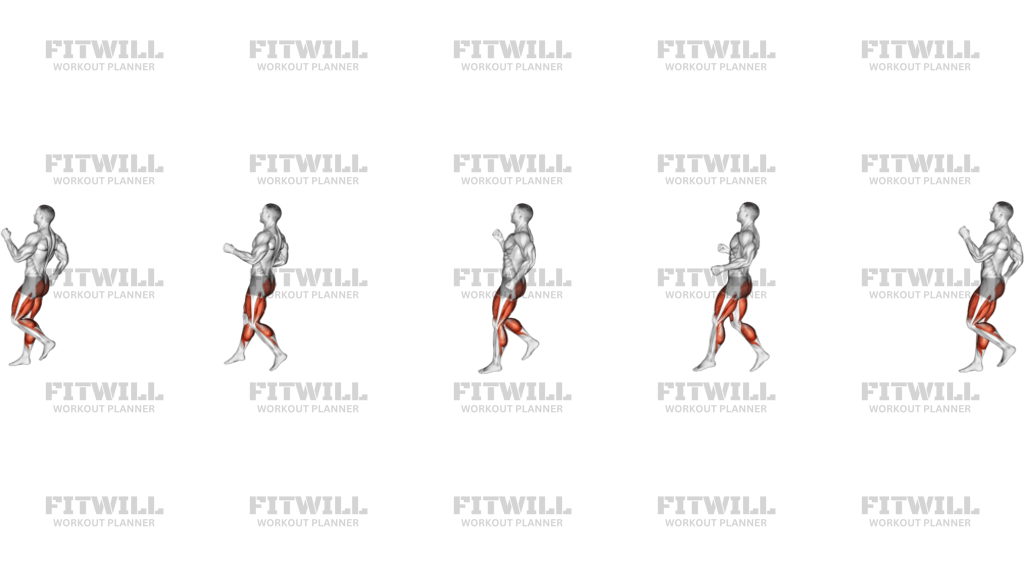
High Knee Run is a bodyweight cardio drill built around rapid alternating knee drives. Each rep asks you to run in place with enough intent to raise one thigh toward hip height while the opposite leg supports your body and your arms help drive the rhythm. The exercise looks simple, but the quality of the set depends on staying tall, landing quietly, and keeping the pelvis and ribs stacked instead of leaning back or bouncing side to side.
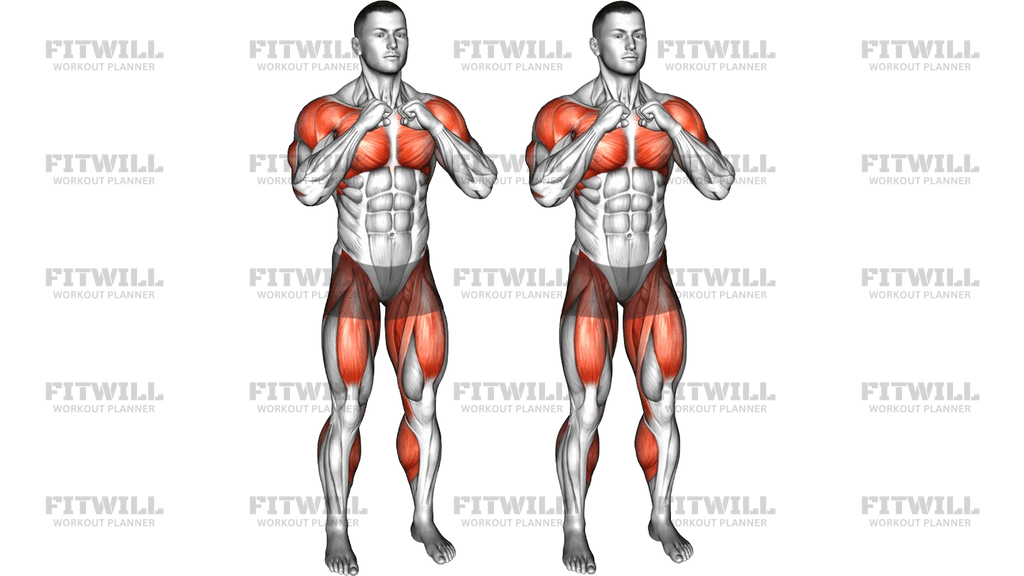
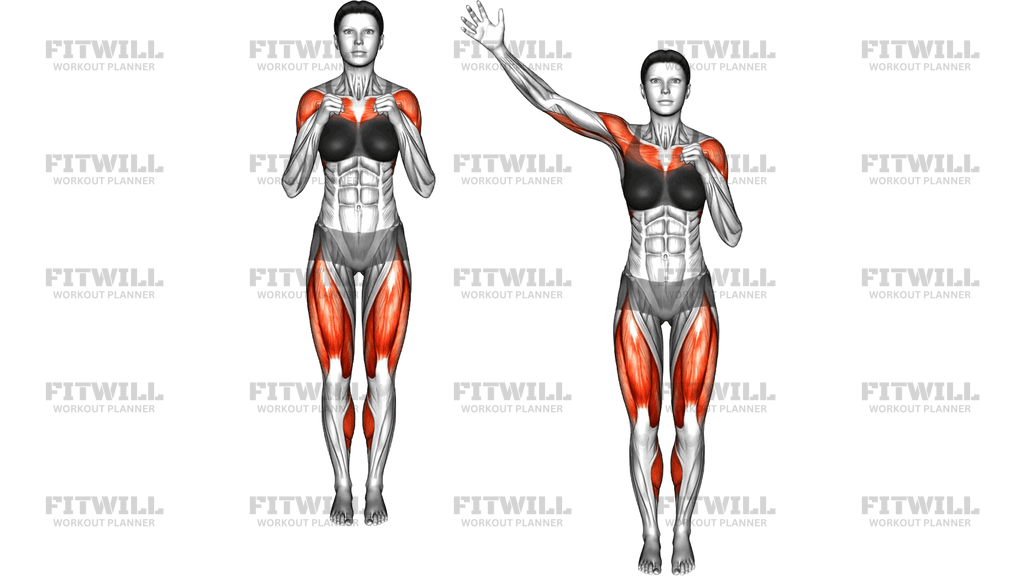
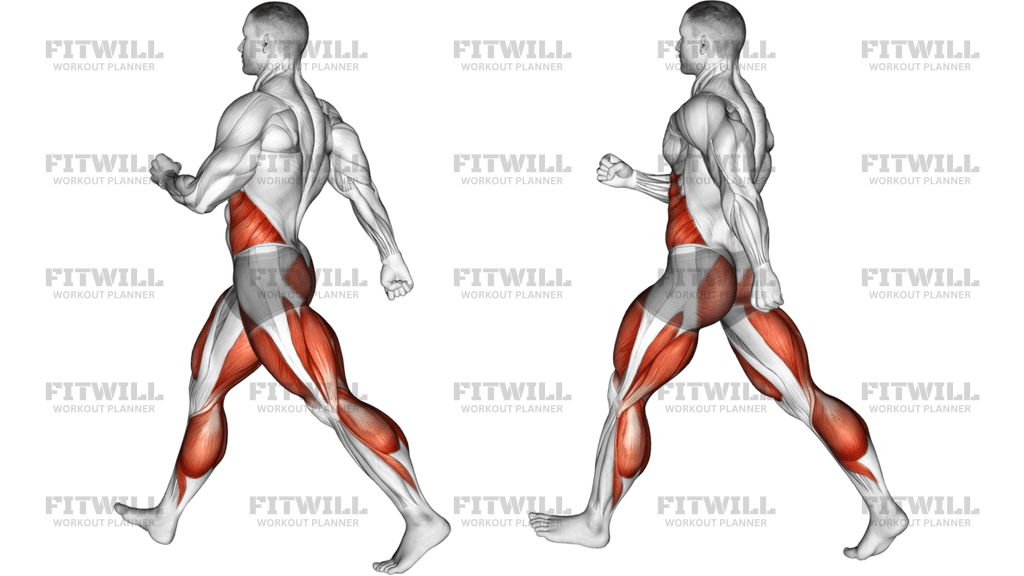
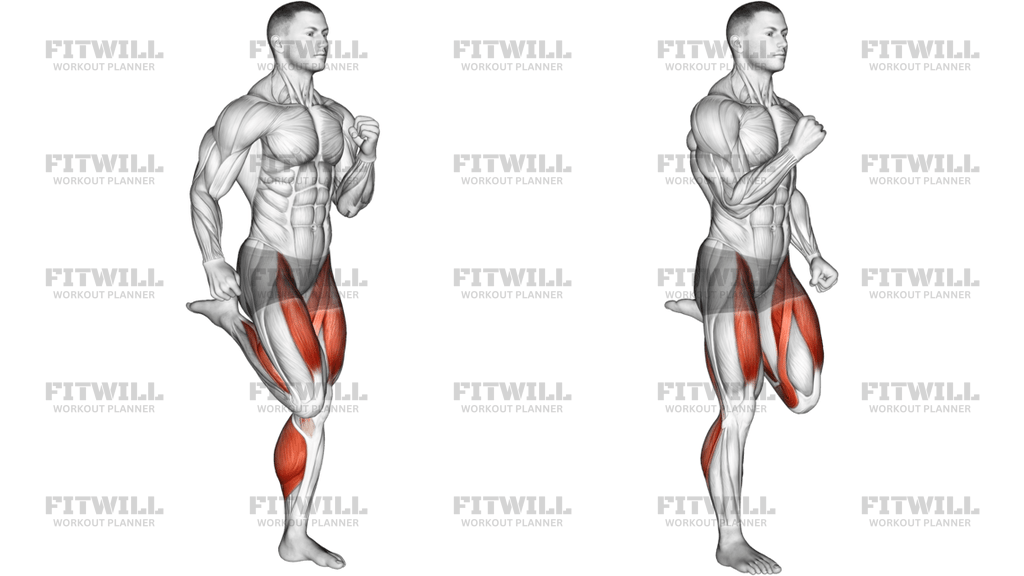
The movement emphasizes the hip flexors, quads, calves, glutes, and trunk stabilizers that keep the body organized while one leg leaves the floor. Because the image shows a sprint-style knee drive rather than a slow march, the goal is to create quick, springy contacts and a clear lift phase instead of just lifting the knee and holding it. That makes the drill useful for conditioning, warm-ups, running prep, and athletic circuits where coordination and foot speed matter.
Setup matters because a poor starting position turns the drill into a sloppy hop. Stand tall with your feet under your hips, shoulders relaxed, and your chest open. Before you start, lightly brace your midsection and get ready to drive one knee up without letting the standing leg collapse inward. The supporting foot should stay active so you can push the floor away and switch legs cleanly.
During each repetition, drive one knee up toward hip height while the opposite arm swings forward naturally. Keep the lifted foot flexed or relaxed in a sprint-like position, then switch legs quickly as soon as the working foot returns to the floor. The return should be controlled and light, not heavy or stomping. Breathe rhythmically through the set so the pace stays smooth instead of turning into a rushed scramble.
The best sets are crisp, upright, and repeatable. If the knees start dropping lower, the torso starts leaning back, or the steps get louder, shorten the set or slow the pace slightly. High Knee Run works well as a warm-up before lower-body lifting, as a conditioning finisher, or as part of a bodyweight interval circuit. Beginners can use a marching version first, then build into the faster run pattern once they can keep their posture and rhythm consistent.
[ Workout Log & Planner ]
Put your next workout in Fitwill
Keep your plan and training log ready when you are.


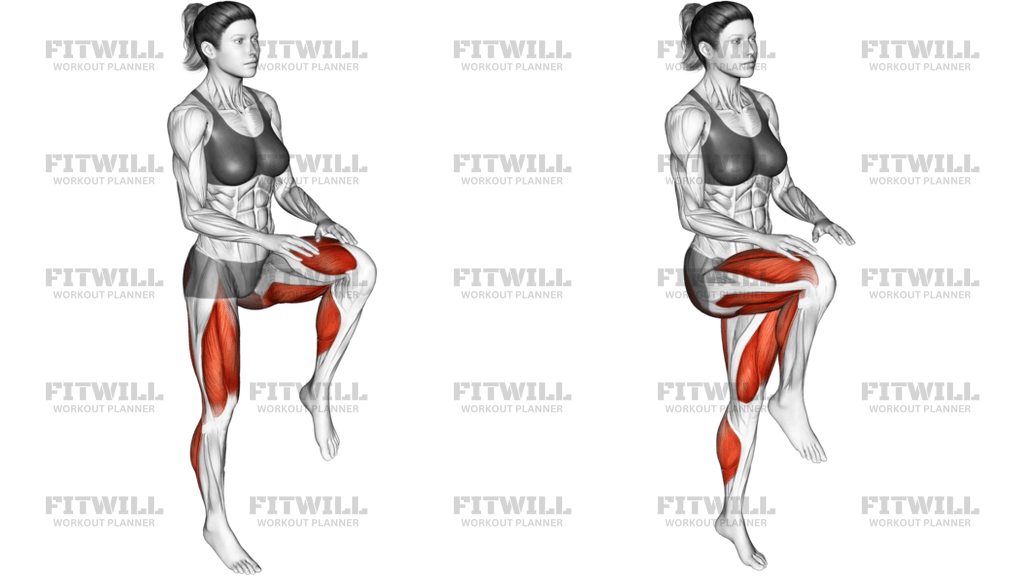
Instructions
- Stand tall with your feet about hip-width apart and your arms relaxed at your sides.
- Brace lightly through your midsection and keep your chest lifted before you start.
- Shift your weight onto one foot and prepare to drive the opposite knee upward.
- Swing the opposite arm forward as the knee rises to about hip height.
- Keep the supporting leg springy so you can push off the floor quickly.
- Land lightly under your hips and immediately switch legs into the next knee drive.
- Maintain an upright torso and avoid leaning back or twisting side to side.
- Continue alternating knees at a fast, controlled pace for the planned time or reps.
Tips & Tricks
- Think of the drill as quick sprint mechanics in place, not a bouncing jump.
- Bring the knee up in front of you, not across the midline, so the pelvis stays square.
- Keep the landing quiet; loud footfalls usually mean you are dropping too heavily between steps.
- Use the arms to match the leg speed, with the opposite arm driving forward each rep.
- Stay tall through the crown of the head instead of hinging back to make the knee look higher.
- If your hips start wobbling, reduce speed and shorten the interval until the pattern is clean again.
- Point the standing knee straight ahead so it does not cave inward as you switch legs.
- For a lower-impact version, turn the run into a fast marching high-knee drill.
Frequently Asked Questions
What does High Knee Run train?
It primarily trains conditioning, coordination, and hip drive while the quads, calves, glutes, and core help stabilize each step.
Is High Knee Run the same as a high-knee march?
No. A high-knee march is slower and more deliberate, while High Knee Run uses quicker leg turnover and a more sprint-like rhythm.
How high should the knees go?
Aim for roughly hip height if you can keep your torso tall and your steps controlled. If the lift gets sloppy, reduce the height before you increase speed.
What is the biggest form mistake?
Leaning back or bouncing side to side to fake a higher knee lift. The torso should stay stacked over the hips while the legs do the work.
Do my arms matter in this exercise?
Yes. The opposite arm should swing naturally with each knee drive because it helps keep the drill rhythmic and closer to a real running pattern.
Can beginners do High Knee Run?
Yes, but beginners usually do better starting with a marching version or a short interval before building up to faster turnover.
When should I use this exercise?
It works well in warm-ups, conditioning circuits, athletic prep, or as a finisher when you want a fast, bodyweight cardio drill.
How do I make the drill easier on my joints?
Reduce the speed, keep the knees slightly lower, and land softly under your center of mass instead of reaching forward.