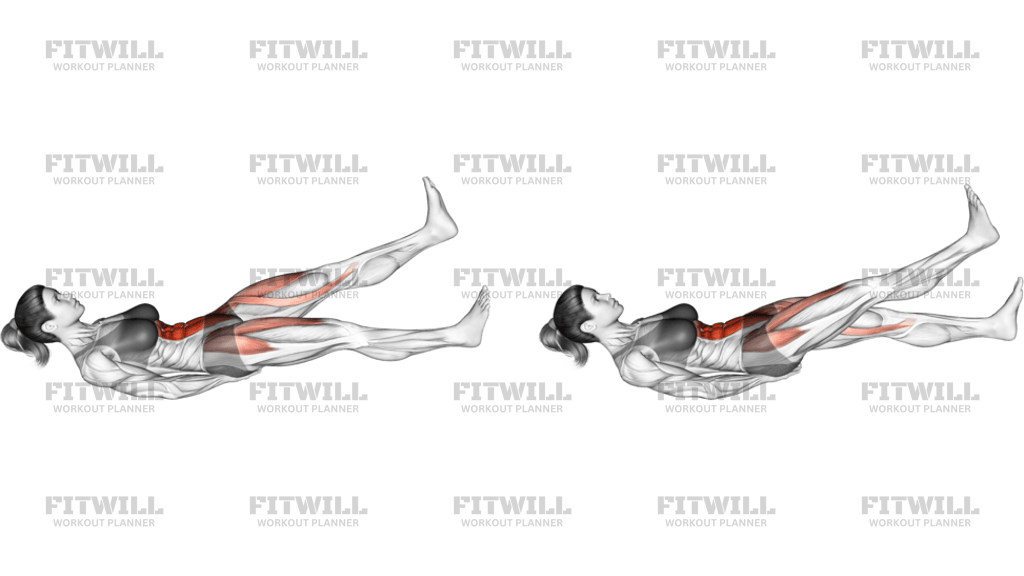
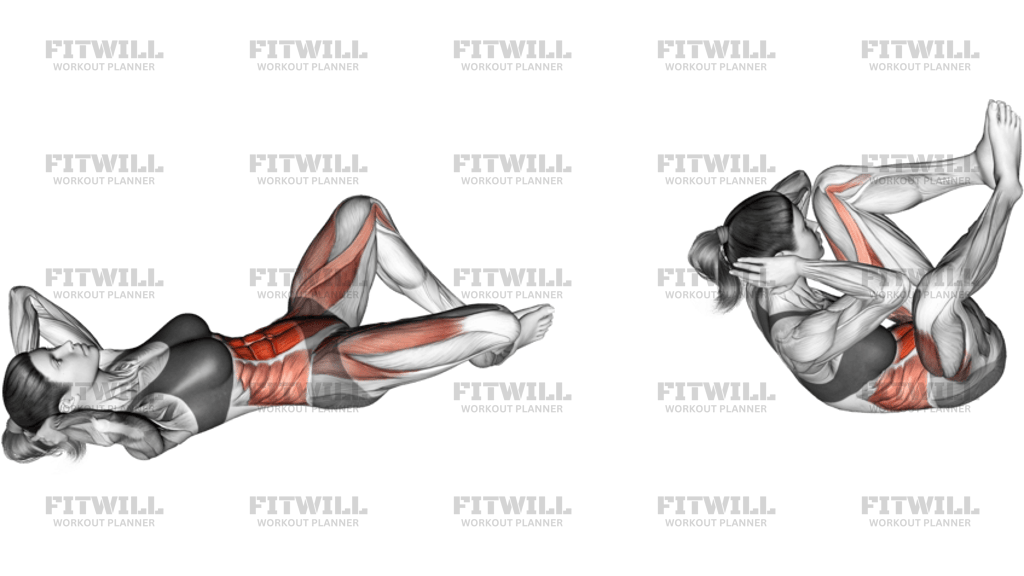
Seated Alternate Crunch
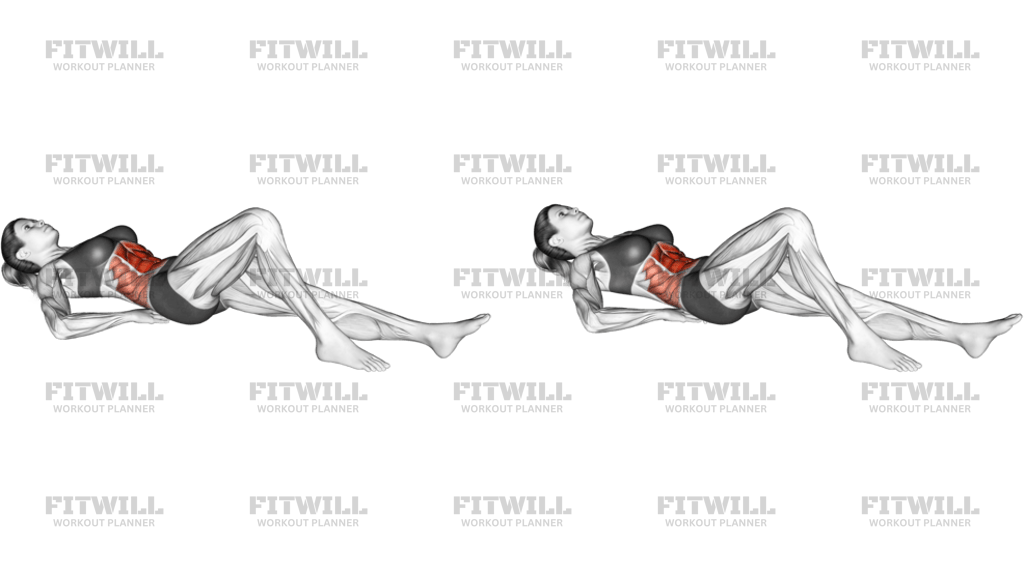
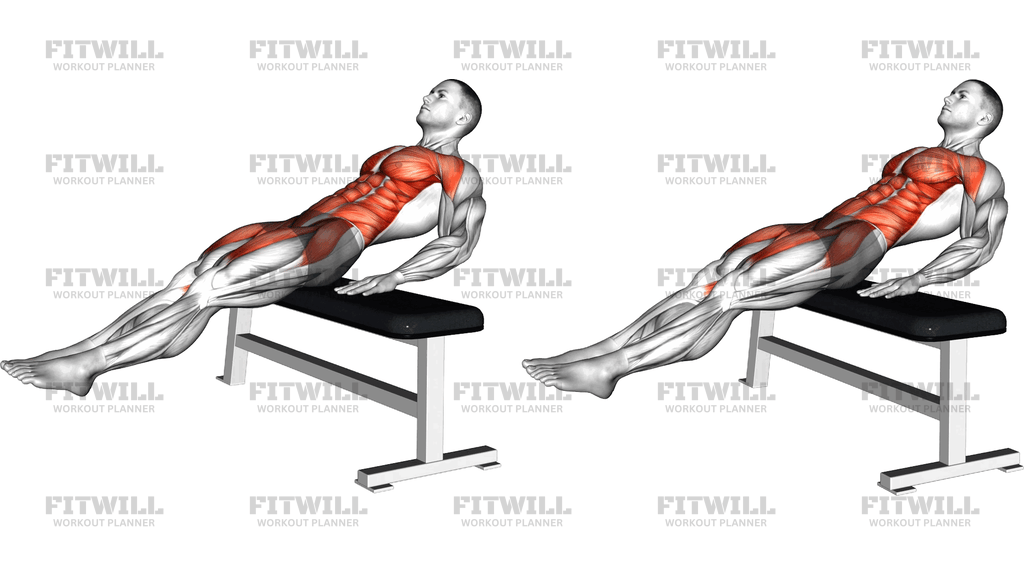
Seated Alternate Crunch is a bench-supported bodyweight core exercise built around alternating knee drive and trunk flexion. You sit on the edge of a flat bench, lean back to create tension through the midsection, and then alternate bringing one knee up as the torso comes forward. The movement looks simple, but the setup matters because the bench contact, torso angle, and leg position determine whether the abs do the work or whether the hip flexors and momentum take over.
This exercise is primarily an abdominal movement, with the rectus abdominis doing most of the shortening work and the obliques helping you rotate and stabilize as you alternate sides. The hip flexors assist during each knee lift, but they should not yank the body through the rep. The goal is a controlled crunch on one side at a time, with the pelvis staying organized and the lower back not collapsing off the bench.
A good setup starts by sitting close enough to the bench edge that you can recline without sliding, then bracing through the midsection before the first rep. Keep your chest lifted, shoulders down, and neck relaxed. From there, drive one knee upward while the opposite side of the torso tightens and the working side of the abdomen shortens. Return slowly to the reclined position, reset the brace, and alternate sides without letting the movement become a fast rocking motion.
Because the exercise is mostly about quality and not load, it fits well in core circuits, warm-up blocks, or accessory work where you want clean trunk control and a clear abdominal burn. It is also useful for beginners who need a simple, low-load way to learn how to brace and alternate sides without relying on aggressive leg swing. If the movement feels mostly in the hips, shorten the range, slow the tempo, and make sure the torso is actually curling toward the knee instead of simply lifting the leg.
Use the seated alternate crunch when you want a compact core drill that trains control, coordination, and side-to-side abdominal work. Keep every repetition smooth enough that you can repeat the same setup and range on both sides. If you cannot control the descent or you need to jerk the torso forward, the set is too hard or too fast.
Fitwill
Log Workouts, Track Progress & Build Strength.
Achieve more with Fitwill: explore over 9600 exercises with images and videos, access built-in and custom workouts, perfect for both gym and home sessions, and see real results.
Start your journey. Download today!




Instructions
- Sit on the edge of a flat bench and lean back so your torso is reclined, with your hands lightly supporting your balance beside your hips or on the bench.
- Keep both legs extended forward to start, then set your ribs down and brace your abs before the first rep.
- Lift one knee toward your chest while you crunch the torso forward, keeping the opposite leg long and quiet.
- Reach the opposite elbow or hand toward the lifted knee without yanking your shoulders forward.
- Pause briefly when the knee and torso meet at the top of the rep.
- Lower the lifted leg and recline back to the start under control, keeping tension in the abs.
- Alternate to the other side and match the same range of motion and tempo.
- Exhale as you crunch up and inhale as you return to the reclined position.
Tips & Tricks
- Sit close enough to the bench edge that you can recline without sliding backward during the knee drive.
- Keep pressure through the sitting bones and upper thighs so you do not bounce off the bench.
- Let the abs start the curl; do not whip the leg up and then chase it with your shoulders.
- Keep the non-working leg long and controlled so the movement stays alternating instead of turning into a double-leg tuck.
- Reach through the trunk, not just the shoulder, so the top position is a true crunch rather than an arm swing.
- If your hip flexors dominate, shorten the top range and slow the lowering phase.
- Keep the chin slightly tucked and the neck long so you do not pull your head forward.
- Stop before your lower back rounds hard off the bench or your torso starts rocking side to side.
Frequently Asked Questions
What does Seated Alternate Crunch train most?
It mainly trains the abs, especially the rectus abdominis, with the obliques helping control the alternating side-to-side action.
Where should I feel the movement on the bench?
You should feel it in the front of the torso and lower abs, not as a hard yank in the hips or lower back.
How do I keep from turning it into a hip-flexor exercise?
Use a slower tempo, keep the opposite leg long instead of jerking it, and make the torso curl toward the knee instead of simply lifting the thigh.
Can beginners do the seated alternate crunch?
Yes. It works well for beginners because the bench gives you a clear setup and the bodyweight resistance is easy to scale by changing tempo and range.
Should my hands be behind my head?
Not necessarily. Light support beside the hips or on the bench is often better because it helps you avoid pulling on the neck.
What is the most common form mistake?
People usually rush the rep and swing the torso, which takes tension off the abs and makes the movement look more like momentum than a crunch.
Is this a good core finisher?
Yes. It works well near the end of a workout when you want a controlled abdominal burner without heavy loading.
How do I make the exercise harder without weights?
Slow the lowering phase, pause longer at the top, and keep the legs straighter so the abs have to control more of the lever.