High Knees Lunge
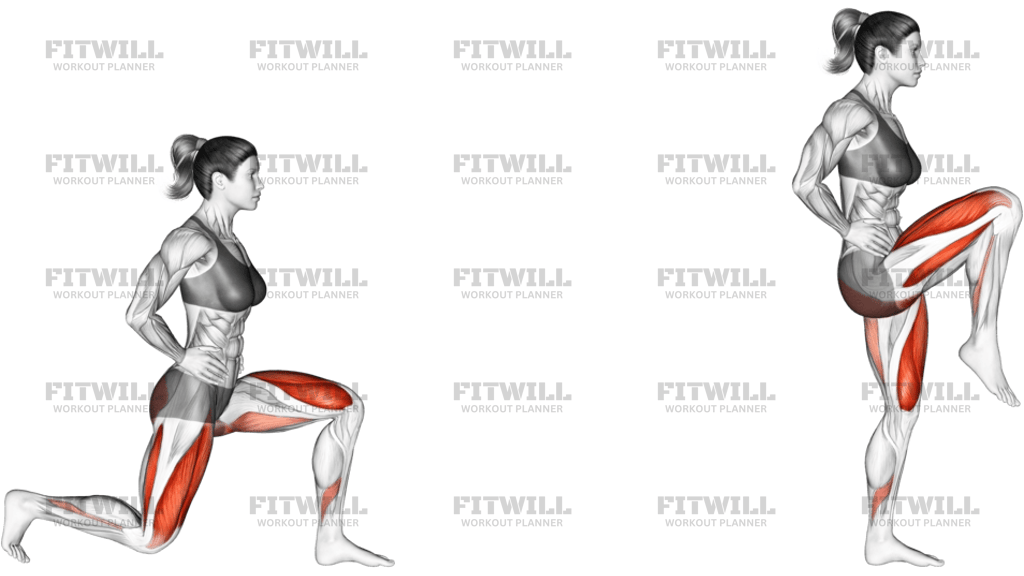
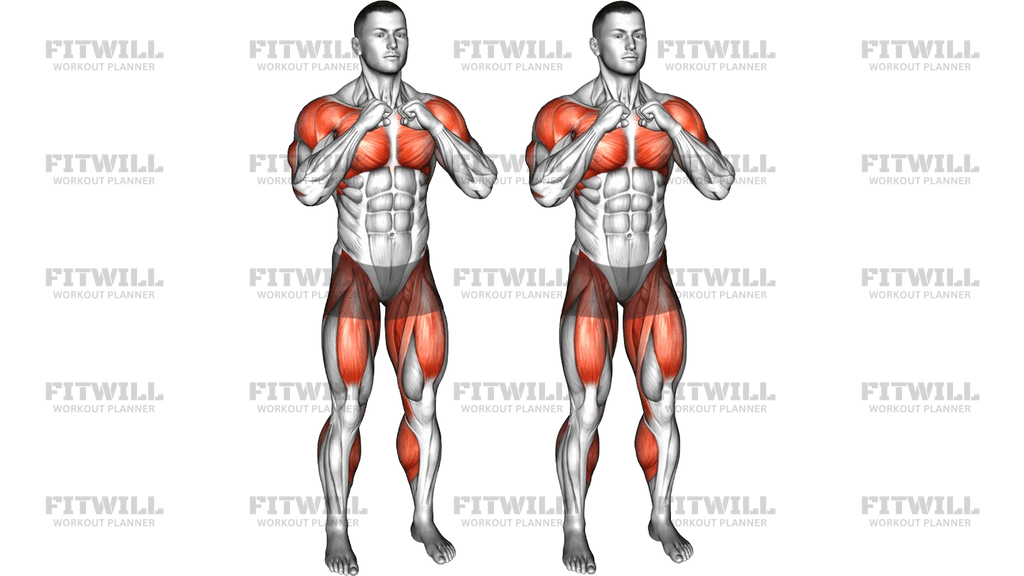
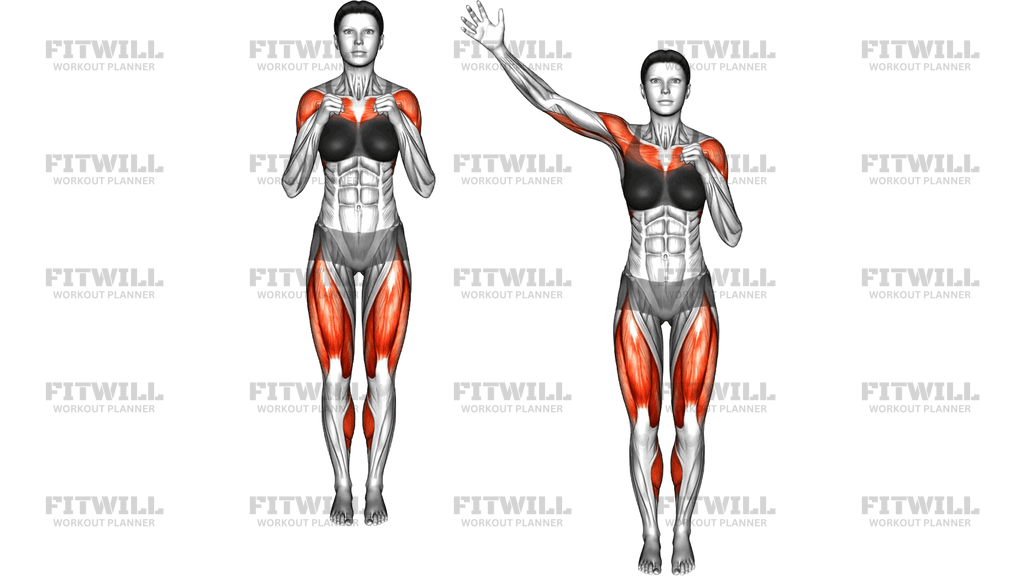
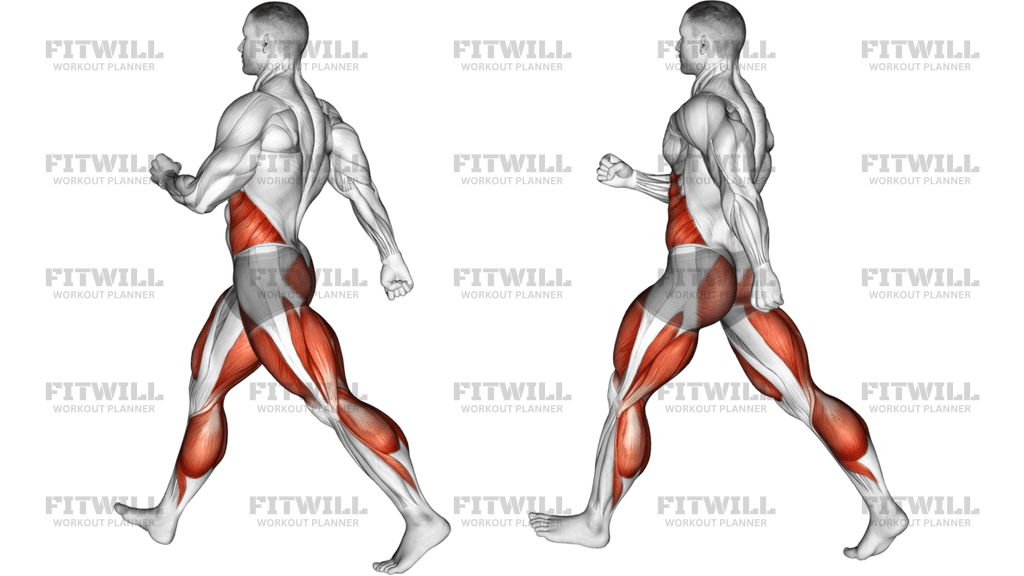
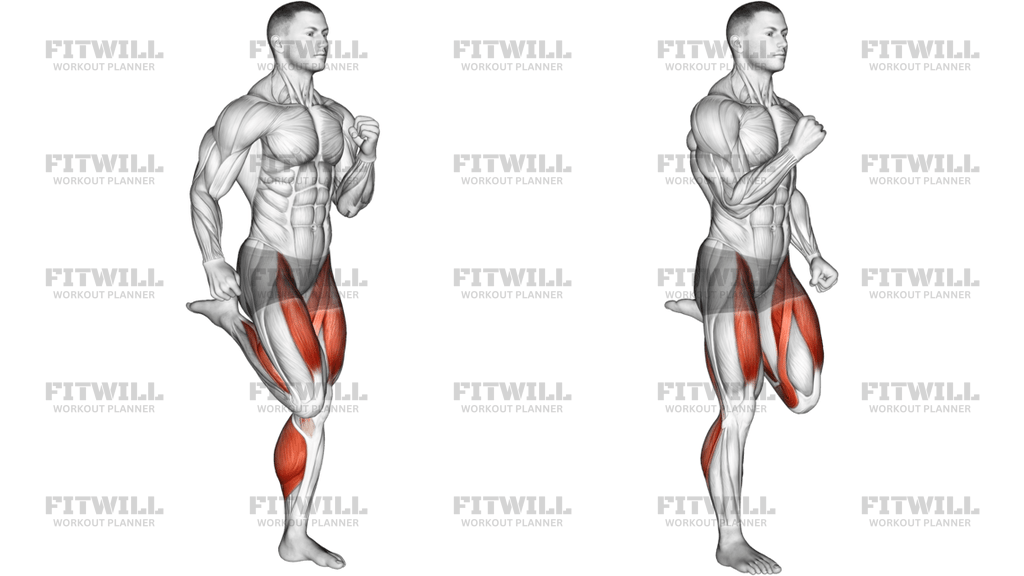
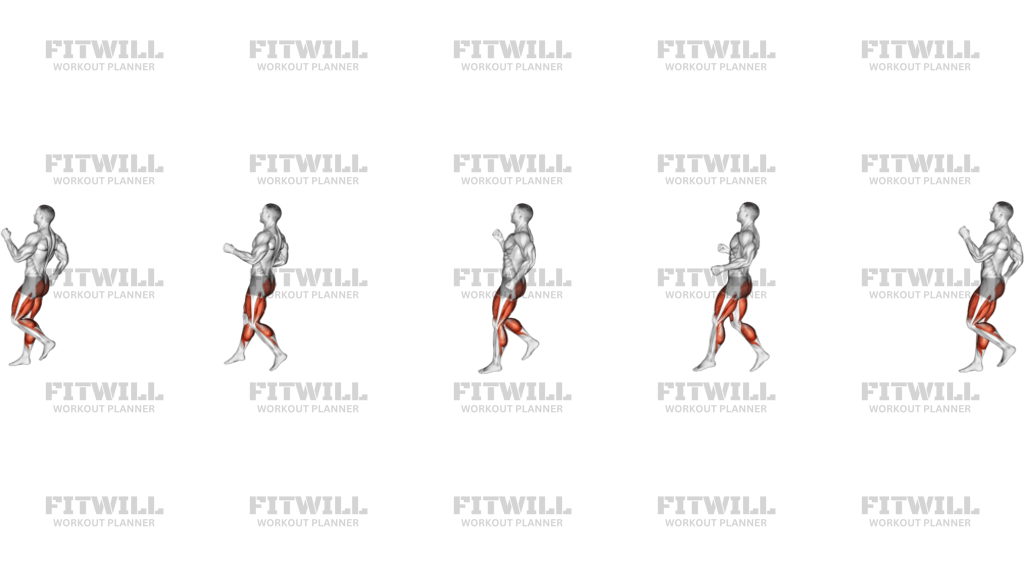
High Knees Lunge is a bodyweight conditioning drill that combines a split squat pattern with a powerful knee drive. It is useful when you want to train lower-body coordination, single-leg control, and a fast but organized transition from the bottom of a lunge into a tall standing position. The movement reads as cardio, but it also asks the legs and trunk to work together instead of letting momentum do all the work.
The main training demand comes from the legs and core working as stabilizers while you shift weight from one side to the other. Your front leg has to absorb force and stand you up, while the rear leg helps you balance as the knee comes through. That makes High Knees Lunge a practical choice for warm-ups, athletic prep, and conditioning circuits where you want more than just repetitive stepping.
The setup matters because the exercise looks simple but falls apart quickly if the stance is too short or too narrow. Start tall with your feet about hip-width apart, then step into a split stance long enough that your front heel stays down and your back knee can lower toward the floor without tipping your torso. Keep your hands on your hips or in front of your chest so you can feel whether your ribs stay stacked over your pelvis.
Lower into the lunge under control, letting the back knee travel close to the floor while the front knee tracks over the middle toes. From there, press through the front heel and midfoot, stand up firmly, and drive the trailing knee up toward hip height without leaning back or swinging the torso. The top position should feel tall and balanced, not rushed, and the return to the floor should be quiet enough that you can repeat the pattern cleanly.
High Knees Lunge works well in bodyweight circuits, running warm-ups, field-sport prep, or as a dynamic leg endurance drill when you do not want external load. It is also easy to scale by slowing the tempo, reducing the knee height, or shortening the lunge step if balance is the limiting factor. Keep the motion smooth and repeatable so each rep starts from a stable base instead of a recovered stumble.
Because the drill is driven by leg drive and posture, common mistakes usually show up at the hips and torso. Letting the front knee cave inward, bouncing off the back leg, or arching the lower back during the knee lift all reduce the value of the rep. A better rep is one where the stance is stable, the knee drive is crisp, and the landing into the next lunge is controlled enough to keep the rhythm intact.
[ Workout Log & Planner ]
Put your next workout in Fitwill
Keep your plan and training log ready when you are.


Instructions
- Stand tall with your feet about hip-width apart, hands on your hips or in front of your chest, and brace lightly through your midsection.
- Step one foot forward into a long split stance so your front heel stays down and your back heel lifts naturally.
- Lower straight down until your back knee approaches the floor while your front knee tracks over the middle toes.
- Keep your chest stacked over your hips and let the front shin angle forward without collapsing the arch of the foot.
- Press firmly through the front heel and midfoot to stand up from the lunge.
- As you rise, drive the back knee up toward hip height or higher while staying tall through the torso.
- Pause briefly at the top position without leaning back or swinging the leg.
- Place the lifted foot down softly and step into the next lunge, alternating sides or repeating the same side as programmed.
Tips & Tricks
- Keep the split stance long enough that the front heel stays heavy when you sink into the lunge.
- Think of the top rep as a tall balance position, not a backbend; ribs should stay stacked over the pelvis.
- Let the back knee skim close to the floor instead of bouncing off it.
- Push the floor away through the front heel and big toe to stand up cleanly.
- Lift the knee with control instead of swinging the foot forward from momentum.
- If your balance wobbles, shorten the step and slow the transition between the lunge and the knee drive.
- Keep the front knee in line with the second toe so it does not cave inward as you rise.
- Use a quieter landing if you are doing this in a circuit; loud foot contacts usually mean the rep is too rushed.
Frequently Asked Questions
What muscles does High Knees Lunge work?
It mainly challenges the legs and core, especially the glutes, quads, hip flexors, and the stabilizers that keep you balanced during the knee drive.
Is High Knees Lunge a cardio exercise or a strength exercise?
It can serve both roles. Done for speed and continuity, it is a cardio drill; done slowly with precise pauses, it becomes a controlled single-leg strength and balance exercise.
How high should the knee come up in High Knees Lunge?
Aim for hip height or as close as you can get without leaning backward. If the torso starts to arch, reduce the height and keep the ribs stacked over the pelvis.
Should my back knee touch the floor?
It can come close to the floor, but it does not need to slam down. A light hover or gentle tap keeps the rep controlled and protects the rhythm of the drill.
Can beginners do High Knees Lunge?
Yes. Beginners should slow the transition, keep the stance slightly longer, and use a smaller knee lift until balance and knee tracking stay consistent.
What is the most common mistake in High Knees Lunge?
Rushing the knee drive and losing the tall finish is the biggest issue. If the torso sways or the front knee caves inward, slow the rep and reset the stance.
How can I make High Knees Lunge harder?
Increase the knee height, add a longer pause at the top, or move through the drill at a steadier tempo with no momentum between sides.
What variation should I use if balance is the limiting factor?
Keep the same lunge pattern but hold the top position for a second before stepping down. You can also keep both hands on your hips and shorten the step until the landing feels stable.