Band Standing Single-Arm Twist Row
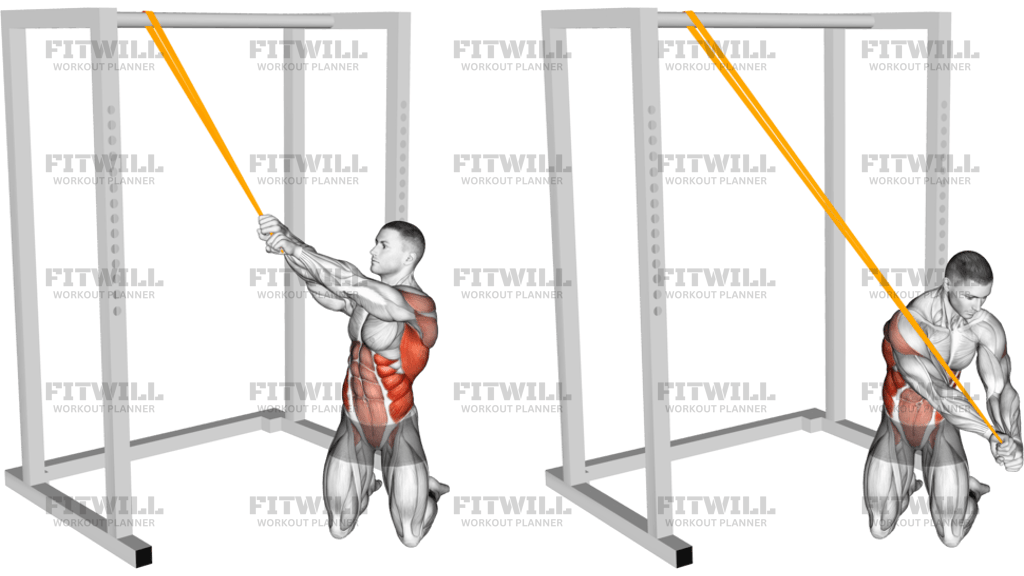
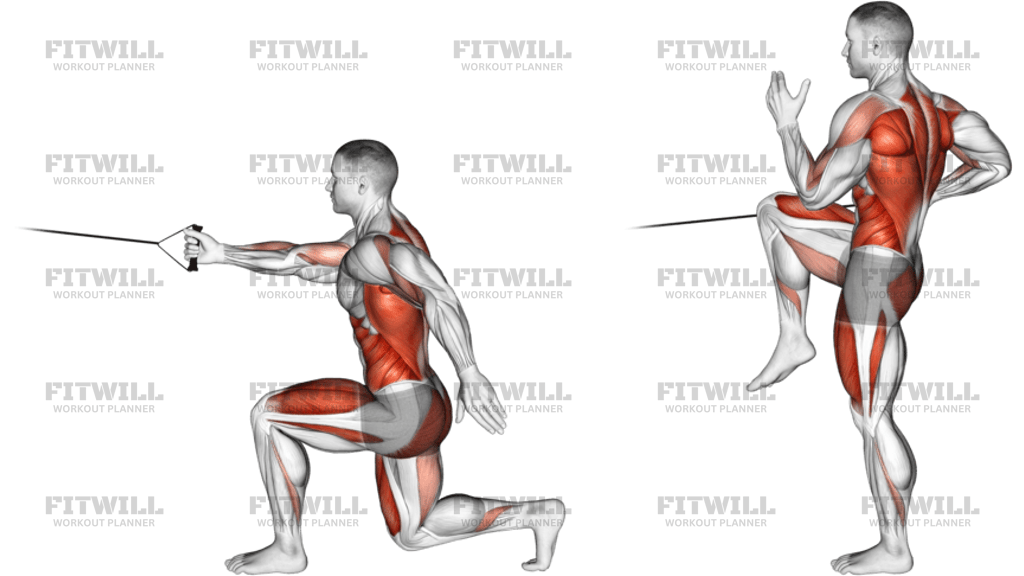
Band Standing Single-Arm Twist Row is a standing unilateral row that combines a pulling action with a small torso rotation. The band is anchored at about chest height, and the working arm starts long in front of the body before you row the handle back toward the lower ribs while the chest and shoulder turn slightly toward the anchor. That twist makes the exercise feel different from a plain row: the lats still do most of the work, but the upper back, biceps, forearm grip, and trunk stabilizers have to organize the rep so the pull stays smooth.
Because the band changes tension as you move, the setup matters. Step far enough away to create light tension at the start, but not so far that the shoulder gets yanked forward or the ribs flare. A split stance gives you room to rotate without wobbling, and it also helps you keep pressure through both feet while the arm moves. If the stance is sloppy, the exercise turns into a lean-and-yank pattern instead of a controlled row.
Each repetition should begin from a long reach: the shoulder blade can glide forward, the arm can extend, and the torso can stay tall before the pull starts. As you row, drive the elbow back and slightly down toward the hip, then let the ribs and shoulder turn only as much as needed to finish the pull. The goal is not to crank the lower back through a big twist. It is to keep the rotation organized through the upper trunk while the working side stays packed and strong.
At the top of the rep, squeeze the back hard without shrugging the shoulder toward the ear. Then return the handle slowly, letting the band pull the arm forward under control until the lats lengthen again. That controlled return is where the exercise earns a lot of its value, because it trains the shoulder to stay stable while the band tension increases. Exhale as you pull, inhale as you reach forward, and reset your stance before the next rep.
This is a strong accessory exercise for back day, unilateral pulling work, anti-rotation training, or warm-up sets before heavier rows and pulldowns. It is also useful when you want to clean up side-to-side differences in pulling strength or torso control. Beginners can use it if they keep the twist small and the band light. If the shoulders feel pinchy or the lower back starts to take over, shorten the reach, step closer to the anchor, and keep the motion focused on a clean row with only a modest turn through the torso.
[ Workout Log & Planner ]
Put your next workout in Fitwill
Keep your plan and training log ready when you are.


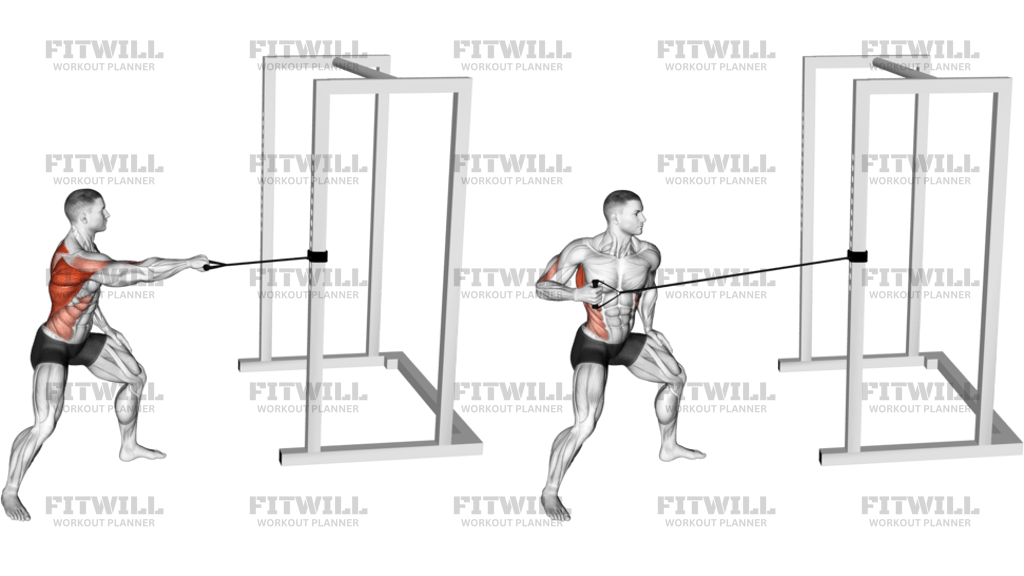
Instructions
- Anchor the resistance band at about chest height and stand facing the anchor in a staggered stance with the working arm holding the handle.
- Step back until the band has light tension with your arm almost straight, your shoulder down, and your torso tall.
- Keep a soft bend in both knees, stack your ribs over your pelvis, and brace before you start the first pull.
- Reach the working arm forward so the shoulder blade can glide slightly toward the anchor without shrugging.
- Pull the elbow back toward your lower ribs or hip while you rotate the chest and shoulder a little toward the band.
- Finish the rep with the handle close to your side, the elbow tucked in, and the shoulder still away from your ear.
- Pause briefly at the end of the row, then lower the handle slowly until the arm is long again under control.
- Reset the stance and breathe out on the pull, inhale on the return, and repeat for the planned reps.
Tips & Tricks
- Set the anchor at roughly sternum height so the handle travels on a natural row path instead of pulling steeply up or down.
- Choose a band that is already challenging in the first third of the pull; if the start feels slack, step farther back only until tension is clear.
- Keep the elbow travelling back and slightly down. If the hand crosses the body too much, the shoulder usually rolls forward and the lat tension drops.
- Let the shoulder blade reach forward at the start, then retract it as you row. Pinning the scapula back too early makes the rep feel stiff and short.
- Rotate through the upper torso and ribs, not a hard twist from the low back. The pelvis should stay mostly quiet in the split stance.
- Keep the front knee soft and your weight evenly shared so the band does not pull you into a sway.
- Use a slower return than pull. The lowering phase should stay smooth enough that the band never snaps the arm back.
- If the front shoulder pinches, reduce the amount of twist and keep the elbow a little farther from the torso.
- Stop the set when you start leaning, shrugging, or losing the split stance. Those are signs the band is now too heavy for clean rows.
Frequently Asked Questions
What muscle does Band Standing Single Arm Twist Row target most?
The lats do most of the work, with the upper back, biceps, forearm grip, and trunk stabilizers helping to control the twist.
Is this more of a row or a rotation exercise?
It is primarily a row with a small, controlled torso rotation added to challenge unilateral control.
Where should I anchor the band?
Chest height is the best starting point because it lets the handle travel toward the lower ribs without forcing the shoulder up or down.
How much should my torso twist?
Only enough to help finish the row cleanly. The ribs should turn a little, but the lower back should not crank through a big rotation.
Should my arm stay straight at the start?
It should be nearly straight with tension on the band, but not locked out or shrugged forward.
Can beginners use Band Standing Single-Arm Twist Row?
Yes, as long as the band is light and the twist stays small enough to keep the stance and shoulder position under control.
What should I do if my lower back starts to move?
Shorten the range, step closer to the anchor, and keep the rotation through the upper torso instead of the lumbar spine.
How can I make this exercise harder?
Step farther from the anchor, slow the lowering phase, or pause longer with the handle at your ribs before returning.