Resistance Band Jump Lunge With Single-Arm Row
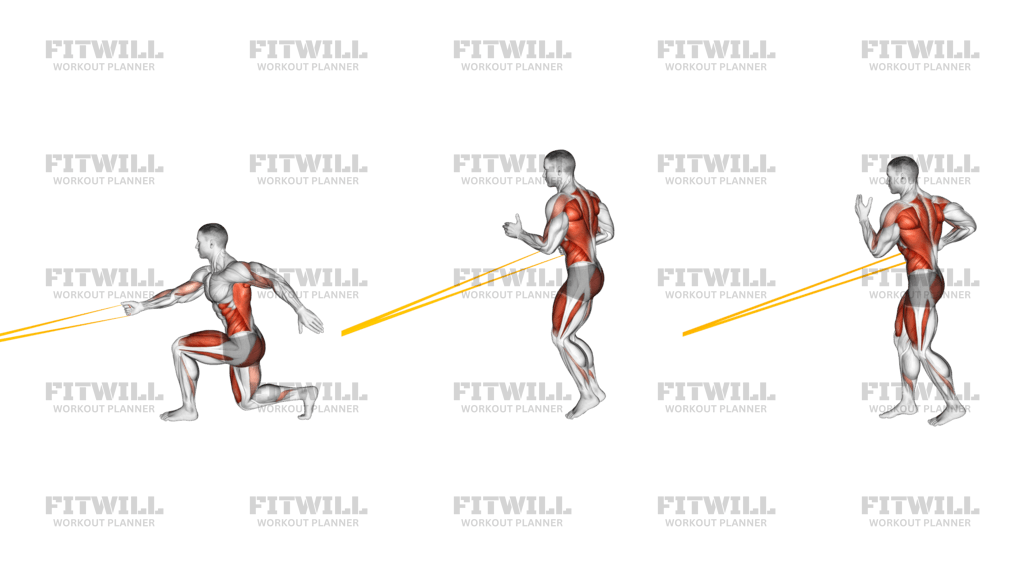
Resistance Band Jump Lunge With Single-Arm Row combines a lower-body plyometric split jump with an upper-body rowing pattern against band resistance. It is a demanding coordination drill that trains power, balance, and timing while also loading the quads, glutes, calves, lats, rear shoulders, and trunk. The exercise works best when the band is anchored low and slightly in front of you so the row lines up with the torso as you rise out of the lunge.
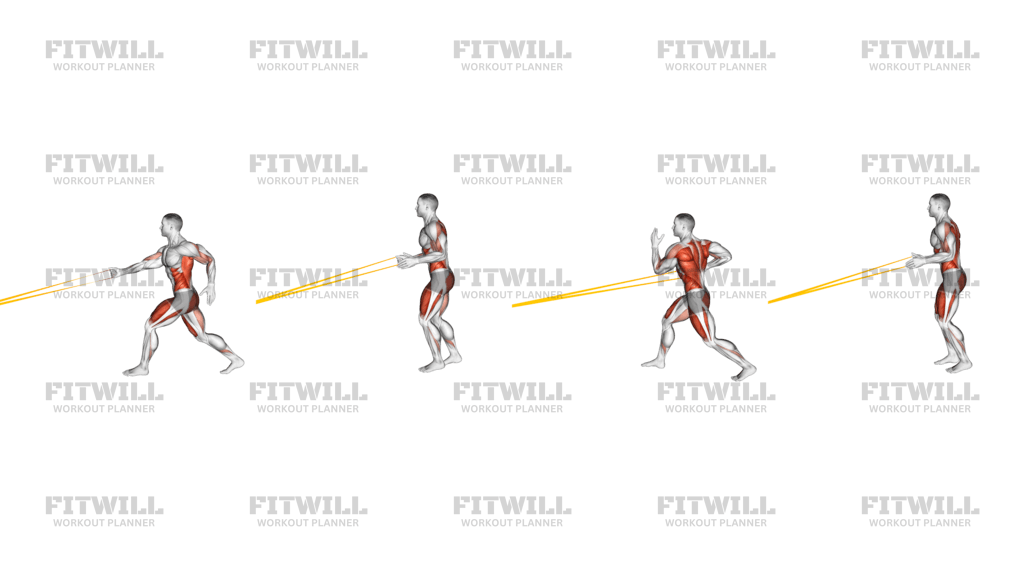
The lunge and the row need to happen together, not as two separate exercises glued together. As you drive up from the split stance, the back leg and front leg should both contribute to the jump while the working arm pulls the handle toward the lower ribs. That pairing teaches force transfer from the floor through the hips and torso into the pulling arm, which is why this movement shows up in athletic conditioning, full-body circuits, and power-endurance work.
Setup matters more here than with a basic lunge or a basic row. Start in a controlled split stance with enough band tension to feel the pull immediately, but not so much that it drags your torso forward. Keep your chest tall, your pelvis square, and your ribs stacked over your hips before every rep. If the band is too light, the row disappears; if it is too heavy, the jump becomes sloppy and the landing gets noisy.
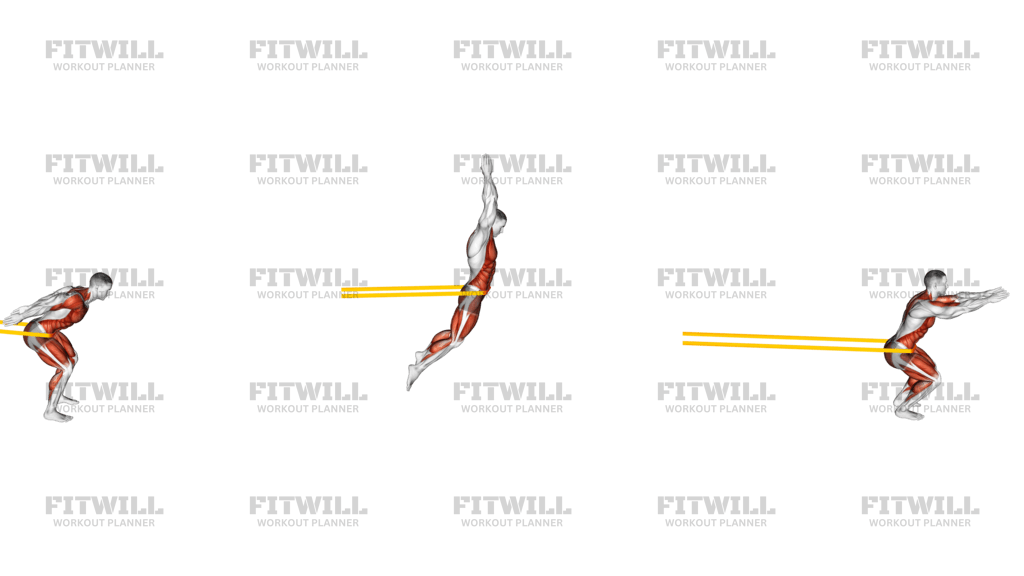
Each rep should be crisp. Drop into the lunge, explode upward, row the handle as you rise, then land softly back into a stable split position. The front foot should stay planted and the rear leg should absorb without crashing. Keep the elbow close to the body on the pull and avoid twisting through the shoulders or yanking with the arm alone. The band should guide the motion, not pull you off balance.
Use this movement when you want conditioning with a power element rather than pure strength or pure cardio. It is useful for athletes, advanced general fitness clients, and anyone who needs to train lower-body drive while coordinating a pulling action. Because fatigue can degrade both landing mechanics and rowing position quickly, stop the set as soon as the jump height, balance, or torso control starts to fall apart.
[ Workout Log & Planner ]
Put your next workout in Fitwill
Keep your plan and training log ready when you are.


Instructions
- Anchor a resistance band low and slightly in front of you, then hold the handle in one hand and step into a split stance with the band already under tension.
- Start in a lunge with your front foot flat, back heel lifted, chest tall, and hips square to the anchor point.
- Keep the rowing arm long at the bottom so the band is stretched but your shoulder stays packed and relaxed.
- Lower under control into the lunge, loading the front leg and glute without letting the torso collapse forward.
- Drive forcefully through both legs to jump or switch, and begin the row as you rise.
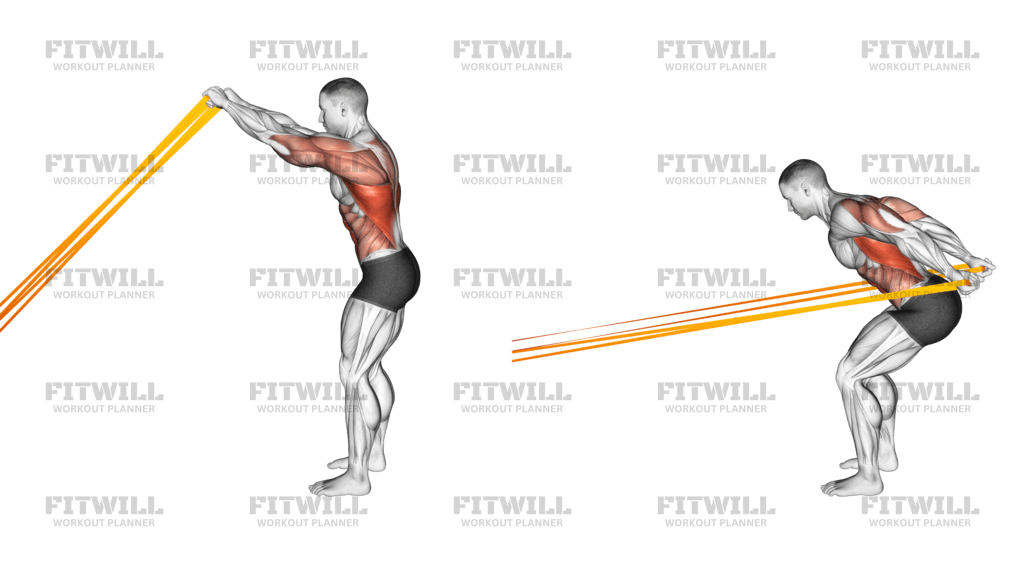
- Pull the handle toward your lower ribs with the elbow tracking close to your side.
- Land softly back into the split stance and immediately absorb the impact through the hips, knee, and ankle.
- Reset the lunge position before the next rep so each jump and row starts from a clean base.
Tips & Tricks
- Pick a band tension that lets you row without rotating your torso or losing the jump.
- Let the legs create the power; the arm should finish the row, not start it.
- Keep the front knee tracking over the middle toes so the landing stays stable and quiet.
- Pull to the lower ribs or waist, not up toward the shoulder, so the lat does the work instead of the upper trap.
- Use a short, athletic jump if the landing gets heavy or your feet start drifting.
- Exhale on the drive up and row, then reset your breath before the next rep.
- Keep the ribs stacked over the pelvis so the band does not pull you into low-back extension.
- If balance is the limiting factor, reduce jump height before reducing control of the row.
Frequently Asked Questions
What does Resistance Band Jump Lunge With Single-Arm Row train most?
It trains lower-body power, single-leg coordination, and pulling strength at the same time.
Can beginners perform this exercise?
Not usually as a first-choice drill. Beginners can practice the split lunge and single-arm row separately before combining them.
Where should the band be anchored?
Anchor it low and slightly in front of you so the row matches the path of the torso as you rise out of the lunge.
What should I feel in the pulling arm?
You should feel the lat and upper back working as the handle comes toward the lower ribs, not a shrug in the neck.
Do I row before or after the jump?
They should happen together. Start the row as you drive up so the pull and jump stay synchronized.
Why is my balance the first thing to fail?
This movement combines landing mechanics with band tension, so balance often breaks down before conditioning does. Shorten the jump and reset each rep.
What is the biggest form mistake?
Twisting the torso to yank the band while the legs barely contribute. The jump should drive the rep.
How can I make it harder without wrecking form?
Use slightly more band tension, cleaner and faster jumps, or longer sets while keeping the landing soft and the row precise.