Band Narrow-Grip High Row
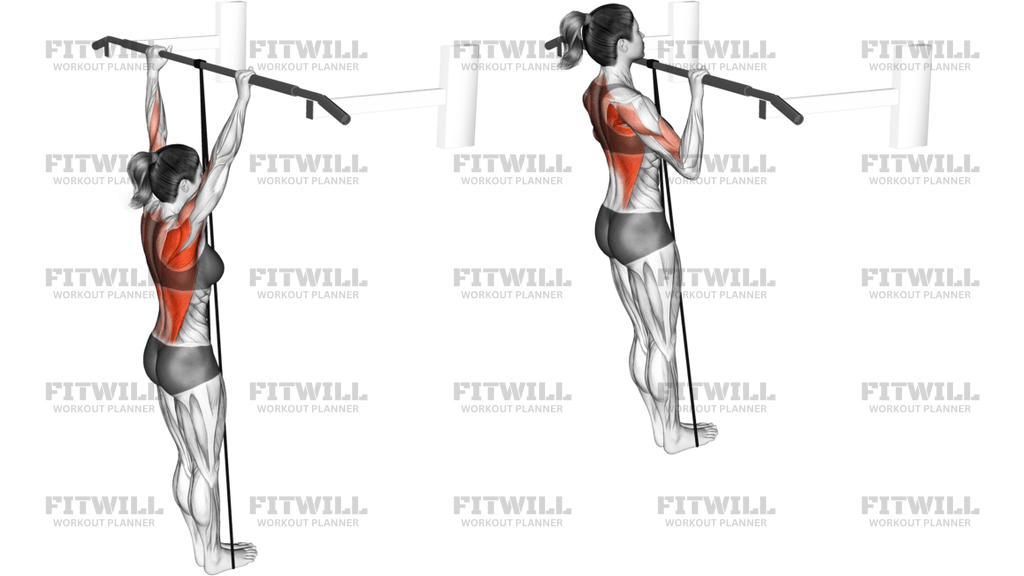
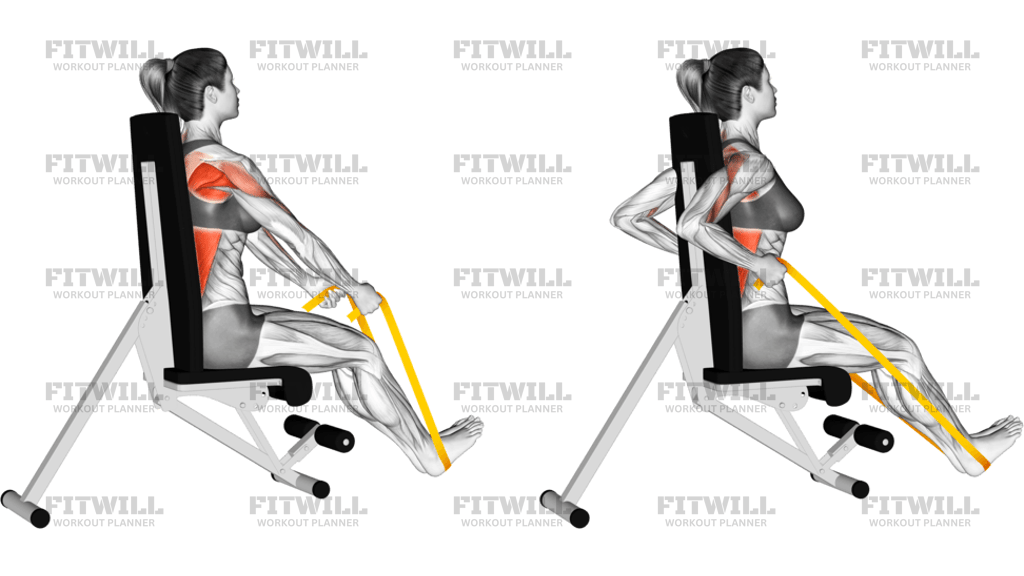
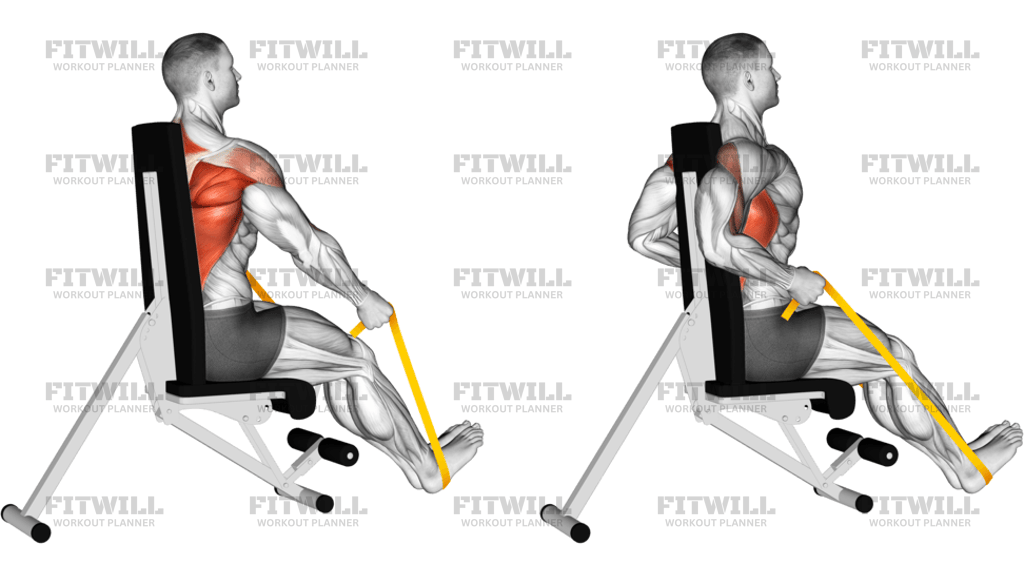
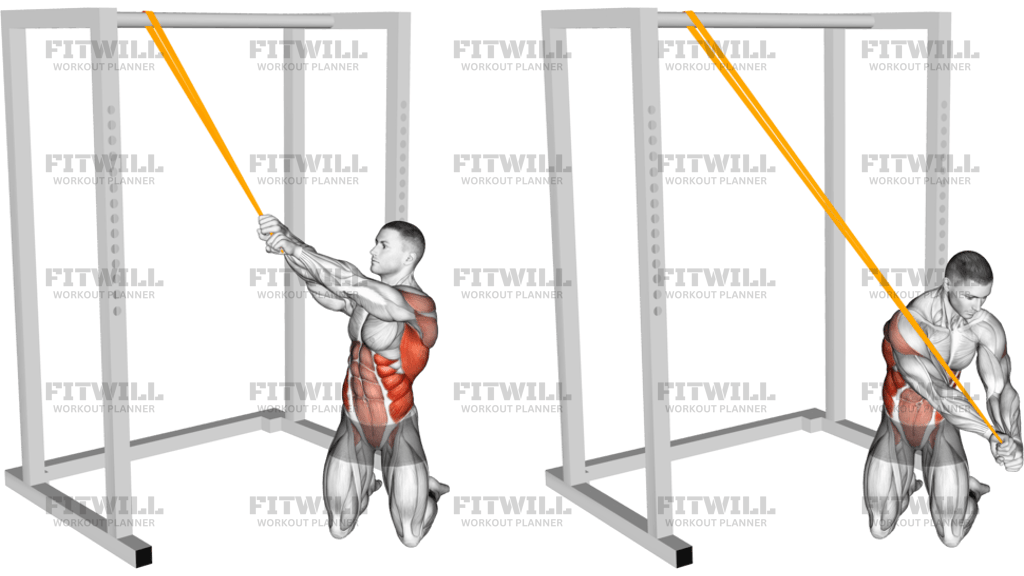
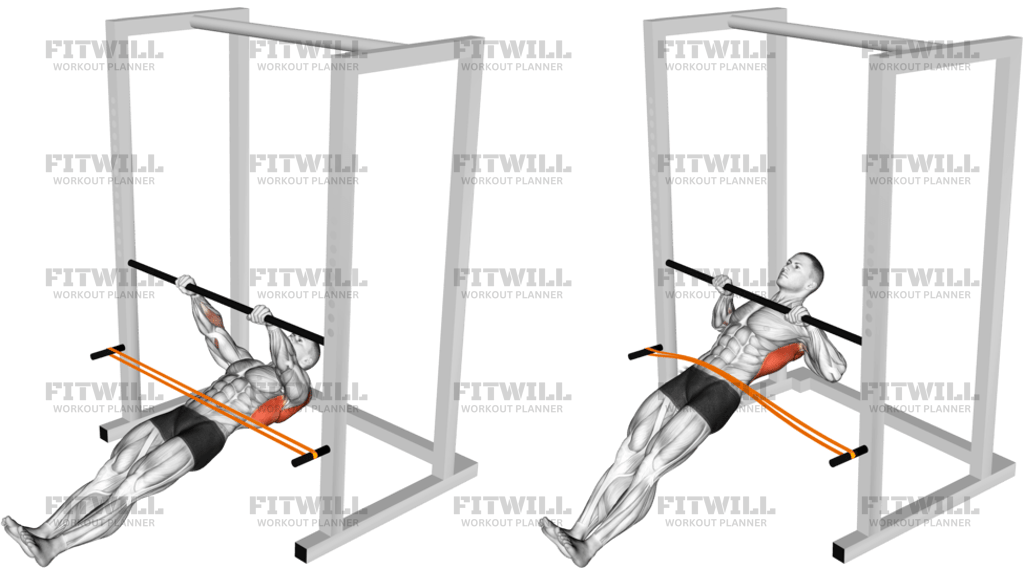
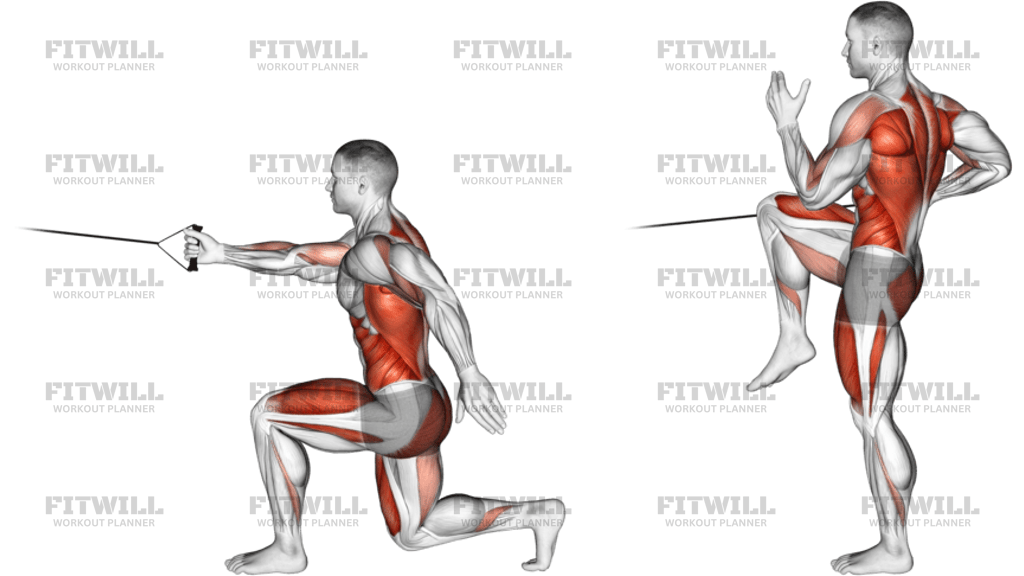
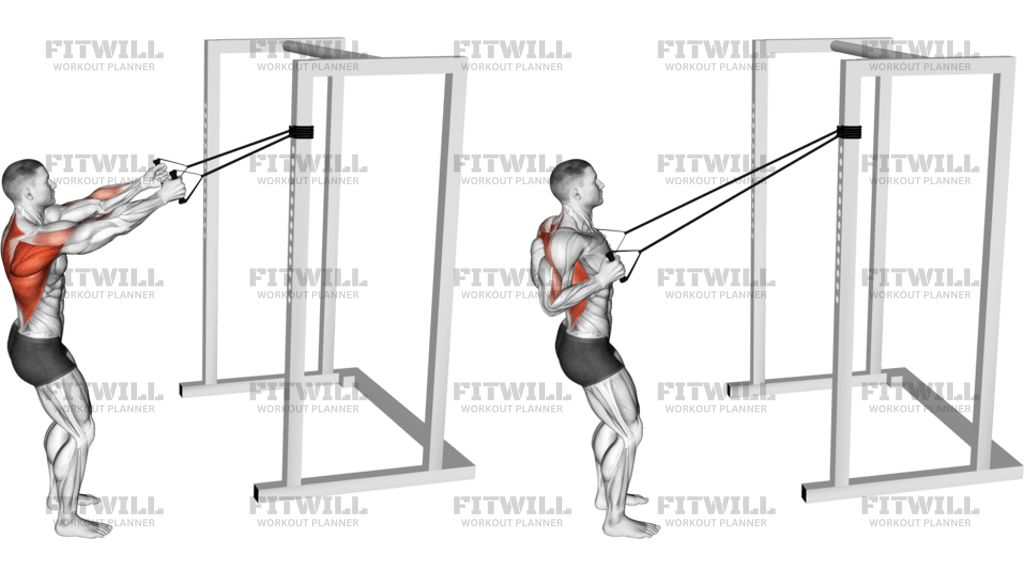
Band Narrow Grip High Row is a standing band row performed with a high anchor and a narrow hand position. The band travels from overhead and forward into a close pull toward the upper chest or upper ribs, which makes it a useful way to train the lats while also involving the upper back, rear shoulders, biceps, and forearms.
The high anchor changes the line of pull. Instead of rowing straight back at shoulder height, you are pulling down and back while keeping the elbows close to the body. That path usually shifts more tension into the latissimus dorsi and lower shoulder-girdle control, while the rhomboids, mid traps, rear delts, and elbow flexors help finish the rep with clean mechanics.
Setup matters here because the band wants to pull you forward as soon as tension comes on. A slight staggered stance, soft knees, and a tall torso help you resist that pull without turning the set into a full-body sway. Hold the handles or narrow grip evenly, set the shoulders down before each pull, and start each rep from a controlled reach without letting the ribs flare or the lower back overextend.
As you row, think about drawing the elbows back and slightly down while the hands stay close together. The handles should finish near the upper chest or just below it, depending on the anchor height and your arm length. Pause briefly at the end range, then let the band return you forward under control without shrugging or losing posture. Exhale as you pull and reset your shoulder position before the next rep.
This exercise is a good fit for accessory back work, warmups, higher-rep strength work, or home training when you need a simple horizontal pull without a machine. It is also useful for lifters who want lat-focused rowing with less lower-back loading than bent-over barbell rows. Keep the motion smooth and pain-free, and stop the set if the band starts snapping you forward or if the shoulders roll up toward the ears.
[ Workout Log & Planner ]
Put your next workout in Fitwill
Keep your plan and training log ready when you are.


Instructions
- Anchor the resistance band high in front of you and hold the narrow grip or both handles with your arms extended.
- Stand tall a step or two back from the anchor, keep a slight bend in the knees, and set your feet about hip-width apart.
- Lean back only slightly so the band is under tension, then brace your torso and keep your ribs stacked over your pelvis.
- Start with your shoulders down and forward reach controlled, not collapsed, so the band pulls in a straight line from the anchor.
- Pull the handles toward your upper chest or upper ribs while driving your elbows back and slightly down close to your sides.
- Squeeze your shoulder blades together at the finish without shrugging your shoulders up.
- Pause briefly in the contracted position, then let your arms extend forward under control until you feel a full stretch through the lats and upper back.
- Keep breathing steady through the set and repeat for the planned number of repetitions without using body swing to finish the pull.
Tips & Tricks
- If the anchor is too low, the row turns into a different pulling angle; keep the band anchored above shoulder height for the high-row path.
- Keep the elbows close enough that the pull feels like it finishes at the lats, not a wide rear-delt fly.
- Do not let the shoulders creep toward your ears at the finish; the neck should stay long and relaxed.
- A small lean back is enough to create tension, but a big recline usually means you are using bodyweight instead of the band.
- Finish the rep with the handles near the upper chest or lower collarbone, not by yanking them behind your torso.
- Let the band open your arms on the way forward, but do not lose your brace or let the lower back arch to chase more range.
- Use a grip tension that lets your wrists stay neutral; bent wrists usually mean the band is too hard or the handles are too small.
- Higher reps work well here because the band tension rises quickly near the finish, so stop the set when you can no longer pause cleanly at peak contraction.
Frequently Asked Questions
What muscle does Band Narrow Grip High Row target most?
The lats are the main target, especially as you pull the elbows back and down from the high anchor.
Can beginners perform this exercise?
Yes. Beginners usually do best with a light band and a shorter stance so they can learn the pull path without leaning too far back.
Where should the handles finish on the row?
They should finish near the upper chest or upper ribs, depending on your anchor height and arm length.
What is the biggest form mistake?
Shrugging the shoulders up or turning the rep into a body swing usually takes tension away from the lats and upper back.
Should my elbows stay close to my body?
Yes. A narrower elbow path usually keeps the exercise more lat-focused and matches the high-row line of pull.
Why use a high anchor instead of a chest-level band row?
The high anchor changes the angle so the pull comes down and back, which often shifts more emphasis to the lats and lower shoulder control.
Is this safe for my lower back?
Usually yes, because it is standing and not heavily bent over, but you should still avoid overleaning or arching to create extra range.
How can I make the set harder without changing the exercise?
Use a stronger band, step farther from the anchor, or add a longer pause at the squeezed position.