Dumbbell Devils Press
Dumbbell Devils Press is a burpee-to-overhead dumbbell conditioning drill that combines a floor-based push-up phase, a fast stand, and a powerful double-dumbbell press. It is not a slow strength exercise. The value of the movement comes from moving cleanly from the floor to full extension while keeping the dumbbells close, the trunk braced, and the breathing organized through a demanding full-body effort.
This exercise loads the chest, shoulders, triceps, glutes, quads, and core at the same time, but the training effect is bigger than any single muscle group. The repeated transition from plank to stand to overhead lockout challenges coordination, aerobic capacity, and midline control. That makes Dumbbell Devils Press useful when you want a hard metabolic set that still rewards good mechanics rather than loose, sloppy speed.
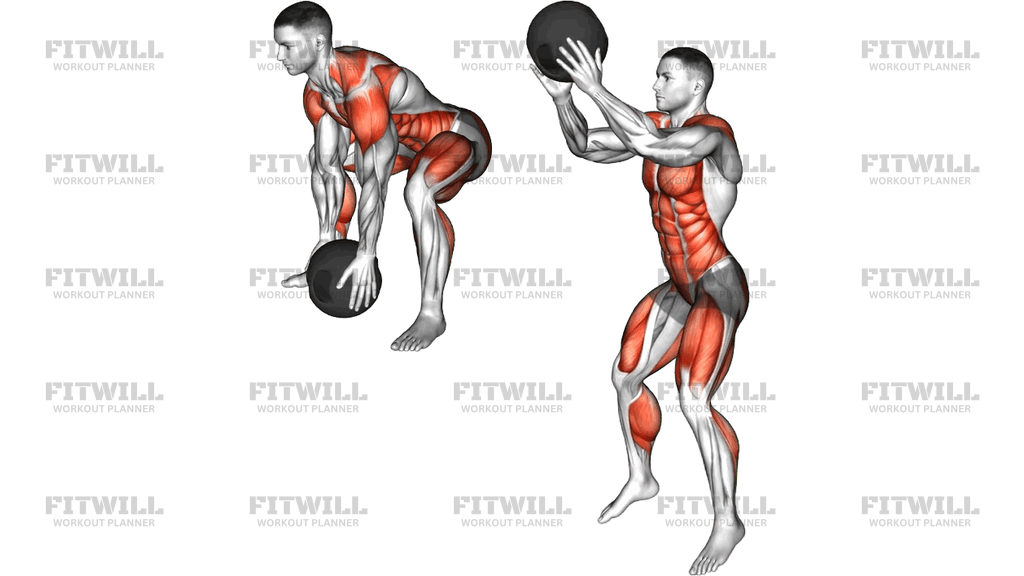
The setup matters because the dumbbells should start where your shoulders can stay stacked over the handles and your feet can return underneath you without a scramble. Set the bells on the floor just outside your shoulders, hinge down with a flat back, and keep your weight centered so the first rep does not begin with a reach or a collapse. The cleaner the floor position, the easier it is to move through the burpee, stand, and press without losing balance.
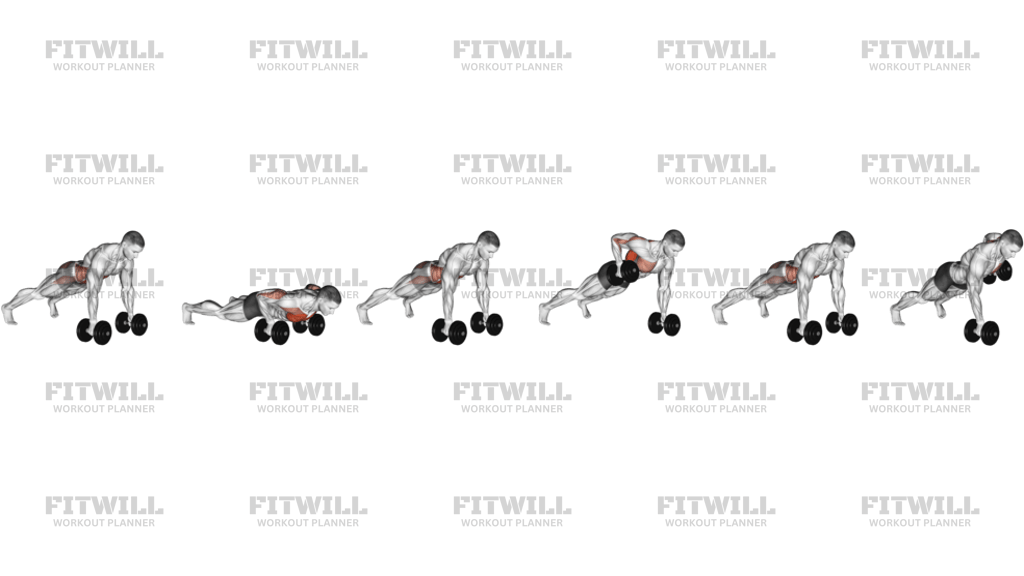
Each rep should move in one connected sequence: hands on the dumbbells, feet back to plank, chest down under control, feet back under the hips, then a strong stand and press to full overhead lockout. Keep the bells close to your body on the way up so the pull stays efficient, and finish with ribs down, glutes tight, and elbows locked without leaning back. If the landing becomes noisy, the push-up turns into a sag, or the press turns into a lower-back arch, the load is too heavy or the pace is too fast.
Use Dumbbell Devils Press when you want a high-output finisher, conditioning block, or power-endurance drill that still demands posture and timing. Beginners can use a lighter pair and step the feet back instead of jumping. More advanced lifters can increase the speed or density of the set, but the rep should still look organized from the first descent to the final overhead position.
[ Workout Log & Planner ]
Put your next workout in Fitwill
Keep your plan and training log ready when you are.


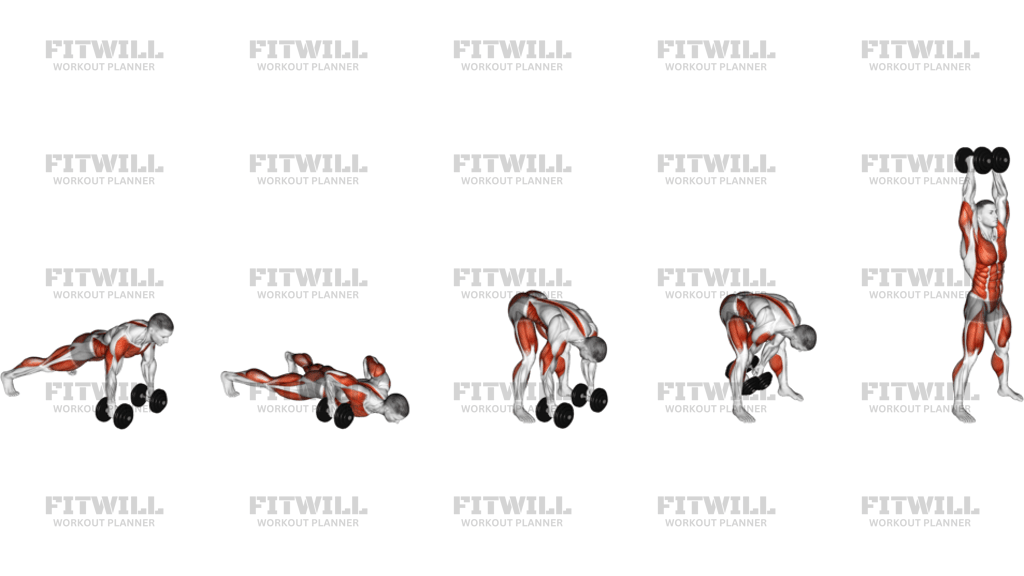
Instructions
- Place a pair of dumbbells on the floor just outside shoulder width and stand over them with your feet about hip-width apart.
- Hinge down with a flat back, grip the handles, and stack your shoulders over the dumbbells before you move.
- Kick or step both feet back into a high plank while keeping your hands planted on the dumbbells.
- Lower your chest and hips toward the floor in a controlled burpee, staying tight through your midsection.
- Press the floor away, then jump or step your feet back underneath your hips between the dumbbells.
- Drive through your legs to stand up, keeping the bells close to your shins and thighs as you rise.
- Use the upward drive to clean the dumbbells close to your body and continue into the press.
- Finish with both dumbbells locked out overhead, biceps near your ears, ribs down, and glutes squeezed.
- Lower the dumbbells back to the shoulders and then to the floor under control before starting the next rep.
Tips & Tricks
- Keep the dumbbells close enough that you can hinge to them without rounding your lower back.
- Step your feet back instead of jumping if the landing quality starts to break down.
- Let your chest and hips lower together so the plank does not turn into a sagging snake position.
- Use a light pair of dumbbells; this movement gets hard quickly because the burpee and press are both fatiguing.
- Think of the stand-up as a strong leg drive, not a yank from the lower back.
- Keep the bells traveling close to your torso on the way up so the clean stays efficient.
- Lock the weights overhead with your ribs stacked over your pelvis instead of leaning backward to finish the rep.
- Stop the set when the push-up gets shallow, the feet come in crooked, or the overhead lockout loses position.
Frequently Asked Questions
What muscles does Dumbbell Devils Press work?
It trains the chest, shoulders, triceps, glutes, quads, and core, with a strong conditioning demand from the burpee-to-press transition.
Is Dumbbell Devils Press the same as a burpee with dumbbells?
It is a burpee-based dumbbell press variation. The floor phase, fast stand, and overhead lockout are the key pieces that make it a Devils Press.
Should I jump my feet back and forward on every rep?
No. Jumping is optional. Stepping back and stepping in is a good way to keep the movement controlled, especially when fatigue rises.
Do I press both dumbbells at the same time?
Yes. This version uses both dumbbells together so the rep finishes with both arms fully locked out overhead.
How heavy should the dumbbells be?
Use a lighter load than you would for a strict press. If the bells pull you off balance or slow the stand-up too much, they are too heavy.
What is the most common form mistake?
The biggest mistake is letting the lower back take over on the stand and press. The rep should rise from the legs and hips, not from a lean-back heave.
Can beginners do this exercise?
Yes, if they start with light dumbbells, step the feet back instead of jumping, and keep the range smooth and organized.
Can I swap in kettlebells or a single bell?
You can use kettlebells if needed, but the movement should still feel like a burpee into a two-handed overhead press pattern rather than a swing.