Knee Raise
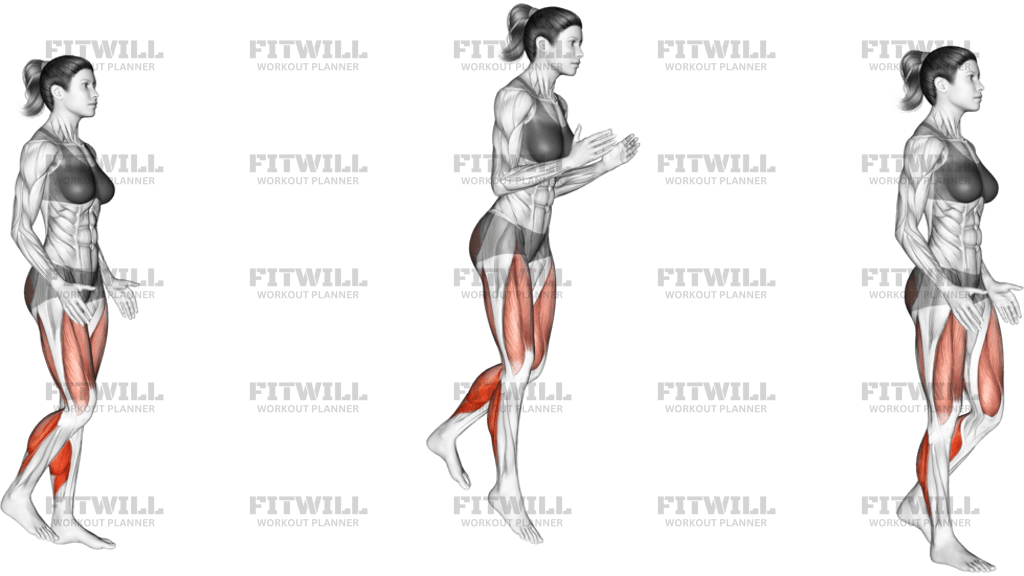
Knee Raise is a simple body-weight drill, but it is much more than just lifting a leg. This version is a standing single-leg knee raise that challenges the hip flexors, thighs, and trunk to work together while the standing leg keeps you balanced. It is useful as a warm-up, a core and coordination drill, or a light accessory movement when you want controlled repetition instead of heavy loading.
The setup matters because the pelvis and torso should stay stacked while one knee travels upward. Stand tall with your weight centered over one foot, soften the standing knee, and let the free leg begin relaxed under the hips. From there, the raised knee should come forward and upward without a big lean back, a twist through the ribs, or a swing from the foot.
At the top, the thigh should be lifted under control rather than kicked upward. If you use your hands, they should only guide or lightly support the lifted knee or shin; they should not yank the leg higher or turn the movement into a pull. The standing foot should stay rooted, the torso should stay tall, and the lower leg should descend just as deliberately as it rises.
Knee Raise works well for people who want to improve single-leg control, hip flexion, and clean trunk positioning without needing equipment. It also pairs well with marching drills, skipping mechanics, or lower-body warm-ups because it teaches the body to lift a knee without losing posture. Keep the range smooth and repeatable, and stop the set if you have to swing the torso or hop off the standing foot to finish the rep.
Because this is a balance-based movement, quality matters more than speed. A few crisp repetitions with a stable pelvis will do more than a fast set with the hips tipping side to side. If the knee height starts dropping or the standing ankle starts wobbling, shorten the range and reset before the next rep so every Knee Raise still looks controlled and athletic.
Fitwill
Log Workouts, Track Progress & Build Strength.
Achieve more with Fitwill: explore over 9600 exercises with images and videos, access built-in and custom workouts, perfect for both gym and home sessions, and see real results.
Start your journey. Download today!




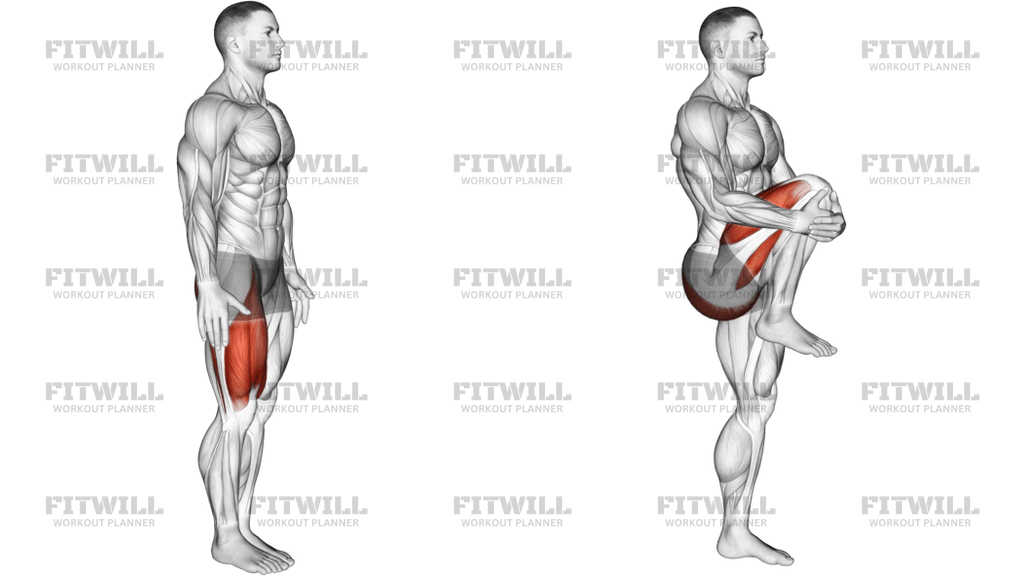
Instructions
- Stand tall on one foot with your ribs stacked over your pelvis and the other foot hovering lightly off the floor.
- Keep your standing knee softly bent, your chest tall, and your hands ready to balance or lightly guide the lifted leg if needed.
- Brace your midsection before the first rep so your pelvis stays level as the free knee starts to rise.
- Drive the free knee forward and up toward your chest instead of swinging the foot or leaning your torso back.
- If you use your hands, lightly cradle the raised knee or shin at the top without pulling the leg higher.
- Pause for a brief squeeze at the top while keeping the standing foot planted and the standing hip steady.
- Lower the raised leg slowly until the foot returns close to the floor and the pelvis stays square.
- Reset your balance before the next rep, then repeat on the same side or alternate sides as programmed.
Tips & Tricks
- Keep the standing foot spread through the floor so the ankle does not collapse inward as the knee rises.
- Lift the knee only as high as you can without tipping your ribs backward or arching your lower back.
- If your balance is shaky, keep one fingertip on a wall or rack and use that for balance, not to pull yourself upward.
- A short pause at the top makes the hip flexors do the work instead of using momentum from the lowering leg.
- Lower the leg more slowly than you lift it; the controlled descent is where many reps get sloppy.
- Do not let the lifted foot whip out in front of you, or the exercise turns into a swing instead of a knee raise.
- Keep the standing hip level with the other side so the movement stays clean and does not become a side bend.
- Exhale as the knee comes up and inhale as it lowers to help keep the trunk braced without holding your breath.
Frequently Asked Questions
What muscles does Knee Raise work?
Knee Raise mainly trains the hip flexors and thighs, with the lower abs, glutes, and standing leg stabilizers helping you stay upright and balanced.
Is Knee Raise good for beginners?
Yes. Start with a small knee lift and a light fingertip support on a wall if needed, then build toward a taller, cleaner rep without wobbling.
How high should my Knee Raise go?
Raise the knee only as high as you can while keeping your torso tall and your standing hip level. If you have to lean back to get higher, the range is too big.
Should I hold the raised knee at the top?
A brief hold is useful because it stops momentum and makes the hip flexors do the work. Keep the hold short and do not yank the leg with your hands.
Can I use a wall for balance during Knee Raise?
Yes. A light touch from the fingertips is fine if it helps you stay upright, but avoid leaning hard into the wall or pushing off it to lift the knee.
Why does my torso lean back during Knee Raise?
That usually means you are trying to lift the knee higher than your hips can control. Shorten the range and keep your ribs stacked over your pelvis.
What is the main mistake in a standing Knee Raise?
The most common mistake is swinging the leg up instead of lifting it smoothly from the hip. The rep should look controlled from start to finish, especially on the way down.
How can I make Knee Raise harder?
Use a slower lowering phase, add a longer pause at the top, or perform it without any hand support once your balance is steady.