Marching On The Spot
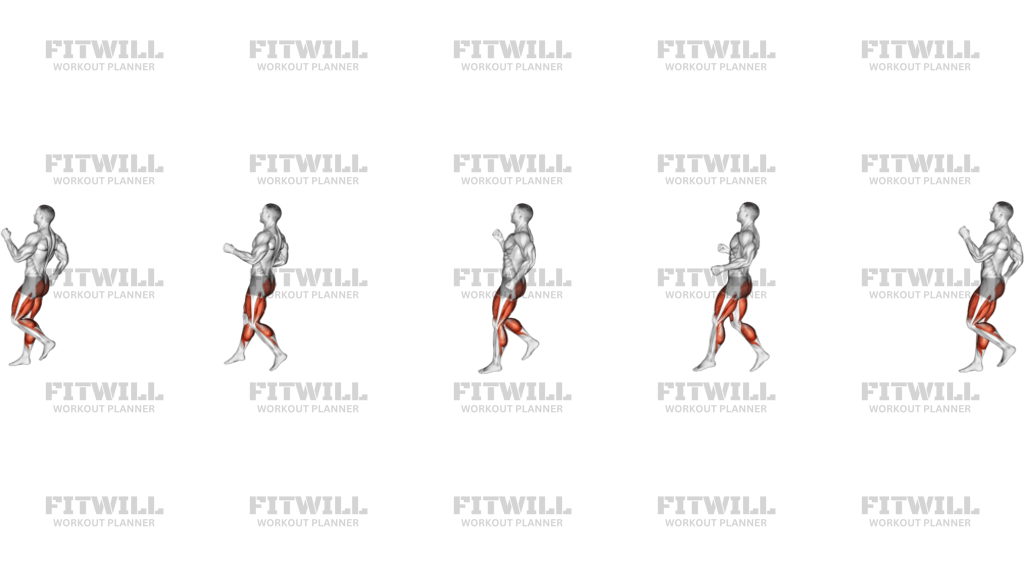
Marching On the Spot is a low-impact cardio drill built around alternating knee lifts, upright posture, and a steady arm swing. The movement looks simple, but the value comes from how cleanly you can repeat the march without leaning back, twisting, or letting the feet slap the floor. It is commonly used to raise heart rate, rehearse coordination, and warm up the hips, ankles, calves, and trunk before more demanding work.
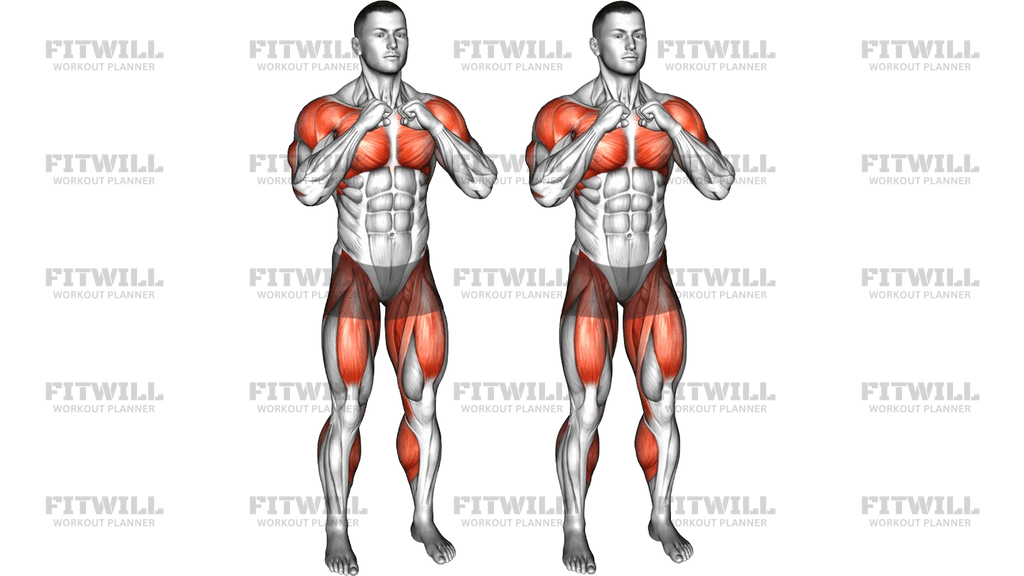
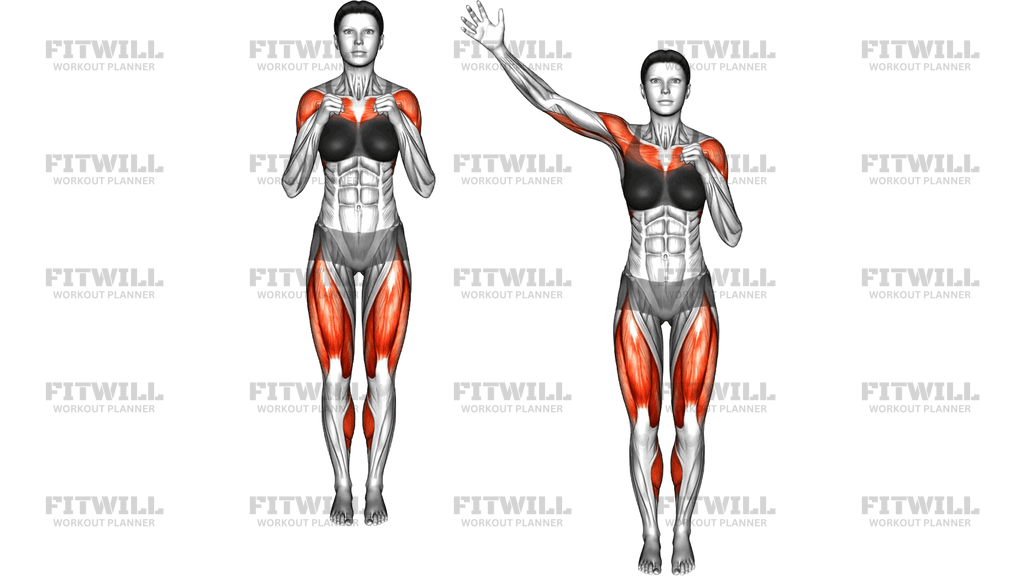
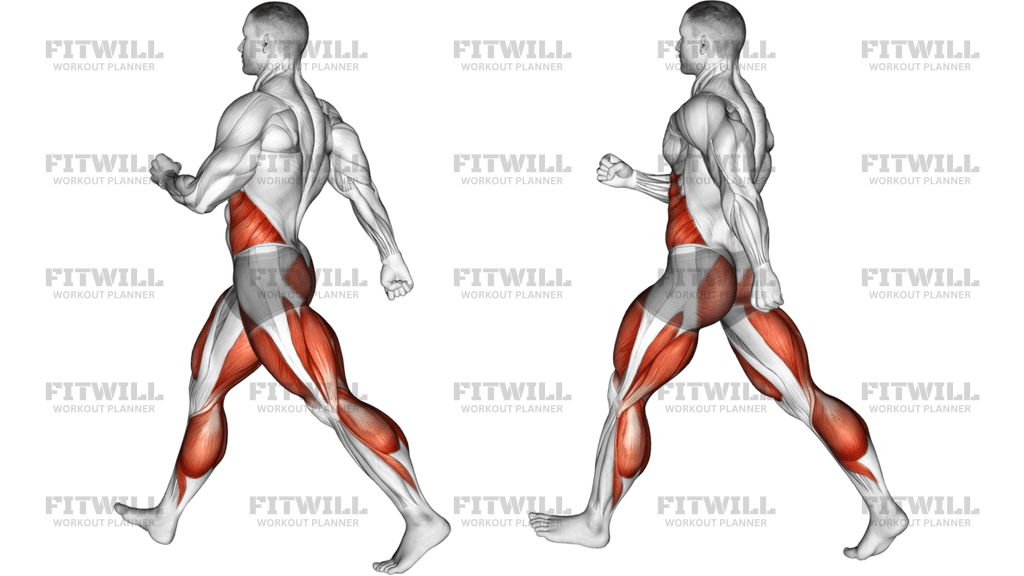
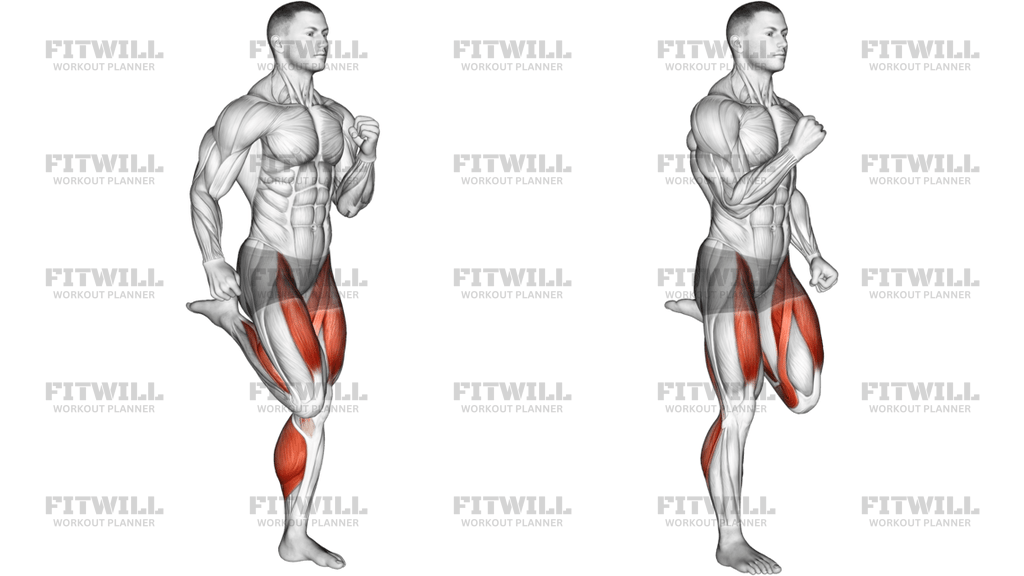
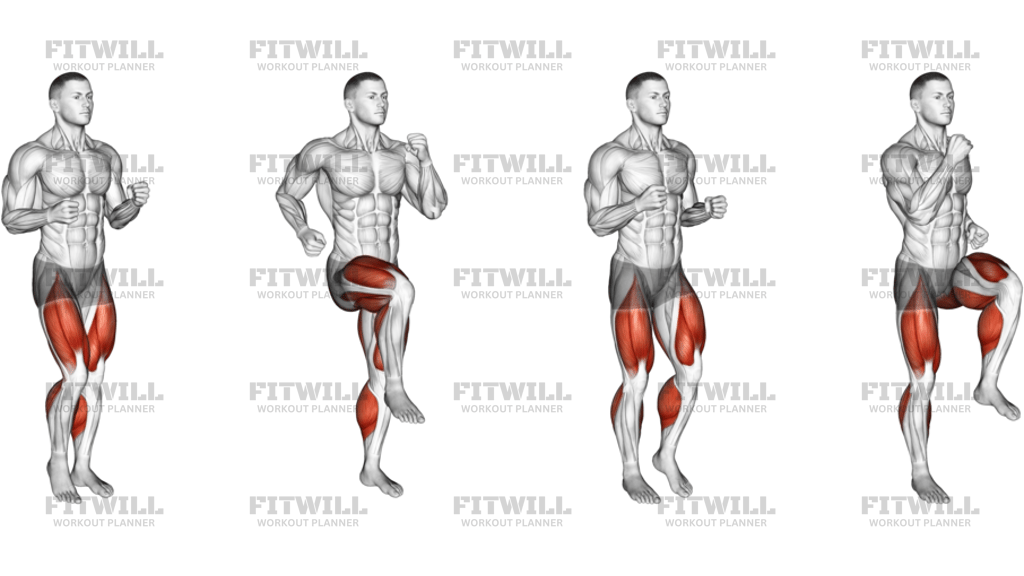
The image shows a tall standing posture with one knee lifted while the opposite arm drives forward, which is the key pattern to preserve throughout the set. The torso should stay stacked over the hips, the ribs should remain down, and the pelvis should not tip side to side as the legs alternate. That makes the exercise useful not only for conditioning, but also for building rhythm and single-leg control in a very joint-friendly way.
Because this is a bodyweight movement, the quality of the repetition depends on pace and shape rather than external load. A good march starts with the foot planted under you, then the opposite knee comes up under control before the leg returns to the floor and the other side takes over. The knees do not need to reach sprinting height; they need to rise to a repeatable, comfortable height that keeps the trunk stable and the breathing smooth.
Marching On the Spot works well as a warm-up, a recovery interval, or a simple conditioning option when you need something that fits in a small space. It can be scaled by marching faster, lifting the knees higher, adding more forceful arm drive, or using shorter, more deliberate steps for beginners. Keep the motion crisp and upright so the exercise stays aerobic and coordinated instead of turning into a shuffle with poor posture.
If you are using it in a circuit, think about it as a rhythm drill first and a fatigue drill second. The goal is to keep the feet light, the landing quiet, and the body organized from the first rep to the last. When the torso starts to sway or the knees stop lifting evenly, reduce the pace and keep the march clean.
[ Workout Log & Planner ]
Put your next workout in Fitwill
Keep your plan and training log ready when you are.


Instructions
- Stand tall on the balls of both feet with your feet about hip-width apart and your arms bent at about 90 degrees.
- Stack your shoulders over your hips, keep your ribs down, and look straight ahead instead of tipping your torso back.
- Shift your weight onto one leg and lift the opposite knee up in front of you under control.
- Drive the opposite arm forward as the knee rises so the arm swing matches the marching leg.
- Place the lifted foot back down under your hip without stomping or reaching too far in front of you.
- As soon as that foot lands, lift the other knee and swing the other arm forward in a steady alternating rhythm.
- Keep your steps light, your core firm, and your pelvis level while the knees continue to alternate.
- Breathe evenly through the march and slow the tempo if the torso starts rocking or the feet get noisy.
Tips & Tricks
- Keep the chest tall and the ribs stacked over the pelvis so the march stays upright instead of turning into a lean-back shuffle.
- Land each foot quietly under your center of mass; loud heel strikes usually mean the step is too long or too fast.
- Match the arm drive to the lifted leg so the movement feels coordinated and helps you keep rhythm.
- Lift the knee only as high as you can without hiking the hip or twisting the trunk to the side.
- If balance is a problem, shorten the step and slow the cadence before trying to raise the knees higher.
- Use a quick but controlled foot turnover rather than bouncing off the floor or hopping between steps.
- Keep the toes pointing forward and avoid letting the knees collapse inward as the feet alternate.
- Finish the set when the march turns into a sway, a shuffle, or a breath-holding sprint.
Frequently Asked Questions
What does Marching On the Spot train?
It trains low-impact cardio, coordination, hip flexor action, calf stiffness, and upright trunk control.
Is this the same as a high-knee march?
It is the same basic pattern when the knees are lifted deliberately on the spot with an alternating arm swing.
How high should my knees come up?
Lift each knee as high as you can while keeping the torso stacked and the pelvis level; knee height is secondary to clean posture.
Where should my feet land during the march?
Each foot should return under your hip or slightly in front of it, not far out in front where it turns into a reach.
What should my arms do during the exercise?
Keep the elbows bent and swing the opposite arm forward as each knee rises so the upper and lower body stay in sync.
Is Marching On the Spot good for beginners?
Yes. Beginners can use a slower cadence and a smaller knee lift to keep balance and posture under control.
What is the most common mistake with this movement?
Most people rush the cadence and start swaying through the torso instead of keeping the march tight and vertical.
How can I make the march harder?
Increase the knee height, speed up the rhythm, or use a longer interval while keeping the landings quiet and the posture tall.