Cable Neutral Grip Kickback
Cable Neutral Grip Kickback is a bent-over triceps isolation exercise performed with a low cable and a single neutral-grip handle. It keeps constant tension on the back of the upper arm while the torso stays hinged forward, which makes it useful when you want a strict arm movement instead of a pressing pattern. Because the cable pulls from behind and below, the exercise rewards a quiet shoulder and a fixed upper arm more than a big load.
The main training target is the triceps, especially the elbow-extension role of the triceps brachii. The forearms grip the handle, the shoulders stabilize the upper arm, and the core keeps the torso from drifting as the cable changes direction. That combination makes the movement good for accessory triceps work, higher-rep arm work, or finishing a session without needing heavy joint stress.
The setup matters more than it looks. You need enough distance from the stack to keep tension on the cable, a hinge strong enough to let the elbow sit beside the ribs, and a stance that lets you resist rotation as one arm works. If the torso comes up or the elbow drifts away from the body, the movement turns into a loose back-and-shoulder swing instead of a kickback.
Each repetition should be driven from the elbow. Start with the handle near the side of the torso, extend the forearm back until the arm is straight, and keep the upper arm nearly still the whole time. At the end, squeeze the triceps without shrugging the shoulder or arching the lower back. Return slowly to the bent-elbow start so the cable stays under control and the triceps keep working through the whole range.
This exercise fits best as controlled accessory work after bigger pushing or pressing lifts, or as a targeted arm movement in a triceps-focused session. It is friendly to beginners when the load is light and the hinge is stable, but it only works well if the rep stays strict. The goal is a clean elbow extension with no torso swing, no shoulder hike, and no help from momentum.
[ Workout Log & Planner ]
Put your next workout in Fitwill
Keep your plan and training log ready when you are.


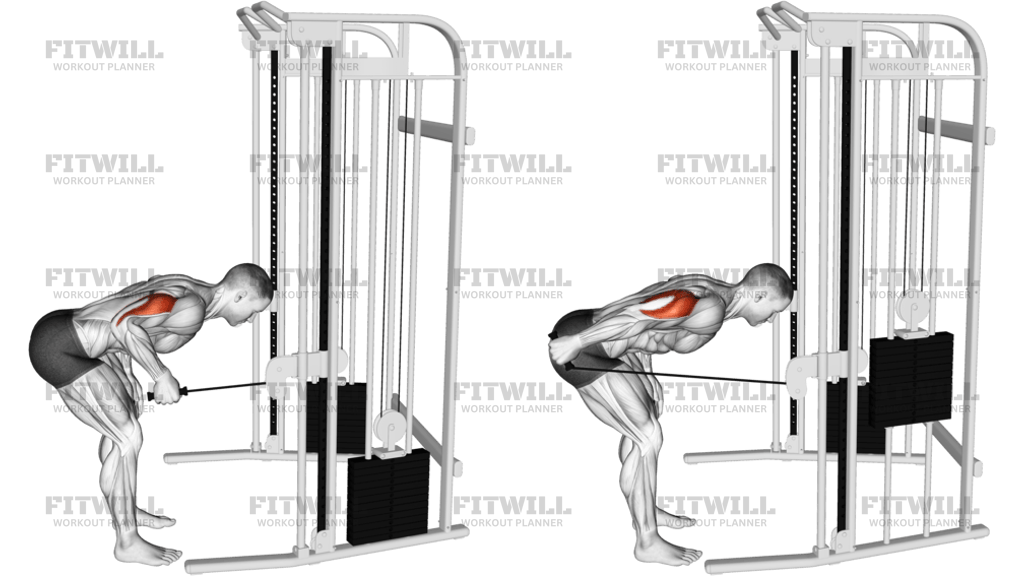
Instructions
- Set the pulley at the lowest position and clip on a single neutral handle.
- Stand facing the machine, hinge forward at the hips, and step back until the cable is taut with your working arm beside your torso.
- Hold the handle with a neutral grip, soften your knees, and brace so your torso stays nearly fixed.
- Start with your elbow bent and tucked close to your ribs, with the handle near your hip or lower side.
- Keep your upper arm still and extend your forearm straight back until the elbow is fully straight.
- Squeeze the triceps at lockout without letting your shoulder roll forward or your back arch.
- Lower the handle slowly until the elbow returns to the bent starting position and the cable stays under tension.
- Breathe out as you kick back, breathe in as you return, and switch sides or reset before the next rep.
Tips & Tricks
- Keep the elbow pinned in place; if it drifts behind the body, the rep becomes a shoulder swing.
- Choose a cable height that lets the handle track in a straight line from near the hip to a fully extended arm.
- A slight staggered stance usually feels steadier than square feet because it helps you resist the cable pulling you forward.
- Use a load that you can lower slowly; the return phase should never snap the stack back.
- If your lower back wants to arch, reduce the weight and hinge a little higher so you can stay stacked.
- Do not turn the hand outward at the top; the neutral grip should stay neutral through the whole rep.
- Keep the neck long and the gaze a few feet in front of you so you do not crank the upper back to finish the rep.
- Stop the set when the last few inches of extension start coming from body swing instead of elbow extension.
Frequently Asked Questions
What muscle does Cable Neutral Grip Kickback train most?
It primarily trains the triceps, with the forearms, shoulders, and core helping stabilize the movement.
Why use a neutral-grip handle instead of a straight bar?
The neutral handle keeps the wrist in a comfortable in-between position and makes it easier to keep the elbow path strict.
How far should the handle travel on each rep?
The handle should move from near the hip or lower side to a straight-arm lockout behind you, without the shoulder rolling forward.
Should my upper arm move during the rep?
No. The upper arm should stay close to the torso while only the forearm opens and closes at the elbow.
Can beginners use this exercise?
Yes. It works well for beginners if the cable is light enough to keep the hinge, elbow position, and return phase controlled.
What should I do if my lower back feels it more than my triceps?
Reduce the load, hinge a little less aggressively, and keep your ribs stacked so the movement stays in the arm instead of the torso.
Is it better to do one arm at a time?
Yes. One arm at a time makes it easier to keep the elbow tucked and avoid twisting your torso to finish the rep.
What is the most common form mistake?
The most common mistake is turning the kickback into a row or a body swing instead of a strict elbow-extension movement.