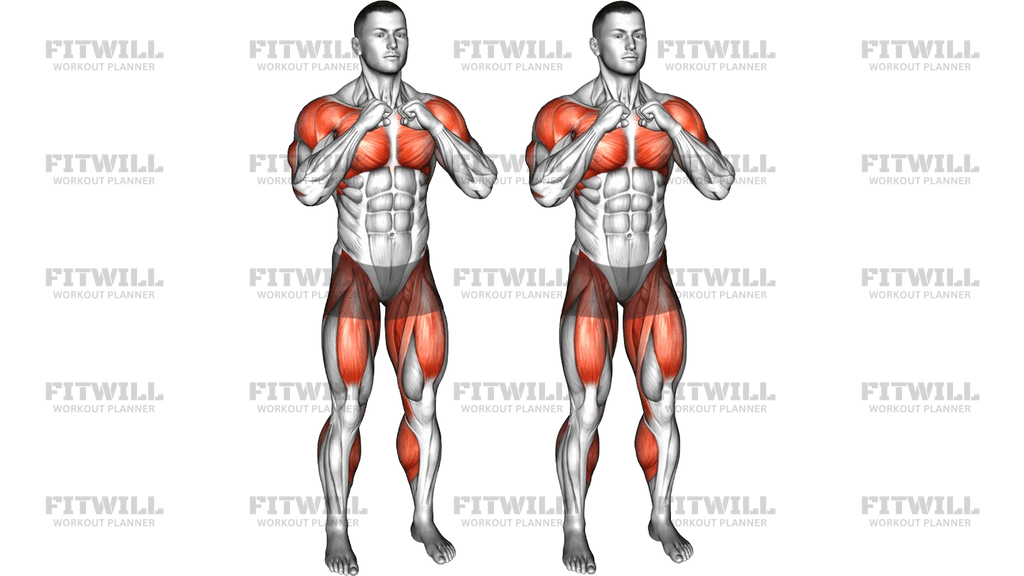
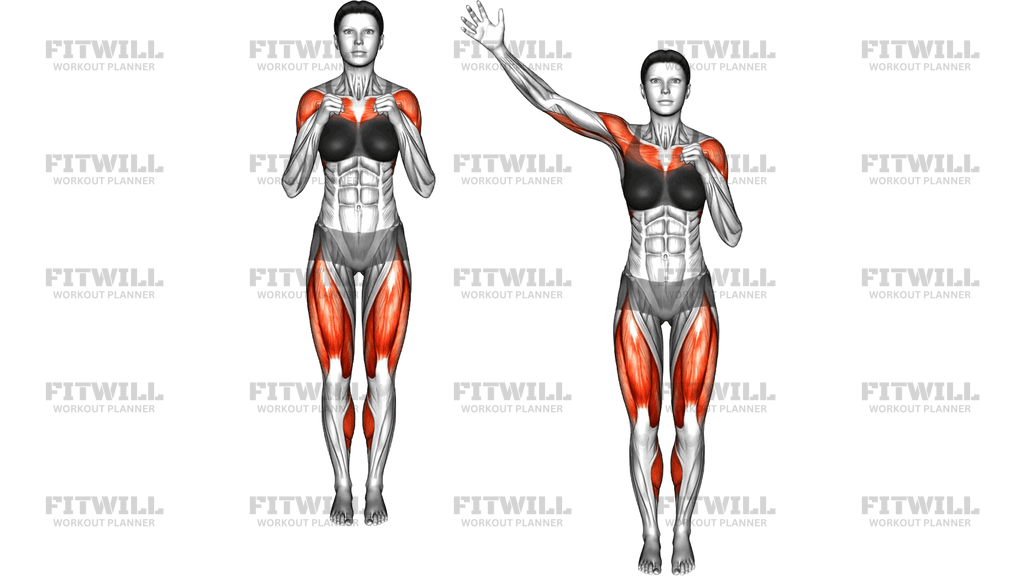
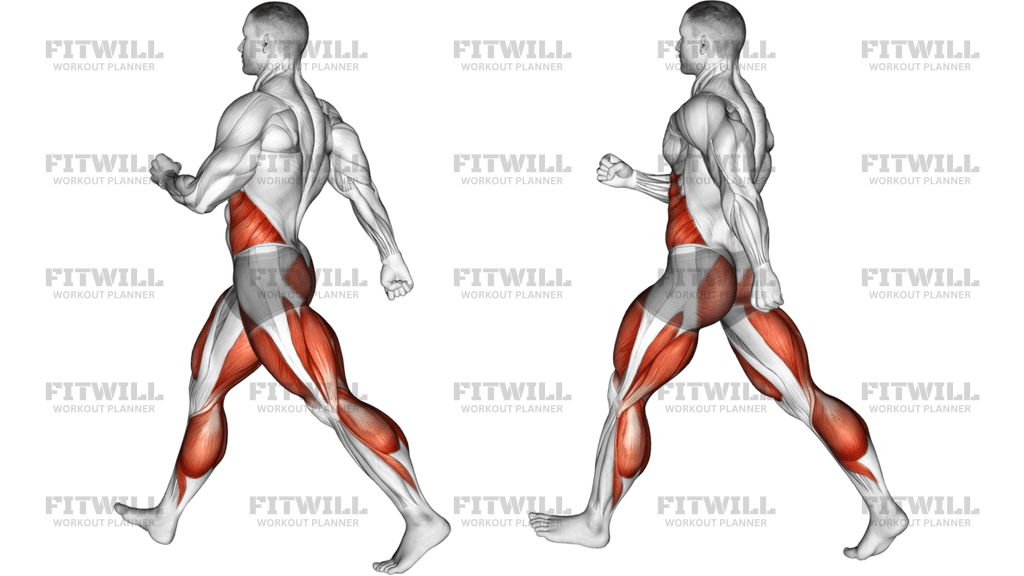
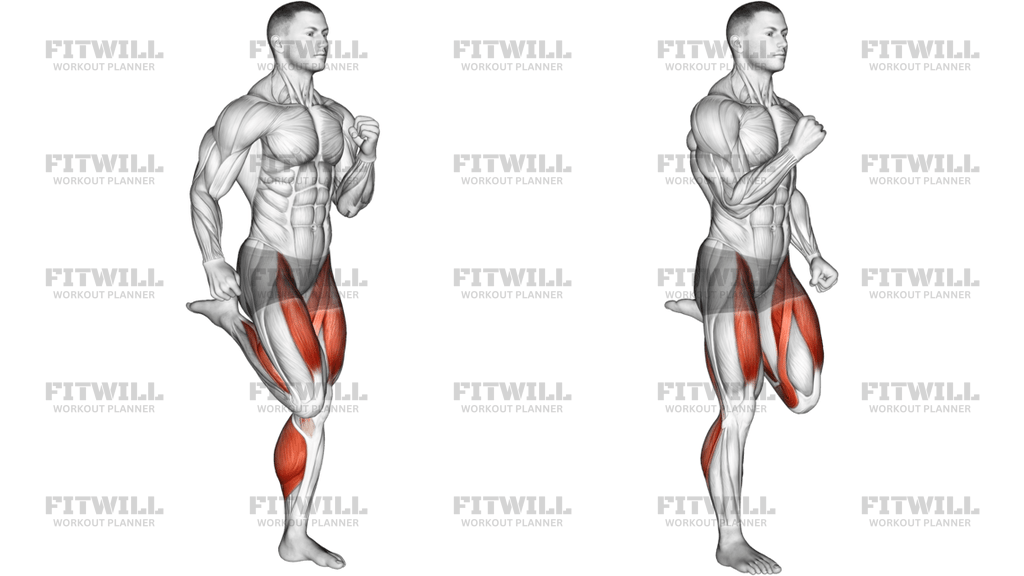
Mountain Climber
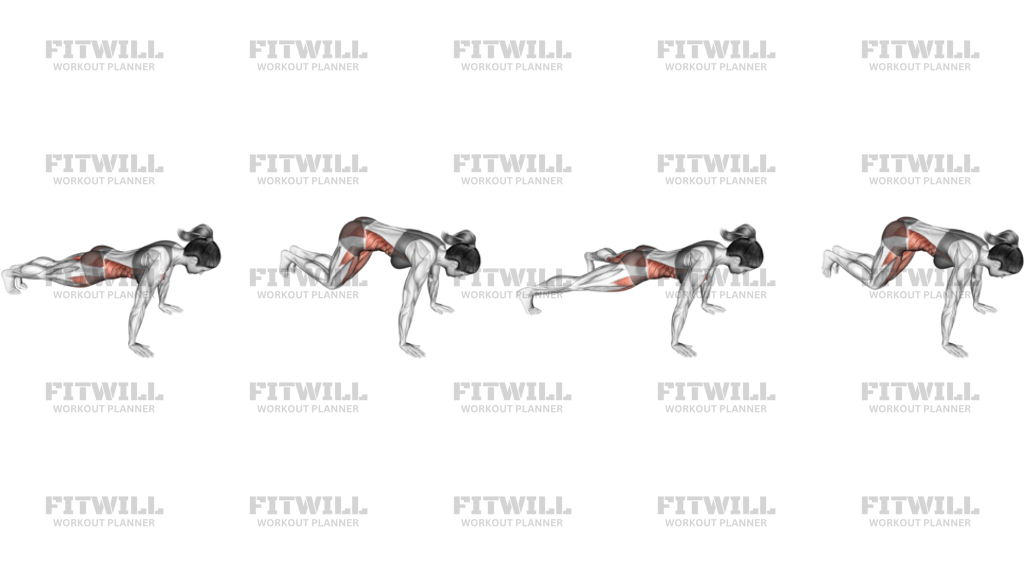
Mountain Climber is a bodyweight plank drill where you alternately drive each knee toward the chest while keeping the hands planted and the torso braced. It is simple to set up, but the training effect depends on whether the hips stay level, the shoulders stay stacked over the wrists, and the core keeps the trunk from sagging or bouncing.
This movement is usually used for core endurance, hip flexor work, shoulder stability, and conditioning. A slower, controlled version keeps more tension on the abs and makes the plank position more demanding. A faster rhythm raises the heart rate and turns the exercise into a strong bodyweight conditioning tool. The same drill can therefore fit a warm-up, a core finisher, or a cardio circuit depending on tempo and total work.
The setup matters because the plank position creates the base for every rep. A high plank with straight arms, fingers spread, and the feet on the toes lets you press the floor away and keep the shoulder blades controlled. If the hands drift too far forward, the hips rise, or the low back arches, the knees will travel with less control and the abs lose tension. Clean mountain climbers start with a stable line from head to heel.
Each repetition should look like a deliberate knee drive, not a running sprint with the hips bouncing. Bring one knee forward under the torso, return it with control, then switch sides while the torso stays quiet. The working leg should move, but the rib cage and pelvis should not twist excessively. Breathing should stay rhythmic so the brace does not collapse as the cadence increases.
Mountain climbers are a good choice when you want a low-equipment movement that builds work capacity without loading the spine. Beginners can shorten the knee drive, slow the pace, or elevate the hands on a bench or box. More advanced lifters can use longer sets, slower cross-body drives, or faster intervals, but only if they can keep the shoulders steady and the lower back from taking over.
[ Workout Log & Planner ]
Put your next workout in Fitwill
Keep your plan and training log ready when you are.


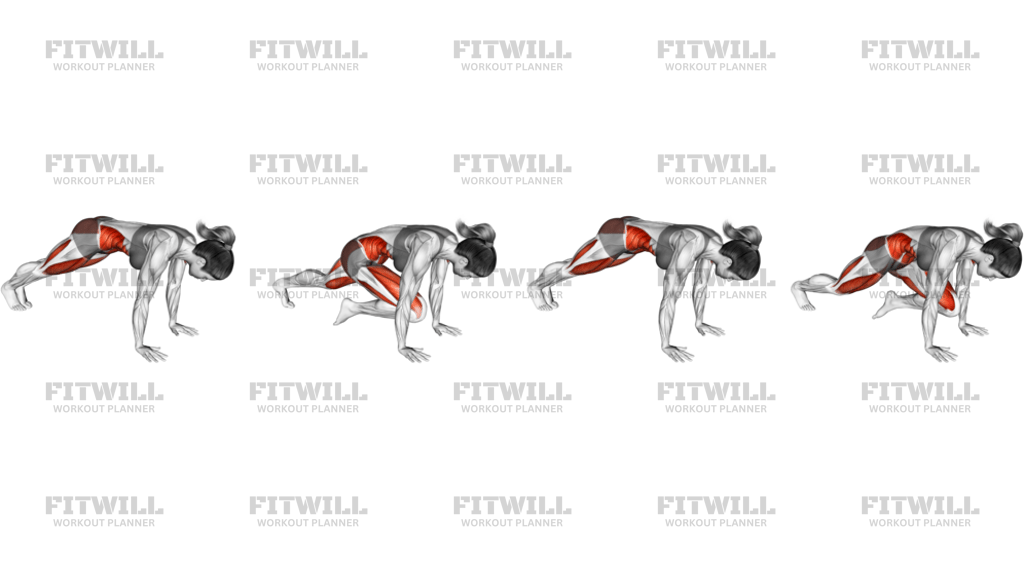
Instructions
- Place your hands on the floor under your shoulders and step both feet back into a high plank.
- Spread your fingers, straighten your arms, and press the floor away so your shoulder blades stay controlled.
- Set your feet about hip-width apart and keep your body in a straight line from head to heels.
- Brace your abs and glutes before you move so your low back does not sag.
- Drive one knee forward under your torso toward your chest while the other leg stays extended.
- Return that foot to the plank position with control, without letting your hips bounce up.
- Switch legs and keep alternating at a steady rhythm.
- Breathe continuously, exhaling on each knee drive if that helps you keep the brace.
- Stop the set when your hips start twisting, rising, or dropping toward the floor.
Tips & Tricks
- Keep your shoulders directly over your wrists; drifting too far forward turns the drill into a weak plank hold and stresses the shoulders.
- Shorten the knee drive if your low back arches. A smaller range with a neutral spine is better than a bigger step with lost position.
- Think about pulling the floor backward with the planted foot while the moving knee comes forward. That cue helps keep the hips from bouncing.
- Keep your gaze a few feet ahead of your hands so your neck stays neutral instead of cranking up or dropping down.
- Use a faster cadence for conditioning, but slow the reps down if you want more abdominal tension and cleaner pelvic control.
- Let the knee travel toward the chest or same-side elbow only as far as you can without twisting the rib cage open.
- If your wrists feel crowded, place your hands on push-up handles, dumbbells, or a bench to reduce extension demand.
- Keep the feet light on the toes and avoid stomping the knees through each rep; the exercise should look smooth, not noisy.
- End the set the moment your shoulders start shrugging or your hips begin to pike, because those are signs the plank has been lost.
Frequently Asked Questions
What muscles do mountain climbers work most?
They mainly train the core, hip flexors, shoulders, and quads, with the exact emphasis changing based on pace and knee-drive height.
Can beginners perform this exercise?
Yes. Beginners usually do best with slower reps, a shorter knee drive, or hands elevated on a bench so the plank stays solid.
Should my knees touch my elbows?
Not necessarily. Drive the knee as far forward as you can while keeping the hips level and the low back from rounding.
Is mountain climber more of a cardio or core exercise?
It can be both. Slower mountain climbers emphasize core tension and shoulder stability, while faster sets raise the heart rate more aggressively.
What is the biggest form mistake on mountain climbers?
The most common mistake is letting the hips bounce or pike so much that the plank position disappears.
Why do my wrists hurt during mountain climbers?
Usually the hands are bearing too much load or the wrist angle is too aggressive. Try handles, dumbbells, or an elevated surface.
How can I make mountain climbers harder without just speeding up?
Use slower, more deliberate knee drives, hold the plank position for a beat on each side, or extend the session into longer intervals.
What should my body line look like during the set?
Your head, shoulders, hips, and heels should stay close to one line while the knees alternate underneath the torso.