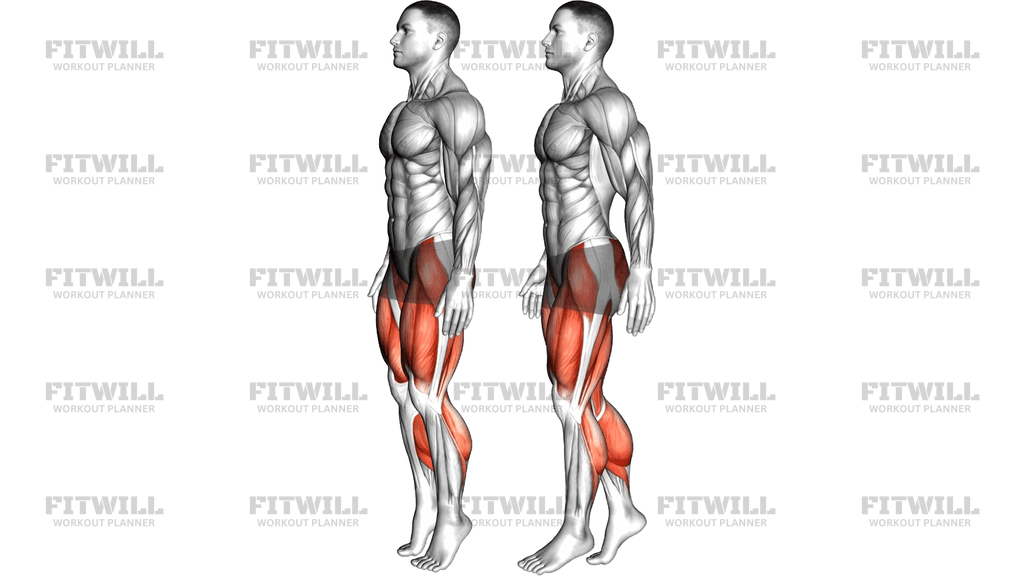
Jump Skip Rope
Jump Skip Rope is a jump-rope conditioning drill built around quick footwork, rhythmic breathing, and efficient coordination. The exercise is not about reaching a big range of motion; it is about repeating small, crisp hops while the rope clears cleanly and your posture stays tall. That makes it useful for cardiovascular work, ankle stiffness, foot speed, and general athletic coordination.
The setup matters more than most people expect. Stand with the rope behind your heels, feet close together or in a light boxing stance, and the handles held low at your sides with your elbows near your ribs. Your torso should stay stacked and quiet while the movement comes mostly from the wrists and ankles. If the rope is too long, too short, or you let the shoulders take over, the rhythm breaks down quickly.
Each rep should look and feel compact. Turn the rope with small wrist circles, hop just high enough for the rope to pass under your shoes, and land softly on the balls of your feet or midfoot. Keep your knees softly bent, your head neutral, and your jumps low so the rope stays smooth instead of getting whipped around by extra arm motion. For longer sets, a steady cadence matters more than speed.
Jump Skip Rope is commonly used as a warm-up, a conditioning finisher, or a stand-alone cardio block between strength sessions. It can also be a good entry point for beginners who need simple plyometric work with immediate feedback from the rope. Start with short intervals and a pace you can repeat without tripping, then build volume only after the landing pattern and timing stay consistent.
As the set gets longer, watch for the usual breakdowns: shoulders creeping upward, elbows drifting away from the ribs, jumps getting too high, and landings becoming loud. If that happens, slow the rope, shorten the interval, or reset your rope length before continuing. The safest version of the exercise is the one that keeps the hops small, the rhythm even, and the impact controlled.
[ Workout Log & Planner ]
Put your next workout in Fitwill
Keep your plan and training log ready when you are.


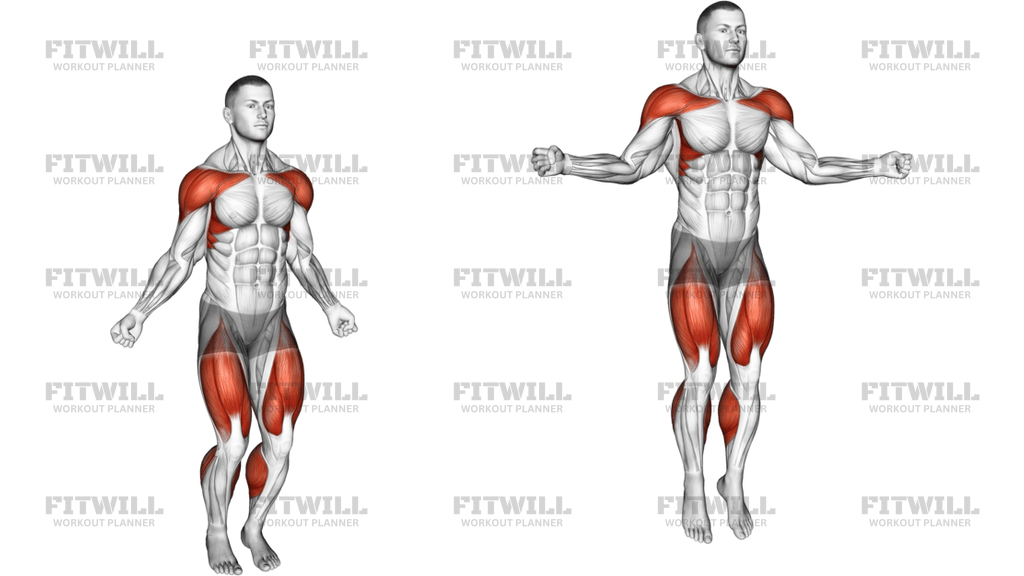
Instructions
- Stand tall with the rope behind your heels, feet together or in a light boxer stance, and hold the handles low beside your hips.
- Keep your elbows close to your ribs and your chest stacked over your pelvis before you start the first turn.
- Create the rope turn with small wrist circles instead of big shoulder swings.
- Hop just high enough for the rope to pass under your shoes, keeping the jump compact and quick.
- Land softly on the balls of your feet or midfoot with your knees lightly bent and your ankles springy.
- Keep the rope moving in a smooth rhythm and let your breathing stay even rather than holding your breath.
- If you use alternating feet, switch feet with the rope rhythm instead of driving the knees upward.
- Slow the rope and step out cleanly when the set ends, then reset before starting the next round.
Tips & Tricks
- Check rope length first: when you stand on the middle, the handles should come roughly to your armpits or low chest.
- Keep the handle turns small and fast; the rope should clear because of wrist speed, not big arm circles.
- Quiet landings are a good sign that the hop height is right and the impact is controlled.
- If the rope keeps clipping your toes, slow the cadence before you try to jump higher.
- A firm, slightly responsive floor works better than a very soft mat that steals rebound from the ankles.
- Keep your shoulders down and relaxed so your neck does not tense up halfway through the set.
- For longer intervals, use a pace you can hold without tightening the grip or losing rhythm.
- If your calves or Achilles start to feel strained, shorten the set and keep the jumps lower on the next round.
Frequently Asked Questions
What does Jump Skip Rope train?
It mainly trains conditioning, foot speed, coordination, calves, and ankle stiffness, with the shoulders and forearms helping to keep the rope moving.
How high should I jump for jump rope?
Only high enough for the rope to clear your shoes. The best reps are low, quick, and quiet.
Should I turn the rope with my wrists or my shoulders?
Use the wrists and forearms. The shoulders should stay relaxed and relatively still.
How do I know if the rope is the right length?
Stand on the middle of the rope; the handles should reach about your armpits or low chest. If they sit much higher or lower, the timing gets harder.
Can beginners do Jump Skip Rope?
Yes. Beginners usually do best with short intervals, a slower cadence, and a basic bounce step before adding faster footwork.
What is the most common mistake with jump rope?
Jumping too high and using too much arm motion. That makes the rope harder to time and increases impact.
Where should I feel the landing?
You should feel a springy landing through the balls of the feet or midfoot, not a heavy heel strike.
Can I use alternate-foot steps instead of two-foot jumps?
Yes. Alternate-foot and boxer-step patterns are useful once the basic rhythm is steady and the rope clears cleanly.