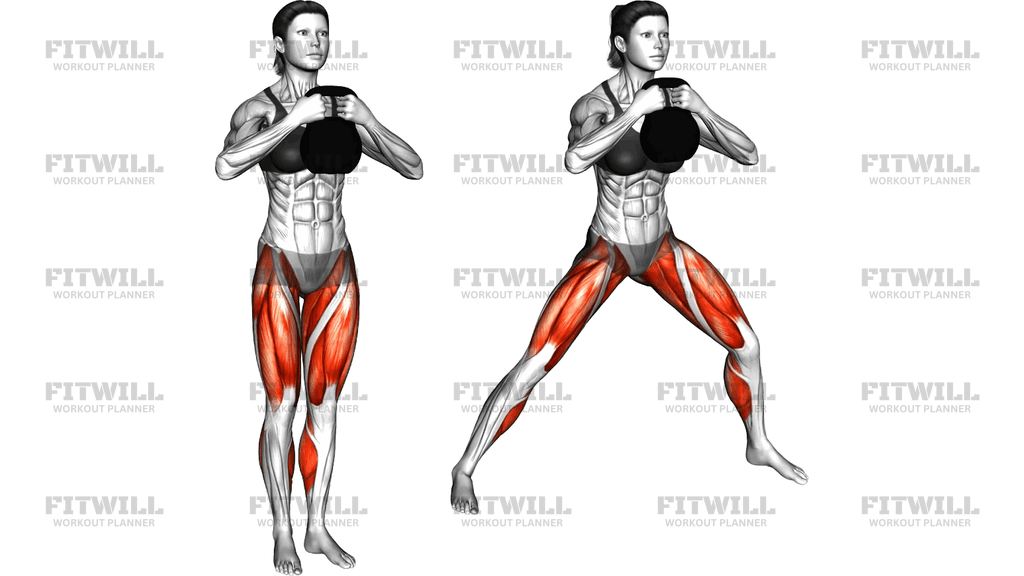
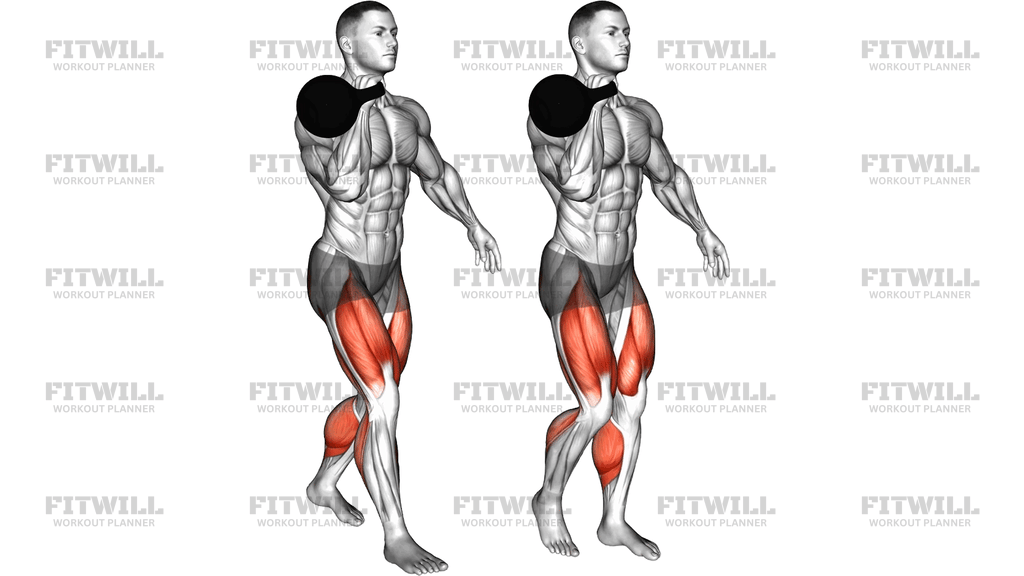
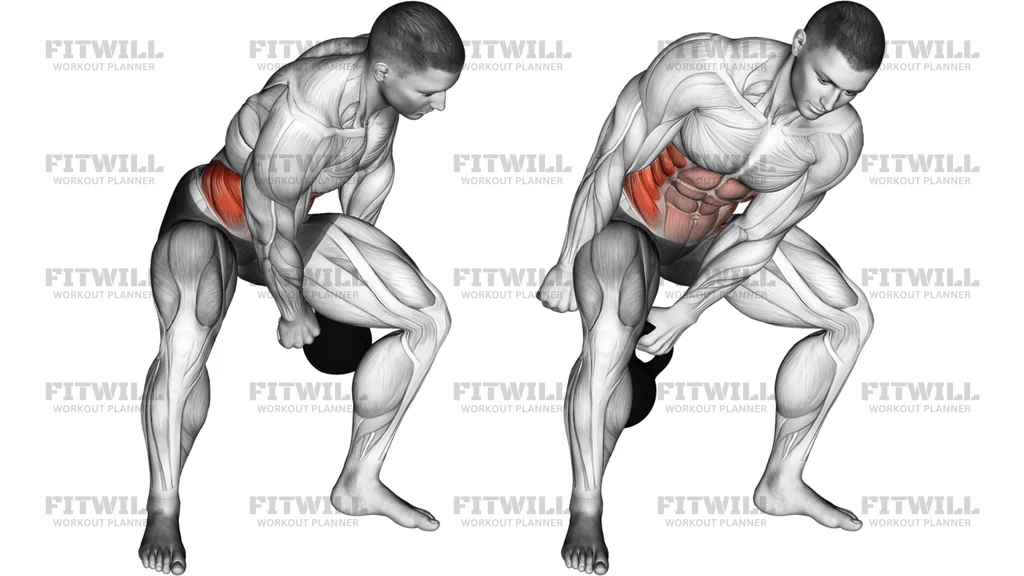
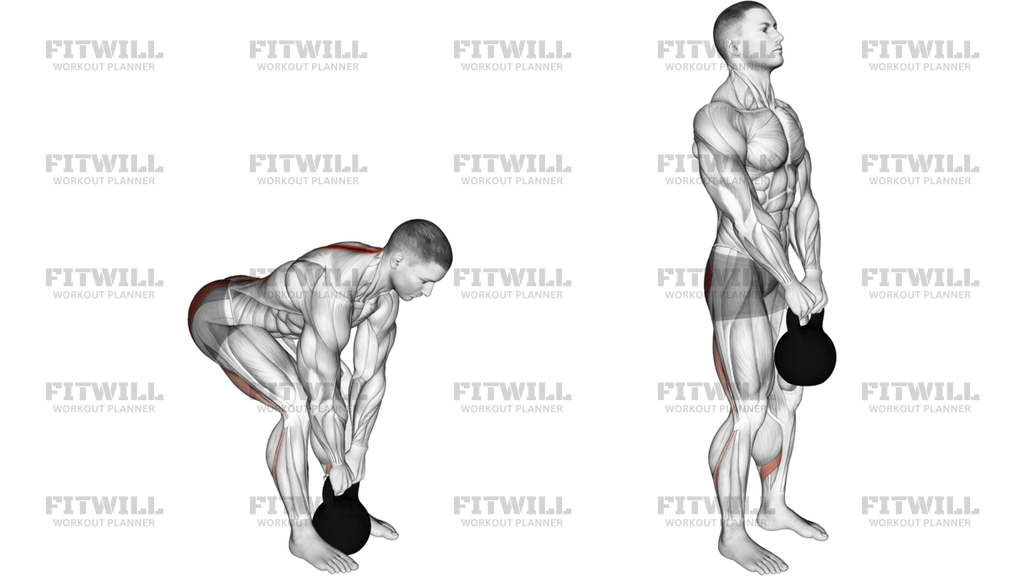
Kettlebell Rear Lunge
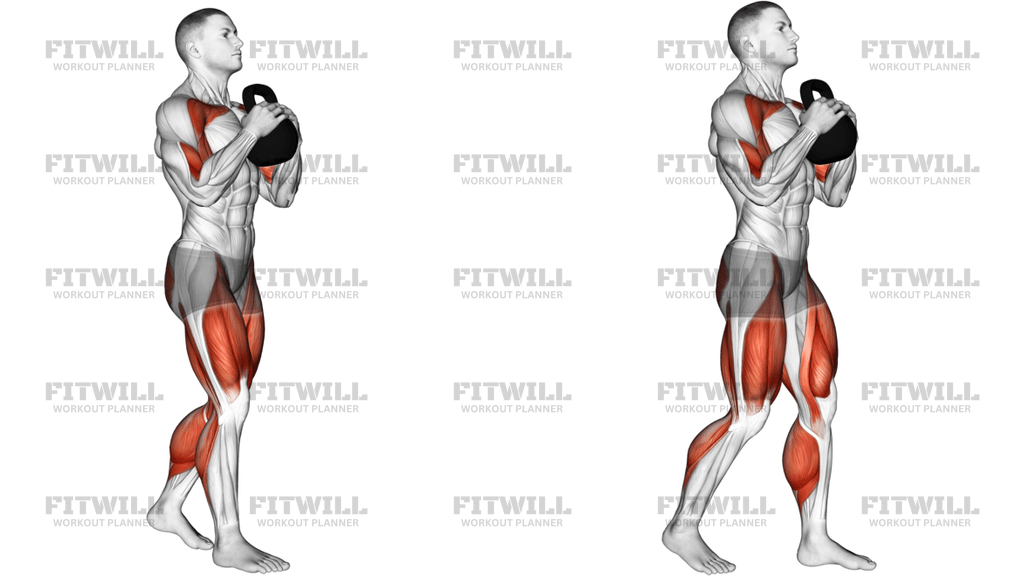
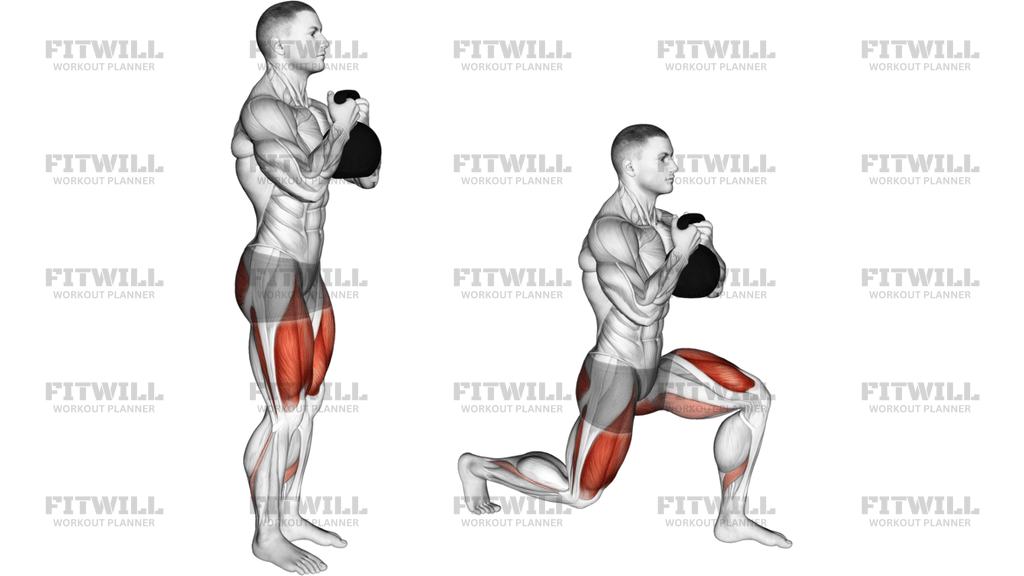
Kettlebell Rear Lunge is a goblet-style split-stance lower-body exercise that trains the thighs, glutes, and trunk through a controlled step-back pattern. The kettlebell is held at the chest, which makes posture and balance part of the work. That front-loaded position also makes it easier to keep the torso tall than with a load at the sides, while still demanding clean leg drive and steady control.
The rear lunge shifts most of the training stress onto the front leg while the back leg helps you descend and stabilize. The front quadriceps and glute take the biggest share of the effort, with the adductors, calves, and core working to keep the knee, pelvis, and ribcage organized. Because the load sits in front of the body, small posture errors show up quickly as the chest drops, the elbows flare, or the front knee caves inward.
A good rep starts from a stable standing position with the kettlebell held close to the sternum, elbows tucked, and feet set hip-width or slightly narrower. Step one leg straight back, land softly on the ball of the back foot, and lower until the rear knee approaches the floor without crashing. Keep the front heel down, let the front knee track in line with the toes, and keep most of the pressure through the front foot as you rise back to standing.
This movement is useful when you want unilateral leg work that also challenges balance, bracing, and clean knee tracking. It works well as an accessory lift, a warm-up strength builder, or part of a lower-body circuit. Use a range of motion you can own on both sides, and stop short of depth if the pelvis tilts, the front heel lifts, or the torso folds forward. The best sets look smooth and repeatable, with each step back and drive up happening under control rather than as a balance test.
[ Workout Log & Planner ]
Put your next workout in Fitwill
Keep your plan and training log ready when you are.


Instructions
- Stand tall with your feet about hip-width apart and hold the kettlebell by the horns at chest height, elbows tucked close to your ribs.
- Brace your midsection and set your gaze forward so your torso stays stacked over your hips before you move.
- Step one leg straight back into a split stance, landing on the ball of the foot with the back heel lifted.
- Lower your back knee toward the floor while keeping most of your weight on the front leg and the front heel planted.
- Keep the front knee tracking over the middle toes instead of letting it collapse inward or drift too far past the foot.
- Pause briefly at the bottom when the rear knee is close to the floor and your torso still feels tall and controlled.
- Drive through the front foot to return to standing, squeezing the front glute as you bring the back leg forward.
- Reset your stance and repeat on the same side or alternate legs for the planned number of reps, exhaling as you stand up.
Tips & Tricks
- Keep the kettlebell tight to your chest; letting it drift away from the body makes the torso tip forward faster.
- Choose a step-back distance that lets the front shin stay fairly vertical and the front heel stay flat.
- Lower under control until the rear knee is just above the floor, then reverse the rep without bouncing.
- A slight forward torso lean is fine, but the ribcage should stay stacked instead of collapsing over the front thigh.
- Think about driving through the front heel and midfoot, not pushing off hard from the back toes.
- If your front knee caves inward, reduce load and slow the descent until the tracking stays clean.
- Keep the back foot light; it is there for balance, not to turn the movement into a forward hop.
- Stop short of depth if the pelvis twists or the front heel lifts, because both usually mean the stance is too narrow or too short.
Frequently Asked Questions
What muscles do kettlebell rear lunges work most?
They primarily train the front-leg quadriceps and glute, with the adductors, calves, and core helping stabilize the split stance.
Why hold the kettlebell at the chest?
The goblet position keeps the load close to your center of mass and makes it easier to stay upright while lunging backward.
Should my front knee go past my toes?
A little travel is normal, but the knee should track in line with the toes and stay under control rather than collapsing inward.
How low should I go on the rear lunge?
Lower until the rear knee is close to the floor and the front foot stays planted. Depth should never come at the cost of balance or pelvic control.
Is this easier than a forward lunge?
Most people find the rear lunge easier to balance and easier on the knees because the step-back pattern lets the front leg set the range.
Can beginners use this exercise?
Yes. Start with a light kettlebell or bodyweight first so you can learn the step length, knee tracking, and upright torso position.
What is the most common mistake with the kettlebell?
Letting the kettlebell drift away from the chest is a common error because it pulls the torso forward and makes balance harder.
Can I alternate legs rep to rep?
Yes. Alternating sides works well if you can keep the same depth, stance length, and control on both sides.