Burpee Long Jump With Push-Up
Burpee Long Jump With Push-Up is a bodyweight conditioning drill that combines a floor burpee, a full push-up, and an explosive broad jump into one fast, athletic repetition. It is useful when you want to train power, upper-body pressing endurance, trunk stiffness, and work capacity at the same time. The movement is demanding because every rep asks you to change levels, brace on the floor, then re-express force through the jump without losing control.
The exercise is especially effective for athletes and lifters who need conditioning that still feels purposeful. Your chest, triceps, shoulders, quads, glutes, calves, and core all have to contribute, but the quality of the landing and the push-up matters just as much as the jump. If the floor phase gets sloppy, the jump usually gets shorter and the knees start collapsing inward, so the setup and pacing matter more than trying to move as fast as possible.
Start from a stance that gives you enough room to jump forward without clipping your toes or crowding the landing. Hands should reach the floor under your shoulders, then the body should move into a strong plank before the push-up. That plank is the checkpoint: if the hips sag or the shoulders drift ahead of the wrists, the next part of the rep becomes harder to control and the landing usually loses precision.
On the floor, keep the push-up clean and lower under control before pressing the body back to a stable plank. From there, bring the feet under the hips, load the legs, and jump forward with an arm swing that helps project the body rather than just flailing for momentum. Land softly with bent knees and a slight hip hinge so you can absorb force, keep balance, and repeat the next rep without a pause that turns into a collapse.
Burpee Long Jump With Push-Up is best used in conditioning circuits, athletic intervals, or as a finisher when you want a hard full-body effort without external load. It is not a movement to rush blindly for reps; the rep quality should stay high enough that each jump is controlled and each push-up still reaches a clear bottom position. If wrists, shoulders, or lower back start losing position, shorten the jump, reduce the volume, or break the set before your form turns into a race instead of a drill.
Fitwill
Log Workouts, Track Progress & Build Strength.
Achieve more with Fitwill: explore over 9600 exercises with images and videos, access built-in and custom workouts, perfect for both gym and home sessions, and see real results.
Start your journey. Download today!




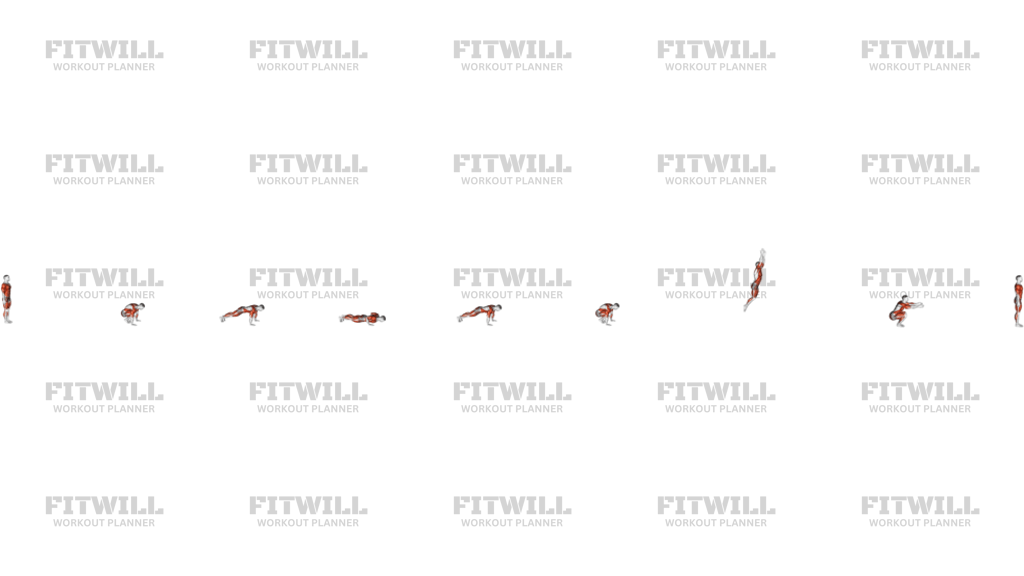
Instructions
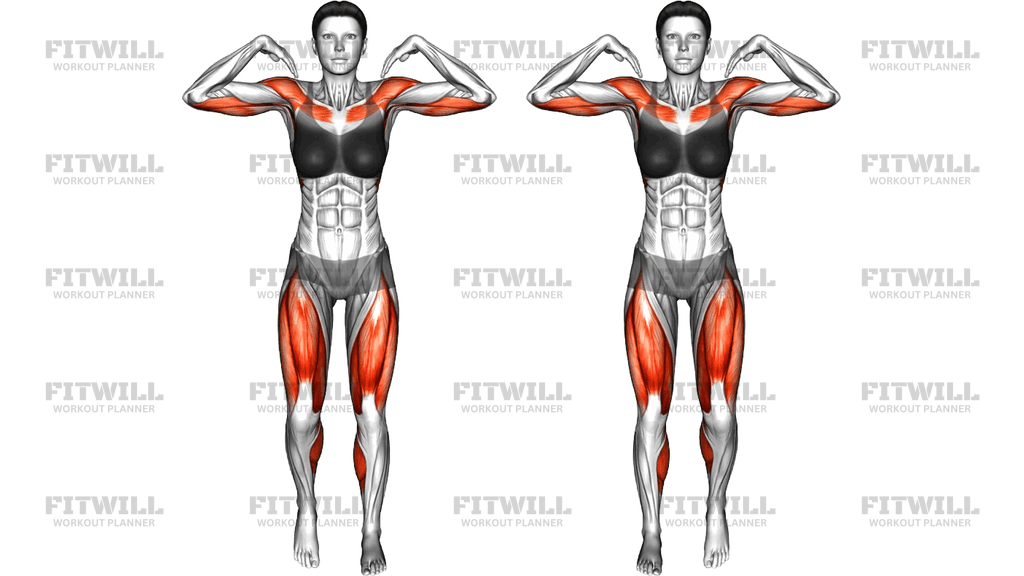
- Stand tall with your feet about hip-width apart and leave enough open space in front of you for a forward jump landing.
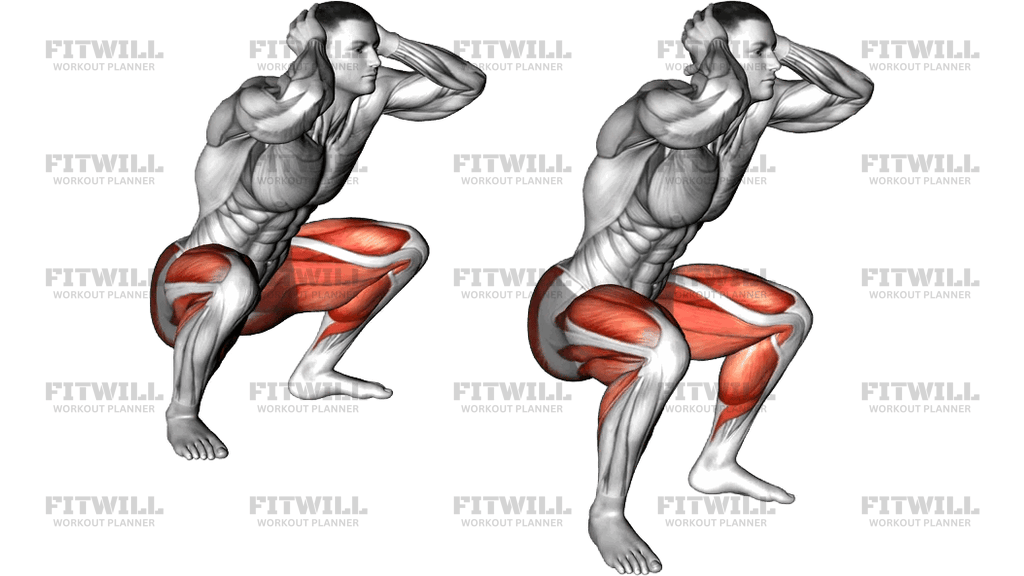
- Squat down and place your hands on the floor just in front of your feet, with your weight balanced over the midfoot.
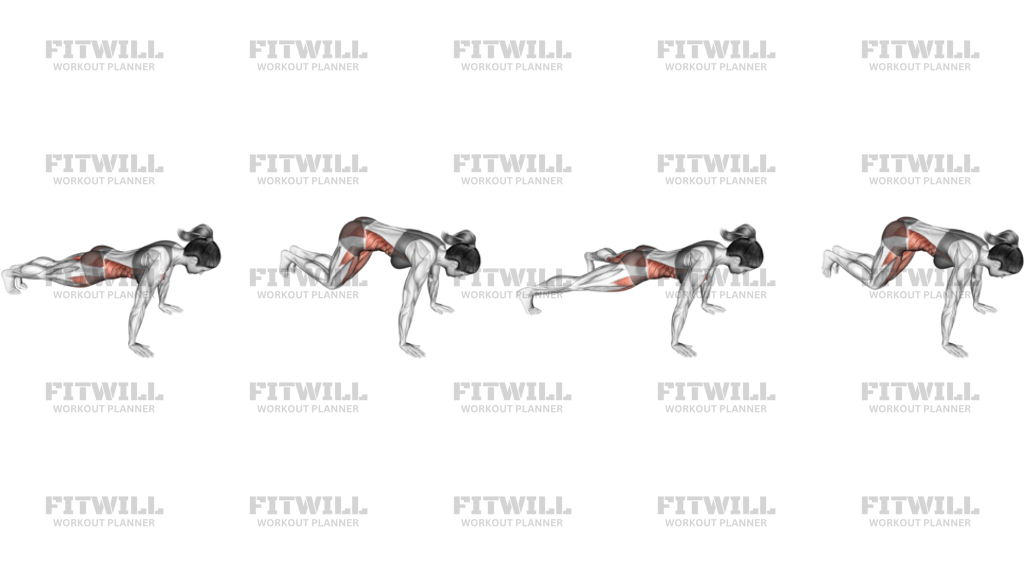
- Kick both legs back to a straight-arm plank and keep your shoulders stacked over your wrists.
- Lower your chest toward the floor with your elbows tracking back at a comfortable angle, then press back up to plank.
- Jump or step your feet back under your hips so you can load the legs for the next phase.
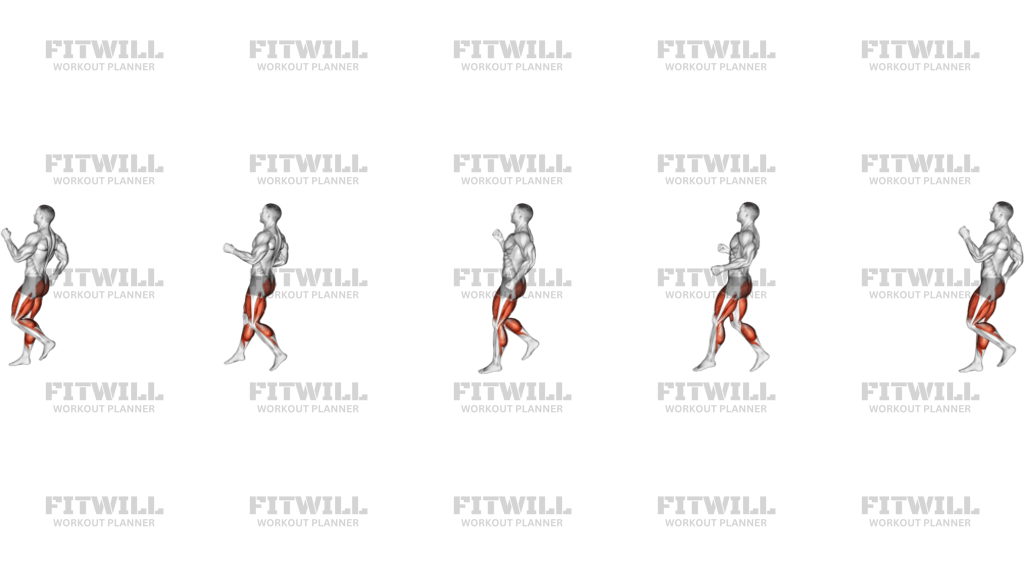
- Swing your arms and drive forward into the long jump, sending your hips and chest together rather than reaching only with the feet.
- Land softly on both feet with bent knees and a slight hip hinge so you can absorb the impact quietly.
- Reset your stance, breathe, and repeat for the planned number of reps or interval.
Tips & Tricks
- Pick a jump distance you can stick without taking an extra step forward; distance means little if the landing is unstable.
- Keep the push-up honest. If your chest stops a few inches above the floor, the movement turns into a partial rep and the burpee loses its purpose.
- Use your arms to help launch the jump, but do not throw your torso so far forward that your feet chase your body and the landing gets heavy.
- Think about landing quietly. A loud landing usually means the knees are stiff or the hips are not doing enough to absorb force.
- Keep your hands close enough to your feet that the step or hop back to plank is efficient, but not so close that your shoulders get jammed.
- If your wrists complain, turn the hands slightly out, spread the fingers hard into the floor, or shorten the total set before position breaks down.
- When fatigue hits, reduce jump distance before you reduce the quality of the push-up.
- Stop the set when the plank turns into a sagging snake or the jump becomes a stumble instead of a clean broad leap.
Frequently Asked Questions
What muscles does Burpee Long Jump With Push-Up work?
It heavily involves the chest, triceps, shoulders, quads, glutes, calves, and core, with the jump adding a strong cardio demand.
Is Burpee Long Jump With Push-Up good for beginners?
It can be scaled, but most beginners should shorten the jump or step back to plank before trying the full push-up version.
How far should I jump on each rep?
Jump only as far as you can land softly with both feet under control. A shorter, repeatable jump is better than a long jump that forces a hard landing.
Do I need to touch my chest to the floor during the push-up?
A full chest-to-floor rep is ideal if you can keep your body straight. If you cannot, reduce the pace or modify the push-up before the set gets sloppy.
Can I step instead of jumping back and forward?
Yes. Stepping back to plank and stepping or lightly hopping forward reduces impact and makes the exercise more sustainable in longer conditioning sets.
What should I do if my wrists hurt?
Place your hands firmly, spread your fingers, and keep the shoulders stacked over the wrists. If the discomfort persists, reduce volume or use an elevated surface for the push-up portion.
Is Burpee Long Jump With Push-Up more for strength or cardio?
It is mainly a conditioning drill, but the push-up and jump also build pressing and lower-body power endurance.
What is the most common mistake with Burpee Long Jump With Push-Up?
Rushing the floor work and then crashing into the landing. Keep the plank strong, the push-up controlled, and the jump quiet.