Riding Outdoor Bicycle
Riding Outdoor Bicycle is outdoor cycling performed with your body weight supporting the effort through the pedals, saddle, and handlebars. It is a cardio-focused movement that builds aerobic endurance, leg stamina, and coordination while asking the trunk and upper body to stay organized over uneven terrain, shifting gears, and changes in pace. The value of the exercise comes from how smoothly you can transfer force into the pedals while keeping the bike stable and your breathing under control.
The main lower-body drivers are the quadriceps, glutes, hamstrings, and calves, while the core, shoulders, forearms, and upper back help you stay balanced on the bike. That support matters because outdoor riding is never a fixed path: wind, corners, hills, and road surface all change how much force you need and how much posture control you must keep. A good ride feels strong in the legs but quiet through the torso, with the hands guiding the bike instead of holding on for dear life.
Setup is what makes the ride efficient. Saddle height should let the working knee stay slightly bent at the bottom of the pedal stroke instead of locking out or collapsing too much. Set the handlebars far enough away that you can hinge forward from the hips without rounding the spine, then relax the shoulders and keep a light grip on the bars. Your foot should sit securely on the pedal so you can push through the full circle without chasing the pedal or bouncing on the saddle.
During the ride, think about a smooth circular stroke rather than a hard stomp straight down. Drive one pedal through the top and forward portion of the stroke, let the other leg recover without tension, and keep the knees tracking in line with the bike. On flat stretches, hold a steady cadence and use easy breathing to stay aerobic. On climbs or faster efforts, stand only long enough to add power while keeping the hips level and the bike under control.
This exercise fits warm-ups, endurance work, commute rides, hill repeats, and longer conditioning sessions. It is especially useful when you want training that feels athletic and practical rather than machine-based. Safety matters more outdoors than on a stationary bike, so keep your eyes forward, brake early, and choose terrain and traffic conditions that let you ride with clean posture. If the ride turns into heavy grinding, rocking hips, or locked shoulders, the effort is too high for the quality you want.
[ Workout Log & Planner ]
Put your next workout in Fitwill
Keep your plan and training log ready when you are.


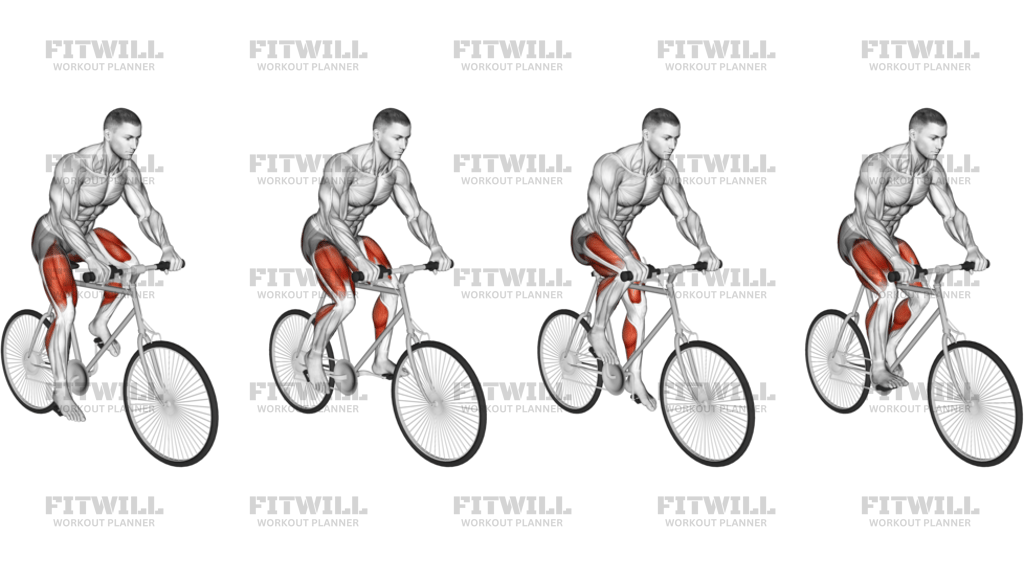
Instructions
- Set the saddle so your working knee stays slightly bent at the bottom of the pedal stroke and your hips do not rock side to side.
- Place your hands on the handlebars, hinge forward from the hips, and keep your shoulders down with a light but secure grip.
- Set your feet so the ball of each foot sits firmly over the pedal and begin with an easy gear or comfortable rolling pace.
- Press one pedal through the top and front of the stroke, then let the other leg recover without forcing a dead stop at the top.
- Keep your knees tracking forward in line with the bike as each leg drives and returns.
- Hold your torso steady and let the legs create the power while the arms simply guide the bike.
- Breathe rhythmically and let the cadence rise only as long as the pedal stroke stays smooth.
- When you finish, ease the effort down gradually, coast or brake in control, and dismount with one foot down.
Tips & Tricks
- If your hips rock on the saddle, the seat is usually too low or the effort is too heavy.
- Keep the grip light enough that your forearms and neck do not become the limiting factor.
- A smooth cadence is usually better than mashing a big gear for this exercise.
- On climbs, stand only as long as you can keep the bike steady and the shoulders relaxed.
- Let the ankles stay natural instead of pointing the toes hard through every stroke.
- Use easier gearing when you want aerobic work; save the big gear for short strength-endurance efforts.
- Keep your eyes farther ahead on the road so you can steer, brake, and turn without jerking the upper body.
- If your lower back starts rounding, shorten the reach to the bars or sit a little more upright.
Frequently Asked Questions
What muscles work most during Riding Outdoor Bicycle?
The quads, glutes, hamstrings, and calves do most of the leg work, while the core, shoulders, and forearms help you stay stable on the bike.
Is outdoor bicycle riding mainly a cardio exercise?
Yes. It is primarily aerobic work, with extra leg endurance and postural demand from holding the bike steady outdoors.
Should I ride seated or standing?
Seated riding is best for steady endurance, while standing is useful for short climbs or harder efforts. Most rides should stay seated unless the terrain or effort calls for standing.
How high should the saddle be for this exercise?
Set it so the knee remains slightly bent at the bottom of the stroke. If the hips rock or the knee locks out, the saddle is probably too high or too low.
What is the most common form mistake?
Grinding a heavy gear and bouncing through the saddle is the biggest mistake. That usually turns the ride into sloppy force production instead of smooth pedal work.
Can beginners do Riding Outdoor Bicycle?
Yes. Beginners can start with flat terrain, easy gearing, and shorter rides so they can learn the cadence and balance demands without overloading the legs.
Do I need to keep a very high cadence?
No. Use a cadence that feels smooth and controlled. The goal is steady power transfer, not spinning so fast that posture and bike control start to fall apart.
How do I progress this exercise?
You can progress by riding longer, adding hills, increasing cadence in the same gear, or using short intervals, as long as your pedal stroke and posture stay clean.