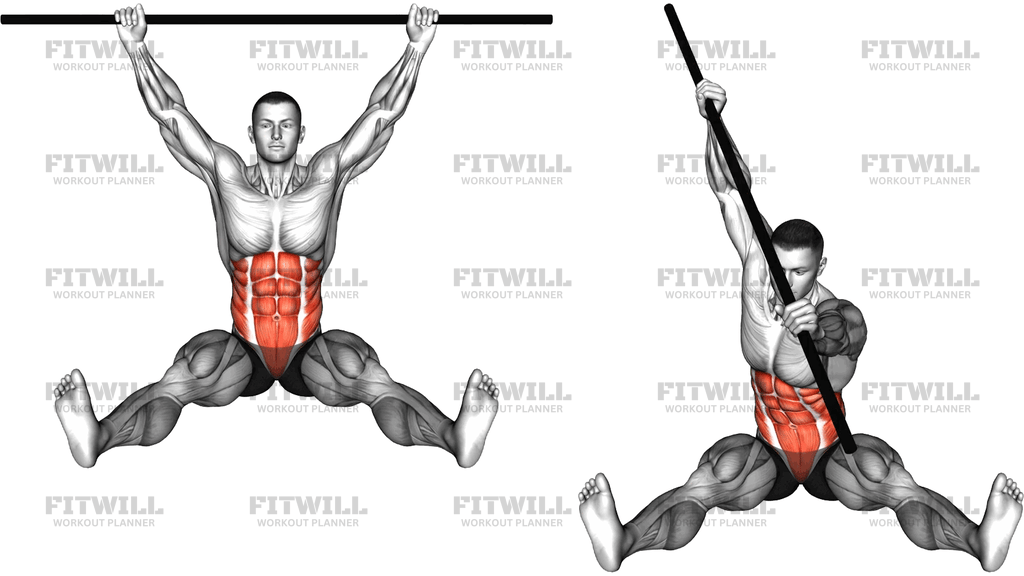
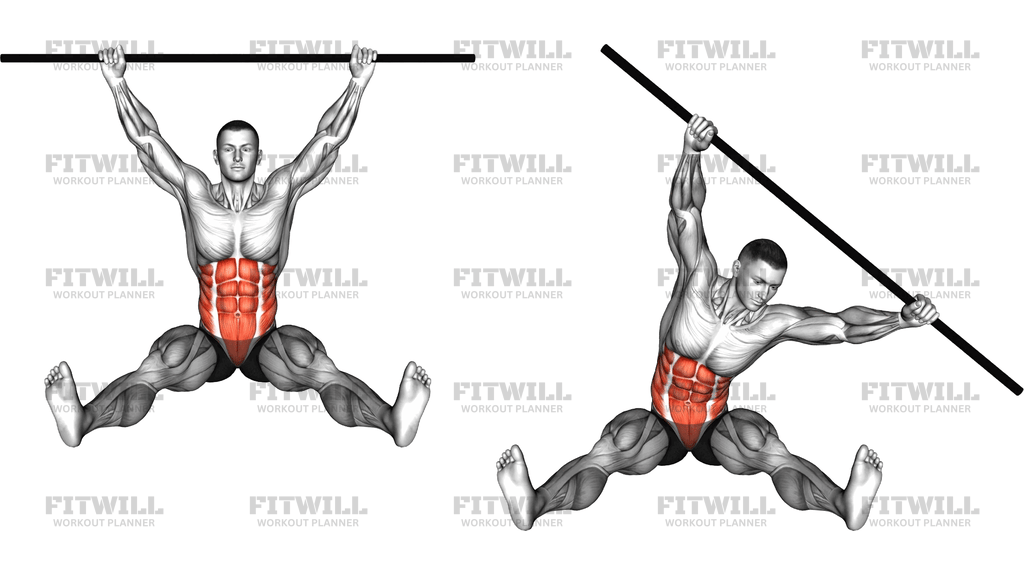
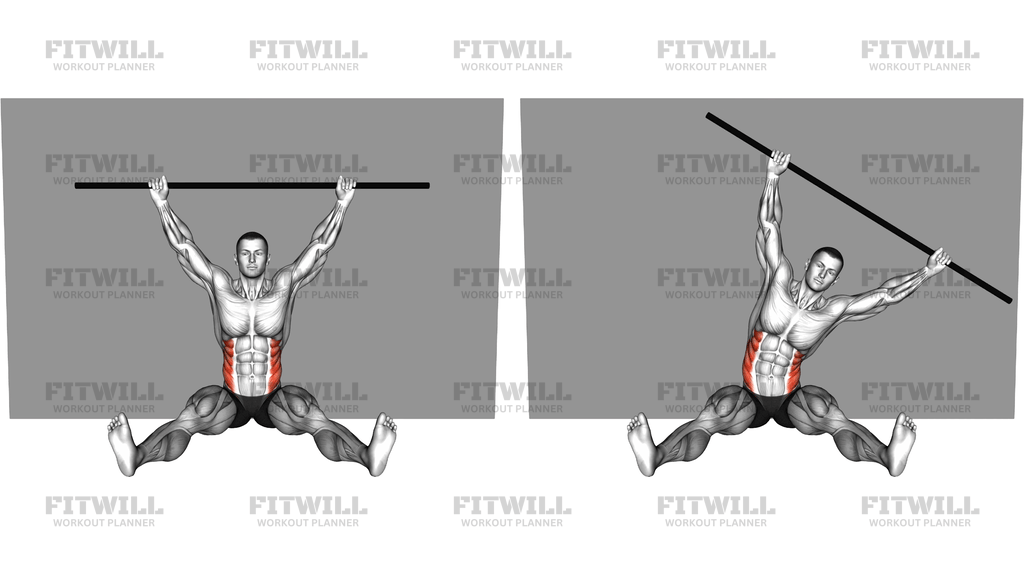
Stick Side To Front Bend Stretch
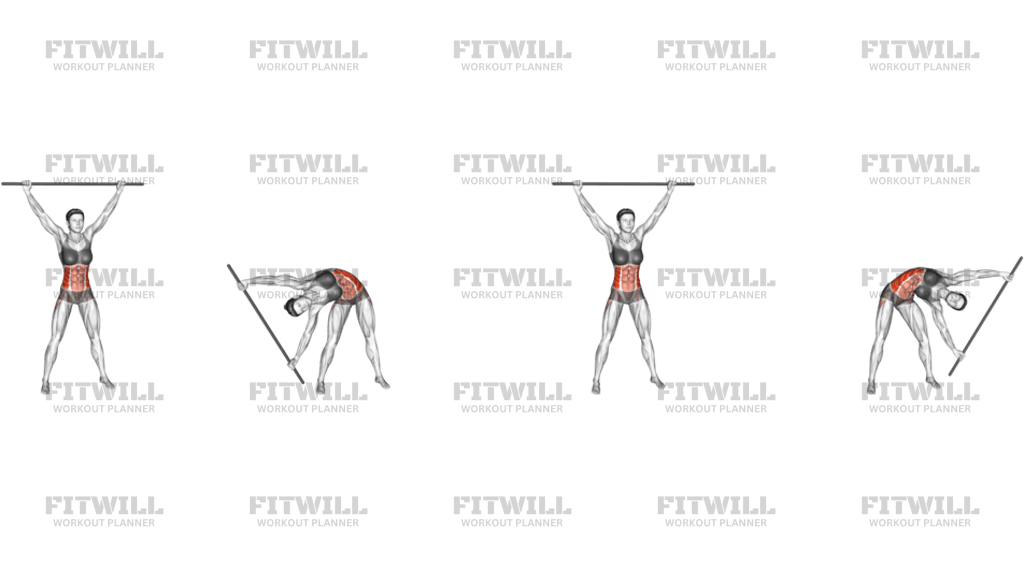
Stick Side to Front Bend Stretch is a standing mobility drill that combines an overhead side bend with a forward hinge while the stick keeps the shoulders and torso organized. The movement is aimed at opening the side body, lats, obliques, and hamstrings while teaching you to control the rib cage and pelvis instead of collapsing into the low back. It is not a power exercise, so the value comes from clean positioning, calm breathing, and a smooth transition from one bend to the next.
The stick changes the exercise in an important way. With the hands set wide on the stick, the arms stay long, the shoulders stay more level, and the torso has a clear reference for how far it is drifting. That makes it easier to feel a true side bend and a true front bend rather than turning the drill into a twist or a sloppy toe touch. A wide grip also helps keep the chest open and the neck relaxed while you move.
Start tall, then lean into one side without letting the hips shoot out or the feet shift around. From there, move through center and hinge forward, allowing the hips to tip back as the spine folds with control. The goal is to keep the motion smooth and repeatable: side, center, front, then back up with the same control. If the range gets shorter as you breathe and repeat, that is fine; the stretch should feel active and organized, not forced.
This drill fits well in a warm-up, cool-down, or mobility block when you want to prepare the trunk and posterior chain for training. It can also be useful between strength sets if the goal is to restore posture and reduce stiffness through the waist and hips. Beginners can use a very light stick or dowel and a smaller range. The main safety cue is simple: keep the movement pain-free, avoid bouncing, and stop if the low back feels compressed instead of lengthened.
[ Workout Log & Planner ]
Put your next workout in Fitwill
Keep your plan and training log ready when you are.


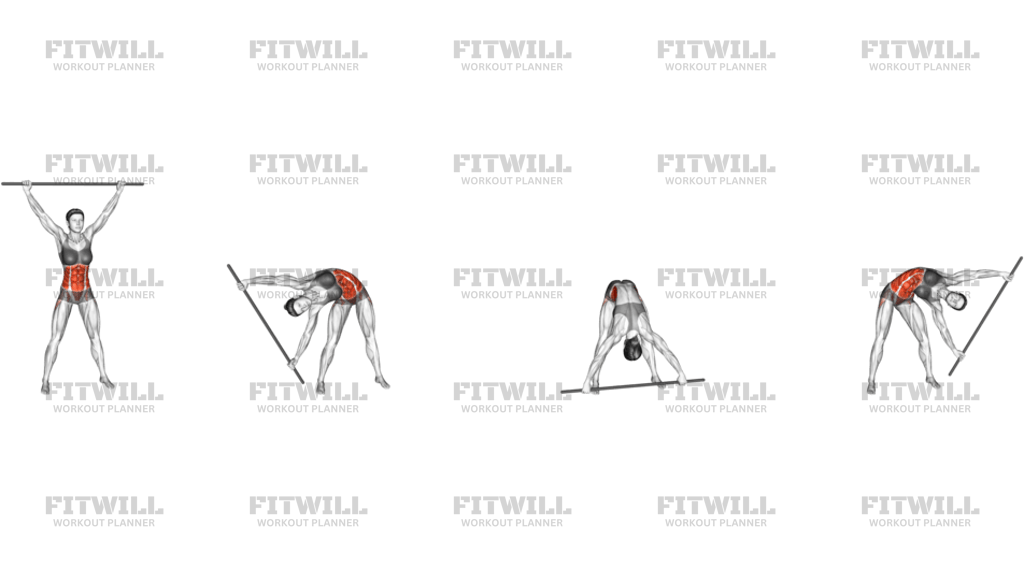
Instructions
- Stand tall with your feet about hip to shoulder width apart and hold the stick overhead with a wide grip, arms straight and elbows soft.
- Stack your head, ribs, and pelvis, then lightly brace your midsection so the stick stays steady above you.
- Bend your torso slowly to one side while keeping both feet planted and your hips facing forward.
- Let the opposite side of your waist and rib cage lengthen, but do not twist the chest or let one shoulder drop hard toward the floor.
- Return through the middle with control until the stick is back over your head and your trunk is tall again.
- Hinge from the hips into a forward bend, sending the hips back as the chest travels down and slightly forward.
- Keep the knees soft and the neck relaxed while you hold the end range for a brief, comfortable stretch.
- Rise back to standing under control, then repeat the side bend and front bend sequence on the other side if the drill is done alternately.
Tips & Tricks
- Use a wider hand position on the stick if your shoulders feel cramped; the goal is to keep the arms long without forcing the joints.
- Think about lifting the rib cage away from the pelvis before you side bend so the stretch lands in the waist instead of compressing the low back.
- Keep both heels heavy during the forward fold; shifting into the toes usually turns the hinge into a rounded reach.
- A small side bend is better than a big lean with the hips drifting out to the opposite side.
- Exhale as you settle into the side bend or forward fold to help the torso soften without losing control.
- If the hamstrings are tight, bend the knees slightly before folding so the back can stay long.
- Avoid turning the chest toward the floor during the side bend; the stick should give you a clear line to stay square.
- Stop the descent when the stretch is strong but still smooth, especially if the shoulders start to shrug or the neck tenses.
Frequently Asked Questions
What does Stick Side to Front Bend Stretch train?
It mainly trains mobility through the side body, lats, trunk, and hamstrings while teaching better control of the rib cage and pelvis.
Why use a stick for the side bend and front bend?
The stick gives you a clear overhead reference so you can keep the arms long, the shoulders organized, and the torso from turning into a twist.
Should my hips move during the side bend?
They should stay mostly square and grounded. A little natural shift is fine, but do not push the hips far out to fake more range.
How deep should I fold forward?
Only as far as you can keep the back long and the stretch smooth. If the lower back rounds hard or feels pinched, shorten the range.
Can I bend my knees in the forward fold?
Yes. A soft knee bend is often helpful if your hamstrings limit the hinge or pull you into an aggressive round-back position.
What muscles should I feel most?
You should feel the side waist, lats, and hamstrings stretching most, with the shoulders and upper back helping keep the stick steady.
When is this exercise useful?
It works well in warm-ups, cool-downs, and mobility sessions when you want to prepare the trunk and posterior chain for training.
What is the biggest form mistake?
Rushing the transition and turning the drill into a sloppy reach. Keep the side bend, return, and forward fold distinct and controlled.