Roll Biceps Lying On Floor
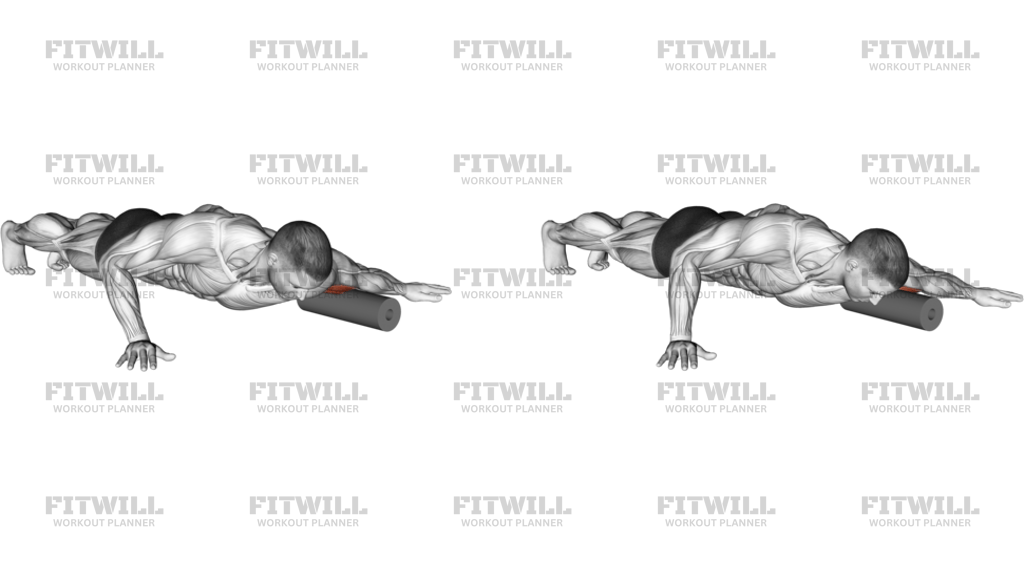
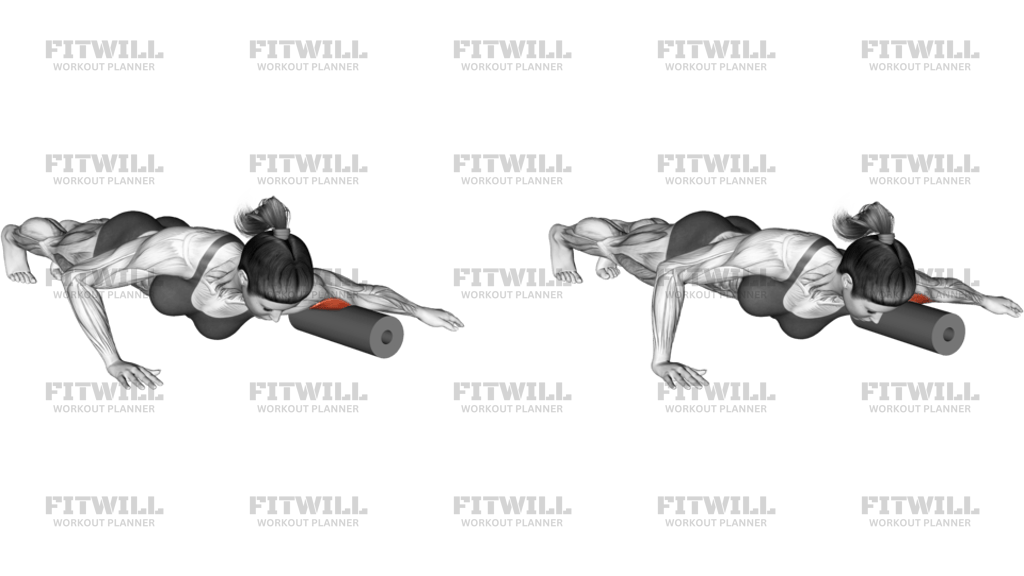
Roll Biceps Lying On Floor is a floor-based soft tissue and mobility drill that uses a foam roller to work along the biceps while the chest, shoulder, and torso stay close to the ground. The position shown in the image is prone, with one upper arm supported on the roller and the body angled low enough to let you shift pressure through the front of the upper arm in a controlled way.
This movement is most useful when the biceps feel tight after pulling work, climbing, racket sports, or any session that leaves the front of the upper arm and elbow flexors feeling dense and shortened. Because the roller is under the arm instead of under the whole body, the setup is less about brute force and more about finding a pressure level that lets you relax the tissue without losing alignment through the shoulder or low back.
The exercise should feel like a slow, deliberate rolling pass along the length of the upper arm, usually from just below the front of the shoulder toward the elbow crease and back again. The torso, opposite hand, and legs help you control how much body weight you place on the roller. Small shifts in position change the pressure quickly, so the best results come from careful adjustments rather than forcing the hardest spot you can tolerate.
Good form means keeping the neck long, the ribcage settled, and the shoulder from collapsing forward as you roll. If the pressure gets too sharp near the elbow or front of the shoulder, lighten the load immediately by shifting more weight into the supporting hand and legs. The goal is to smooth out a tight, overworked biceps line, not to pin the arm so hard that the tissue guards against the pressure.
Use this drill in a warm-up, recovery circuit, or between upper-body strength sets when you want to free up elbow flexion and shoulder extension without adding fatigue. It is especially helpful if pressing or pulling volume has left the front of the arm cranky. Keep the motion comfortable, breathe steadily, and stop short of any numbness, tingling, or joint pain.
[ Workout Log & Planner ]
Put your next workout in Fitwill
Keep your plan and training log ready when you are.


Instructions
- Lie face down on the floor and place the foam roller under the upper arm you want to work, with the roller centered on the biceps belly just below the front of the shoulder.
- Extend the working arm forward or slightly out to the side as shown, and keep the opposite hand on the floor for support.
- Lengthen the legs behind you and set your weight so the roller feels firm but not pinching.
- Gently press through the supporting hand and torso to create a small amount of pressure on the biceps.
- Roll the upper arm slowly along the foam roller from the shoulder side toward the elbow and back again.
- Pause on the tightest spot for a second or two, then ease off before moving again.
- Keep the neck relaxed, the chest low, and the ribcage steady while you roll.
- Breathe slowly the entire time and lighten the pressure if the arm starts to tingle, go numb, or feel sharp pain.
Tips & Tricks
- Start with very little body weight on the roller; this drill works better when the pressure is just strong enough to feel the tissue, not crush it.
- Keep the roller on the soft part of the upper arm rather than directly on the elbow crease or bony front of the shoulder.
- If the shoulder starts to roll forward, shift more weight into the supporting hand and reset the torso before continuing.
- Use short strokes first. Long, aggressive passes often make the front of the arm guard instead of relax.
- A slightly turned-in palm usually changes the line of tension through the biceps more than a neutral hand position.
- Move the body, not just the arm. The roller should travel because your torso and legs are shifting, not because you are clawing at the floor.
- If the biceps feels too sharp near the shoulder, slide the roller a little lower on the arm and reduce pressure immediately.
- This is a recovery drill, so stop a set once the arm feels looser and the pressure quality changes from tight to irritated.
Frequently Asked Questions
What does Roll Biceps Lying On Floor target most?
It mainly targets the biceps along the front of the upper arm, especially the biceps brachii.
Where should the foam roller sit on my arm?
Place it on the fleshy part of the upper arm, not on the elbow crease or the hard front edge of the shoulder.
Should I roll from the shoulder down to the elbow?
Yes. A slow pass from the front of the shoulder toward the elbow and back again is the simplest way to work the biceps line.
What should I use for support while doing it?
Use the opposite hand and your legs to control how much body weight presses into the roller.
Is this exercise strength work or mobility work?
It is primarily a mobility and recovery drill, not a strength exercise.
Can beginners do this safely?
Yes, as long as they start with light pressure and avoid rolling directly on painful spots or joints.
When is this most useful in a workout?
It fits well in a warm-up, cool-down, or recovery block after pulling, climbing, or heavy arm work.
What should make me stop the set?
Stop if you feel numbness, tingling, sharp pain, or a pinching sensation at the shoulder or elbow.