Roll Biceps Lying On Floor
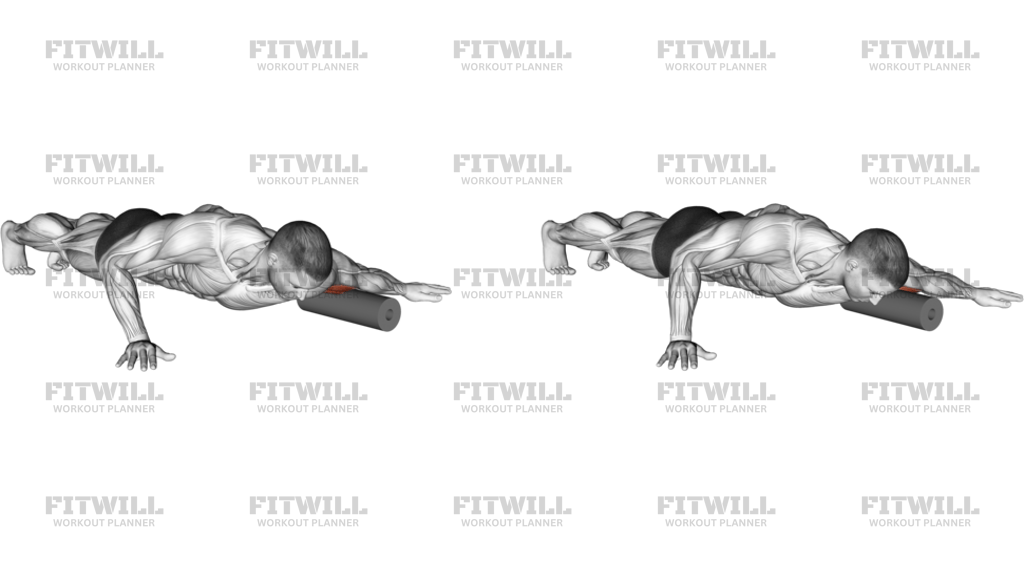
Roll Biceps Lying On Floor is a floor-based soft-tissue release for the front of the upper arm. The working arm rests on a foam roller while your opposite hand and toes control how much bodyweight you place into the tissue. It is not a strength exercise; the goal is to apply steady, tolerable pressure to the biceps so the muscle can soften without the shoulder, elbow, or wrist taking over.
The setup matters because the biceps is crossed by both the shoulder and elbow joints. If you sink too far onto the roller, or let the shoulder shrug and the elbow jam into the floor, the pressure shifts away from the muscle belly and into irritated joints. A cleaner position keeps the roller on the fleshy part of the upper arm, usually between the elbow crease and the front of the shoulder, while the body stays long, calm, and easy to control.
Think of each pass as a slow scan rather than a big roll. You shift your body a few inches at a time so the roller moves along the biceps, then pause on a tender band for a few breaths before continuing. The opposite hand should stay active enough to unload the shoulder and adjust pressure instantly. That makes the exercise useful whether you need a light warm-up release before pressing and pulling, or a more deliberate recovery drill after heavy upper-body work.
Because this is a mobility and recovery tool, the best result comes from restraint. Keep the pressure firm but manageable, keep breathing smooth, and stop short of numbness, tingling, or sharp pain. The movement should feel like controlled tissue work in the upper arm, not a grind through the elbow joint or an aggressive smash into the front of the shoulder.
[ Workout Log & Planner ]
Put your next workout in Fitwill
Keep your plan and training log ready when you are.


Instructions
- Lie face down with the foam roller under the front of one upper arm, placing it on the biceps belly rather than on the elbow joint or shoulder socket.
- Reach the working arm forward and rest the opposite palm on the floor under your shoulder so you can share bodyweight between the roller, hand, and toes.
- Keep the working shoulder relaxed away from your ear and let the elbow stay soft instead of locking the joint.
- Set your torso long and slightly angled so the roller can press into the biceps without twisting your ribs or lower back.
- Use the support hand and toes to lower or increase pressure before you begin rolling.
- Glide your body a few inches so the roller travels from just above the elbow crease toward the middle of the upper arm.
- Pause on a tender spot for two to four breaths, then continue with another slow pass.
- Switch sides after the planned time or number of passes, and stop if the pressure creates sharp pain, numbness, or tingling.
Tips & Tricks
- Use the opposite hand to unload the roller; a small shift in bodyweight changes the pressure a lot.
- Keep the passes short and slow. This drill works better when you search the biceps belly with a few inches of travel instead of long sweeping rolls.
- Do not park the roller on the elbow crease. The muscle should be on the roller, not the joint.
- If the front of the shoulder feels pinched, slide the roller slightly lower on the arm and keep the reaching shoulder softer.
- Turn the working palm a little up or a little down to find a tighter line through different fibers of the biceps.
- Breathe out during the tender part of the pass so the upper arm can relax instead of guarding.
- Stay off bruised tissue, acute tendon pain, or any spot that sends symptoms into the forearm or hand.
- If you cannot relax on the roller, reduce pressure before you keep going; more force is not better here.
Frequently Asked Questions
What does Roll Biceps Lying On Floor target most?
It mainly targets the biceps brachii and the surrounding front-of-upper-arm tissue.
Is this a strength exercise or a recovery drill?
It is a soft-tissue release drill. The goal is to reduce tone and improve comfort, not to build force through the arm.
Where should the roller sit on my arm?
Place it on the fleshy part of the biceps, usually between the elbow crease and the front of the shoulder.
What is the most common mistake with this movement?
People usually press too hard or roll onto the elbow joint instead of staying on the biceps belly.
Can beginners do this exercise?
Yes. Start with very little bodyweight on the roller and use the support hand to keep the pressure mild.
Should I hold on one tender spot or keep moving?
A short pause on a tender band is useful, but you should keep the pressure tolerable and avoid grinding through pain.
When is this useful in a workout?
It works well before upper-body training, after arm-heavy sessions, or any time the front of the upper arm feels tight.
What should I do if I feel tingling in my hand?
Stop the drill and reduce pressure or change position. Tingling usually means the setup is too aggressive for that area.