EZ Bar 21s
EZ Bar 21s is a standing biceps curl sequence that uses an EZ bar to keep tension on the upper arms through three distinct ranges of motion. The standard set is 21 total reps: seven curls from the bottom half, seven from the top half, and seven full-range curls. That split keeps the biceps working where they are often strongest and weakest, which is why the exercise is popular for finishing a curl session with a dense, high-tension stimulus.
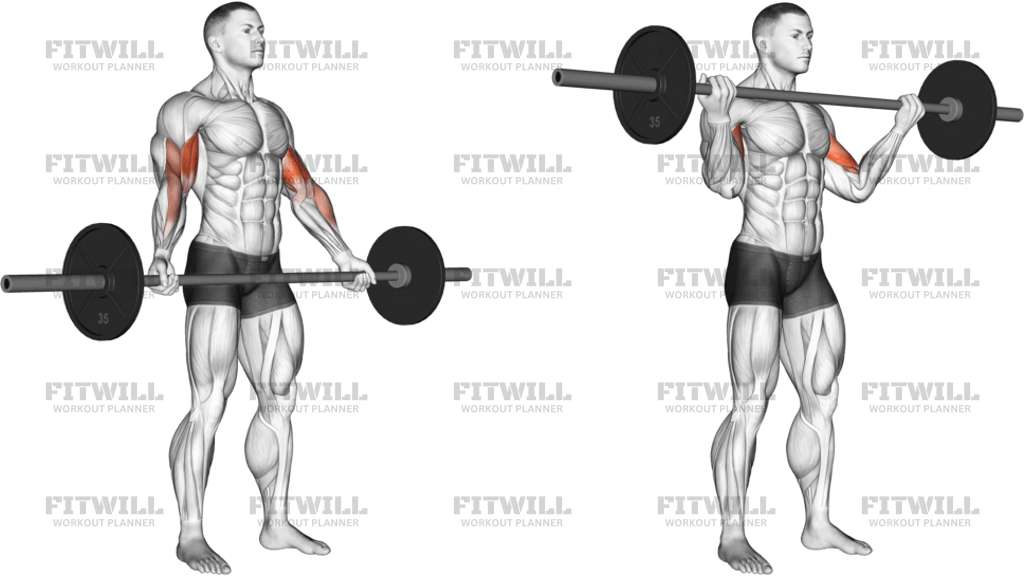
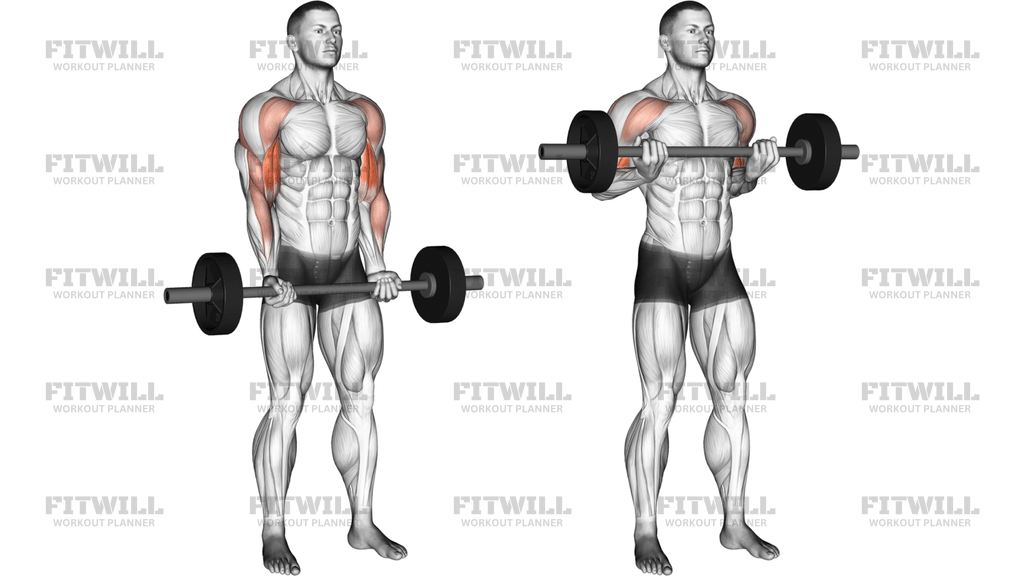
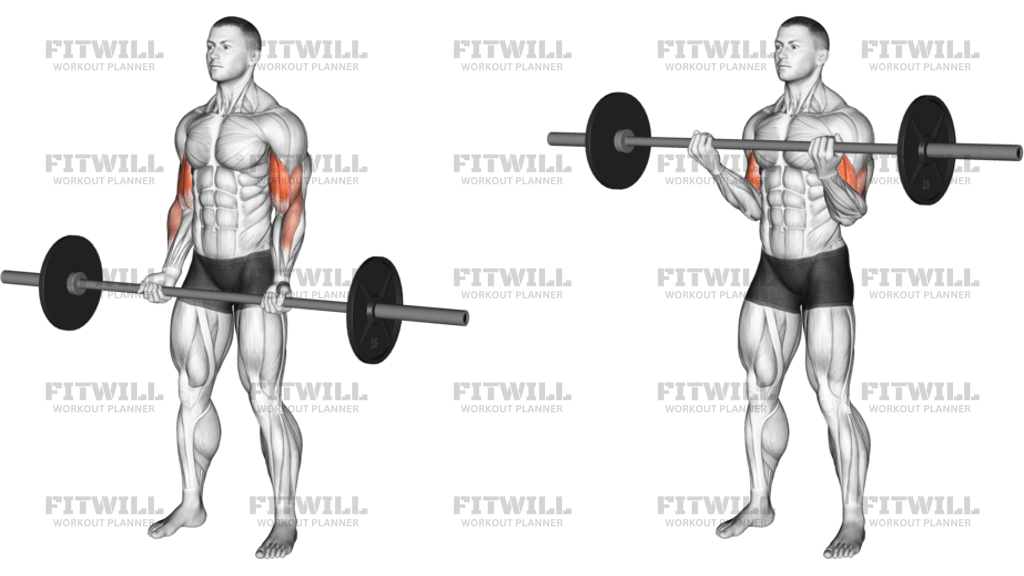
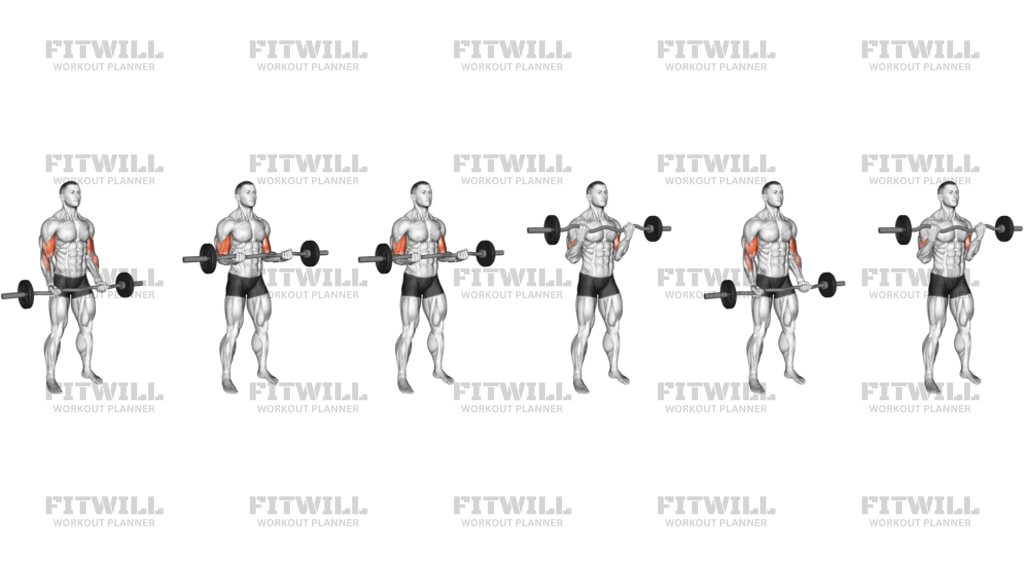
The image shows a neutral, upright stance with the bar held in front of the thighs and the elbows kept close to the ribs. That setup matters. If the torso swings or the elbows drift forward, the set turns into a shoulder and hip exercise instead of a strict arm curl. The EZ bar's angled grip is useful because it usually places the wrists in a more natural position than a straight bar, which helps you keep the forearms, brachialis, and brachioradialis involved without forcing the wrists into an awkward angle.
The movement is not meant to be a fast pump with sloppy partials. The lower half should start from near full elbow extension and curl to about halfway up, the upper half should begin at the midpoint and finish near peak contraction, and the final seven reps should use the full curl path. Keep the elbows pinned, keep the ribs stacked over the pelvis, and let the bar travel in a smooth arc rather than drifting away from the body. A short pause at the top can help you feel the squeeze, but the real goal is uninterrupted control.
EZ Bar 21s works well as an accessory or finisher after heavier pressing or pulling work, especially when the goal is arm size, local muscular endurance, or a focused biceps pump. Use a load that lets all 21 reps stay strict; if the first seven already require body English, the weight is too heavy. Because the set builds fatigue quickly, it is better to stop with clean mechanics than to force the final reps with shoulder sway, lumbar extension, or wrist collapse.
For most lifters, this is a straightforward exercise to learn, but the details are non-negotiable. The bar should stay under control on the way down, the wrists should stay aligned with the forearms, and the shoulders should remain quiet. If you have elbow or wrist irritation, reduce the load, slow the lowering phase, or shorten the range slightly while you keep the same 21-rep structure. Done correctly, the exercise is a compact, efficient way to challenge the biceps from several angles in a single set.
[ Workout Log & Planner ]
Put your next workout in Fitwill
Keep your plan and training log ready when you are.


Instructions
- Stand tall with your feet about hip-width apart and hold the EZ bar in front of your thighs with an underhand grip on the angled sections.
- Set your elbows close to your sides, soften your knees, and stack your ribs over your pelvis so your torso stays quiet.
- Curl the bar through the lower half of the range for 7 reps, moving from near full elbow extension to about halfway up.
- Keep the upper arms still and avoid letting the elbows drift forward as you complete each lower-half rep.
- Without resting, continue with 7 upper-half reps, starting at the midpoint and curling to the top of the movement.
- Squeeze the biceps at the top without shrugging your shoulders or leaning back to finish the rep.
- Finish the set with 7 full-range curls from the bottom to the top, using the same strict body position.
- Inhale as you lower the bar under control, exhale as you curl it up, and lower the bar fully before resetting the next set.
Tips & Tricks
- Choose a load you can control for all 21 reps; the first seven partials should not already require hip drive.
- Use the EZ grip that feels best on your wrists, but keep the hands evenly spaced so the bar tracks symmetrically.
- Keep the elbows slightly in front of the hips only if needed for comfort; do not let them keep sliding forward as fatigue builds.
- Lower the bar slowly on every rep so the negative phase does not turn into a drop between partial ranges.
- Treat the lower-half reps as a tension builder, not as a bounce from the bottom position.
- If your lower back starts arching to finish the top-half reps, reduce the load and shorten the set until the torso stays still.
- Do not let the wrists curl back hard at the top; keep the knuckles and forearms lined up to spare the forearm flexors.
- Stop the set if the bar starts moving in front of the body instead of staying close to the thighs and ribs line.
Frequently Asked Questions
What does EZ Bar 21s train most?
It mainly trains the biceps, with extra work from the brachialis and forearm flexors during the partial and full curls.
Why use an EZ bar instead of a straight bar?
The angled grip usually feels friendlier on the wrists and lets many lifters keep a stronger curl position for longer.
How are the 21 reps split up?
The classic version is 7 lower-half curls, 7 upper-half curls, and 7 full-range curls in one continuous set.
Should my elbows move during this exercise?
They should stay close to your sides and only move slightly if your individual shoulder position requires it. Big elbow drift usually means the set has become too heavy.
Is this a good beginner biceps exercise?
Yes, if the load is light and the lifter can keep the torso still. Beginners should focus on the curl path before chasing a hard pump.
What is the biggest mistake with 21s?
The most common error is turning the final reps into body swings, which removes tension from the biceps and loads the lower back.
Can I stop at fewer than 21 reps?
Yes. If the form breaks early or the elbows and wrists can no longer stay in position, end the set rather than forcing sloppy partials.
When should I program EZ Bar 21s?
It fits well after heavier arm or upper-body work as a finisher, or in a biceps-focused accessory block.