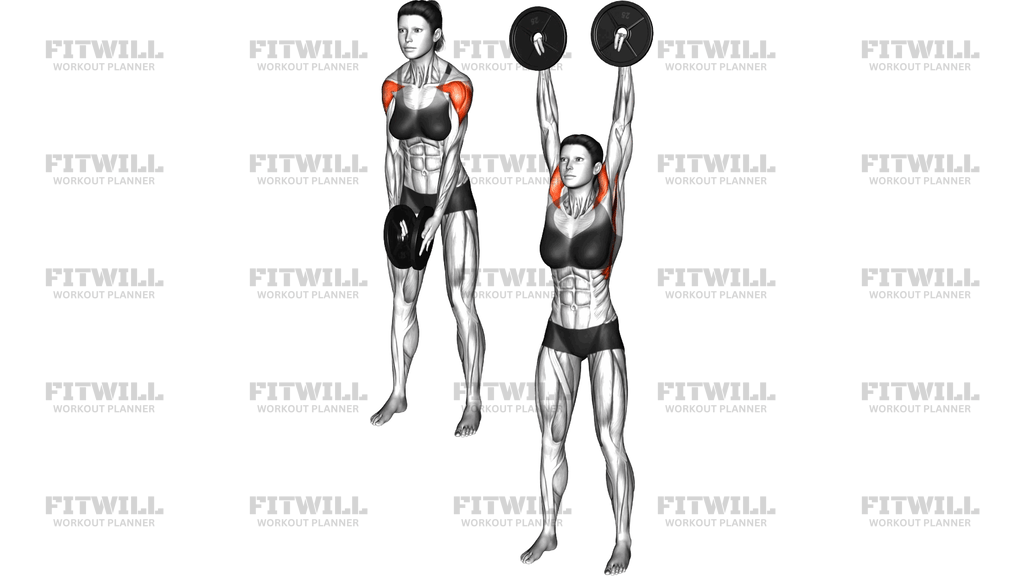
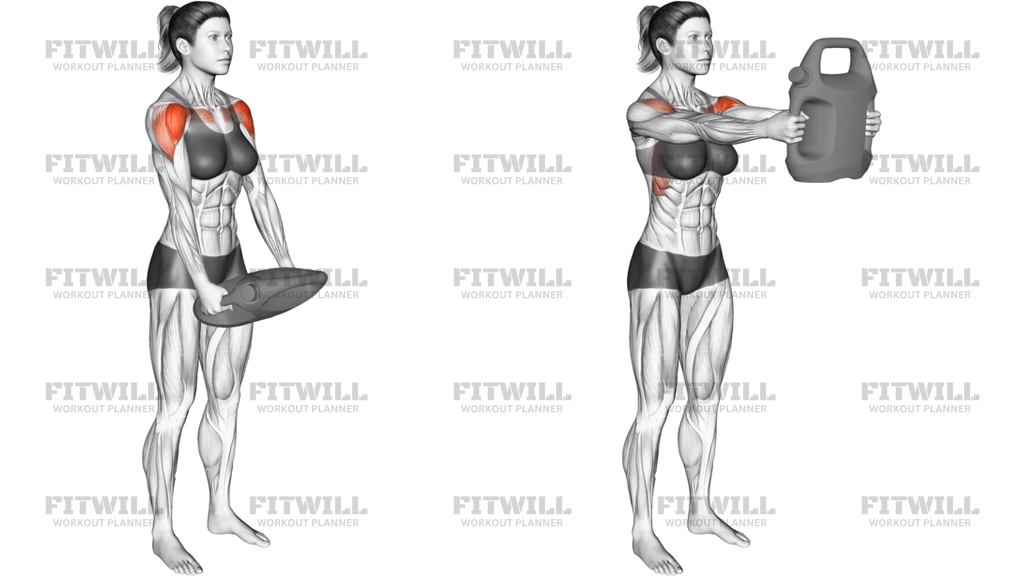
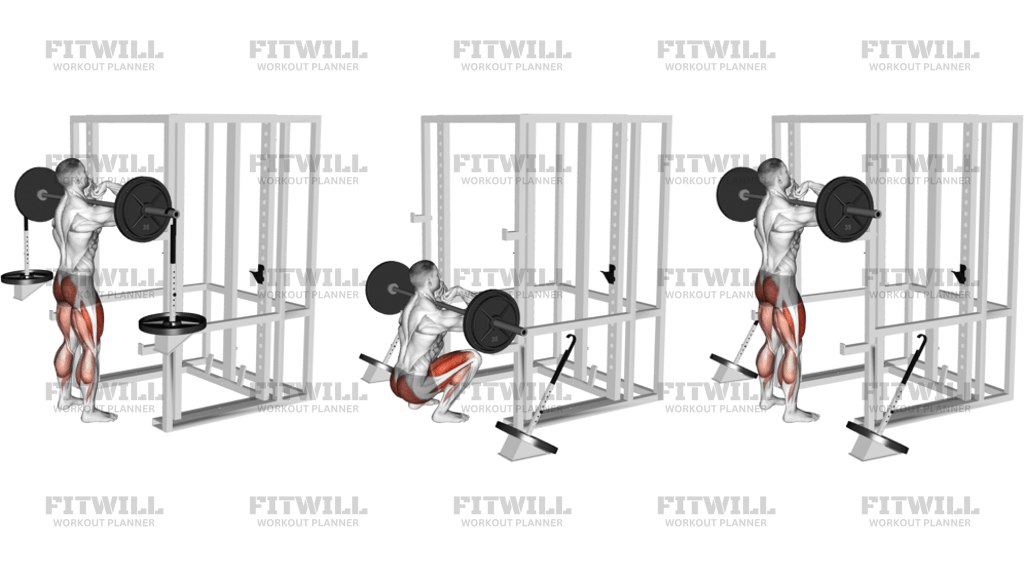
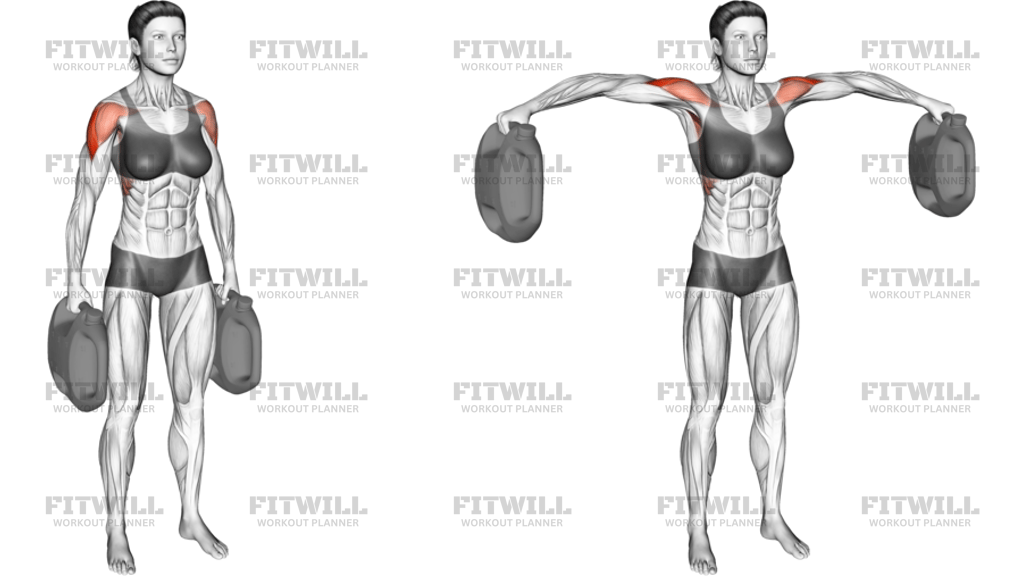
Weighted Full Squat With Overhead Press
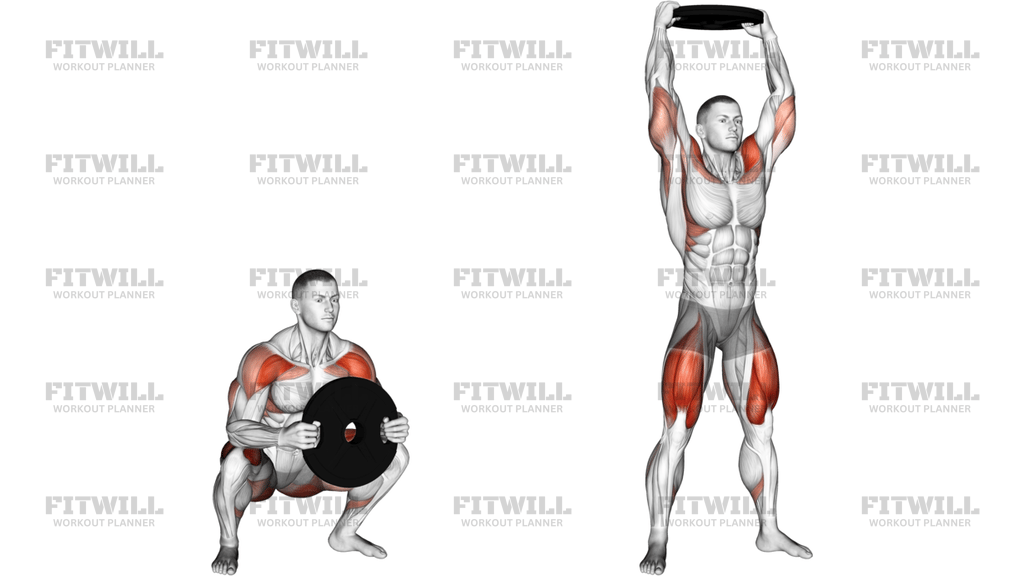
Weighted Full Squat With Overhead Press is a combined lower-body and upper-body movement built around a deep squat and a strong overhead finish. The image shows a plate held close to the chest during the squat and driven overhead as you stand, which makes this closer to a plate thruster than a pure squat or pure press. That hybrid pattern is useful when you want a single exercise that challenges leg drive, shoulder strength, trunk control, and breathing under load.
The main training effect comes from the thighs and hips producing force out of the bottom of the squat, then transferring that force into the press. Quads, glutes, and adductors help you stand up; delts and triceps finish the overhead lockout; the upper back and core keep the plate path steady. Because the load moves from a front-rack style hold to overhead, posture matters as much as raw strength. If the chest collapses or the weight drifts forward, the rep becomes much harder and less stable.
Use the setup to create a clean line of force before you descend. Stand with feet about shoulder-width apart, hold the weight plate at chest height, and keep the elbows slightly in front of the torso so the load stays close. Sit down into the squat with control, keep the heels rooted, and let the knees track in line with the toes. The bottom position should feel balanced and braced rather than folded or rushed.
On the way up, drive through the midfoot, rise out of the squat, and press the plate overhead as you reach full standing height. Finish with the arms straight, ribs controlled, and the weight stacked over the shoulders and hips instead of drifting behind the head. Lower the plate back to chest level with control before the next repetition. Smooth breathing and repeatable tempo matter more here than speed.
This exercise fits well in conditioning blocks, full-body sessions, and accessory work when you want a more athletic squat pattern without switching between separate lower- and upper-body movements. It can also expose limitations in ankle mobility, shoulder mobility, and trunk stability, which makes it useful as both a training drill and a diagnostic lift. Keep the rep quality high, use a load you can stabilize, and stop the set when the squat depth or overhead finish starts to break down.
[ Workout Log & Planner ]
Put your next workout in Fitwill
Keep your plan and training log ready when you are.


Instructions
- Stand with your feet about shoulder-width apart and hold the weight plate at chest height with both hands.
- Keep your elbows slightly in front of your torso, brace your core, and set your ribs down before you start.
- Sit back and down into a full squat while keeping your heels flat and your chest lifted.
- Lower until your thighs reach your chosen depth without losing balance or rounding your lower back.
- Drive through your midfoot to stand up strongly from the squat.
- As you rise, press the plate overhead in one smooth path until your arms are straight.
- Finish stacked over your shoulders and hips, with the plate directly over the center of your body.
- Lower the plate back to chest height under control and reset before the next repetition.
- Breathe in on the way down and exhale as you stand and press.
Tips & Tricks
- Keep the plate close to your sternum on the way down so it does not pull you forward.
- If the press turns into a lean-back, lighten the load and finish with the ribs stacked instead of arching the lower back.
- Let the squat and the press flow together, but do not throw the weight upward from the bottom of the squat.
- Track your knees in line with your toes so the squat stays stable from the first rep to the last.
- Stay rooted through the heels and midfoot; if the heels lift, reduce depth or load.
- Use a smooth exhale as you stand and press, then reset your breath before the next descent.
- Keep the elbows slightly forward rather than flared wide, especially if the plate feels awkward in the front-rack position.
- Stop the set when the overhead finish gets sloppy or the squat depth starts to shorten.
Frequently Asked Questions
What muscle does Weighted Full Squat With Overhead Press target most?
It mainly trains the thighs, glutes, shoulders, and triceps, with the core and upper back helping keep the plate stable.
Is this more of a squat or a press?
It is a hybrid movement: you squat first, then use the stand-up to help drive the plate overhead.
How should I hold the plate at the start?
Hold it with both hands at chest height, keep the elbows slightly forward, and keep the load close to your body.
How deep should the squat go?
Go as deep as you can while keeping the heels down, the chest organized, and the lower back neutral.
Can beginners perform this exercise?
Yes, as long as the plate is light enough to keep the squat and press controlled.
What is the most common mistake with this movement?
The most common problem is letting the plate drift forward or leaning back to force the overhead press.
What if my shoulders feel tight overhead?
Use a lighter plate, keep the press path slightly in front of the face, and shorten the range if needed.
Is this good for conditioning?
Yes. Continuous squat-to-press reps create a strong full-body conditioning effect when the load is kept moderate.