Otis-Up
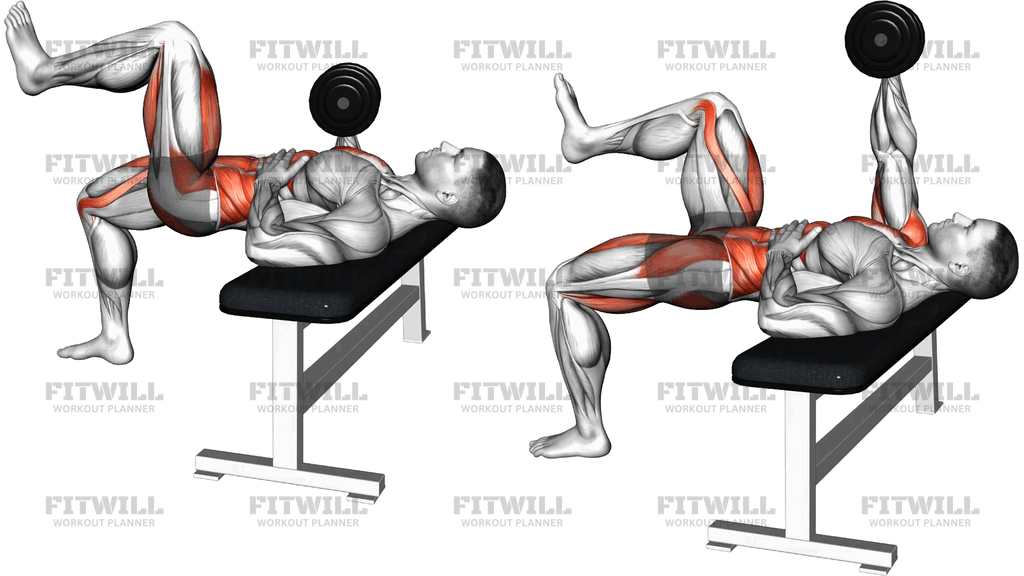
Otis-Up is a floor-based sit-up and overhead press variation performed with a single plate. You begin lying on your back with the knees bent and the weight held at the chest, then sit up while driving the plate to a locked-out position over the shoulder. The exercise links trunk flexion with shoulder control, so the rep has to stay smooth enough that the torso rises, the arm finishes stacked, and the return to the floor remains deliberate.
The setup is what makes the movement work. Starting from the floor removes momentum and makes the first part of the rep more honest, which is why the feet, ribcage, and chin position matter so much. If the feet slide, the ribs flare, or the head leads the rep, the sit-up turns into a neck pull instead of a controlled roll-up. A clean Otis-Up feels like the torso is curling off the floor one section at a time while the arm finishes in a stable overhead line.
This exercise is useful when you want the abs, hip flexors, shoulder stabilizers, and triceps to cooperate under the same load. It can fit into a core circuit, accessory block, or general strength session, especially when you want a dynamic trunk drill that is more demanding than a standard crunch. The working side should stay organized through the shoulder, elbow, and wrist so the plate does not drift forward or force the low back to overarch at the top.
The return phase matters as much as the sit-up itself. Lower the weight under control, roll back to the floor without dropping, and reset fully before the next rep. If the neck tightens, the shoulder loses stack, or the low back starts to arch, the load is too heavy or the range is too ambitious. Use a plate that lets you finish tall, keep the movement crisp, and repeat the same path every time.
Fitwill
Log Workouts, Track Progress & Build Strength.
Achieve more with Fitwill: explore over 9600 exercises with images and videos, access built-in and custom workouts, perfect for both gym and home sessions, and see real results.
Start your journey. Download today!




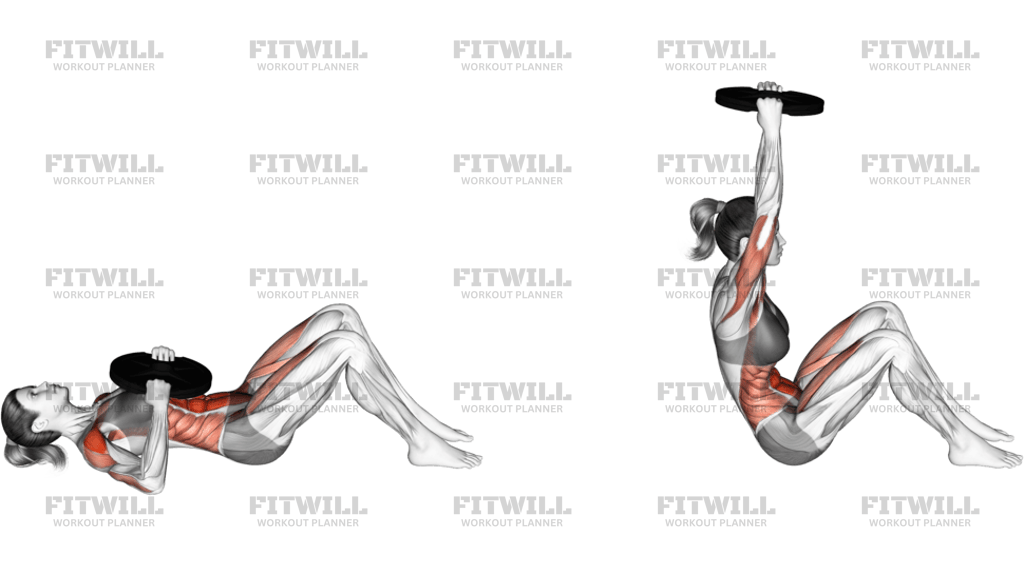
Instructions
- Lie on your back with your knees bent and feet flat, holding a single weight plate at your chest in the working hand.
- Keep your other arm out for balance or lightly braced on the floor, and tuck your chin so the neck stays long.
- Exhale and brace your abs before you start so your ribs stay down against the floor.
- Curl your head and shoulders off the floor, then roll your torso up one segment at a time instead of jerking forward.
- As you sit up, press the plate straight overhead until the arm finishes stacked over the shoulder.
- Reach the top in a tall seated position with the trunk upright and the plate controlled overhead.
- Lower the plate and roll back down slowly, keeping the descent smooth and resisting the urge to drop.
- Reset with your head and shoulders back on the floor before beginning the next repetition.
Tips & Tricks
- Keep both feet rooted so the legs do not kick the rep off the floor.
- Let the sit-up start from the ribcage, not from a yank at the head or neck.
- Press the plate only after the torso is already moving; the press should finish the rep, not start it.
- Use a light enough plate that you can lock it overhead without arching your lower back.
- Keep the plate stacked over the shoulder instead of drifting forward in front of your face.
- Lower slowly enough that each section of your spine touches down under control.
- If the neck tightens, keep the chin slightly tucked and your eyes forward rather than looking behind you.
- Choose a range that lets you finish tall without collapsing onto the sit bones.
Frequently Asked Questions
What muscle does Otis-Up target most?
It mainly challenges the abs and hip flexors, with the shoulders, triceps, and upper back helping finish and stabilize the overhead position.
Can beginners perform this exercise?
Yes, as long as they use a light plate and keep the sit-up and return slow enough to stay in control.
Should the plate travel straight overhead?
Yes. The arm should finish stacked over the shoulder instead of drifting forward or out to the side.
What is the biggest form mistake on Otis-Up?
Using the neck or momentum to start the sit-up instead of curling the torso up in a controlled way.
Do my feet need to stay planted?
Yes. A stable foot position keeps the torso honest and prevents the legs from swinging the body up.
What equipment works best for this exercise?
A single weight plate matches the movement shown here best, but any balanced load you can press cleanly overhead can work.
Why does my lower back arch at the top?
The plate is probably too heavy or the sit-up is being forced. Reduce the load and finish tall with the ribs stacked over the pelvis.
How should I progress Otis-Up?
Add load only after every rep looks the same on the way up and the way down, and you can keep the overhead finish stable.