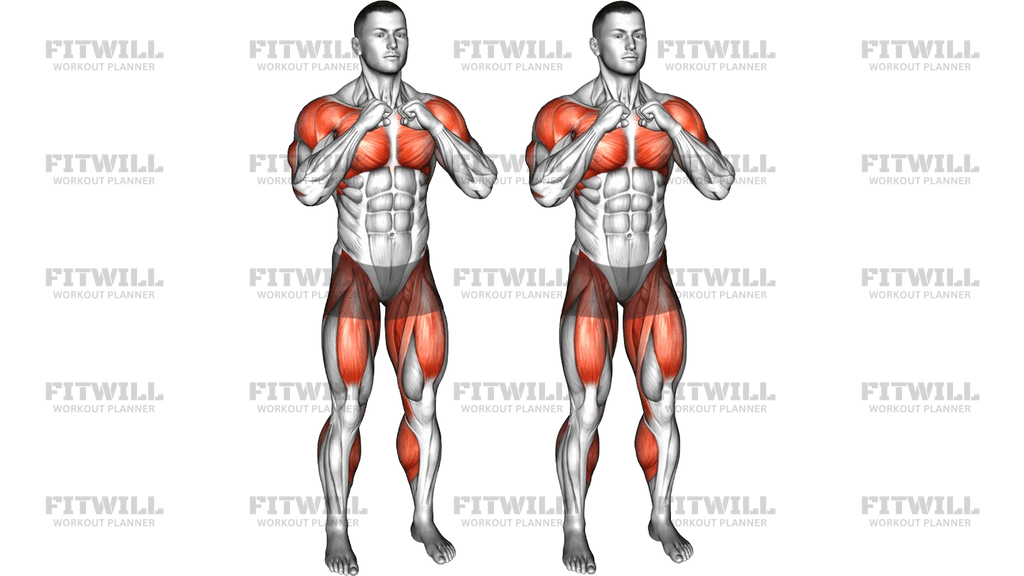
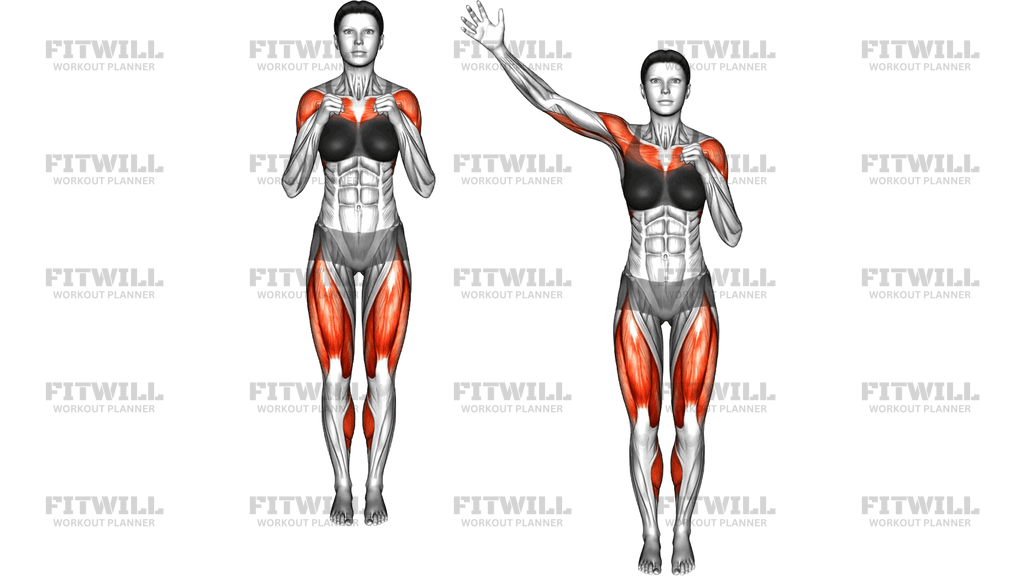
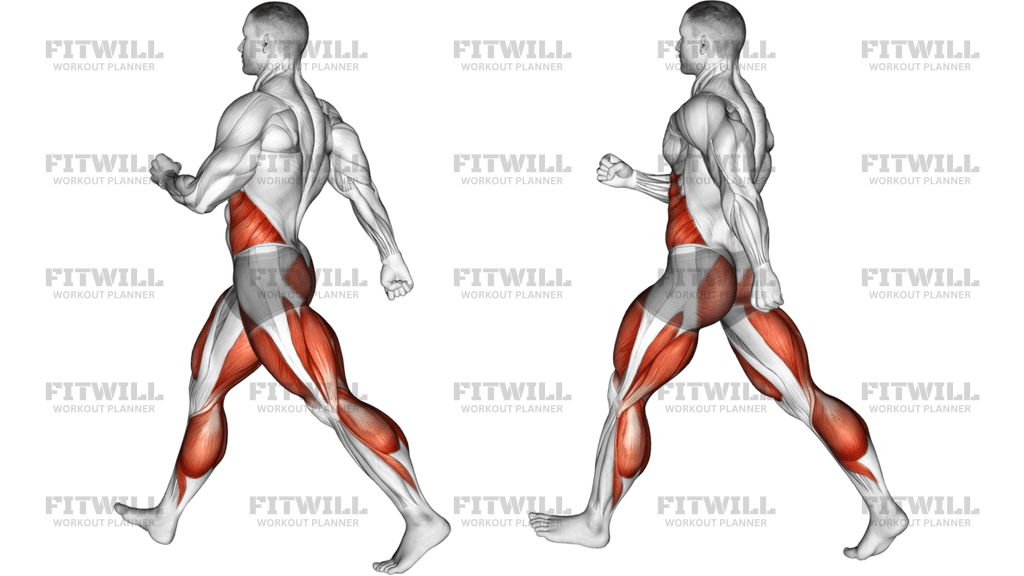
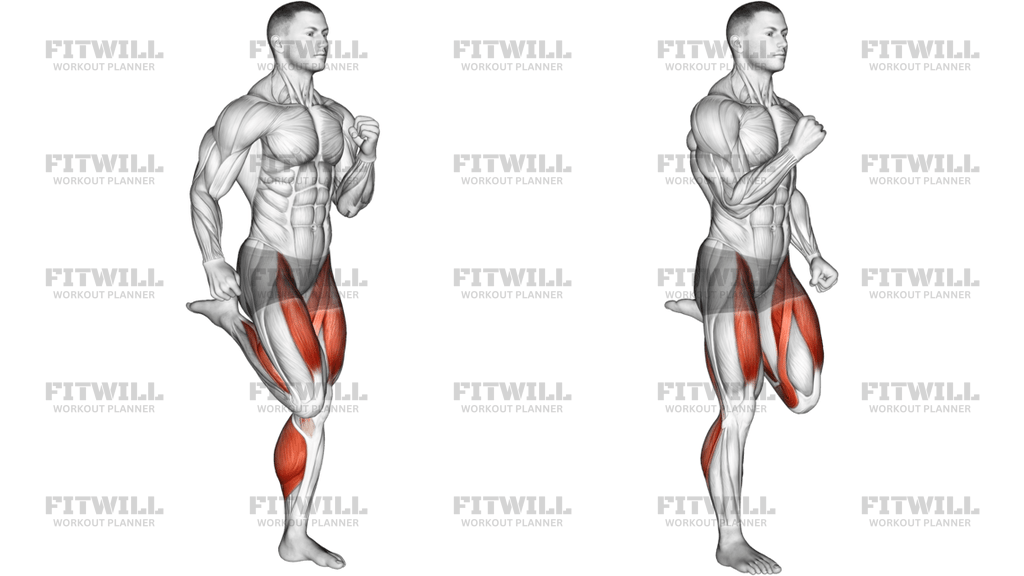
Marching On Spot
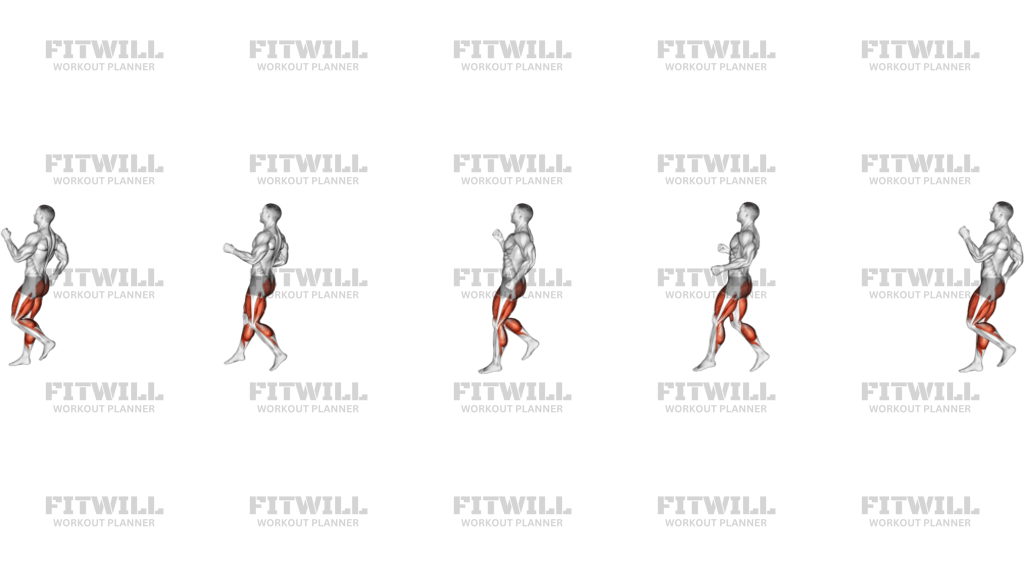
Marching On Spot is a bodyweight cardio drill that has you lift one knee at a time while staying in place. It looks simple, but the value comes from how cleanly you can repeat the pattern: upright posture, controlled hip flexion, active arms, and steady rhythm. The exercise is often used to raise body temperature, rehearse running mechanics, or add low-impact conditioning without needing any equipment.
This movement asks the hips, thighs, calves, and trunk to work together. The lifted leg drives the motion, while the standing leg supports balance and keeps you tall. The core helps stop the torso from leaning side to side, and the arm swing adds pace without letting the shoulders tense up. Because the exercise is repetitive, small posture errors show up fast, so the best reps are the ones that stay smooth and symmetrical.
Setup matters more than most people expect. Start with your feet under your hips, ribs stacked over the pelvis, and your eyes forward. From there, shift weight to one foot and lift the opposite knee to a comfortable height while the other leg stays grounded. The goal is not to throw the knee as high as possible; it is to keep the pelvis level, the torso quiet, and the steps light enough that you can repeat them for time.
As you march, the knee should come up and down on a clean vertical path rather than swinging across the body. Land softly through the midfoot, then transfer weight in a controlled way before the next lift. Keep breathing steady so the pace stays sustainable. If the drill is being used as a warm-up, the march should feel crisp and rhythmic. If it is part of conditioning, the pace can be faster, but only as long as posture and coordination stay intact.
Marching On Spot is useful for warm-ups, active recovery, home workouts, and low-impact cardio intervals. It can also help beginners learn basic single-leg balance and trunk control before moving to more explosive drills. The exercise is easy to scale by changing cadence, knee height, arm drive, or duration, which makes it practical for both general fitness and athletic prep. The main coaching priority is still the same at every level: stay upright, stay balanced, and keep the march controlled instead of bouncing or twisting through each rep.
Fitwill
Log Workouts, Track Progress & Build Strength.
Achieve more with Fitwill: explore over 9600 exercises with images and videos, access built-in and custom workouts, perfect for both gym and home sessions, and see real results.
Start your journey. Download today!




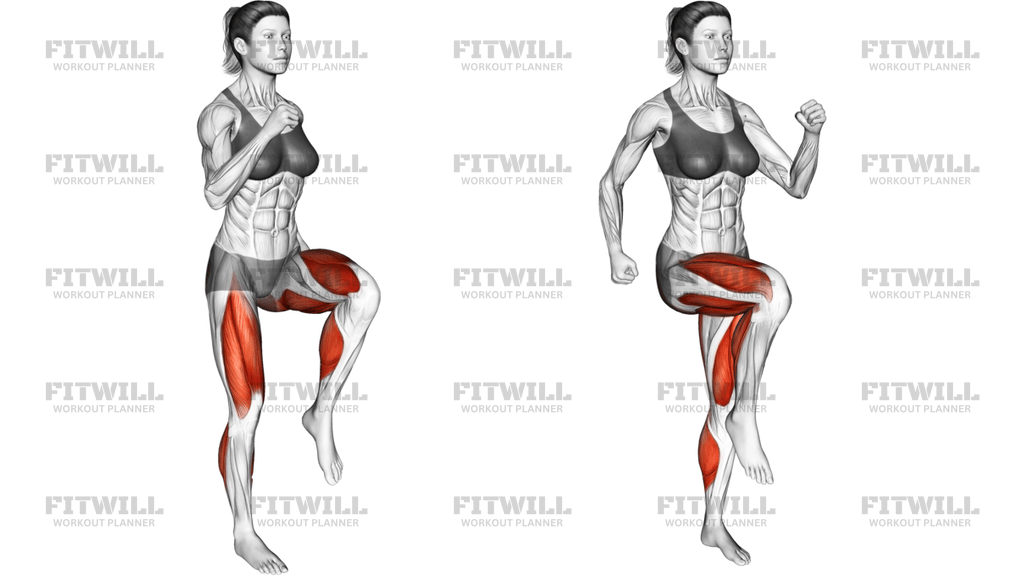
Instructions
- Stand tall with your feet under your hips, arms relaxed at your sides, and your weight evenly distributed.
- Set your ribs over your pelvis, look straight ahead, and soften your knees so you can shift weight without tipping forward.
- Lift one knee up in front of you to about hip height or the highest level you can control without leaning back.
- Drive the opposite arm forward naturally as the knee rises, keeping the shoulders loose and the elbows bent.
- Lower the lifted foot back to the floor under control and transfer your weight onto that leg before the next step.
- Immediately lift the other knee and match the same rhythm on the second side so the march stays even.
- Land softly on the supporting foot each time, using a light toe-to-midfoot contact instead of stomping.
- Keep marching in place for the planned time or number of steps, breathing steadily and maintaining an upright torso.
- Stop the set if you start leaning, twisting, or losing balance, then reset before continuing.
Tips & Tricks
- Pick a knee height you can repeat cleanly; if the torso rocks, the lift is too high for your current tempo.
- Think of marching from the hip rather than kicking the foot forward, which keeps the step more vertical and controlled.
- Let the arms swing in opposition to the legs, but keep the hands relaxed so the shoulders do not tense up.
- Keep your chest tall and your pelvis level; dropping one hip at a time usually means the stance leg is fatiguing or the pace is too fast.
- Use a quick but quiet foot contact on the floor to reduce impact and keep the drill suitable for longer intervals.
- If balance is an issue, slow the cadence first instead of holding onto furniture or chopping the range of motion too much.
- Breathe in for a few steps and out for a few steps so the rhythm feels natural instead of forced.
- For conditioning, add time before you add speed; a cleaner march is more useful than a frantic one.
Frequently Asked Questions
What does Marching On Spot work the most?
It mainly trains the hip flexors, thighs, calves, and core while the standing leg handles most of the balance demand.
Is Marching On Spot good for beginners?
Yes. It is one of the simplest ways to practice low-impact cardio, balance, and upright posture at the same time.
How high should I bring my knees?
High enough to feel the hip lift and rhythm, but not so high that you have to lean back, sway, or lose control of the supporting leg.
Should my arms move during the march?
Yes. A natural opposite arm swing helps keep the torso organized and makes the movement feel more like a real marching or running pattern.
What is the biggest mistake with this exercise?
Most problems come from bouncing, leaning, or slamming the feet down instead of keeping the steps light and controlled.
Can I use this as a warm-up?
Yes. It is a good warm-up for walking, running, circuits, or any session that needs a gradual increase in heart rate.
How can I make it harder?
Increase the pace, add time, or exaggerate the arm drive slightly while keeping the torso tall and the steps quiet.
Is Marching On Spot the same as high knees?
They are related, but marching is usually slower and more controlled, while high knees are faster and more aggressive.