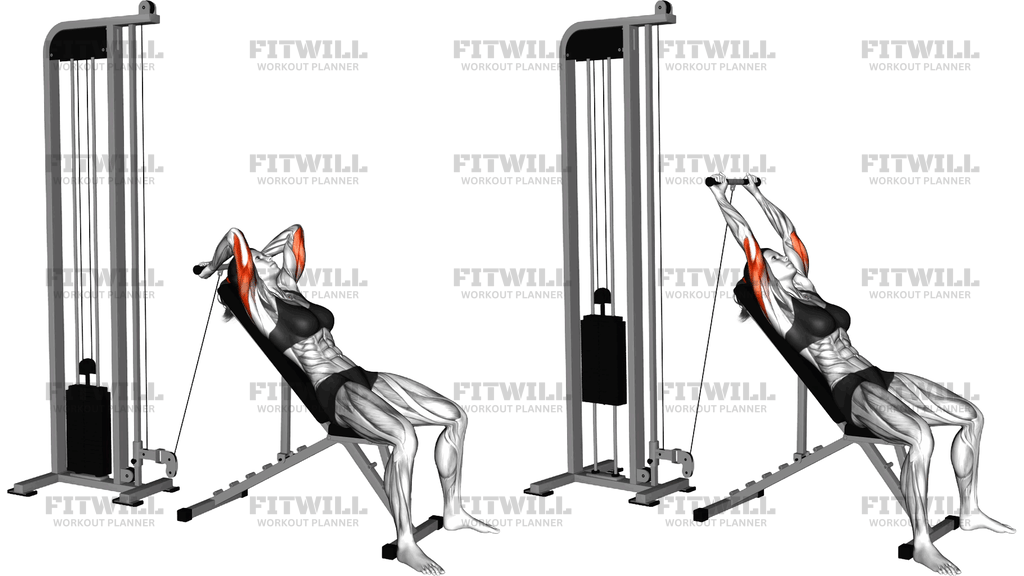
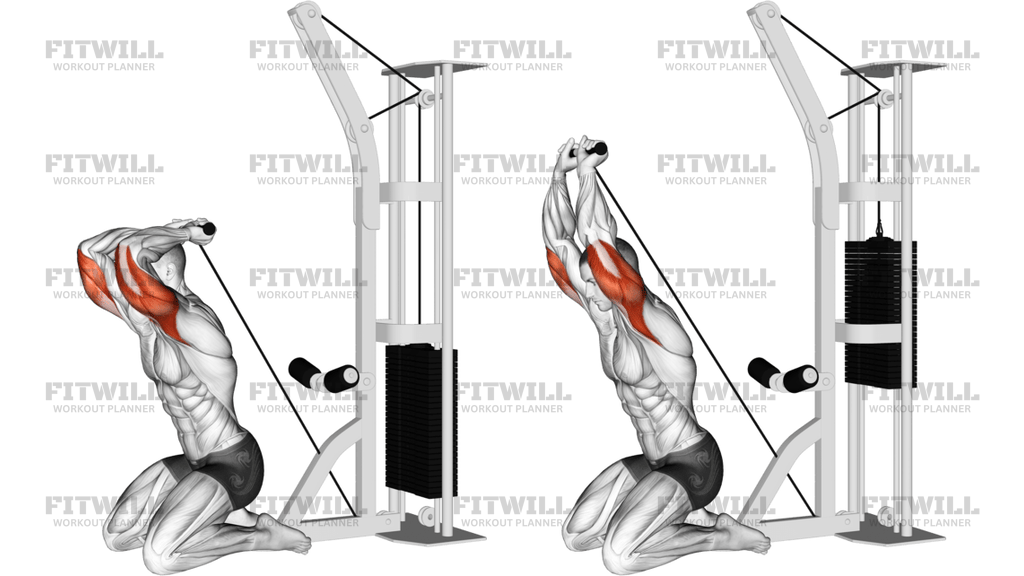
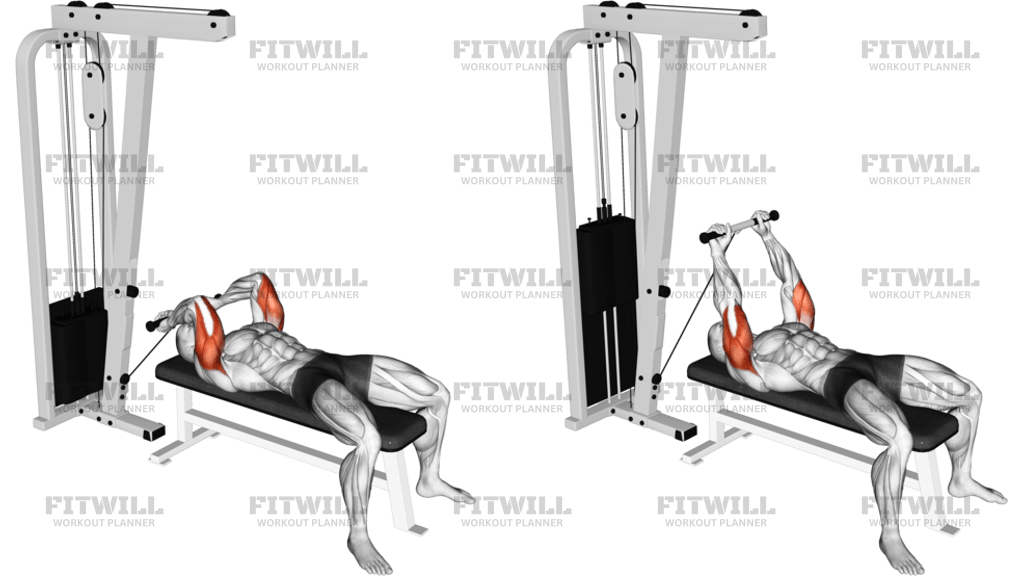
Cable Seated High Pulley Overhead Triceps Extension
Cable Seated High Pulley Overhead Triceps Extension is a cable isolation exercise that keeps the triceps working through a long, controlled elbow path while the shoulder stays mostly fixed. Because the cable comes from a high pulley behind and above the body, the line of pull stays active through most of the rep instead of disappearing at the bottom. That makes Cable Seated High Pulley Overhead Triceps Extension a useful choice when you want direct triceps work with constant tension and less reliance on momentum.
The main target is the triceps brachii, with a strong emphasis on the long head because the arms start in an overhead position. The forearms only hold the handle, the shoulders stabilize the upper arm, and the core helps keep the ribs from flaring while the stack tries to pull you backward. In practical terms, the exercise should feel like the elbow is opening and closing while the torso stays quiet.
Setup matters a lot in Cable Seated High Pulley Overhead Triceps Extension. Sit tall on the bench or seat facing away from the stack, place the feet flat, and set the handle so the cable stays taut when your elbows are bent and the hands are just behind the head. Keep the upper arms near the ears, wrists neutral, and elbows pointed up and slightly forward. If you have to lean back to make the handle move, the load is too heavy or the setup is too close to the machine.
On each repetition, press the handle forward and up by straightening the elbows until the arms are nearly straight, then bring it back under control until the triceps lengthen again. The lower back should not arch and the shoulders should not roll forward to steal the rep. Exhale as you extend and inhale as you return so the rhythm stays steady and the cable never jerks from one position to the next.
Cable Seated High Pulley Overhead Triceps Extension fits well after pressing work or on an arm-focused accessory block when you want elbow extension strength and a strong stretch on the triceps. It is also a good option for lifters who prefer cable resistance over free weights because the path is guided and easy to repeat. Use a load that lets you keep the same elbow path every rep, and stop the set if the elbows flare, the wrists bend back, or the movement turns into a torso swing.
[ Workout Log & Planner ]
Put your next workout in Fitwill
Keep your plan and training log ready when you are.


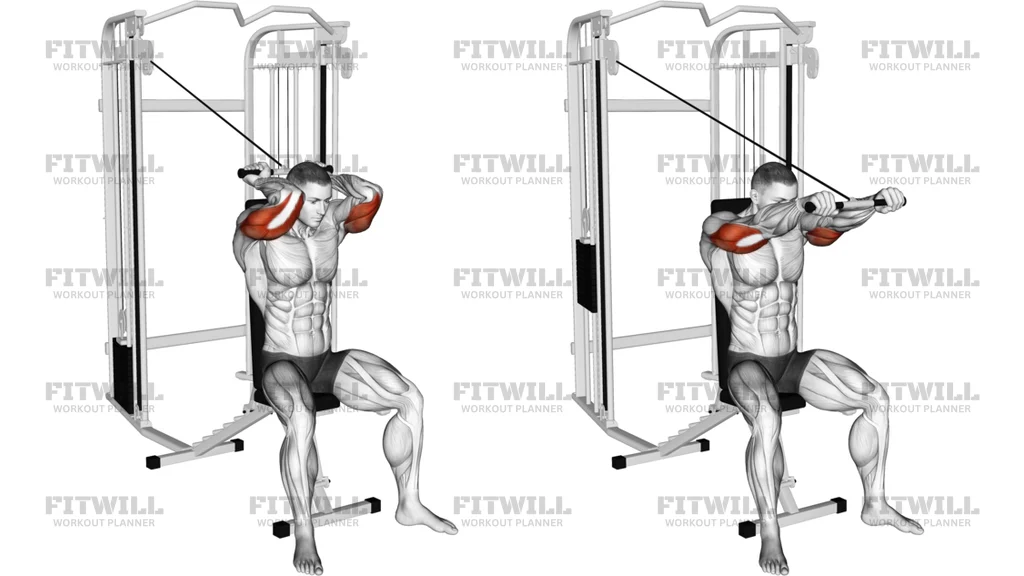
Instructions
- Sit on a bench or seat facing away from the high pulley so the cable runs down behind your head.
- Hold the handle with both hands and bend your elbows so the attachment starts just behind the crown of your head.
- Plant your feet flat, sit tall, and keep your ribs stacked over your hips before the first rep.
- Keep your upper arms close to your ears and point your elbows up and slightly forward, not wide to the sides.
- Brace your torso and press the handle forward by straightening the elbows without changing your torso angle.
- Finish the rep with the arms nearly straight and the triceps fully contracted, but do not slam into the lockout.
- Lower the handle back behind your head under control until the triceps lengthen and the cable remains smooth.
- Exhale as you extend, inhale as you return, and stop the set if you need to arch your back or swing the torso.
Tips & Tricks
- Set the seat distance so the cable is already taut when the handle is behind your head; slack at the bottom usually means the setup is too close.
- Keep the upper arms fixed near your ears so the elbows do the work instead of the shoulders.
- If your elbows flare outward, reduce the load and think about aiming your forearms toward the ceiling on the way up.
- Keep the wrists stacked with the knuckles facing forward; bent wrists make the handle feel heavier and can irritate the elbows.
- Pause for a beat at full extension to stop yourself from bouncing the weight off the joint.
- Use a slower lowering phase so the cable stays smooth and the triceps stay loaded through the stretch.
- Do not let the ribs pop up when the handle moves; that usually means the weight is forcing a back arch.
- If the handle touches the back of your head or neck, open the elbow angle a little at the start rather than forcing a bigger range.
Frequently Asked Questions
What does Cable Seated High Pulley Overhead Triceps Extension work most?
It targets the triceps most, especially the long head because the arms start overhead.
Is Cable Seated High Pulley Overhead Triceps Extension good for beginners?
Yes, if the load is light and the seat is set so the cable stays smooth behind the head.
Where should my elbows be in Cable Seated High Pulley Overhead Triceps Extension?
Keep them close to your ears and slightly forward so the upper arms stay quiet while the elbows extend.
What handle should I use for Cable Seated High Pulley Overhead Triceps Extension?
A handle attachment works well as long as you can keep the wrists neutral and the cable line comfortable behind the head.
Why does Cable Seated High Pulley Overhead Triceps Extension feel awkward at the bottom?
Usually the seat is too close to the stack or the elbows are starting too open, so the cable loses tension behind the head.
What are the most common mistakes in Cable Seated High Pulley Overhead Triceps Extension?
Leaning back, flaring the elbows, bending the wrists, and turning the rep into a torso swing are the main ones.
Can I do Cable Seated High Pulley Overhead Triceps Extension one arm at a time?
Yes, a single-arm version is useful if one elbow drifts or one side has less triceps control.
When should I use Cable Seated High Pulley Overhead Triceps Extension in a workout?
It fits well after pressing movements or on an arm day when you want direct triceps volume and a strong overhead stretch.