Negative Biceps Leg Concentration Curl
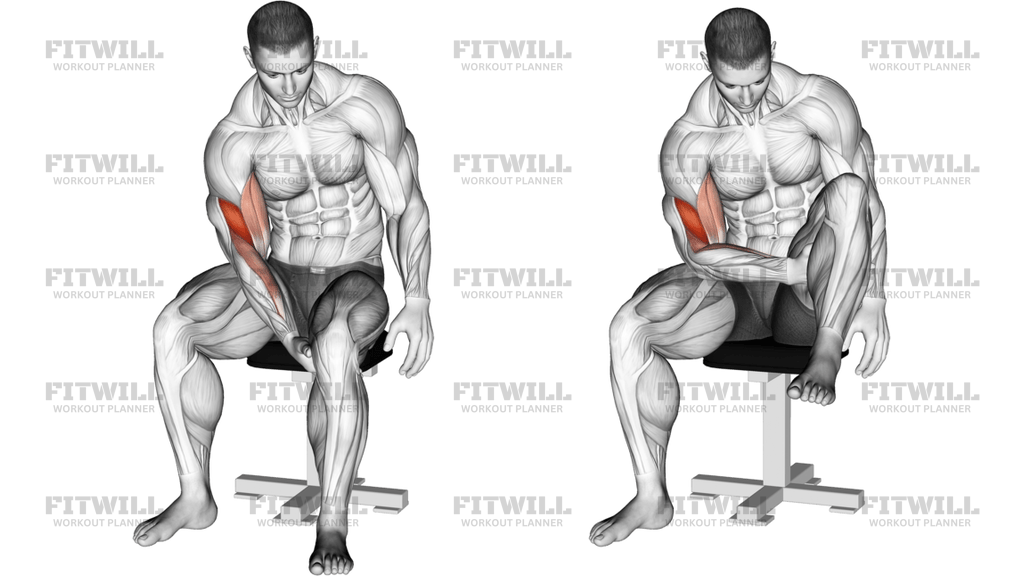
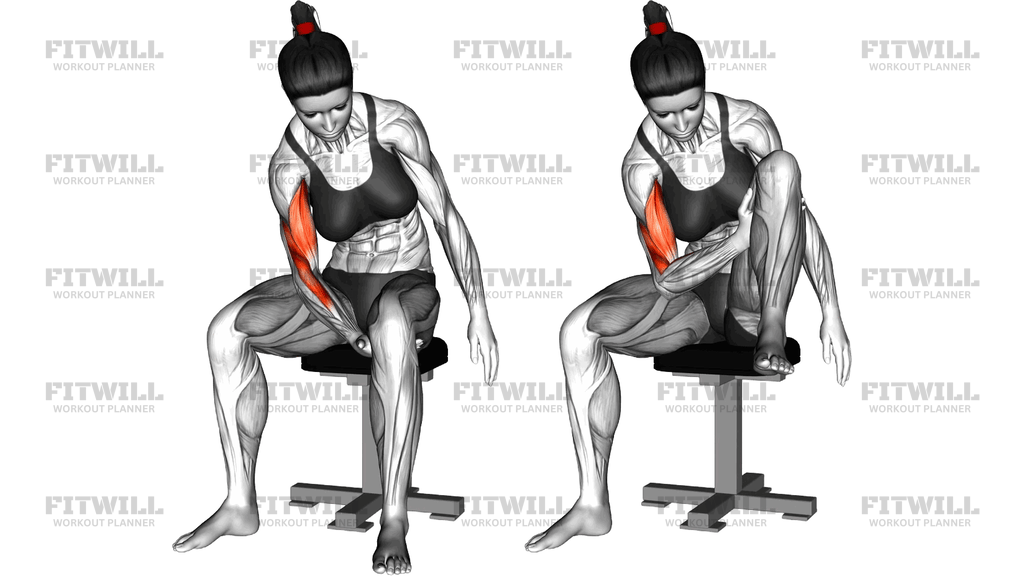
The Negative Biceps Leg Concentration Curl is a bodyweight take on the classic concentration curl in which your own lower leg acts as the load. You sit on a bench or sturdy stool, pin the back of your working upper arm against your inner thigh, grip just above your ankle, and curl the forearm toward the shoulder by lifting the foot off the floor. The name points to the key feature: the lowering phase is deliberately slow, so the biceps works hard through the eccentric as it resists the weight of the leg dropping back down.
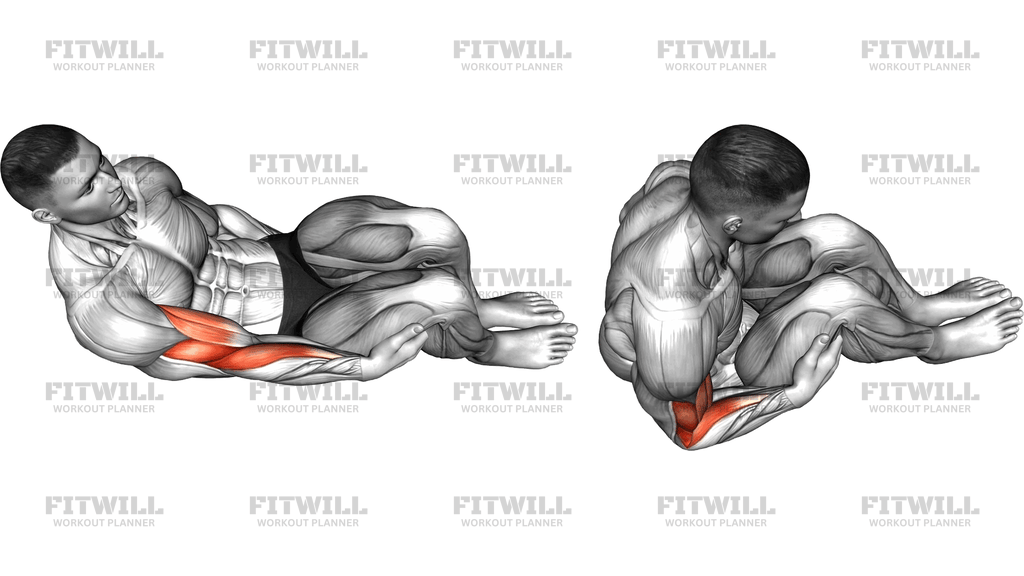
The primary muscle at work is the biceps brachii, with solid support from the brachialis and brachioradialis as the elbow bends, and the forearm flexors and grip working to hold onto the ankle throughout. Because the elbow is locked against the thigh and the torso is leaned forward, there is almost no room for momentum or shoulder swing to steal work from the elbow flexors, which makes this a very honest test of the biceps despite the modest load.
The setup is what separates this from a sloppy arm curl. Sitting with the feet wide and the torso hinged forward from the hips fixes the shoulder and gives the upper arm a firm surface to brace against, so the elbow joint becomes the only moving part. That isolation is exactly why the concentration position is so effective for building the mind-muscle connection with the biceps, and wrapping the hand around the ankle keeps you honest: if the curl stalls, the leg simply stops rising.
To perform it well, curl the hand up toward the same-side shoulder until the elbow is fully bent and the lower leg hangs raised, then take three to five seconds to lower the leg back toward the floor while keeping the elbow glued to the inner thigh. Exhale on the way up, breathe in as you resist the descent, and pause briefly at the bottom before starting the next rep. The slow negative is where most of the tension lives, so resist the temptation to rush it.
This variation suits people training at home with no equipment beyond a seat, lifters who want a high-tension biceps finisher after heavier dumbbell or barbell work, and anyone working on feeling the biceps contract properly before adding external load. Because the resistance is limited to the weight of your own lower leg, treat it as a controlled-tempo accessory rather than a primary mass builder, and stop the set if you feel any pinching at the elbow or shoulder.
Fitwill
Log Workouts, Track Progress & Build Strength.
Achieve more with Fitwill: explore over 9600 exercises with images and videos, access built-in and custom workouts, perfect for both gym and home sessions, and see real results.
Start your journey. Download today!




Instructions
- Sit on a sturdy bench or stool with your feet flat on the floor and spread wider than your shoulders so your torso can lean forward between them.
- Hinge forward from the hips with a flat back and press the back of your right upper arm against the inner thigh of your right leg, just above the knee.
- Lift your right foot a few inches off the floor and wrap your right hand firmly around the front of your right ankle, palm facing up, with the elbow still braced on the inner thigh.
- Place your left hand on your left knee or thigh for stability and brace your core so your torso stays still.
- Curl your right forearm up toward your right shoulder, bending only at the elbow, and raise the lower leg as high as the contraction allows.
- Pause for a beat at the top with the hand near the shoulder, elbow fully bent and pinned to the thigh, and squeeze the biceps.
- Lower the leg under control for three to five seconds, letting the biceps resist the weight of the leg until the arm is nearly straight at the bottom.
- Exhale as you curl up and inhale slowly as you lower the leg down.
- Reset the foot on the floor briefly if needed, then repeat for the target reps before switching to the left arm and leg.
Tips & Tricks
- If your elbow drifts away from the inner thigh mid-set, the set is over before you know it — re-press the upper arm against the leg on every rep, since that contact is what blocks momentum.
- The temptation with a fixed load like your own leg is to lower it in a second; a two-count descent turns this into a light leg lift, so count three to five seconds down to keep the biceps under real eccentric tension.
- Keep the shoulder passive. If you find your upper arm lifting or rotating to help the hand reach the shoulder, lighten the effort and let the elbow do all the bending.
- Grip just above the ankle bone rather than on the foot itself — holding the foot lets the ankle wobble and shifts tension toward the grip instead of the biceps.
- Do not crane your neck to watch the arm. Keep the head in line with the spine and eyes forward or slightly down; watching the curl usually rounds the upper back and shortens the range.
- Because the resistance is fixed, adjust difficulty with tempo instead of reps alone: add a two-second pause at the top or a full stop just above the bottom to make the set harder.
- If the biceps cramps near full contraction, which is common in this position, shorten the top range slightly and skip the extra squeeze until your arms adapt.
- Stop the set if you feel any sharp pinching at the inner elbow — back off the range of motion or reduce the descent time before continuing.
Frequently Asked Questions
What muscles does the Negative Biceps Leg Concentration Curl work?
The biceps brachii is the main mover, with the brachialis and brachioradialis assisting elbow flexion. The forearm flexors and grip also work continuously because your hand holds the ankle for the entire set.
Do I need any equipment for the Negative Biceps Leg Concentration Curl?
Only a stable bench, stool, or chair to sit on — the resistance comes entirely from the weight of your own lower leg. Make sure the seat will not tip when you lean forward.
Why is the negative phase emphasized in this exercise?
The load is limited to your leg, so the slow three-to-five second lowering phase is what creates meaningful tension in the biceps. Rushing the descent turns the set into low-effort repetitions with little training value.
Where exactly should my elbow be during the Negative Biceps Leg Concentration Curl?
The back of the working upper arm should stay pressed against the inner thigh of the same-side leg, just above the knee, for every rep. If the elbow floats off the thigh, momentum and shoulder movement start taking over.
What is the most common mistake in this movement?
Lowering the leg too quickly and rocking the torso to help lift it. Both mistakes are easy to spot: the descent speeds up and your chest lifts away from the thigh, so reset your lean and slow the negative.
Is the Negative Biceps Leg Concentration Curl suitable for beginners?
Yes, it is a low-risk way to learn the concentration curl position and the feeling of a biceps contraction without any equipment. Just keep the tempo controlled and expect the fixed load to limit how challenging it becomes over time.
How many reps should I do per set?
Somewhere around eight to fifteen reps per side with a three-to-five second negative works well for most people. Because the resistance cannot be increased, extend sets through slower tempo and pauses rather than chasing very high rep counts.
Can the Negative Biceps Leg Concentration Curl replace dumbbell concentration curls?
Not entirely — the weight of your lower leg caps the load, so it works best as a finisher, a warm-up, or a travel option. For progressive overload with heavier resistance, dumbbell or cable concentration curls remain the better choice.
My grip fatigues before my biceps on this exercise — what should I change?
Move your grip slightly higher on the shin just above the ankle, where the leg is easier to hold, and consciously keep the hand relaxed rather than squeezing. If grip still gives out first, the biceps stimulus is still intact on the slow lowering phase.
Is it safe to do the Negative Biceps Leg Concentration Curl every day?
Daily training is possible because the load is light, but the biceps still need recovery to adapt. Two to four sessions per week with at least a day between hard sessions is a more sensible starting point, and any lingering elbow discomfort is a signal to back off.