Kneeling Fist Circle
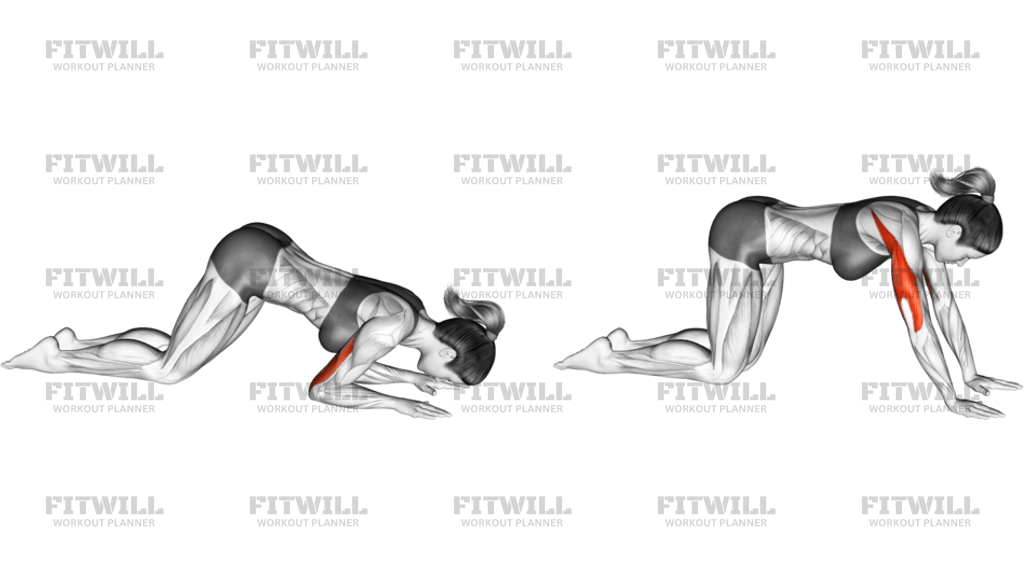
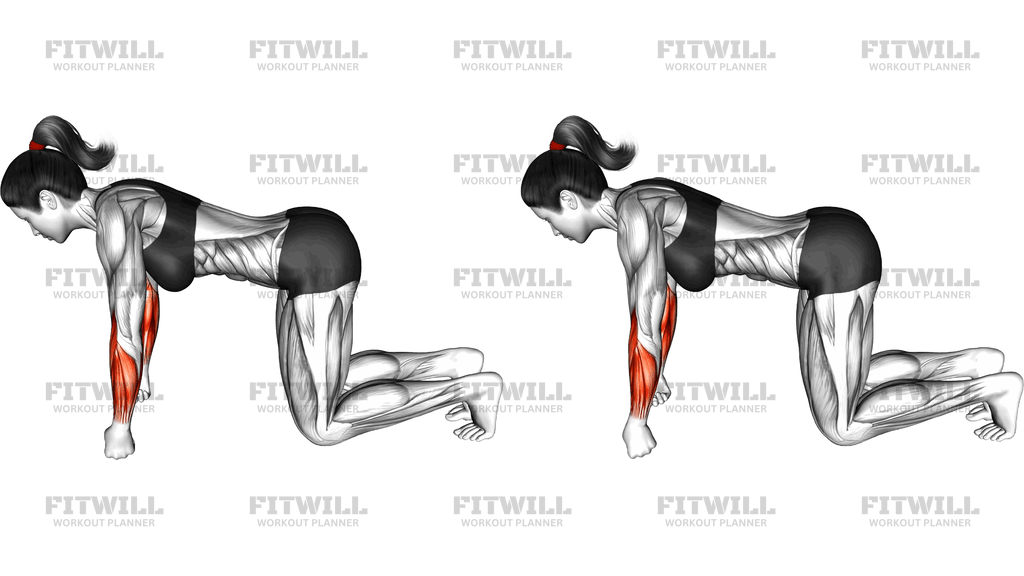
Kneeling Fist Circle is a body-weight wrist and forearm conditioning drill performed from a hands-and-knees position. Instead of resting on flat palms, you support your upper body on closed fists and slowly draw circles with your fists, letting the wrists roll through their range of motion while staying weight-bearing. The red-highlighted forearms in the movement show where the work happens: the wrist extensors along the outside of the forearm and the wrist flexors along the inside share the load as the fist rotates.
This exercise is most useful for people whose wrists take regular punishment — lifters who press, squat, or hold a bar, martial artists who punch or do knuckle drills, desk workers with stiff forearms, and anyone rebuilding wrist tolerance after long periods of avoiding loaded wrist extension. Because the kneeling position limits how much body weight loads the hands, you get a controlled, adjustable dose of stress that is hard to replicate with a dumbbell or wrist roller.
The setup is what makes the movement safe. Kneeling with knees under the hips and fists directly under the shoulders keeps the load line vertical through the forearm bones. If your fists drift forward of your shoulders or your hips slide back, the wrists end up at odd angles under load, which is exactly where strain creeps in. Keep a soft bend in the elbows, brace the trunk lightly, and let the shoulder blades stay broad rather than collapsing between them.
To execute it well, think of the circle coming from the wrist joint itself, not from swinging the whole arm. The fist pivots so the knuckles roll toward the thumb side, forward, toward the pinky side, and back, tracing a smooth loop. Keep the circle small at first — a few centimeters in each direction is plenty when your body weight is on top of it. One direction for all reps, then reverse.
You will see this drill in warm-ups before pushing movements, in grip and wrist-strength circuits, and in rehab-style programming for grumpy wrists. It pairs well with kneeling wrist stretches and palm-supported mobility work as a complete wrist prep block. Treat it like a strength exercise for small muscles: slow tempo, modest volume, and steady progression beat racing through big circles.
The main safety point is to respect pain signals at the wrist. Pressure on the knuckles and a working stretch through the forearm are normal; sharp pain at the wrist crease or the base of the thumb is not. If flat-fisted circling is too much, reduce the load by widening your knee stance or elevating your hands on a low step, and build back up gradually.
[ Workout Log & Planner ]
Put your next workout in Fitwill
Keep your plan and training log ready when you are.


Instructions
- Kneel on an exercise mat with your knees directly under your hips and your shins flat behind you, toes tucked or relaxed.
- Place your closed fists on the mat shoulder-width apart, knuckles down, directly under your shoulders, with a soft bend in each elbow.
- Stack your shoulders over your fists and your hips over your knees so your torso is close to parallel with the floor, and lightly brace your stomach.
- Press gently through the knuckles so the forearms take a small share of your body weight before any movement starts.
- Keeping your elbow still, roll the fist forward and toward the thumb side, letting the wrist angle change as you draw the first quarter of the circle.
- Continue the loop toward the pinky side and back to the start, tracing a small, smooth circle with the fist while your weight stays even across the knuckles.
- Complete all reps in one direction, then reverse the circle for the same number of reps on both wrists.
- Breathe steadily throughout, exhaling as the fist rolls through the hardest part of the arc.
- When finished, ease the pressure off the fists, sit your hips back toward your heels, and gently straighten and shake out the wrists before the next set.
Tips & Tricks
- Start with circles no bigger than a coin. Because your torso weight sits over the hands, a large arc multiplies the leverage on the wrist very quickly.
- If the knuckles hurt on a hard floor, use a folded mat or a soft-but-firm surface so the contact point is not the limiting factor.
- Watch for the hips drifting backward as the circles get harder — that sneak-away reduces the wrist load and turns the drill into an arm swing. Keep the hips stacked over the knees.
- Keep the circle shape round. Most people flatten it into a back-and-forth roll, which only trains one direction of wrist motion instead of the full loop.
- Distribute weight across all leading knuckles. If you feel it concentrated on the index knuckle, rotate the fist slightly so the middle knuckles lead.
- A quick forearm pump or mild ache in the wrist extensors is expected; tingling or numbness in the fingers means you should stop and reduce the load before continuing.
- Scale by shifting load: bring the knees closer to the hands to make it easier, or walk the fists slightly ahead of the shoulders to make it harder.
- Do this before pressing or pulling workouts as prep, or after long desk days to move the wrists through loaded rotation they rarely get.
Frequently Asked Questions
What muscles does the Kneeling Fist Circle work?
The main work comes from the forearm muscles that move and steady the wrist — the wrist extensors and wrist flexors — along with the small stabilizers around the wrist joint. The shoulders and trunk work isometrically to hold the kneeling plank position.
Is the Kneeling Fist Circle good for beginners?
Yes, because the kneeling position lets you control exactly how much body weight rests on the fists. Beginners should use small circles and keep most of the load in the legs at first, then shift weight forward as wrist tolerance improves.
Why circle on fists instead of flat palms?
Supporting on fists removes the sharp wrist-extension angle that flat-palm floor work creates, and the fist gives the wrist room to roll through rotation under load. It is a friendlier position for stiff or cranky wrists while still training them.
How big should the circles be?
Start with circles of roughly two to three centimeters. If you can keep the loop smooth and pain-free for all reps, gradually enlarge the arc; if the wrist shakes or aches, shrink it again.
My knuckles get sore on the floor — what should I change?
Use a mat or a folded towel under the fists so the contact surface is padded, and check that weight is spread across the middle knuckles rather than concentrated on one. Surface discomfort is common at first and usually fades as the hands adapt.
How many reps and sets should I do?
Around 5-10 circles in each direction per wrist, for 2-3 sets, works well either as a warm-up or as standalone wrist conditioning. Because the muscles are small, quality of the loop matters more than volume.
Can the Kneeling Fist Circle replace wrist curls?
It complements rather than replaces them. Fist circles train rotation and stabilization under a body-weight load, while wrist curls train flexion and extension against external resistance through a longer range. Using both covers more of the wrist's needs.
Is it safe if I have a previous wrist injury?
Clear any returning-to-training wrist with a professional first. Once cleared, start with barely any weight on the fists and tiny circles, and stop anything that produces sharp pain, tingling, or swelling rather than working through it.
How do I progress the Kneeling Fist Circle over time?
Progress in this order: bigger circles, more reps, then more load by walking the fists slightly in front of the shoulders or elevating the knees. Only add load once the current level feels smooth and controlled with no wrist complaints the next day.