Roll Ball Triceps Latissimus Dorsi Stretch
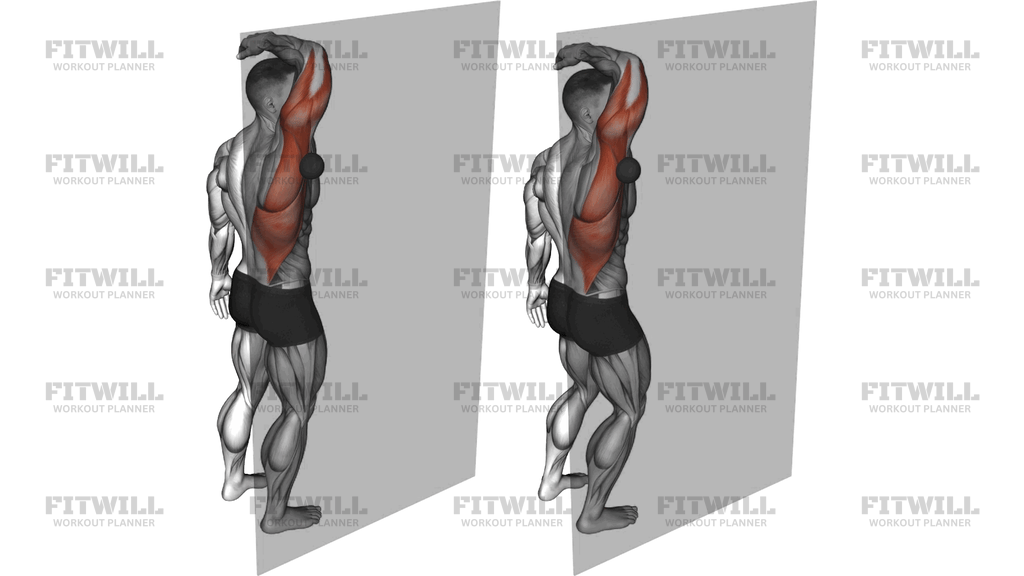
The Roll Ball Triceps Latissimus Dorsi Stretch is a self-release and stretch combination performed against a wall with a small ball. You trap the ball between the side of your upper body and the wall, raise the same-side arm overhead with a bent elbow, and slowly roll the ball over the lat, armpit, and triceps area. The raised, flexed arm position lengthens the triceps and latissimus dorsi at the same time, while the ball adds targeted pressure that a plain overhead stretch cannot provide.
This movement suits anyone whose lats and triceps feel tight or shortened: people who do a lot of pulling in the gym, overhead athletes, swimmers, climbers, and office workers who sit with rounded shoulders for long hours. Because the lat connects the upper arm to the pelvis and lower back, restrictions there often show up as limited overhead reach, an arched lower back during presses, or a shallow bottom position in squats and pull-ups. Working the tissue with a ball while it is stretched can noticeably improve shoulder range of motion.
The setup matters because the ball's starting position determines what you actually target. Placing it just below the armpit, where the lat wraps toward the upper arm, lets you sweep down the outer ribs to hit the full lat. Placing it slightly higher, toward the back of the armpit and the underside of the upper arm, shifts the work toward the triceps, especially the long head. The wall gives you a stable surface to control exactly how much pressure you apply, which makes this far safer and more adjustable than lying on a ball on the floor.
To execute it well, move the ball by shifting your hips and knees, not by cranking your spine sideways. Keep the raised elbow pointing up and the hand relaxed behind your head or neck, and let the ball travel in slow, short passes rather than fast, long scrubbing motions. When you find a tender spot, pause there, breathe slowly, and let the tissue settle before continuing.
The most common practical mistakes are leaning in too hard, rolling over the ribs or lower back instead of the lat, and letting the shoulder shrug up toward the ear. Keep the pressure at a level you could comfortably talk through, spend roughly thirty to sixty seconds per side, and use this after training or between sets rather than as an aggressive pre-lift routine. Stop if you feel sharp pain, numbness, or tingling down the arm.
[ Workout Log & Planner ]
Put your next workout in Fitwill
Keep your plan and training log ready when you are.


Instructions
- Stand sideways to a clear wall with the side you want to stretch facing it, feet about hip-width apart and a few inches away from the base of the wall.
- Trap a small ball between the wall and the outer edge of your torso, starting just below the armpit where the lat and the back of the upper arm meet.
- Raise the same-side arm overhead, bend the elbow, and let your hand rest behind your head or the back of your neck so the triceps and lat are lengthened.
- Lean gently into the wall until you feel firm but tolerable pressure from the ball, and keep the shoulder blade quiet rather than shrugging it toward your ear.
- Bend your knees slightly and shift your hips back and down so the ball rolls slowly along the lat, from the armpit toward the lower ribs, in short controlled passes.
- To bias the triceps, keep the ball high near the underside of the upper arm and extend or flex the elbow a few degrees to move the tissue over the ball.
- When you find a tight or tender spot, pause on it for fifteen to thirty seconds while breathing steadily and letting the pressure do the work.
- Inhale as you reposition the ball and exhale slowly as you sink into each new spot; avoid holding your breath at any point.
- After thirty to sixty seconds, roll the ball back toward the armpit, ease your weight off the wall, lower the arm, and remove the ball.
- Reset your stance and repeat on the other side, spending more time on whichever side feels tighter.
Tips & Tricks
- A common mistake is starting the ball too low on the waist or ribs, where you are rolling soft tissue that is not the lat; reposition it up near the armpit before you begin.
- If the ball skids instead of rolling, you are either leaning too little or wearing slippery fabric; lean in slightly and use short hip-driven movements so the ball grips.
- Rolling too fast is the most frequent error with this setup; the wall-ball position rewards slow passes of a few inches, not long scrubbing strokes.
- Do not crank your spine into a side bend to create pressure; move from the hips and knees so the stretch stays in the lat and triceps instead of the lower back.
- Keep the raised elbow pointed upward and forward rather than flaring backward; a dropped elbow shortens the triceps long head and weakens the stretch.
- If the ball digs into bone at the edge of the shoulder blade or the ribs, angle your body a few degrees so it sits on the muscle belly of the lat.
- Ease off immediately if you feel tingling or numbness in the arm; the ball may be sitting on a nerve pathway near the armpit rather than muscle.
- Your hand resting behind the head should stay relaxed; gripping your neck adds tension through the shoulder and reduces the quality of the stretch.
- Do this after pulling workouts or overhead pressing sessions when the tissue is warm, rather than cold first thing in the morning.
Frequently Asked Questions
Which muscles does the Roll Ball Triceps Latissimus Dorsi Stretch target?
It primarily targets the triceps, especially the long head, and the latissimus dorsi. The teres major and tissues around the armpit also receive pressure as the ball travels through that area.
Where exactly should I place the ball at the start?
Place it just below the armpit on the outer side of your torso, where the lat wraps toward the back of the upper arm. Moving it a few inches higher or lower lets you bias the triceps or the lower lat.
Is this suitable for beginners?
Yes, as long as you start with light pressure and short sessions. The wall setup is one of the most controllable ball positions because you adjust the load simply by leaning more or less.
How is this different from a plain overhead lat stretch?
The ball adds localized pressure and tissue movement while the arm overhead already lengthens the lat and triceps. That combination lets you address specific tight spots that a general stretch passes over.
How long should I spend on each side?
Thirty to sixty seconds per side is a good starting point, pausing fifteen to thirty seconds on any particularly tender spot. You can add a second pass if the area still feels tight.
What kind of ball works best for this movement?
A firm ball roughly the size of a tennis or lacrosse ball works well. Softer balls spread the pressure out and may feel too vague, while very hard balls can dig uncomfortably into the ribs.
Why does my arm tingle when I roll near the armpit?
The armpit contains nerve pathways, and pressure there can cause tingling down the arm. Ease off the wall, reposition the ball slightly lower onto the lat muscle, and reduce how long you pause on that spot.
Can I substitute this if I do not have a ball?
You can approximate it with a foam roll placed vertically between your side and the wall, though the pressure is broader and less targeted. A static wall lat stretch with the arm overhead is another option without equipment.
Should I do this before or after training?
It works best after training or on rest days, when the tissue is warm and you are not about to load the shoulder heavily. Doing it right before heavy pressing or pulling may temporarily reduce output.
When should I avoid the Roll Ball Triceps Latissimus Dorsi Stretch?
Avoid it over areas of recent injury, bruising, or unexplained pain, and stop if you feel sharp pain or lasting numbness rather than mild stretch discomfort. Check with a qualified professional if symptoms persist.