

Day 1 of Week 6 - Full Body 2
वर्कआउट पूरा करने वाला Sergey · 20 अगस्त 2026
This is a high-volume gym-based hypertrophy workout centered on back width, upper-back density, shoulder development, and posterior-chain strength. The descending rep schemes, beginning with high-repetition sets and progressing toward heavier lower-repetition work, create a blend of muscular endurance, metabolic stress, and progressive mechanical tension. The primary targets are the lats, rhomboids, trapezius, rear delts, side and front delts, glutes, hamstrings, and spinal erectors, while the biceps, forearms, triceps, upper chest, and deep shoulder stabilizers provide important assistance. Because this session requires cable stations, a hyperextension bench, a plate, a shoulder-press machine, and dumbbells, it is designed for a commercial or well-equipped home gym. It is best suited to intermediate lifters, although beginners can use the same exercise selection with fewer sets and conservative loads. Advanced trainees can use it as a demanding upper-body and posterior-chain accessory session.
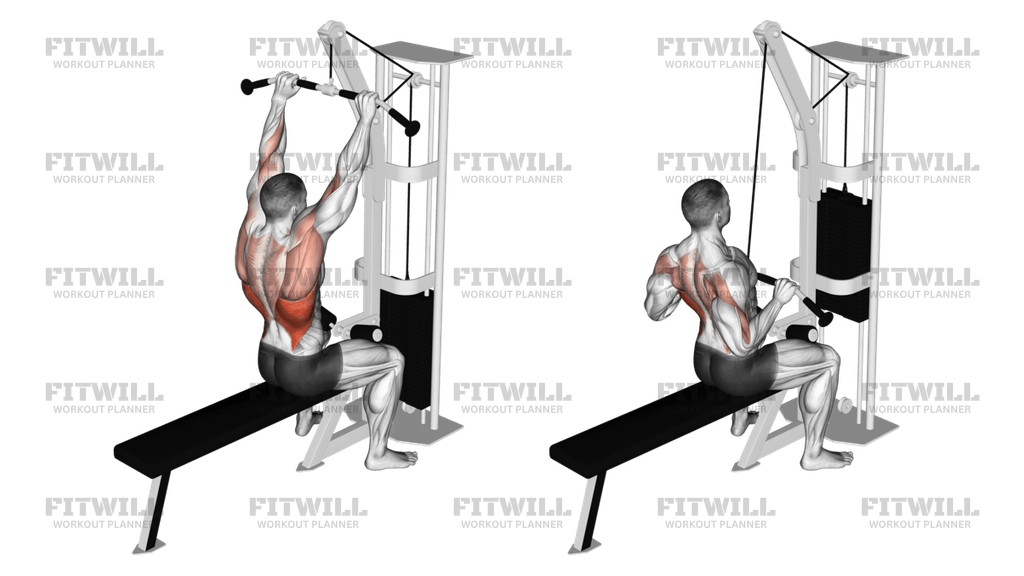
"Cable Bar Lateral Pulldown" is the primary vertical-pull movement and places the greatest emphasis on the latissimus dorsi for back width. The biceps, brachialis, rear delts, lower traps, rhomboids, and forearms assist as you pull. Set the shoulders down away from the ears, lift the chest without excessively arching the lower back, and pull the bar toward the upper chest by driving the elbows down and slightly behind the torso. Allow the arms to lengthen under control at the top without losing shoulder position. Avoid leaning far backward, bouncing the weight stack, pulling the bar behind the neck, or turning each repetition into a biceps curl. Starting with 30 reps encourages a lighter, controlled load and a strong mind-muscle connection; the later 15-, 12-, and 9-rep sets can gradually become more challenging. This exercise establishes the vertical-pulling foundation of the workout and complements the following row, which trains the back from a more horizontal angle.
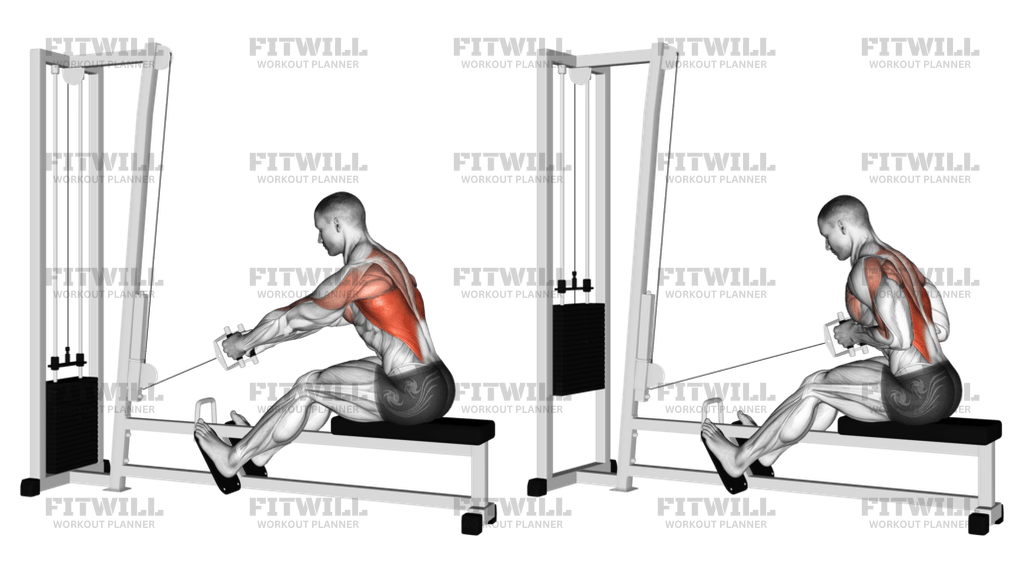
"Cable Elevated Row" builds upper-back thickness while also training the lats through a high cable line of pull. The lats, rhomboids, middle and lower trapezius, and rear delts are the main contributors, with the biceps and forearms assisting the pull. Stand securely with the pulley set around shoulder height, brace the abs, keep the ribs stacked over the pelvis, and pull the handle toward the lower ribs. Think about moving the elbows back while allowing the shoulder blades to come together and slightly down. Return until the arms are long and the shoulder blades can move forward naturally, but do not let the torso rotate or drift backward. Common mistakes include shrugging, overextending the low back, yanking with the arms, and using a loose stance to swing the load. Paired with the pulldown in the overall workout, this row balances vertical pulling with a controlled horizontal row, helping develop both lat size and the scapular strength needed for healthier shoulder mechanics.
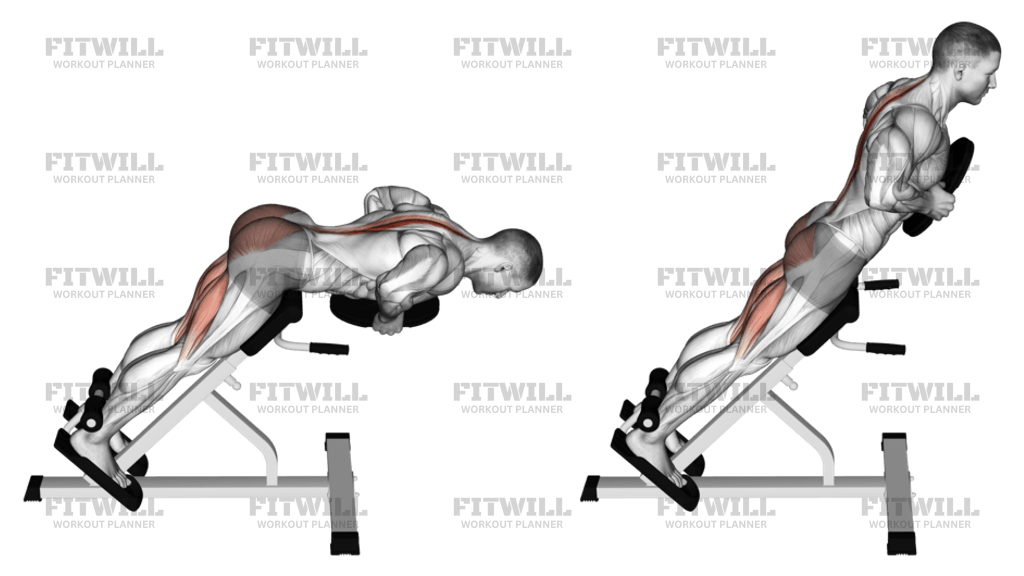
"Plate Hyperextension" shifts the focus to the posterior chain: the glutes, hamstrings, and spinal erectors are the primary muscles, while the upper back and abdominal wall stabilize the torso and the plate. Position the hip pad just below the crease of the hips so you can hinge freely, lock the feet in securely, and hold the plate close to the chest. Lower by hinging at the hips with a neutral neck and braced trunk, then drive the hips into the pad to raise the torso until the body reaches a straight line. Squeeze the glutes at the top, but do not aggressively crank into lumbar hyperextension. Rounding the back, moving too quickly, holding the plate away from the chest, or using excessive spinal extension are common errors. After the high-volume pulling work, this exercise adds direct hip-extension volume without the fatigue and technical demands of heavy barbell deadlifts, making it an effective posterior-chain complement to the upper-body emphasis.
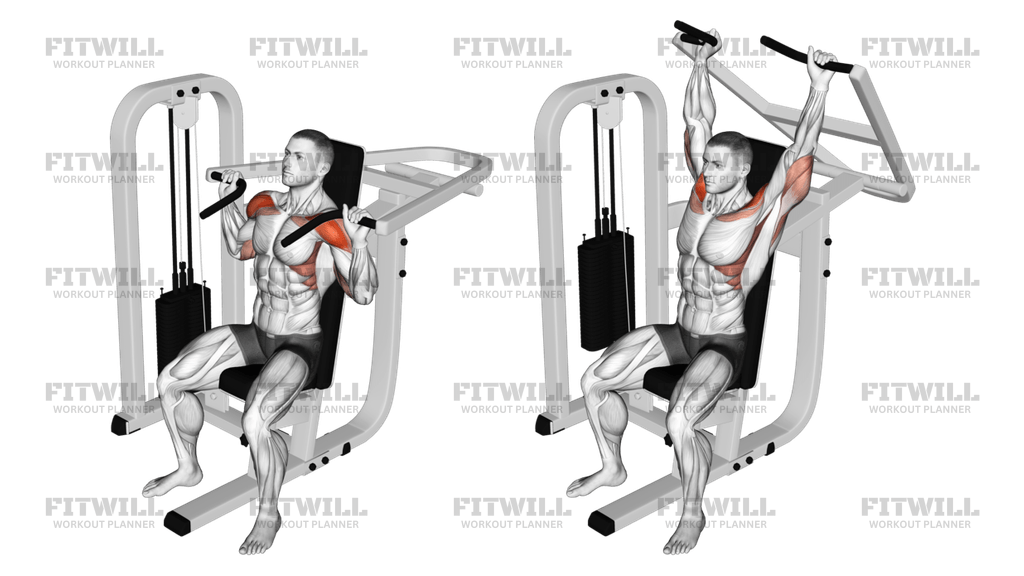
"Lever Seated Shoulder Press" is the workout's main pressing movement and targets the deltoids, especially the front delts, while the triceps and upper chest assist the press. The upper back and rotator cuff help keep the shoulders stable against the machine pad. Adjust the seat so the handles begin around shoulder height, sit fully back against the pad, plant the feet firmly, and keep the wrists aligned over the elbows. Press smoothly along the machine's natural arc while keeping the ribs down and the neck relaxed. Lower slowly to a comfortable bottom position rather than allowing the shoulders to roll forward. Avoid using a dramatic lower-back arch, shrugging into the ears, slamming into lockout, or selecting a load that causes uneven pressing. The machine-supported setup provides a stable way to accumulate substantial shoulder volume after back work, while minimizing the balance demands that would be present with a standing barbell or dumbbell press.
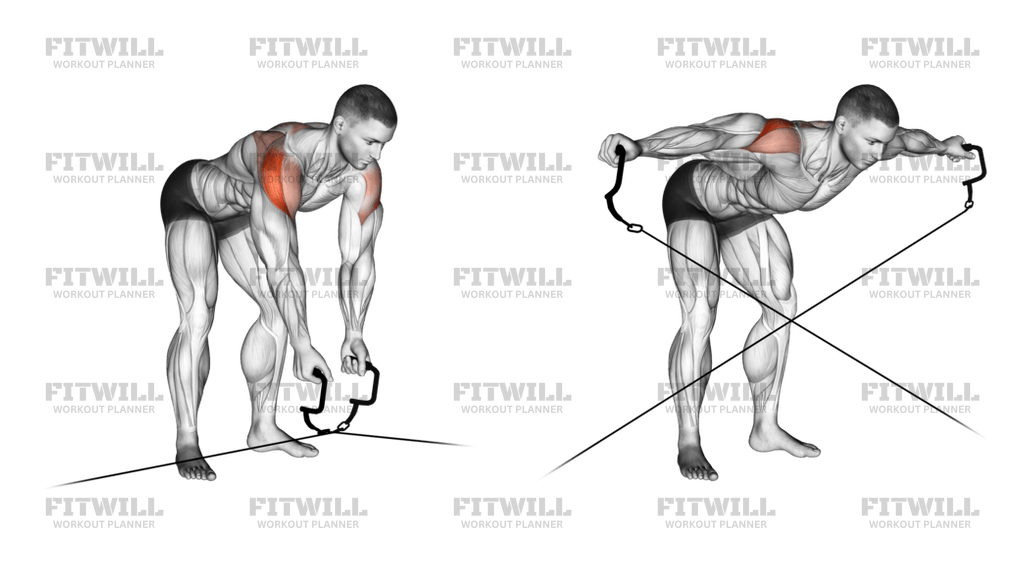
"Cable Cross-Over Reverse Fly" is a rear-delt and upper-back isolation exercise. The posterior deltoids are the primary target, with the rhomboids, middle trapezius, lower traps, and rotator cuff supporting scapular control. Set the pulleys near shoulder height, stand centered between them, take the opposite handle in each hand, and maintain a soft, fixed bend in the elbows. With the torso braced, sweep the arms outward and slightly back as if opening into a wide arc. Pause briefly when the rear delts are fully engaged, then return slowly to the crossed starting position. Keep the shoulders down and the neck long; avoid turning the movement into a row by bending the elbows, shrugging hard with the traps, swinging the torso, or using a load that prevents controlled motion. Following the shoulder press, this exercise brings more balance to the shoulder complex by directly training the rear delts and scapular retractors, which are often undertrained relative to the pressing muscles.
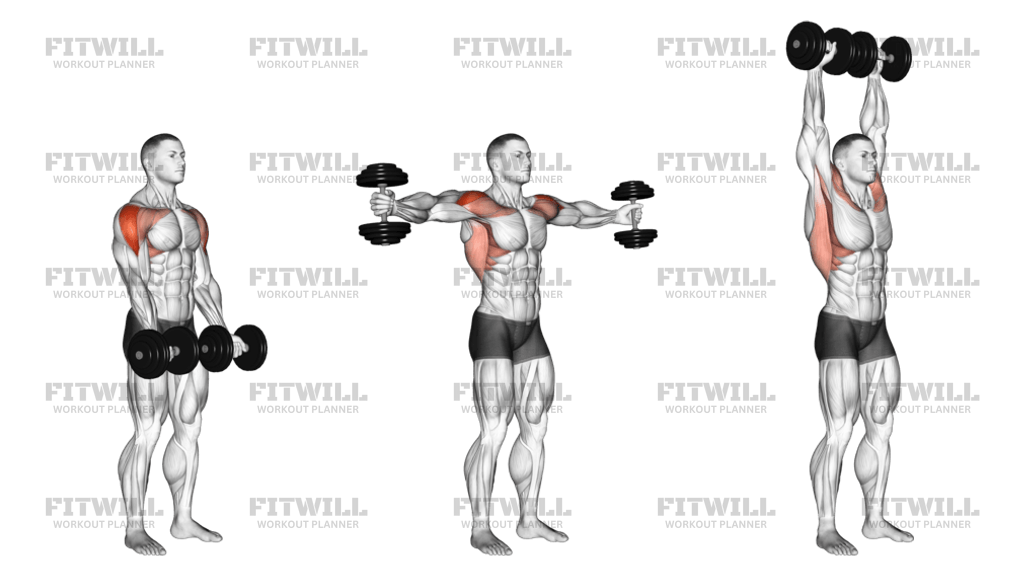
"Dumbbell Standing Around World" finishes the session with light-load shoulder control through a large, continuous range of motion. The front and side delts perform most of the lifting, while the upper traps, rhomboids, triceps, rotator cuff, and trunk musculature help control the arc and stabilize the shoulders. Begin standing tall with the dumbbells at the thighs, feet about hip width apart, a slight bend in the elbows, and the abs braced. Sweep the dumbbells outward to shoulder level and continue in a smooth arc overhead, then reverse the same path with deliberate control. Use very light dumbbells; this movement is about coordination, time under tension, and pain-free shoulder motion rather than maximal loading. Avoid swinging the weights, flaring the ribs, leaning backward, locking the elbows harshly, or forcing an overhead range that produces pinching. As the final shoulder-focused exercise, it reinforces controlled overhead mechanics after the heavier press and rear-delt work.
Overall, this workout is a straight-set, high-volume upper-body and posterior-chain hypertrophy session rather than a superset workout; each numbered exercise is completed independently before moving to the next. Rest roughly 60 to 90 seconds after the higher-repetition sets and 90 to 120 seconds after the heavier 9- to 12-repetition sets, plate hyperextensions, and shoulder presses. Take longer if breathing, technique, or shoulder position is deteriorating. Perform it one to two times per week, allowing at least 48 hours before repeating demanding work for the same muscle groups. Start with five to 10 minutes of light cardio, then perform shoulder circles, band pull-aparts, cable or band external rotations, bodyweight hip hinges, and a few lighter ramp-up sets of pulldowns and presses. Progress by adding small amounts of load only when every prescribed repetition is controlled, or by improving tempo, pauses, range of motion, and rep quality before increasing weight. Maintain a slow, controlled eccentric on all cable and machine work, keep the movements pain-free, and reduce total sets if recovery, joint comfort, or performance begins to decline.
पूरा वर्कआउट Fitwill ऐप में देखें।
[ Fitwill — वर्कआउट रिकॉर्ड और प्लानर ]
अगला वर्कआउट तय करें। अपनी प्रगति देखें।
जिम या घर के लिए रूटीन बनाएँ, हर सेट दर्ज करें और एक ही जगह अपनी प्रगति देखें।
