

Day 1 of Week 10 - Full Body 2
Concluído por Sergey · 4 de outubro de 2026
This high-volume full-body gym workout is built primarily for hypertrophy, using cable, machine, Smith machine, and bodyweight exercises to develop the back, legs, posterior chain, and shoulders. The session emphasizes vertical and horizontal pulling for lat width and upper-back density, paired with direct quad, hamstring, glute, and spinal-erector work before finishing with supported overhead pressing. With multiple 5-set movements and rep ranges spanning 6 to 30 reps, it combines higher-repetition muscle-building volume with a few heavier sets for progressive overload. It is best suited to intermediate and advanced trainees, although newer lifters can use reduced volume and lighter loads while practicing strict technique. This is clearly a gym-based workout, requiring cable stations, selectorized leg machines, a Roman chair or 45-degree back-extension bench, a Smith machine, and a pull-up bar.
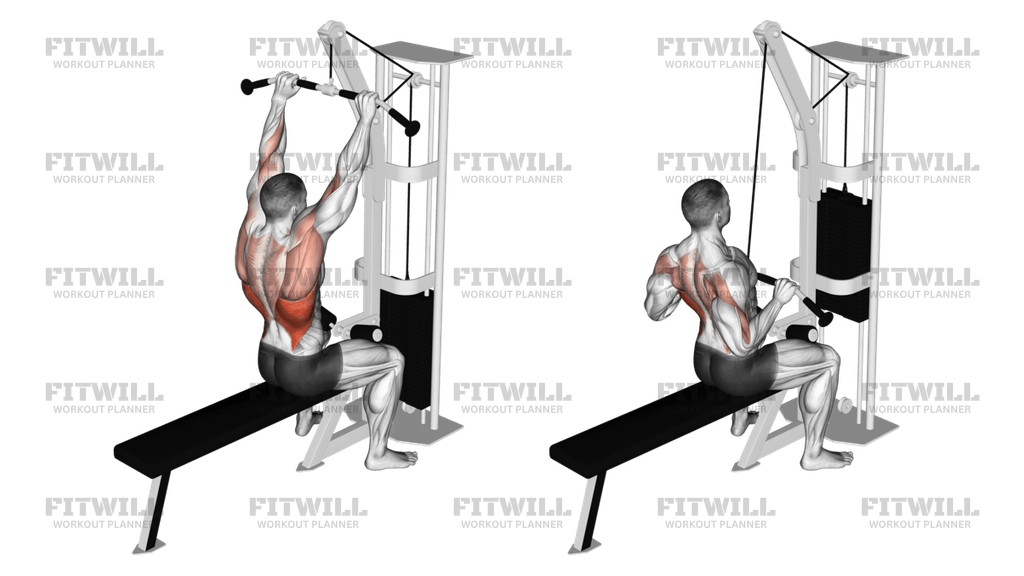
"Cable Bar Lateral Pulldown" is the first vertical-pull movement and primarily trains the latissimus dorsi, with the biceps, forearms, teres major, rear delts, rhomboids, and lower traps assisting. Begin with the chest lifted, ribs controlled, and shoulders pulled down away from the ears. Drive the elbows down toward the ribs as you bring the bar to the upper chest, then return through a slow, controlled stretch. Avoid swinging the torso backward, pulling the bar behind the neck, or turning every repetition into a biceps curl. The 30-to-6-rep sequence provides both high-rep lat fatigue and heavier loading, making it an effective foundation for back width before the rowing and pull-up work that follows.
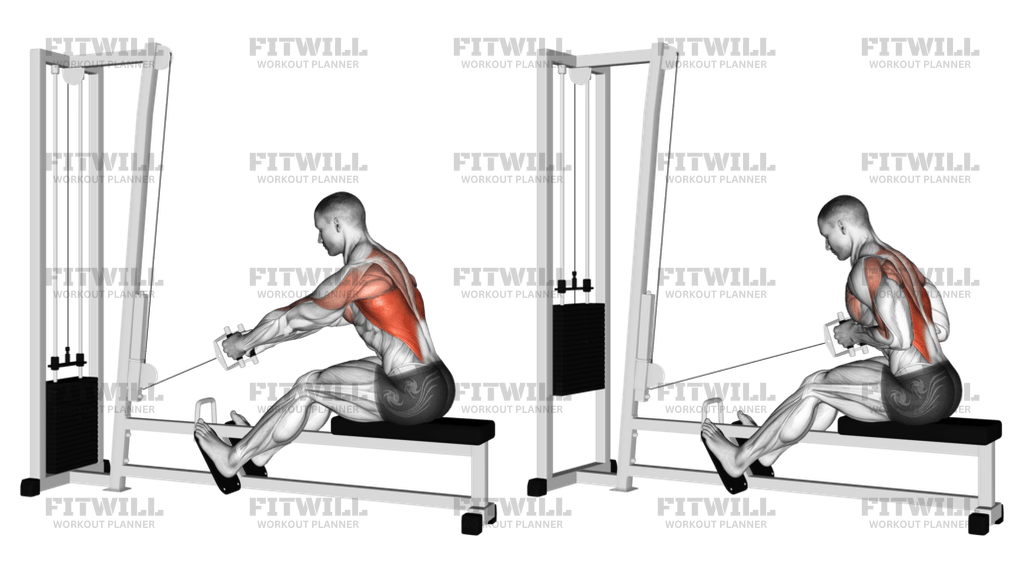
"Cable Elevated Row" adds a horizontal pulling pattern to complement the pulldown’s vertical line of pull. Its main targets are the lats, rhomboids, middle and lower trapezius, and rear delts, while the biceps, brachialis, and forearms assist with elbow flexion and grip. Set the pulley around shoulder height, stand in a stable staggered stance, and keep the ribs stacked over a neutral pelvis. Pull the handle toward the lower rib cage by driving the elbows back while allowing the shoulder blades to retract and depress naturally. Do not lean excessively backward, shrug your shoulders, or jerk the cable stack. This row develops upper-back thickness and scapular control, helping balance the lat-focused pulldown and supporting stronger posture during pressing and pull-ups.
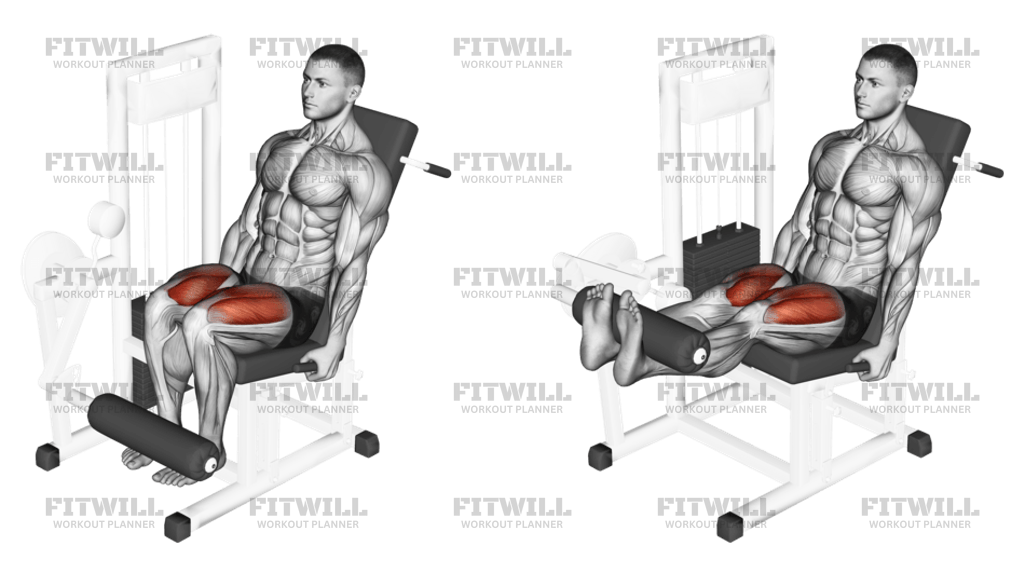
"Lever Leg Extension" isolates the quadriceps through knee extension, particularly the rectus femoris and vasti muscles on the front of the thigh. Set the machine so the knees align with the pivot point and the roller pad rests just above the ankles. Keep your back against the pad, extend the knees smoothly, and squeeze the quads near the top without aggressively snapping into lockout. Lower with control rather than allowing the stack to pull the legs down. Common mistakes include using momentum, lifting the hips from the seat, and forcing a painful range of motion. Following the back work, this movement gives the quads direct hypertrophy volume with minimal lower-back fatigue and provides a useful contrast to the hamstring-focused curl that comes next.
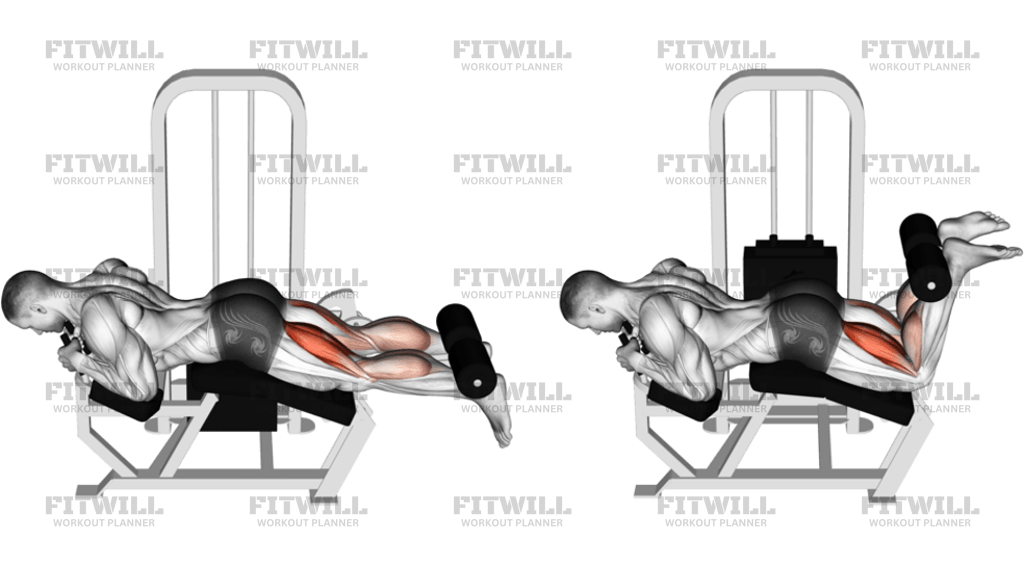
"Lever Lying Leg Curl" directly targets the hamstrings, including the biceps femoris, semitendinosus, and semimembranosus, with the gastrocnemius assisting during knee flexion. Position your knees close to the edge of the bench and aligned with the machine’s pivot, with the roller resting comfortably above the heels or lower calves. Keep the hips pressed firmly into the pad, curl the roller toward the glutes, pause briefly in the shortened position, and lower slowly until the knees are nearly straight. Avoid lifting the hips, arching the lower back, kicking the weight upward, or cutting the eccentric short. Pairing leg curls with leg extensions gives the session balanced direct work for both sides of the thigh, supporting knee function as well as leg size.
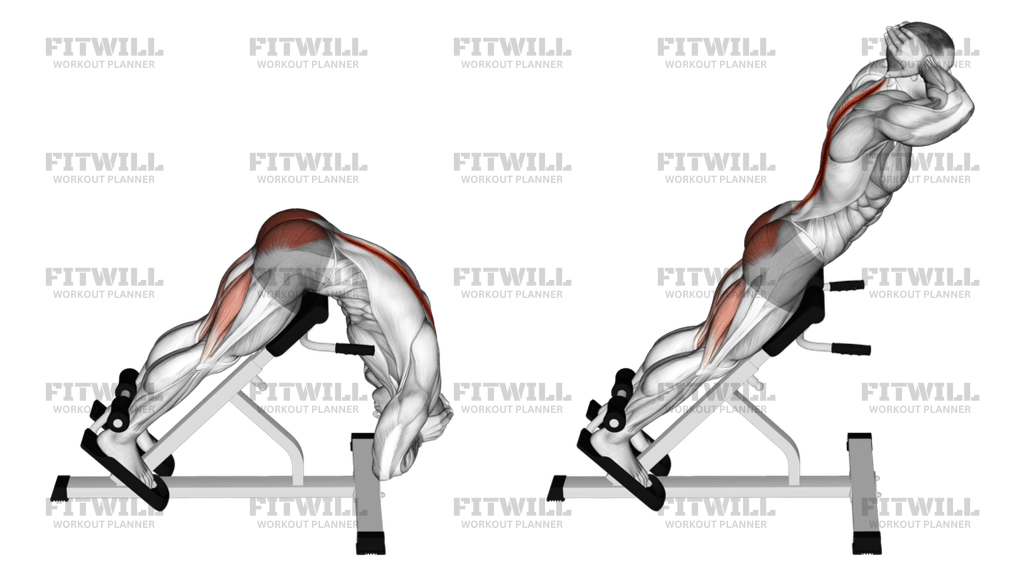
"Hyperextension" is a high-repetition bodyweight posterior-chain exercise that trains the glutes, hamstrings, and spinal erectors while challenging trunk control. Adjust the Roman chair pad so it supports the upper thighs and allows the hips to hinge freely. Lower your torso as one long, braced unit, then extend the hips to bring the body back to a straight line from head to heels. Think about squeezing the glutes to raise the torso rather than hyperextending through the lumbar spine. Do not bounce at the bottom, pull aggressively on the neck, or lean far backward at the top. This single set of 20 acts as a controlled primer for the heavier weighted hyperextension work, reinforcing the hip-hinge pattern before load is added.
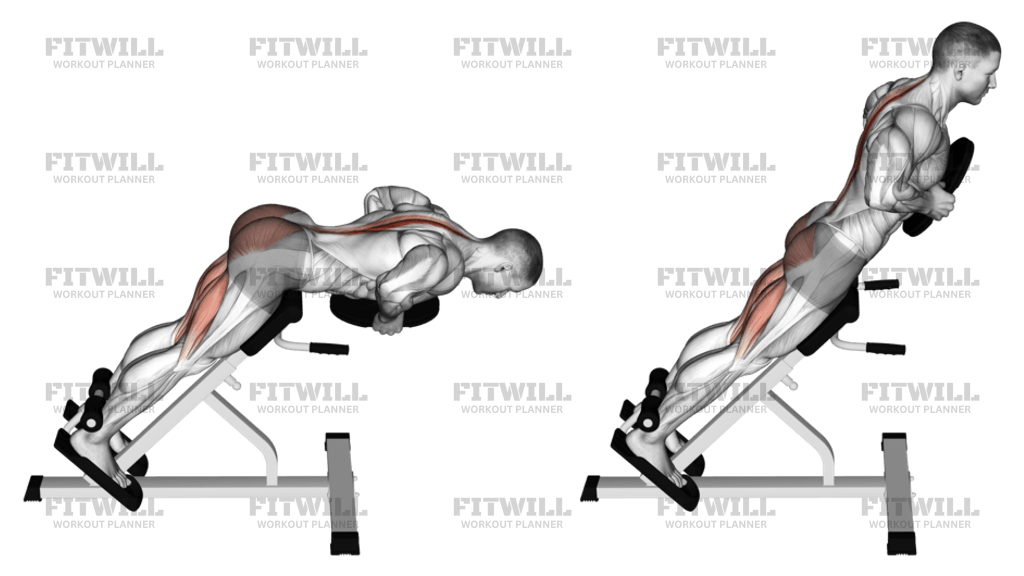
"Plate Hyperextension" progresses the same hip-extension pattern by holding a plate tightly against the chest. The primary muscles remain the glutes, hamstrings, and spinal erectors, while the upper back and abdominals stabilize the torso and keep the load close to the body. Set up with the hips supported on the pad, feet secured, neck neutral, and plate held firmly to the sternum. Hinge down under control, then drive the hips into the pad and contract the glutes until the torso reaches neutral. Avoid holding the plate away from the chest, rounding violently at the bottom, bouncing, or overextending the low back at the top. The higher-rep sets build posterior-chain muscular endurance and hypertrophy without the same axial loading demands as heavy barbell deadlifts.
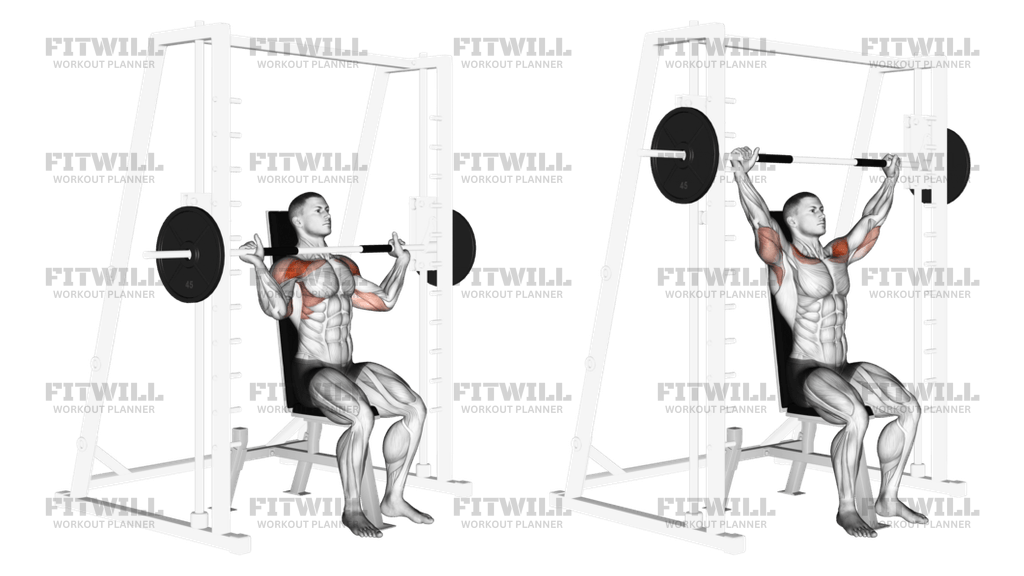
"Smith Shoulder Press" shifts the focus to the deltoids, especially the anterior and lateral delts, with the triceps contributing to elbow extension and the upper back stabilizing the torso. Position the bench so the bar travels comfortably from the upper chest to overhead, with feet planted, wrists stacked over the elbows, and the back supported. Press smoothly upward while keeping the ribs down and avoiding excessive lower-back arching. Lower the bar to a controlled upper-chest position without bouncing. Common errors include flaring the ribs, shrugging hard into the ears, pressing from an awkward bench position, and loading the fixed bar path beyond what shoulder mobility can handle. The Smith machine’s stability makes this a practical high-volume shoulder builder after the pulling and lower-body work, allowing you to focus on repeatable tension and controlled reps.
"Wide-Grip Pull-Up" finishes the workout with a demanding bodyweight vertical pull that reinforces lat development, upper-back strength, grip, and scapular control. The lats are the primary movers, with the biceps, forearms, rhomboids, trapezius, and rear delts assisting. Start from a controlled hang with the shoulders active rather than fully shrugged, brace the trunk, and pull by driving the elbows down and out while bringing the chest toward the bar. Lower under control to a full comfortable stretch. Avoid kicking the legs, craning the neck, shrugging toward the ears, or using a grip so wide that it creates shoulder discomfort. Because this exercise follows the cable pulldown and elevated row, it serves as a challenging bodyweight test of the back strength and pulling mechanics developed earlier in the session. Use an assisted pull-up machine, bands, or controlled eccentric repetitions if 10 strict reps are not yet available.
Overall, this workout delivers substantial hypertrophy volume for the lats, upper back, quads, hamstrings, glutes, spinal erectors, and shoulders. There are no supersets in the listed format, so perform each movement as straight sets and complete the prescribed sets before moving on. Rest roughly 60 to 90 seconds after higher-rep isolation sets, 90 to 120 seconds after moderate cable and machine compound work, and up to 2 to 3 minutes before heavier 6-rep sets or demanding pull-up sets. Warm up with 5 to 10 minutes of light cardio, shoulder circles and band pull-aparts, bodyweight hip hinges, easy leg curls or extensions, and a few ramp-up sets for the first pulling and pressing movements. Due to the high total workload, perform this session once weekly as a full-body workout, or distribute its exercises across separate upper- and lower-body days if training more frequently. Progress by adding small amounts of load when all target reps are crisp, improving rep quality and range of motion, slowing the eccentric phase, or adding assistance only when needed to maintain strict form.

Veja o treino completo no app Fitwill.
[ Fitwill — Diário e planejador de treinos ]
Prepare seu próximo treino. Veja o quanto você já evoluiu.
Monte seus treinos para a academia ou para casa, registre cada série e acompanhe sua evolução em um só aplicativo.
