Day 1 of Week 4 - Crystal park 3
Concluído por Stan_Nesklada · 29 de agosto de 2026
This high-volume full-body hypertrophy workout develops the chest, shoulders, triceps, biceps, quads, glutes, and calves while reinforcing core stability and controlled movement. The combination of bodyweight pressing, dumbbell compound lifts, targeted arm and shoulder isolation, cable work, and calf training makes it best suited to a gym or well-equipped home gym with dumbbells, an adjustable bench, a cable station, and a raised step. The moderate-to-high rep work and multiple five-set exercises make this an intermediate-level session, although beginners can use lighter loads, fewer total sets, and elevated push-up variations to build up gradually. Although “Dumbbell Standing Calf Raise” is marked 6-D, there is no matching D exercise listed, so it should be performed as straight sets rather than as a superset.
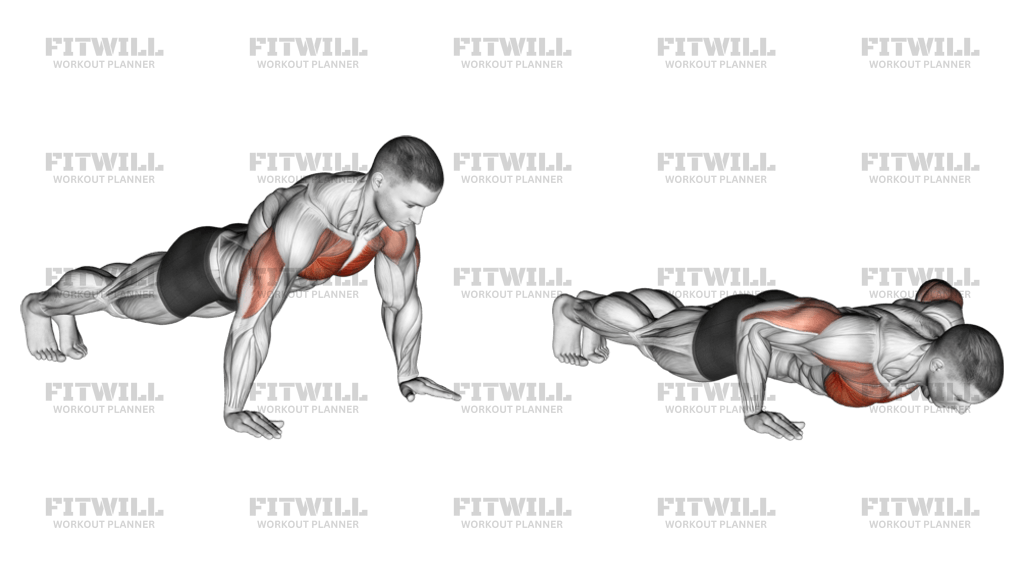
“Push-Up” opens the workout with a bodyweight horizontal press that emphasizes the triceps, chest, and anterior deltoids while the serratus anterior, forearms, glutes, and deep core stabilize a rigid plank. Set the hands under or just wider than the shoulders, brace the abdomen, lightly squeeze the glutes, and maintain a straight line from head to heels. Lower the chest under control and press the floor away while keeping the elbows angled back rather than flared directly sideways. Avoid sagging hips, craning the neck, partial-range repetitions, and rushing the descent. These 3 sets of 15 build pressing endurance, prepare the upper body for the later incline press, and create triceps volume before the more isolated pushdown work. Use incline push-ups with hands on a bench if strict floor repetitions are not yet consistent.
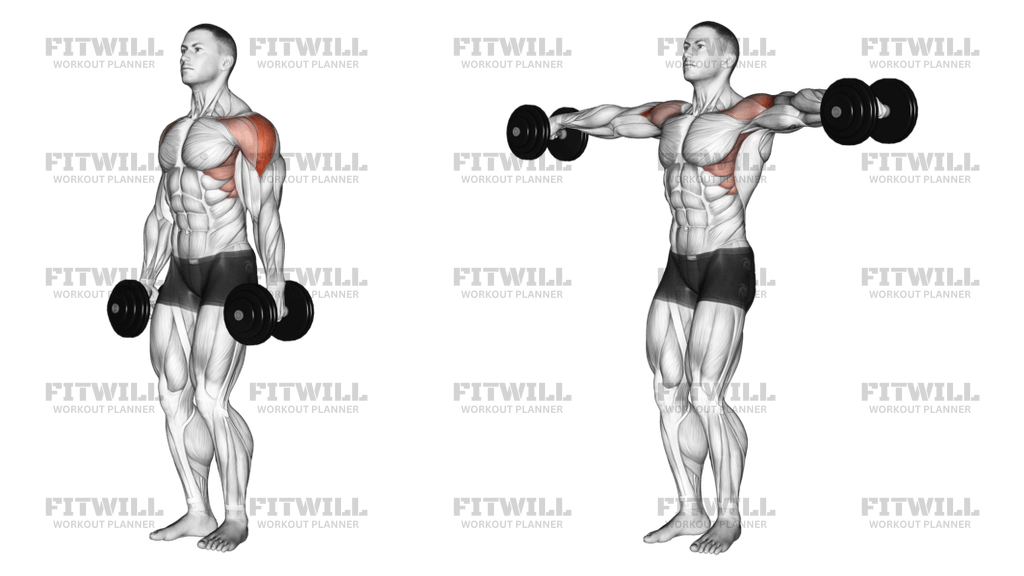
“Dumbbell Lateral Raise” isolates the lateral deltoids, which are essential for shoulder width and balanced upper-body development. The upper traps, supraspinatus, and rotator-cuff muscles assist by stabilizing the shoulder joint, but the side delts should remain the focus. Stand tall with soft knees, dumbbells beside the thighs, ribs stacked over the pelvis, and a slight bend in the elbows. Raise the arms out and slightly forward until approximately shoulder height, leading with the elbows and lowering slowly. Do not swing the weights, lean back, aggressively shrug, or lift far above shoulder level, as these errors reduce delt tension and often shift work to the traps. The mixed-rep five-set sequence provides substantial shoulder volume without adding more pressing fatigue, complementing the chest and triceps-focused movements.
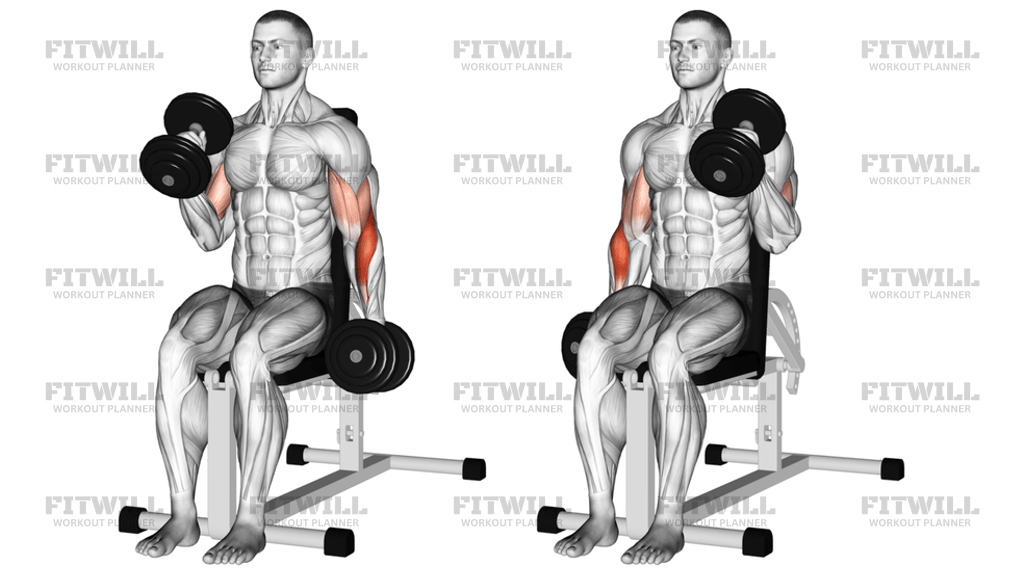
“Dumbbell Alternate Seated Hammer Curl” targets the brachialis and brachioradialis strongly, with the biceps brachii also contributing to elbow flexion. Its neutral grip is often comfortable for the wrists and helps build upper-arm thickness and forearm strength. Sit upright on a bench with both feet firmly planted, arms hanging at the sides, and palms facing each other. Curl one dumbbell toward the shoulder without letting the elbow travel far forward or the shoulder roll upward, then lower it deliberately before alternating sides. Avoid rocking the torso, using momentum, bending the wrist, or shortening the lowering phase. The seated position limits body English, making this a useful strict arm-building movement that balances the heavy triceps emphasis from push-ups, incline pressing, and cable pushdowns.
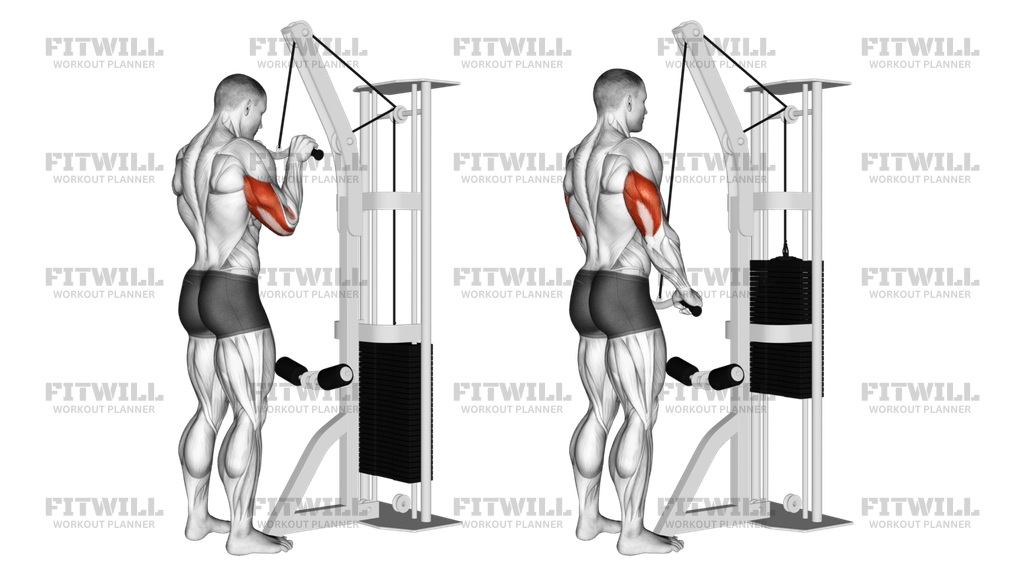
“Cable EZ-Bar Triceps Pushdown” directly trains all three heads of the triceps through elbow extension, while the forearms grip the attachment and the shoulders and core keep the torso stable. Set the pulley high, take a comfortable angled overhand grip on the EZ-bar, and stand with the feet planted so you can resist the cable without leaning into it. Keep the elbows close to the ribcage, press the bar down until the arms are straight, briefly contract the triceps, and return under control without allowing the shoulders to drift forward. Common mistakes include flaring the elbows, swinging the torso, turning the movement into a partial rep, and using so much weight that the wrists or low back compensate. This high-volume isolation exercise follows the compound presses to add focused triceps stimulus with constant cable tension and minimal additional chest fatigue.
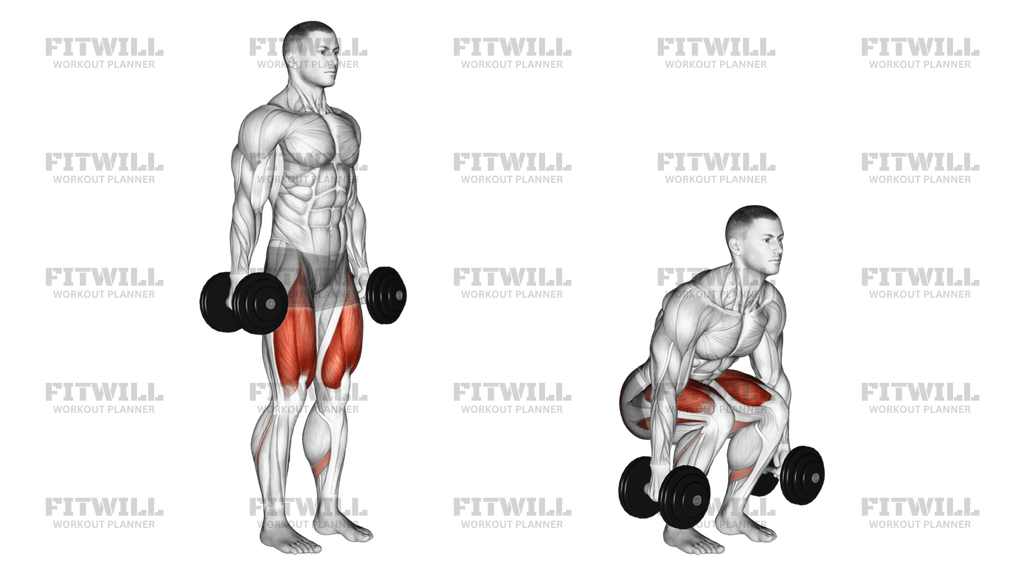
“Dumbbell Squat” is the primary lower-body compound movement in this session. It primarily works the quadriceps and glutes, with assistance from the adductors, hamstrings, calves, and trunk musculature. Hold the dumbbells at the sides, stand with feet roughly shoulder width apart, brace the abdomen, and descend by bending the knees and hips together. Keep the dumbbells close to the legs, maintain pressure through the whole foot, and let the knees track in the same direction as the toes. Drive through the floor to stand tall without snapping the knees back or shrugging the dumbbells upward. Avoid collapsing the knees inward, lifting the heels, excessively folding forward, or allowing the weights to swing. The higher-rep work builds leg muscle and work capacity while providing a lower-body counterbalance to the substantial upper-body volume in the workout.
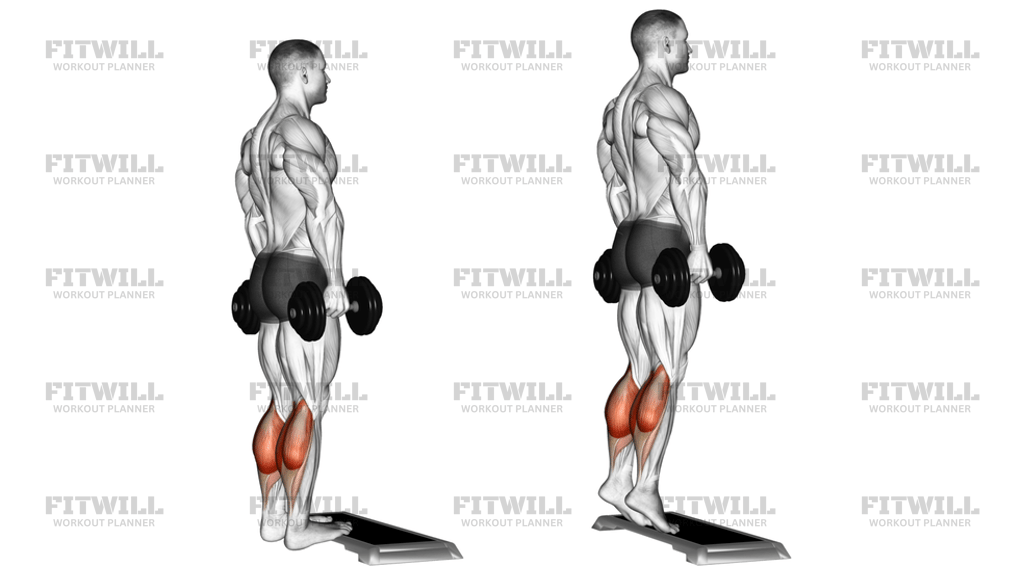
“Dumbbell Standing Calf Raise” trains the gastrocnemius most directly because the knees remain nearly straight, while the soleus, intrinsic foot muscles, and ankle stabilizers assist. Stand with the balls of the feet on a step or sturdy raised platform and the heels free to move through a full range. Hold the dumbbells quietly at the sides, stay tall through the torso, lower the heels slowly into a comfortable stretch, then press through the big toe and second toe to rise as high as possible. Pause briefly at peak contraction before lowering again. Do not bounce out of the bottom, rush the repetitions, roll onto the outer edges of the feet, or use knee bends and torso sway to create momentum. Sets of 20 are ideal for controlled calf volume, ankle strength, and lower-leg endurance after the squat work.
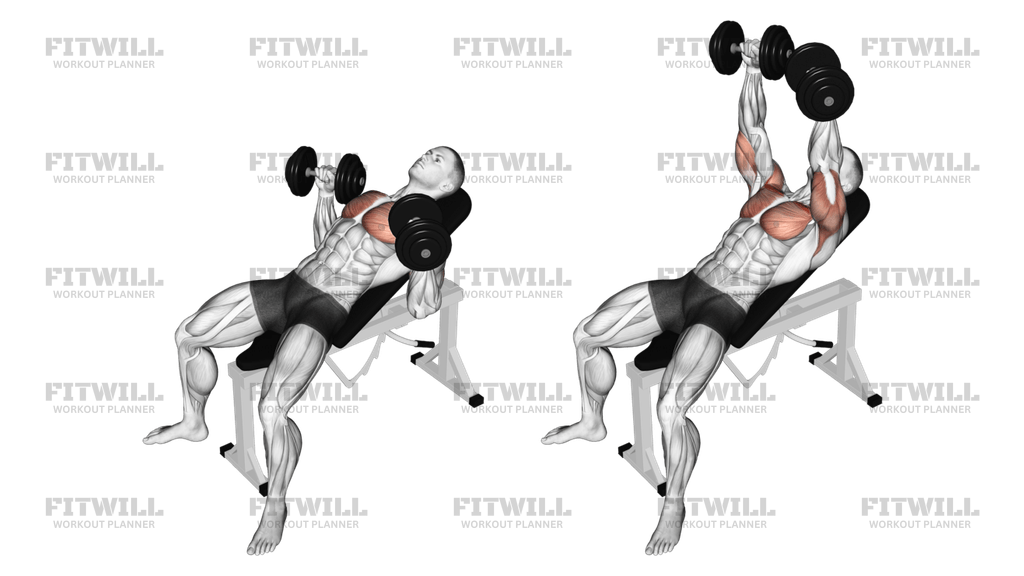
“Dumbbell Incline Bench Press” is the main loaded chest press, emphasizing the upper portion of the pectoralis major while heavily involving the anterior deltoids and triceps. A moderate bench angle of about 30 to 45 degrees is usually most effective; an overly steep setting turns the exercise into more of a shoulder press. Anchor the upper back against the bench, plant the feet firmly, keep the shoulder blades stable, and press the dumbbells from the upper-chest area toward a position over the shoulders. Lower with control until the upper arms reach a comfortable depth, then drive the dumbbells upward without flaring the ribs or letting the shoulders roll forward. Avoid bouncing at the bottom, clanging the dumbbells together at the top, allowing uneven arm paths, or choosing a load that forces shortened range of motion. Performed after the shoulder and arm isolation work, this movement supplies a major upper-chest compound stimulus and ties together the workout's pressing volume.
Overall, this session is a muscle-building full-body workout with especially high emphasis on shoulders and arms alongside productive chest and leg training. Begin with 5 to 10 minutes of light cardio, then perform dynamic shoulder circles, band pull-aparts, scapular push-ups, bodyweight squats, and a few lighter ramp-up sets for the incline press and dumbbell squat. Rest about 60 to 90 seconds between isolation sets and 90 to 150 seconds between challenging compound sets; take longer when needed to preserve clean technique. Perform it one to two times weekly, ideally leaving at least 48 hours before repeating the same muscles hard. Progress by first improving rep quality and reaching the prescribed repetitions with control, then increasing dumbbell or cable load in small increments. You can also progress with a slower lowering phase, a brief pause in the stretched position, or an extra rep before adding weight.
See the full workout in the Fitwill app.
Construa Seu Melhor Eu, Um Treino de Cada Vez
Desbloqueie seu potencial com o Fitwill. Crie e acompanhe seus treinos com mais de 9.600 exercícios para casa ou academia. Sinta o progresso e aproveite os resultados.
Pronto para mudar? Baixe agora e comece sua jornada!





