

Day 2 of Week 12 - Full Body 2
Finalizat de Sergey · 25 octombrie 2026
This high-volume upper-body workout is designed primarily for muscle growth, using descending rep schemes on the presses and cable exercises alongside bodyweight pull-ups and core work. It targets the chest, triceps, biceps, lats and upper back, with the shoulders, forearms and abs also contributing. The Smith machine and cable stations make this a gym workout; a pull-up bar is also required. The volume and pull-up demands make it best suited to intermediate lifters, though beginners can adapt it by reducing sets, using lighter loads or choosing assisted pull-ups. All exercises are straight sets, not supersets: complete the listed sets for one exercise before moving on. The descending rep counts are a guide to adjusting load, not a reason to sacrifice good form.
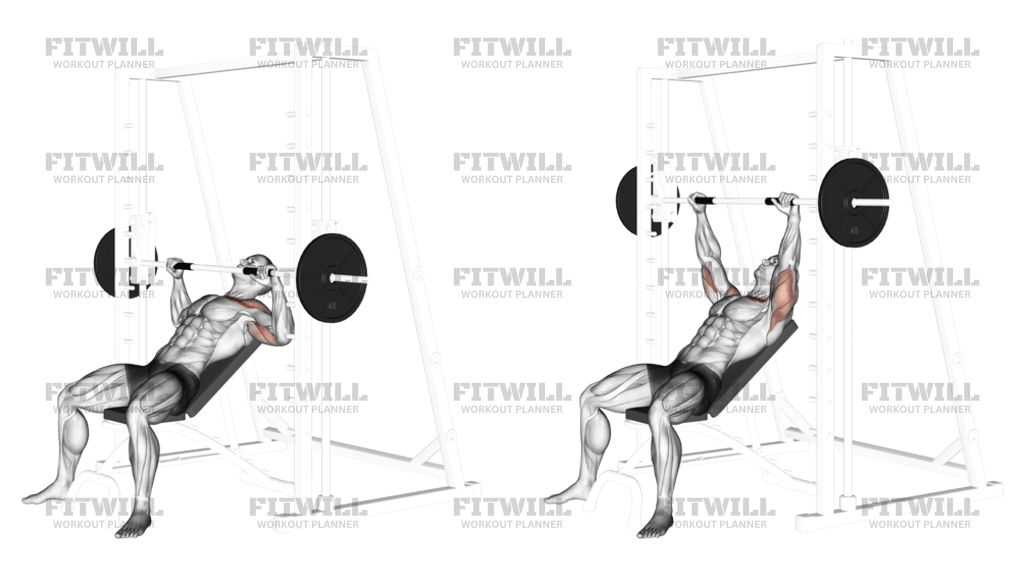
“Smith Incline Bench Press” — Perform 5 sets of 20, 20, 12, 8 and 8 reps. This press emphasizes the upper chest, with the front delts and triceps assisting. Set the bench so the bar lowers toward the upper chest, keep your shoulder blades drawn back and down, and plant your feet firmly. Lower the bar under control with elbows slightly tucked rather than flared, then press smoothly without bouncing or letting your shoulders roll forward. It opens the workout with a stable compound press to build upper-chest volume.
“Smith Hex Press” — Perform 5 sets of 20, 15, 12, 8 and 8 reps. This close-hand pressing variation works the pecs, triceps and front delts. Keep your wrists stacked, elbows angled in and torso steady as you lower the bar toward the lower chest or upper sternum; press without bouncing or shrugging. Use a comfortable range and a load you can control throughout. Following the incline press, this adds another chest-focused stimulus with a narrower pressing pattern and substantial triceps involvement.
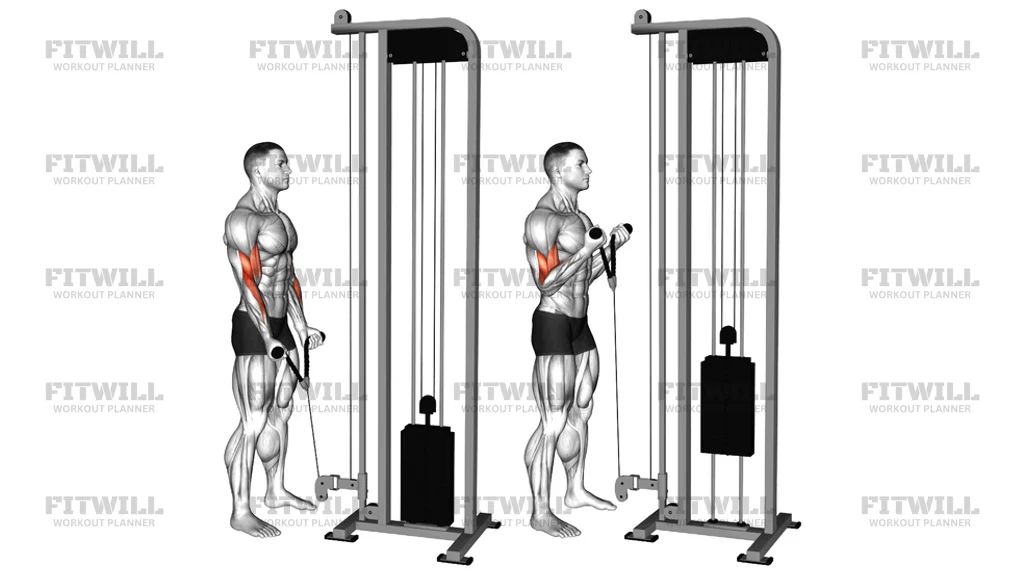
“Cable Standing Biceps Curl (Rope Attachment)” — Perform 5 sets of 20, 15, 15, 10 and 10 reps. The biceps flex the elbows, while the neutral rope grip also recruits the brachialis and forearm muscles. Stand far enough from the low pulley to maintain cable tension, brace your core, and keep your elbows near your sides as you curl. Let the rope ends separate slightly near the top if comfortable, then lower slowly without swinging or shrugging. This isolates the pulling muscles of the arms and balances the pressing work earlier in the session.
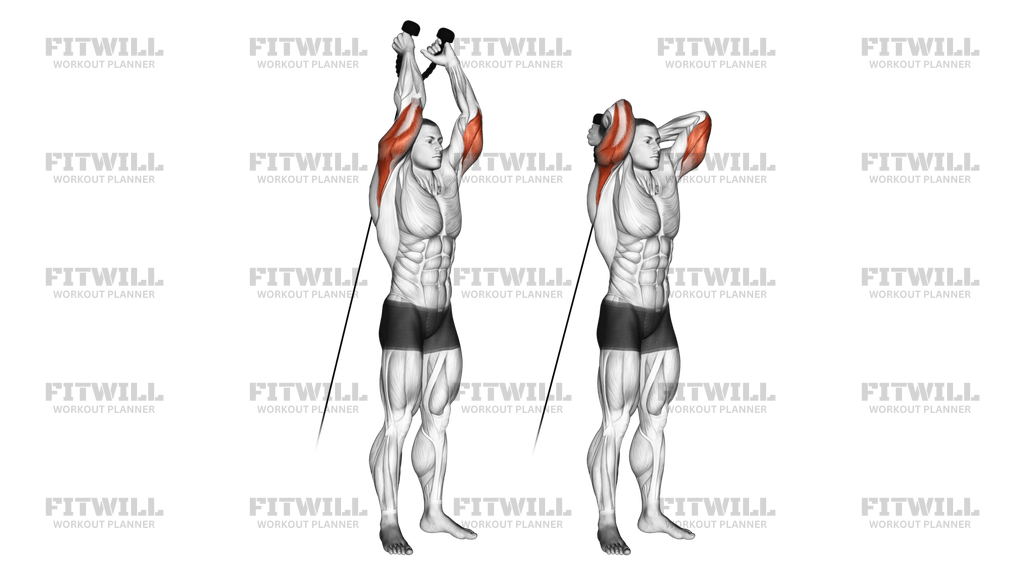
“Cable Rope Overhead Triceps Extension” — Perform 5 sets of 20, 15, 12, 10 and 10 reps. This exercise primarily trains the triceps, especially the long head, while the shoulders and core stabilize your position. Face away from the high pulley, keep your elbows close to your head and ribs stacked over your hips, then extend your arms without arching your lower back. Control the return into the stretch and avoid letting the elbows flare excessively. It complements the curls by directly training the opposing arm muscle group, while the overhead position challenges the triceps from a different angle than pressing.
“Wide-Grip Pull-Up” — Perform 3 sets of 10, 15 and 10 reps. The lats are the main target, supported by the rhomboids, traps, rear delts, biceps and forearms. Begin from a controlled hang with shoulders active and away from your ears; pull your elbows down as you bring your chest toward the bar, then lower without swinging or kicking. Use assistance or a narrower grip if you cannot maintain clean, pain-free reps. The vertical pull brings back work into this otherwise press- and arm-heavy session and challenges grip and scapular control.
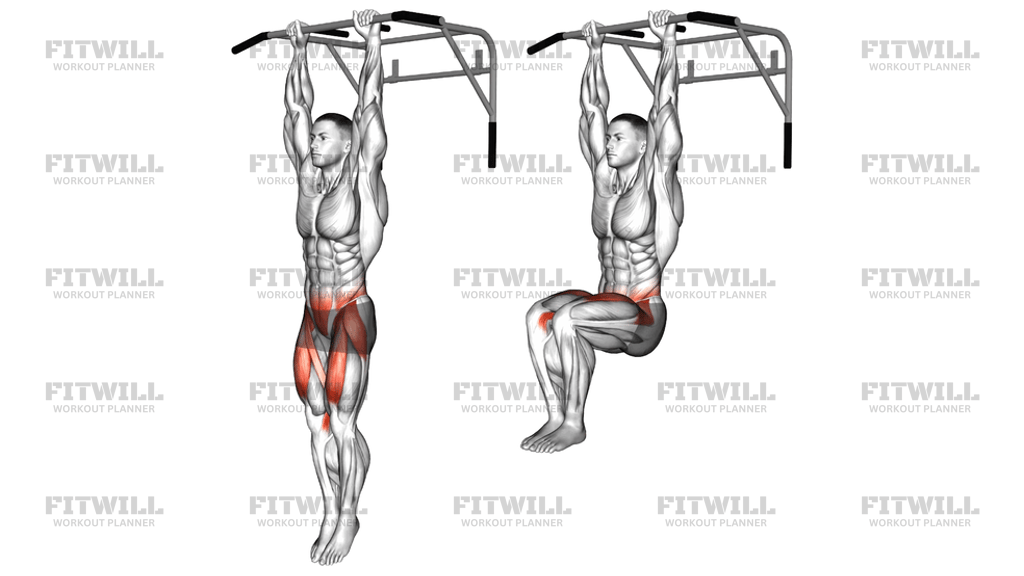
“Hanging Knee Raise” — Perform 5 sets of 20 reps. Your abdominal muscles work to curl the pelvis and control the legs, while the hip flexors, grip and shoulder stabilizers assist. Start from a still, active hang, brace your midsection and lift your knees while gently curling your pelvis upward. Lower slowly and reset between reps rather than using momentum. If the movement becomes a swing or your grip gives out, reduce the reps or use a supported knee-raise station. This finishes the session with focused core work and further develops control while hanging from a bar.
Rest about 2–3 minutes between demanding press and pull-up sets, and roughly 60–90 seconds between cable and core sets; take longer if needed to keep your technique consistent. Before training, warm up for 5–10 minutes and perform a few easy shoulder, upper-back and pressing or pulling movements, gradually building toward your working loads. Allow at least 48 hours before repeating this demanding upper-body session; once or twice weekly can work depending on your wider program and recovery. Progress by adding a small amount of weight when you can complete the prescribed reps with controlled form, or by improving range and technique first. This workout offers substantial upper-body volume, but it does not train the lower body, so pair it with suitable lower-body sessions for a balanced program.


Vezi antrenamentul complet în aplicația Fitwill.
[ Fitwill — Jurnal și planificare de antrenamente ]
Planifică următorul antrenament. Vezi cât ai progresat.
Creează un program pentru sală sau acasă, notează fiecare serie și urmărește progresul într-un singur loc.
