Decline Kneeling Push-Up On Box
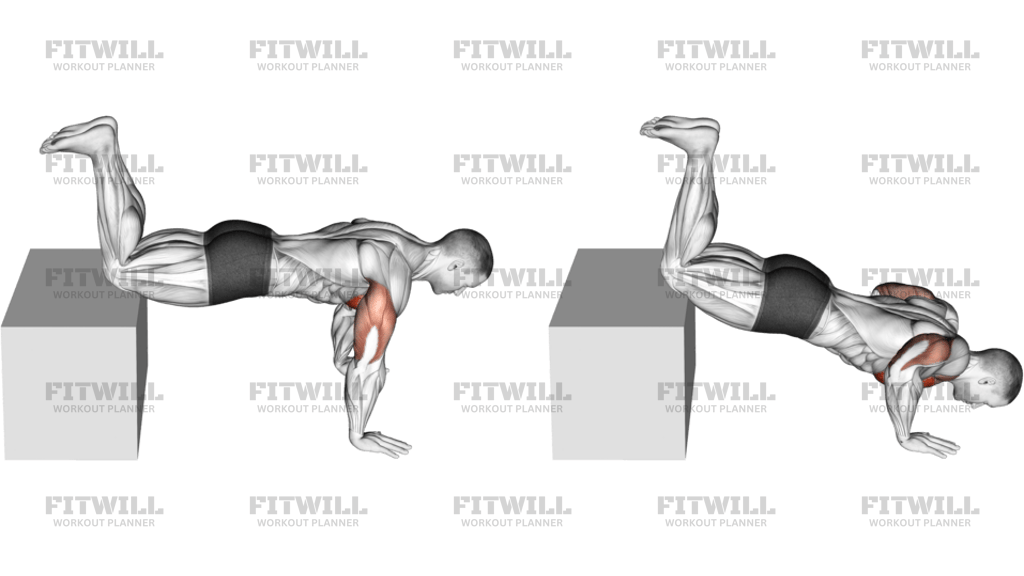
Decline Kneeling Push-Up On Box is a bodyweight pressing exercise that places the lower legs on a box and the hands on the floor, creating a decline angle that shifts more work onto the chest and shoulders than a flat kneeling push-up. The setup matters because the elevated lower body changes how your torso loads through the shoulders, rib cage, and trunk, so the best reps come from keeping everything aligned instead of letting the hips twist or sag.
The main training effect is horizontal pressing strength with a strong chest emphasis, plus assistance from the front delts, triceps, and core. In anatomy terms, the primary work centers on the Pectoralis major, with support from the Anterior deltoid, Triceps brachii, and Rectus abdominis. Because the body is angled downhill toward the hands, this variation usually feels harder than a standard kneeling push-up and can be a good bridge between beginner push-ups and full floor decline work.
To use it well, set the box behind you, place the lower legs on top, and plant the hands firmly under or just slightly in front of the shoulders. From there, lock in a straight line from knees through hips to head, keep the ribs from flaring, and lower the chest toward the floor with control. The elbows should bend naturally rather than drifting straight out to the sides, and the shoulders should stay organized as you press back to the top.
This exercise is useful for chest-focused accessory work, upper-body hypertrophy blocks, or strength sessions where you want a bodyweight press with a clear stability demand. It also works well when a lifter needs a scalable push-up variation that still challenges the pressing pattern without requiring a barbell or machine. Because the box changes leverage, the exact height and distance from the box can make the movement noticeably easier or harder.
For safety and quality, stop the set if the lower back starts to sag, the neck reaches forward, or the box support becomes unstable. Use a pain-free range of motion and keep the descent smooth enough that you can control the bottom position. The goal is not to bounce off the floor or rush the lockout; it is to repeat the same pressed path with clean body tension, steady breathing, and a stable support position from the first rep to the last.
[ Workout Log & Planner ]
Put your next workout in Fitwill
Keep your plan and training log ready when you are.


Instructions
- Place a sturdy box behind you, then put your shins and lower legs on top so your body is angled down toward the floor.
- Walk your hands to the floor under or slightly in front of your shoulders and spread your fingers for a firm base.
- Set your body in a long line from knees through hips to head, with the glutes lightly engaged and the ribs pulled down.
- Brace before the first rep so your torso stays rigid as you move.
- Lower your chest toward the floor by bending the elbows and letting them track about 30 to 45 degrees from your sides.
- Keep the head in line with the spine and stop the descent when your chest is just above the floor or the point where control starts to slip.
- Press the floor away to return to the top, keeping the shoulders and hips rising together.
- Exhale as you press up and inhale on the way down.
- Reset the box contact and hand position if you lose tension or drift out of alignment.
Tips & Tricks
- Choose a box height that lets you keep your trunk rigid; too much decline usually turns the rep into a shoulder-dominant grind.
- Keep pressure through the shins and lower legs on the box so your body does not slide forward as you descend.
- Place the hands far enough forward that the wrists stay comfortable, but not so far that the shoulders dump in front of the chest.
- Think about bringing the chest between the hands instead of letting the head lead the movement.
- If the elbows flare hard to the sides, shorten the descent and reset your hand angle before the next rep.
- Hold the bottom only long enough to own the position; do not collapse into the shoulder joints.
- Use a smooth 2 to 3 second lowering phase if you want more chest tension and less bounce.
- Stop the set when the hips start to pike or the lower back arches instead of forcing extra reps.
Frequently Asked Questions
What does Decline Kneeling Push-Up On Box train most?
It mainly trains the chest, with the front shoulders, triceps, and core helping stabilize and press.
Why does putting the lower legs on a box make this push-up harder?
The decline angle shifts more of your bodyweight toward the hands, so the chest and shoulders have to press through a longer and more demanding line.
Where should my hands go on the floor?
Start with the hands under or slightly in front of the shoulders, then adjust until the wrists feel stable and the chest can lower cleanly between them.
Should my elbows flare out wide?
No. Let them track at a moderate angle, roughly 30 to 45 degrees from the torso, so the shoulders stay organized and the chest can contribute more.
Can beginners use this variation?
Yes, but only if the box height and range are manageable. If the decline is too aggressive, a flatter kneeling push-up is the better starting point.
How deep should I go on each rep?
Lower until your chest is close to the floor while keeping your ribs, hips, and shoulders controlled. Depth only counts if you can keep the body aligned.
What should I do if my hips sag during the set?
Reduce the reps, shorten the range, or lower the box height. Sagging hips usually means the trunk can no longer keep up with the pressing demand.
What is a good regression for this exercise?
Use a flatter kneeling push-up, raise the hands onto a box instead of the lower legs, or reduce the decline until you can own the position.