Low Lunge
Low Lunge is a bodyweight kneeling stretch used to open the front of the hip on the trailing leg while keeping the pelvis and spine organized. It is most often used as a warm-up, cool-down, or mobility drill when the hip flexors, rectus femoris, and groin feel tight from running, squatting, sitting, or cycling.
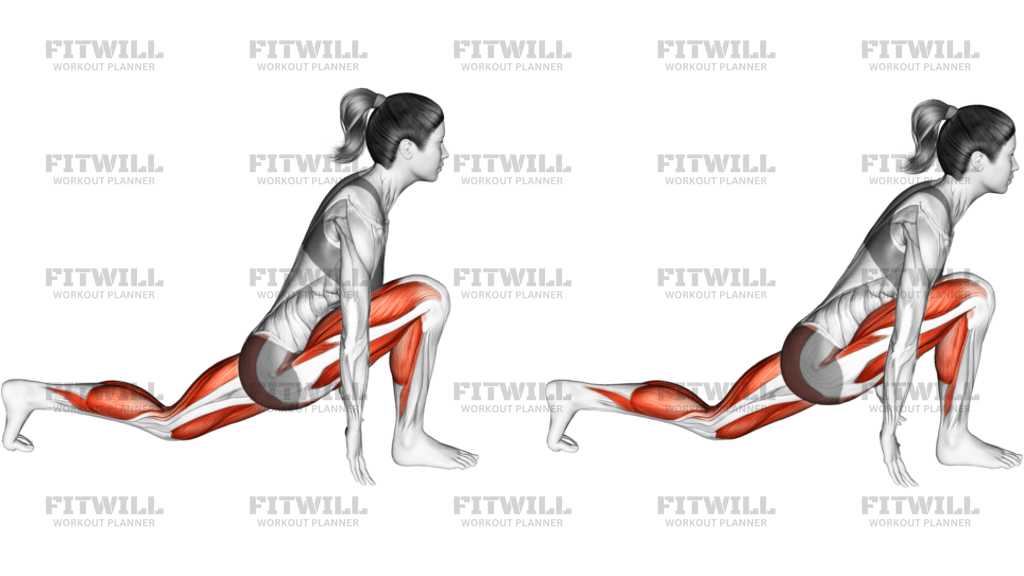
The position matters because the stretch changes a lot depending on where the pelvis goes. In the image, the back knee stays down, the front foot is planted, and both hands support the torso so you can lengthen into the hip without losing balance. That support lets you control how much of the stretch comes from the hip versus how much comes from tipping the lower back forward.
To get the best result, keep the front shin stacked over the ankle, gently squeeze the rear-side glute, and let the pelvis glide forward only as far as you can keep the ribs down and the torso long. A small shift forward can be enough if you stay square through the hips and avoid dumping into the lumbar spine. The goal is a clear line of tension through the front of the rear hip and thigh, not a deep backbend.
This stretch is useful on its own or between lower-body strength sets when you need to restore hip extension and reduce stiffness before training. It also works well as part of a mobility circuit for runners and lifters who spend a lot of time in flexed positions. Beginners can use it easily because the hands on the floor provide support and allow very precise control over the range.
Treat Low Lunge like a controlled breathing drill rather than a forced pose. Each rep or hold should feel smooth, repeatable, and free of pinching in the knee or low back. If the stretch becomes sharp, unstable, or causes the pelvis to twist open, shorten the stance and reduce the range until the position feels clean again.
[ Workout Log & Planner ]
Put your next workout in Fitwill
Keep your plan and training log ready when you are.


Instructions
- Start in a half-kneeling lunge with the back knee on the floor, the front foot flat, and both hands on the floor beside the front foot for support.
- Place the front knee over the ankle and square both hips toward the front of the mat.
- Tuck the back toes if that feels better on the knee, or keep the top of the foot down if you want more front-of-hip length.
- Brace lightly through the lower abdomen and lengthen the spine before moving deeper into the stretch.
- Press the rear-side glute to nudge the pelvis forward a few centimeters without arching the low back.
- Keep the chest long and the ribs stacked as you settle into the stretch on the front of the rear hip and thigh.
- Breathe slowly for the planned hold or small pulse, letting each exhale soften the hip rather than forcing more depth.
- Hold the end position for the programmed time or repeat controlled pulses, then ease back to the starting lunge under control.
- Switch sides and repeat with the same foot and hip position on the other leg.
Tips & Tricks
- Think 'hips forward and ribs down,' not 'chest up and low back arched.'
- A longer stance usually increases the stretch, but only if the front knee still tracks comfortably over the ankle.
- Squeezing the rear-side glute is the fastest way to shift the stretch from the low back into the front of the hip.
- If the rear knee is sensitive, fold a mat or towel under it instead of leaning harder into the pose.
- Keep the front foot planted through the big toe and heel so the pelvis does not drift sideways.
- Do not chase depth by twisting open the pelvis; square hips make the hip-flexor stretch cleaner.
- Slow nasal breathing helps you stay relaxed and prevents you from bouncing into the range.
- If the stretch turns into a pinch at the front of the hip, shorten the stance and reduce the forward shift.
Frequently Asked Questions
What does Low Lunge stretch the most?
It mainly stretches the front of the trailing hip, especially the hip flexors and rectus femoris, with some groin and quad involvement.
Can beginners perform this exercise?
Yes. The hands on the floor make it easy to control balance and reduce the intensity.
Should my front knee stay over the ankle?
Yes, that is usually the safest setup. A stacked shin helps keep the stretch in the hip instead of dumping load into the knee.
Why do my low back and ribs feel it more than my hip?
You are probably arching through the lumbar spine. Tuck the pelvis slightly, squeeze the rear glute, and keep the ribs stacked over the pelvis.
Should I keep the back toes tucked or untucked?
Either works. Tucked toes can feel more stable and help you press forward, while the top of the foot down can feel like a deeper front-of-hip stretch.
How long should I hold the Low Lunge stretch?
A short hold of 20 to 45 seconds is common, or you can use controlled pulses for a mobility-focused warm-up.
What if I feel a pinch in the front of the hip?
Shorten the stance, reduce the forward shift, and keep the pelvis more neutral. A sharp pinch is a sign to back off.
Can I use Low Lunge as part of a warm-up before lifting or running?
Yes. It is a good choice before lower-body training or running when you want to restore hip extension and reduce stiffness.