Kneeling T-Spine Mobility Stretching
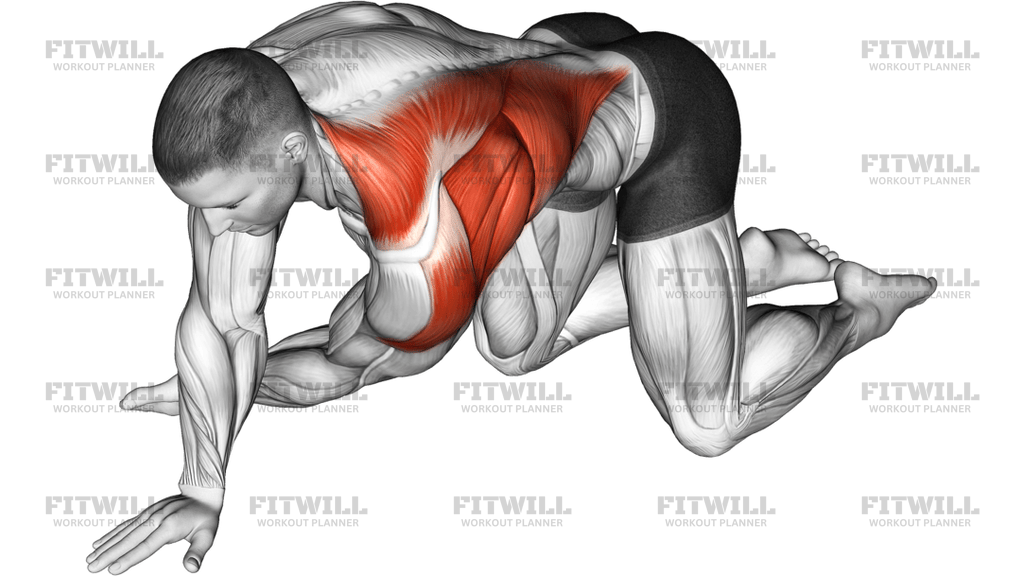
Kneeling T-Spine Mobility Stretching is a kneeling thoracic rotation drill that uses body weight and an exercise mat to open the upper back, rear shoulder, and lat line while keeping the hips and low back under control. In the image, the athlete is in a quadruped position and threads one arm under the torso to create rotation through the ribcage and mid-back. That setup matters because the point of the exercise is not to fold deeper through the lower spine, but to let the thoracic spine rotate cleanly while the rest of the body stays organized.
This movement is especially useful when the upper back feels stiff from pressing, pulling, overhead work, desk posture, or any session that leaves the shoulders feeling closed off. It can be used as part of a warmup, recovery circuit, or mobility block before strength work that depends on thoracic extension and rotation. The main areas that should feel involved are the mid-back, the back of the shoulder, and the side body on the reaching arm, with the supporting hand and opposite knee providing a stable base.
The best reps start from a solid all-fours position with the hands under the shoulders and the knees under the hips. From there, reach the working arm under the chest, rotate the ribcage toward the floor, and let the shoulder move through a comfortable range instead of forcing the hand farther than the joint can tolerate. A slow exhale usually helps the ribs soften and the upper back rotate a little more, but the movement should still feel controlled and repeatable rather than aggressive.
Use the stretch to create better movement quality, not to chase a dramatic end position. If the hips twist, the low back arches hard, or the front shoulder pinches, the range is probably too large or the setup is drifting. Keep the neck relaxed, keep pressure through the planted hand, and return to the start with the same control you used to enter the stretch. Beginners can use this easily because it is body-weight only, but the value comes from precision and calm breathing rather than depth.
When performed well, Kneeling T-Spine Mobility Stretching can make rotation-based work feel smoother and can help restore a cleaner overhead or pressing position. It is a simple drill, but the payoff depends on whether you rotate through the upper back and ribs instead of collapsing the entire trunk into the floor.
[ Workout Log & Planner ]
Put your next workout in Fitwill
Keep your plan and training log ready when you are.


Instructions
- Start on an exercise mat in an all-fours position with your hands under your shoulders, knees under your hips, and your toes relaxed behind you.
- Keep the hand on the stretching side planted under the shoulder, then shift a little more weight into the opposite hand and knee so you have room to rotate.
- Slide the working arm underneath your chest with the palm facing up, reaching long as the shoulder travels toward the floor.
- Let the side of your head, shoulder, or upper arm settle toward the mat only as far as you can control without pain or pinching.
- Exhale slowly and rotate your ribcage toward the floor so the movement comes from the mid-back, not from a hard twist through the low back.
- Keep your hips stacked mostly over your knees and avoid letting the pelvis roll open to fake extra range.
- Pause for one to three calm breaths at the end range while keeping light pressure through the planted hand and knee.
- Press through the supporting hand to unwind the torso and return to the starting all-fours position with control.
- Repeat on the other side and match the range and tempo instead of chasing a bigger stretch on just one side.
Tips & Tricks
- Keep the supporting hand active so the shoulder girdle stays lifted instead of collapsing into the mat.
- Think about rotating the ribcage under the shoulder, not forcing the hand farther forward.
- A long exhale often creates more thoracic rotation than trying to push the arm deeper.
- If the front of the shoulder feels pinched, shorten the reach and keep the elbow a little softer.
- Do not let the lower back arch to manufacture range; the stretch should live higher in the spine.
- Keep your neck relaxed and let the head follow the torso rather than leading the movement.
- Move slowly enough that you could pause at any point without losing position.
- If the wrists feel sensitive in the starting position, place the hands on a folded mat or small pad.
- Match both sides carefully, since one side often feels tighter or more restricted than the other.
Frequently Asked Questions
What does Kneeling T-Spine Mobility Stretching target most?
It mainly targets thoracic rotation and upper-back mobility, with the rear shoulder and lat line often feeling the stretch as well.
Can beginners perform this exercise?
Yes. It is body-weight only, and beginners usually do well as long as they keep the range comfortable and the movement slow.
Where should I feel the stretch in the kneeling thread-the-needle position?
You should feel it in the mid-back, back of the shoulder, and sometimes the side of the ribcage or lat on the reaching side.
Why do I need to keep my hips over my knees?
Keeping the hips mostly stacked over the knees helps the stretch stay in the thoracic spine instead of turning into a low-back twist.
Should I force my shoulder or head all the way to the floor?
No. Use only the range that feels smooth and pain-free, because forcing the end position can make the shoulder pinch or the low back compensate.
What is the most common mistake with this stretch?
The most common mistake is rotating through the lower back or opening the hips too much instead of moving through the upper back and ribs.
When is this stretch most useful?
It is useful in warmups, cooldowns, or mobility work before pressing, pulling, overhead lifting, and other exercises that need good thoracic motion.
How can I make the stretch feel better if my wrists are tight?
Use a folded mat or pad under the hands, and make sure the supporting arm stays directly under the shoulder instead of drifting too far forward.