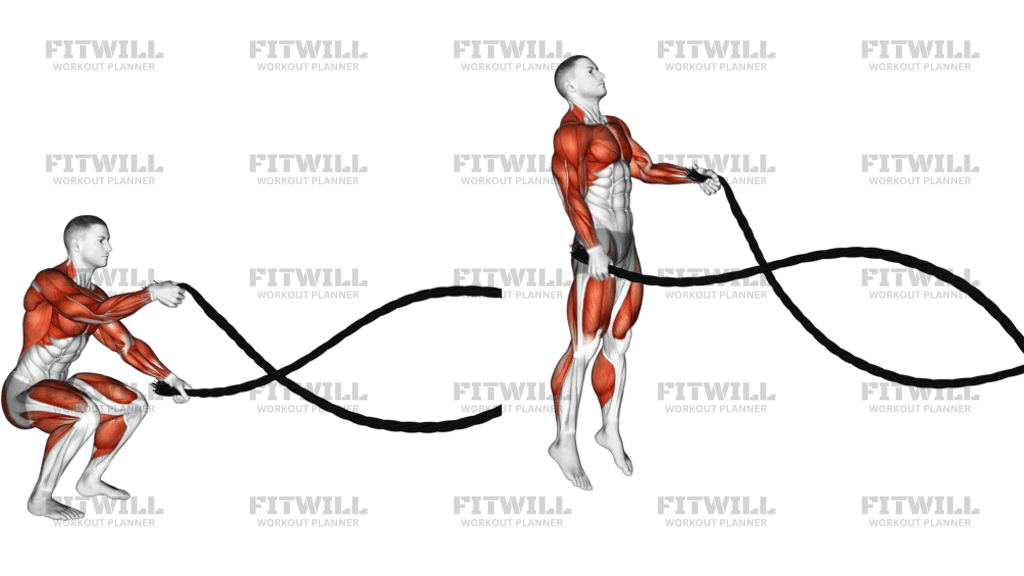
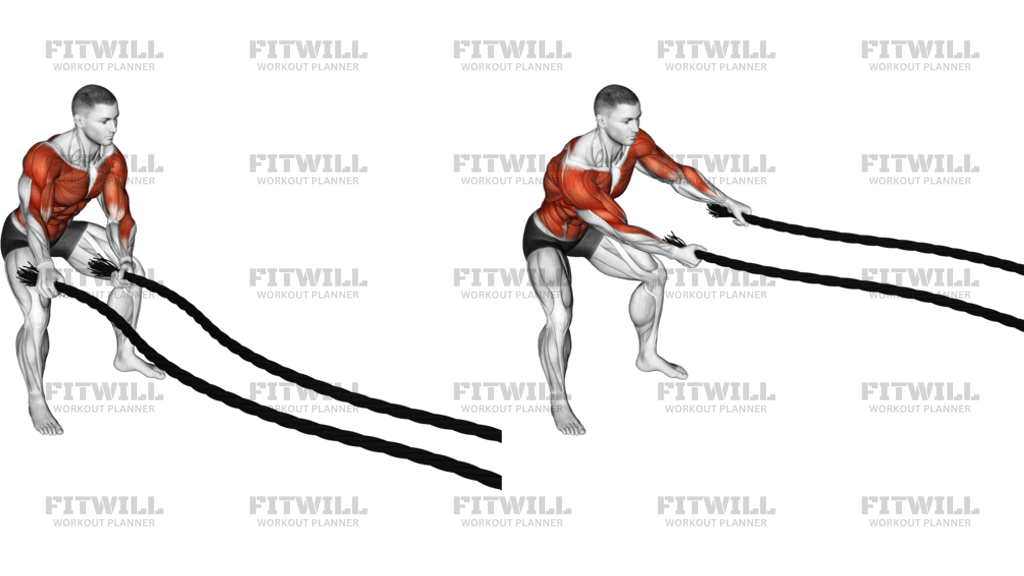
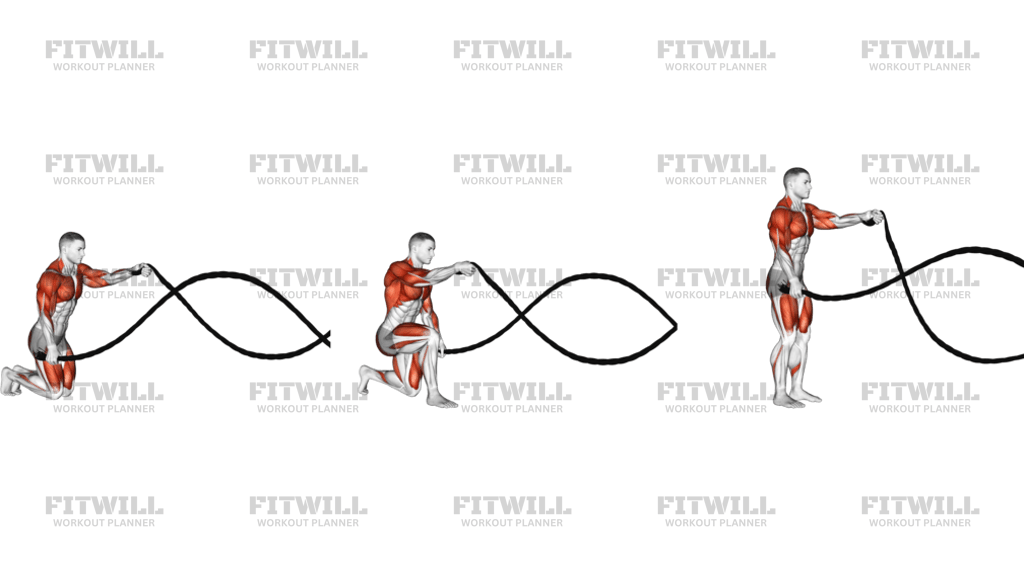
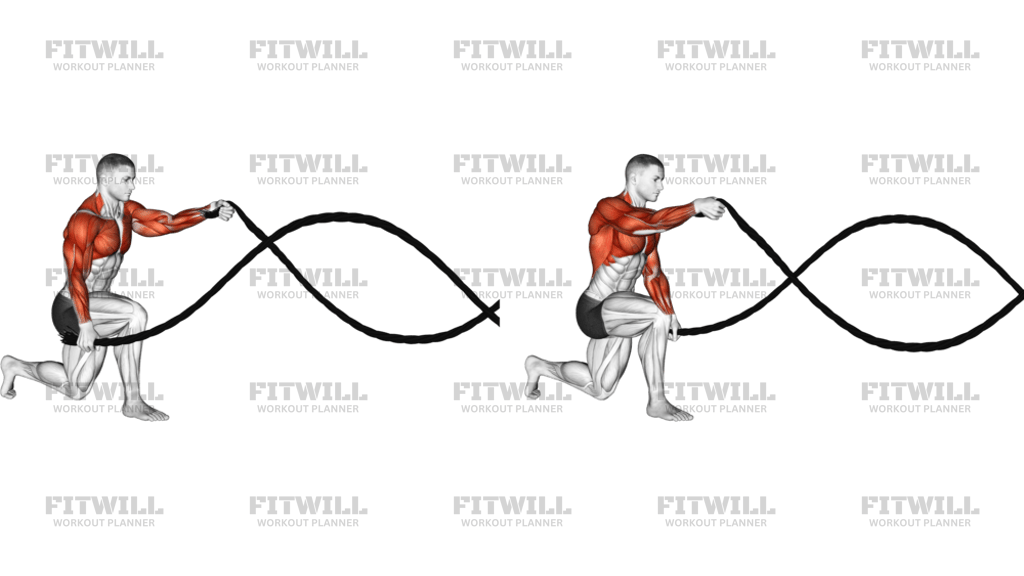
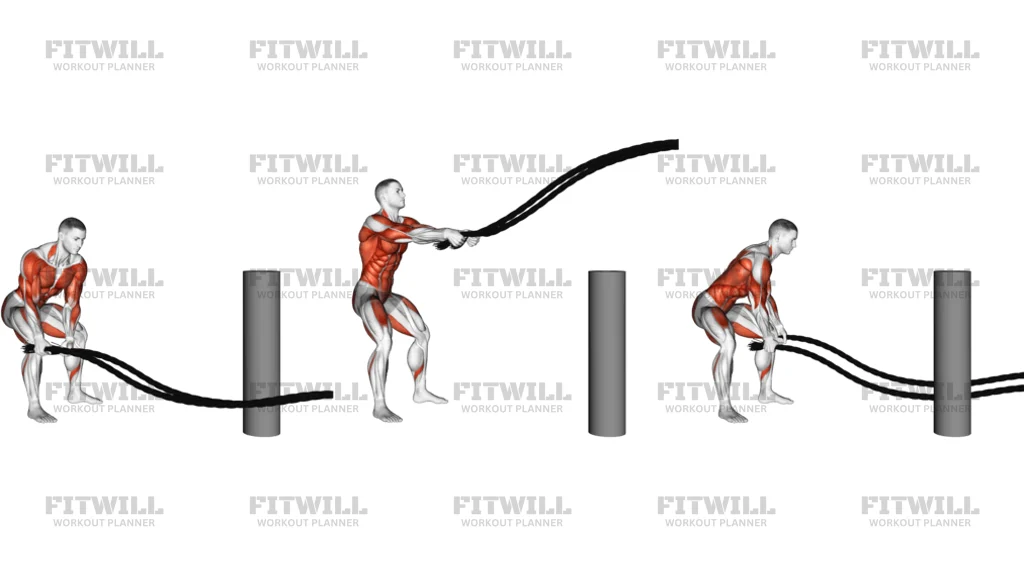
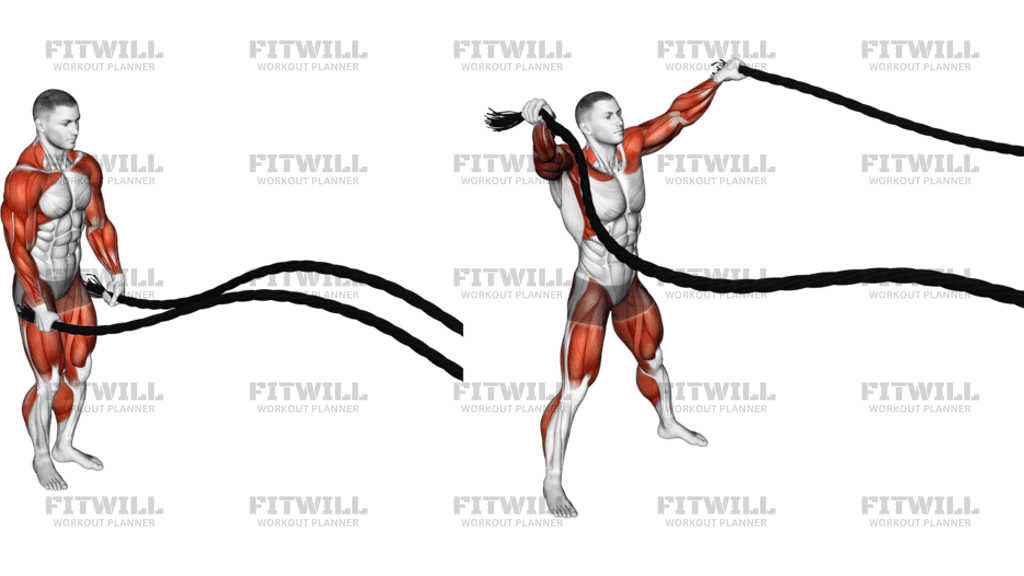
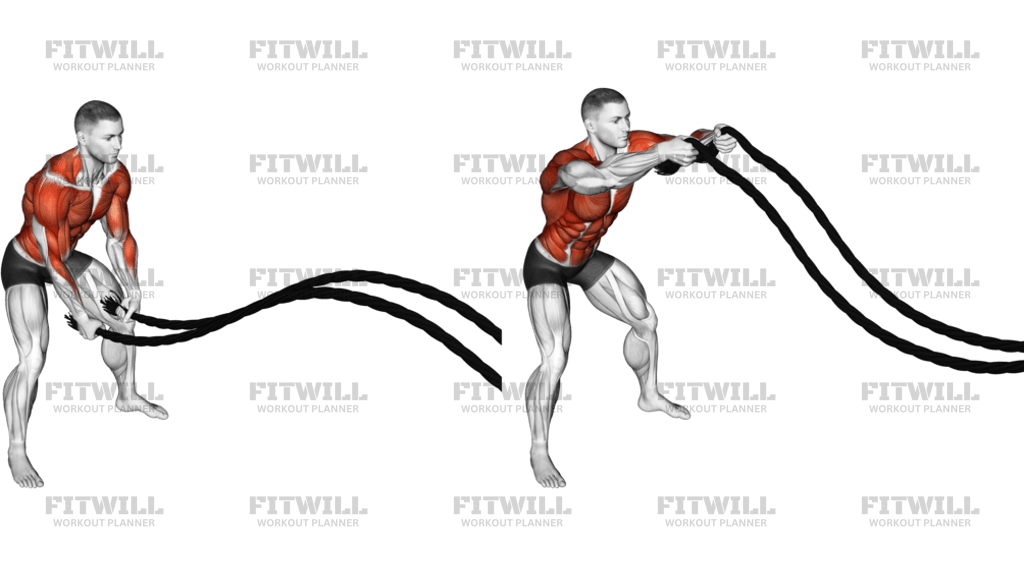
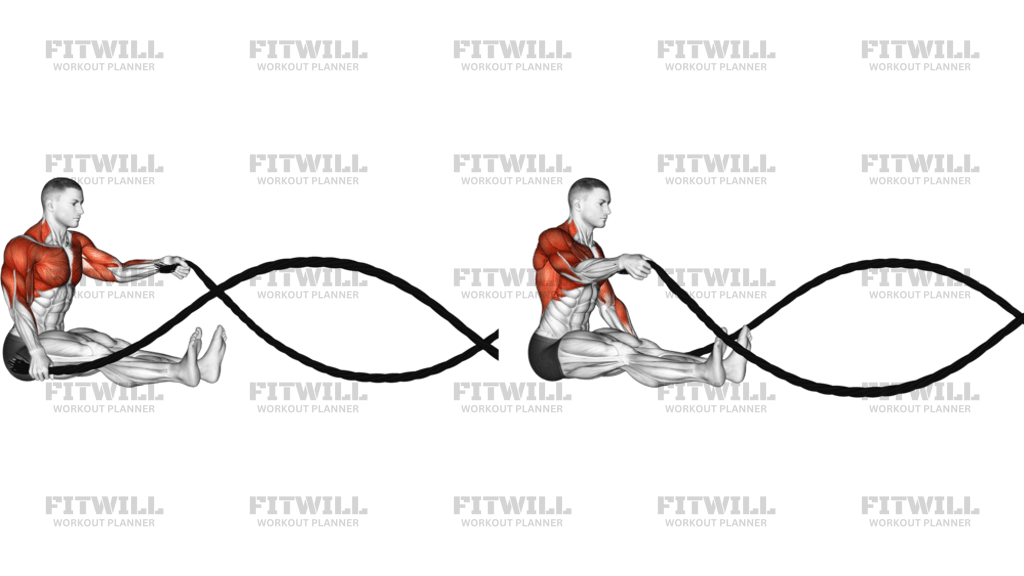
Battling Ropes
Battling Ropes are a conditioning and muscular-endurance exercise performed by holding one rope end in each hand and creating repeated waves, slams, or alternating patterns. The shoulders drive much of the motion, while the arms, upper back, grip, and core work to maintain rhythm and posture.
The ropes provide resistance through speed, rope length, and wave quality rather than a fixed weight. Clean reps come from an athletic stance, steady breathing, and consistent waves that travel all the way toward the anchor. If the waves die near your hands, the interval is too long, too fast, or too poorly controlled.
Set up facing the rope anchor with enough slack to move the ropes freely. Bend the knees slightly, brace the trunk, and keep the chest lifted. Move the arms in the chosen pattern while the hips and core stabilize the body, then slow the ropes down before stopping instead of abruptly dropping posture.
Use Battling Ropes for warmups, conditioning intervals, finishers, or shoulder and grip endurance. Beginners should start with short alternating-wave intervals and longer rests. As skill improves, slams, double waves, lateral waves, and longer work periods can add variety and intensity.
[ Workout Log & Planner ]
Put your next workout in Fitwill
Keep your plan and training log ready when you are.


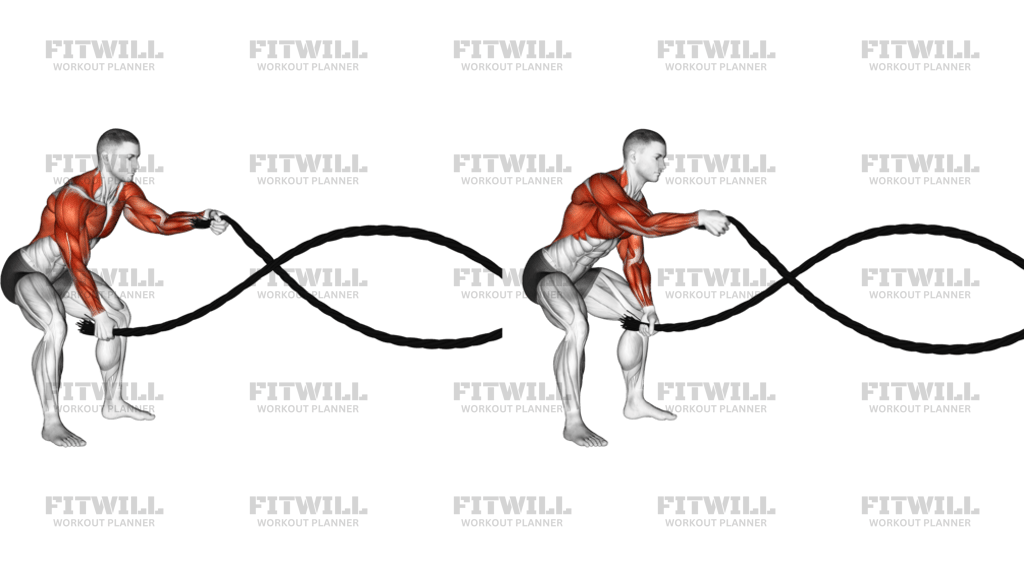
Instructions
- Stand facing the rope anchor and hold one rope end in each hand.
- Step back until the ropes have slight slack but are not tangled or stretched tight.
- Set an athletic stance with feet about shoulder width, knees bent, and hips slightly back.
- Brace your core and keep your chest lifted without rounding forward.
- Move your arms in the chosen pattern, such as alternating waves, double waves, or slams.
- Keep the waves consistent so they travel down the rope toward the anchor.
- Breathe steadily for the full work interval instead of holding your breath.
- Slow the ropes down, reset your stance, and then end the set.
Tips & Tricks
- Start with short intervals so your wave quality stays high.
- Keep the shoulders active but avoid shrugging them into your neck.
- Use your legs and core as a stable base rather than standing stiff-legged.
- If the waves fade before reaching the anchor, reduce speed or shorten the interval.
- Grip firmly without squeezing so hard that your forearms burn out early.
- Keep the rope ends moving from the shoulders and elbows, not just tiny wrist flicks.
- Use longer rests when training power slams and shorter rests when training conditioning.
- Stop when posture collapses or the rope pattern becomes uncontrolled.
Frequently Asked Questions
What muscles do battling ropes work?
They mainly work the shoulders, with support from the arms, upper back, core, and grip.
Are battling ropes cardio or strength?
They can train both conditioning and muscular endurance depending on the interval and intensity.
How should beginners start?
Use short intervals, simple alternating waves, and a stable athletic stance.
How much slack should the ropes have?
Use enough slack that waves can form, but not so much that the ropes pile up near your feet.
Should I use alternating waves or double waves?
Alternating waves are usually easier to learn, while double waves and slams feel more powerful and demanding.
Why do my shoulders fatigue so quickly?
The shoulders are repeatedly accelerating the rope, so fatigue builds fast. Shorten the interval and keep the neck relaxed.
Can battling ropes be used as a warmup?
Yes, with low to moderate intensity and short sets. Save all-out slams for conditioning or finishers.
What is the biggest form mistake?
Rounding forward and losing the athletic stance. Keep the chest lifted and the core braced while the arms move.