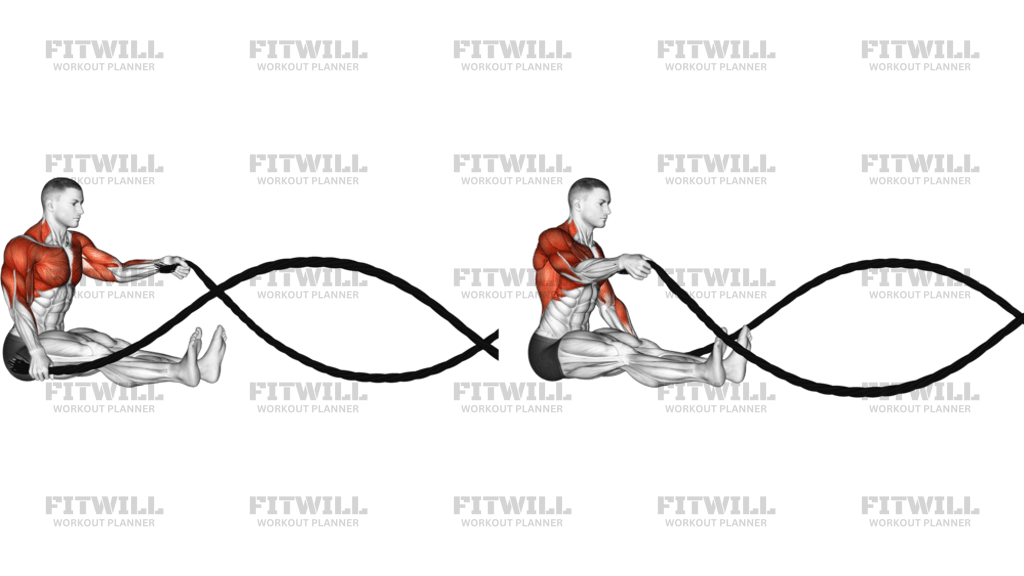
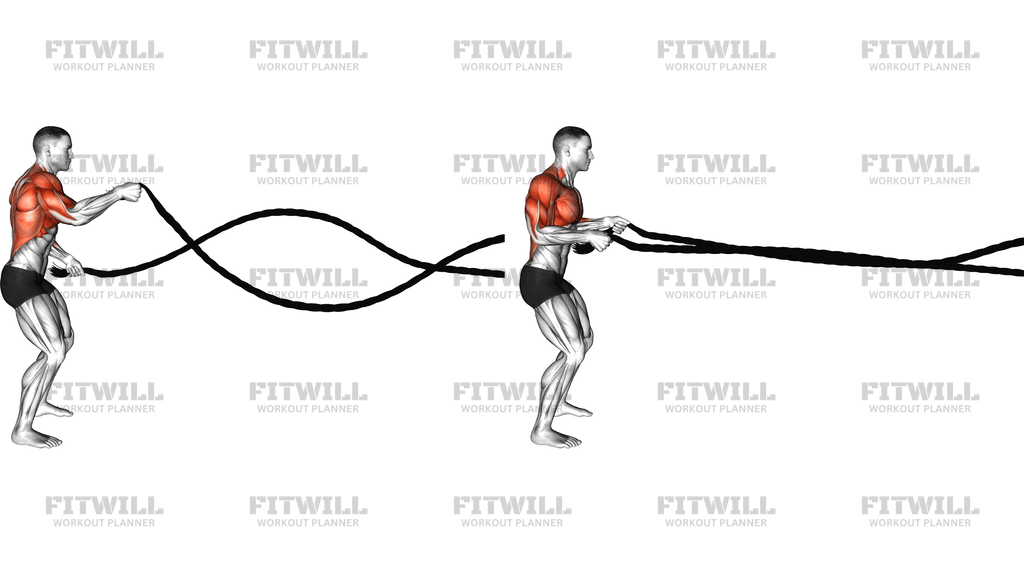
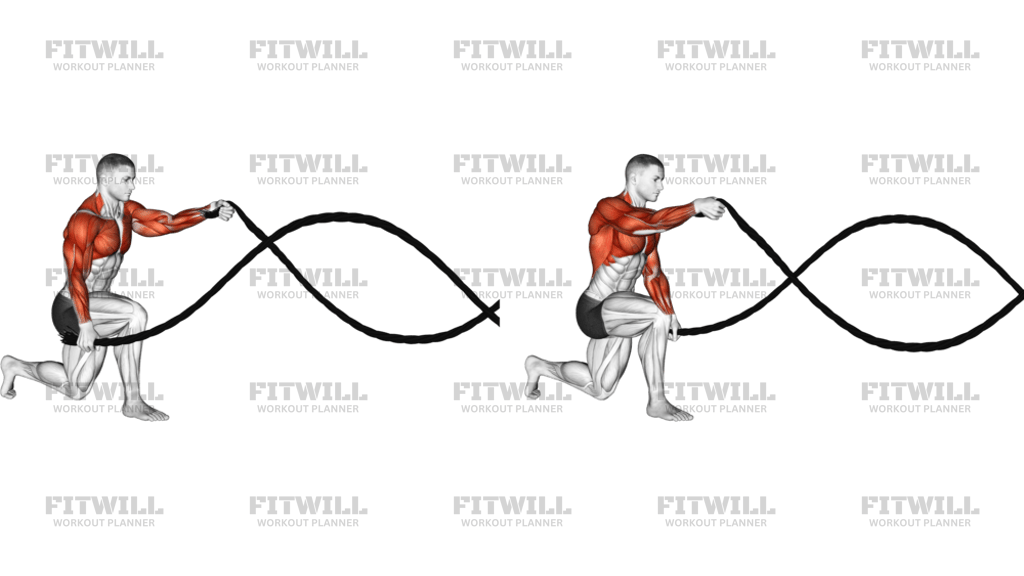
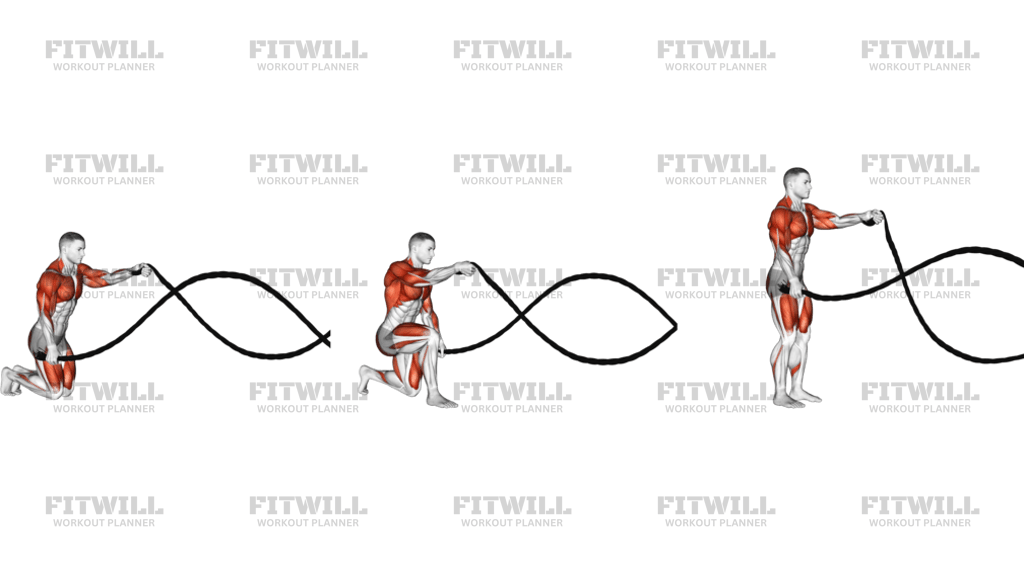
Battling Ropes Side Raise
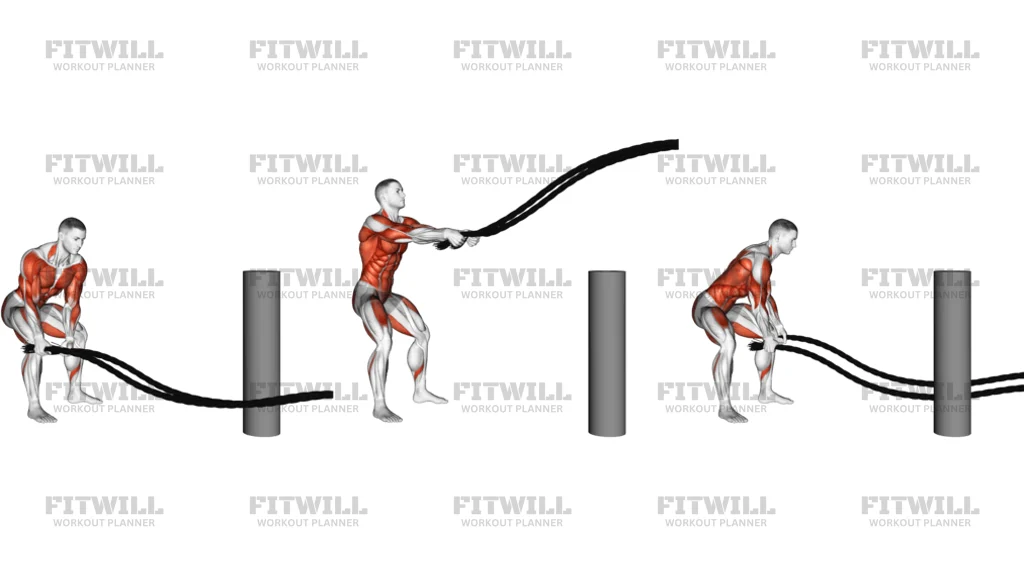
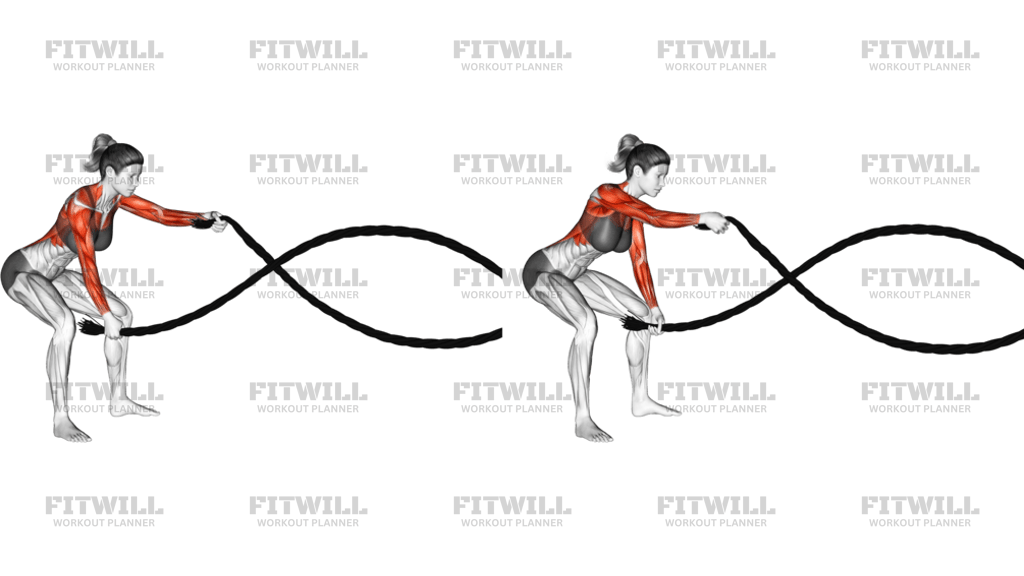
Battling Ropes Side Raise is a standing rope conditioning drill that uses an anchored battling rope and a rope attachment to drive a controlled side-to-side lifting path. It blends shoulder elevation, trunk control, grip endurance, and lower-body stability, so the exercise feels more like a coordinated athletic pattern than a pure isolation lift. The goal is to move the rope cleanly through the arc without letting the torso twist, the shoulders shrug, or the rope whip the body out of position.
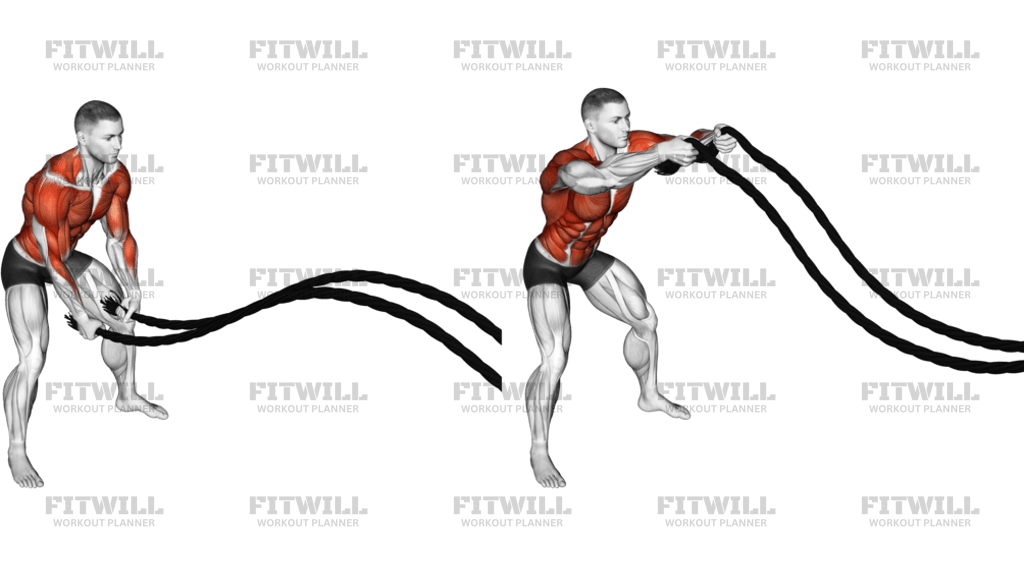
The setup matters because the rope needs enough tension to stay organized, but not so much tension that every rep turns into a yank. Stand with a shoulder-width base, soft knees, and a slight hip hinge so your hips can absorb the pull without dumping the load into your low back. Keep the chest tall, ribs stacked over the pelvis, and the neck long. Grip the rope ends with neutral wrists and let the handles sit where you can start from a low, controlled position near the thighs or hips.
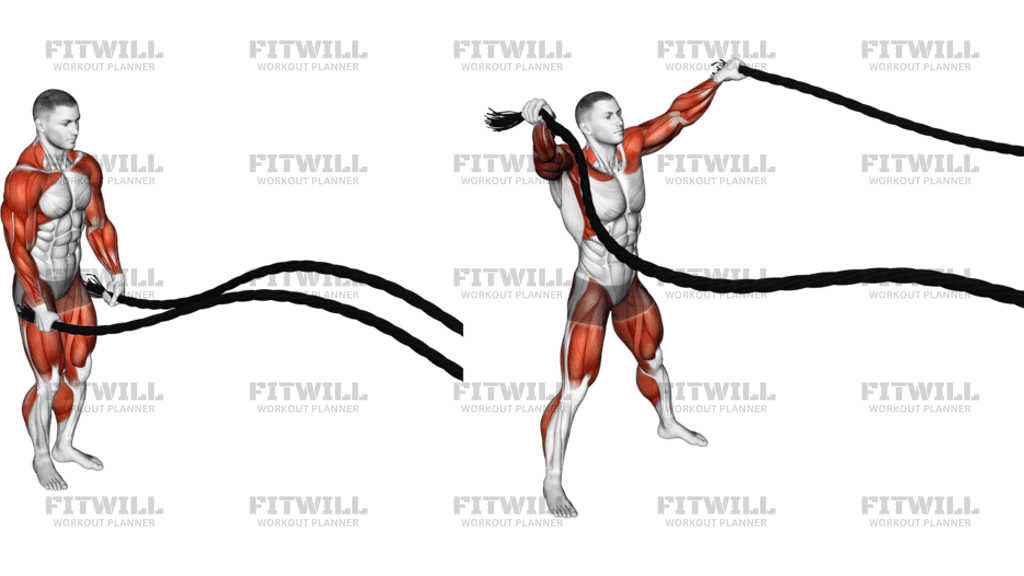
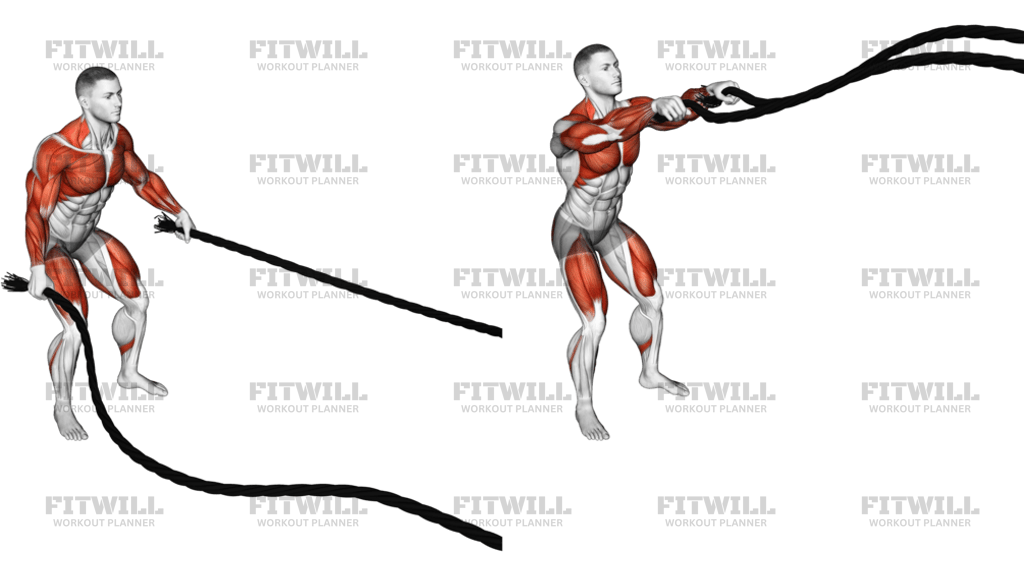
From there, raise the rope ends in a smooth lateral arc toward shoulder height on the working side, then guide them back down along the same path. The elbows should lead the motion slightly while the hands follow, and the shoulders should stay away from the ears as long as possible. If the image or setup cues you to move in a diagonal, keep the rope path crisp and deliberate rather than rushing the top position. Breathing should stay rhythmic, with a firm exhale during the lift and a controlled inhale on the return.
This exercise is useful when you want a shoulder-focused conditioning pattern that also challenges posture, coordination, and anti-rotation control. It fits well in warmups, shoulder endurance work, metabolic circuits, or athletic prep sessions where you want repeated effort without heavy loading. Because the rope path is dynamic, lighter resistance often produces better mechanics than trying to force a larger range or faster pace.
Keep the repetitions clean and stop the set as soon as the path gets sloppy. A good rep looks organized from the feet up: stable stance, quiet trunk, controlled shoulder lift, and a smooth return to the start. If the low back arches, the torso rotates, or the traps take over, reduce the range, shorten the stance, or step closer to the anchor until the movement feels precise again.
[ Workout Log & Planner ]
Put your next workout in Fitwill
Keep your plan and training log ready when you are.


Instructions
- Anchor the rope low and stand facing it with your feet about shoulder-width apart, knees softly bent, and a slight hip hinge.
- Hold one rope end in each hand with neutral wrists, arms in front of your thighs, and the shoulders set down away from your ears.
- Stack your ribs over your pelvis, brace your core, and keep your neck long before the first pull.
- Start from the low position and raise the rope ends in a smooth side-raise arc toward shoulder height.
- Lead the motion with your elbows slightly, letting the hands follow the same path instead of jerking upward.
- Keep your torso quiet as the ropes rise; only a small amount of body shift should happen at the hips and knees.
- Lower the ropes back to the starting position under control, keeping tension on the line instead of letting it go slack.
- Repeat for the planned reps, then set the ropes down before you step away from the anchor.
Tips & Tricks
- Stand close enough that the rope stays taut at the bottom, but not so close that the handles crash together.
- Think about lifting the rope ends with the elbows first so the upper traps do not take over the whole rep.
- Keep the hands at or below shoulder height; going higher usually turns the drill into a shrug.
- A small knee bend helps absorb the pull and keeps the lower back from arching to fake extra range.
- If the torso starts twisting toward the anchor, shorten the range before you add speed or reps.
- Use a lighter rope or less distance from the anchor if the handles feel too heavy to control smoothly.
- Exhale as the rope rises and inhale as it comes back down so the trunk stays organized.
- Stop the set when the rope path becomes jerky or the shoulders creep up toward the ears.
Frequently Asked Questions
What does Battling Ropes Side Raise train most?
It emphasizes shoulder elevation, upper-body coordination, grip endurance, and trunk stability, with a strong conditioning effect.
Is Battling Ropes Side Raise a pure shoulder isolation exercise?
No. The shoulders do the visible lifting, but the core, hips, and stance work hard to keep the rope path controlled.
How should I stand for the rope side raise?
Use a shoulder-width stance with soft knees and a slight hip hinge so you can move the handles without overextending your back.
How high should the rope handles go?
For most reps, bring the handles to about shoulder height. If you have to shrug to go higher, the range is too big.
What are the most common mistakes with this exercise?
Common errors are twisting the torso, shrugging the shoulders, bending the wrists back, and letting the rope slack out on the return.
Can beginners use Battling Ropes Side Raise?
Yes. Beginners should start with light rope tension, a short range, and a slow rhythm until the side-raise path feels smooth.
What if I feel this mostly in my neck?
That usually means the shoulders are shrugging. Lower the range, soften the knees, and keep the shoulder blades down as you lift.
How can I make the movement harder without losing form?
Increase rope tension, step slightly farther from the anchor, or add more reps while keeping the same clean side-raise path.