Battling Ropes Alternating Waves With Kneeling Get-Up
Battling Ropes Alternating Waves With Kneeling Get-Up combines rope conditioning with a controlled rise from kneeling to standing. The exercise asks you to keep the rope waves alive while your base changes from both knees, to a half-kneeling stance, and finally to tall standing. That makes it more than a cardio drill: it challenges rhythm, trunk control, hip drive, shoulder endurance, and the ability to keep producing force while your body position changes.
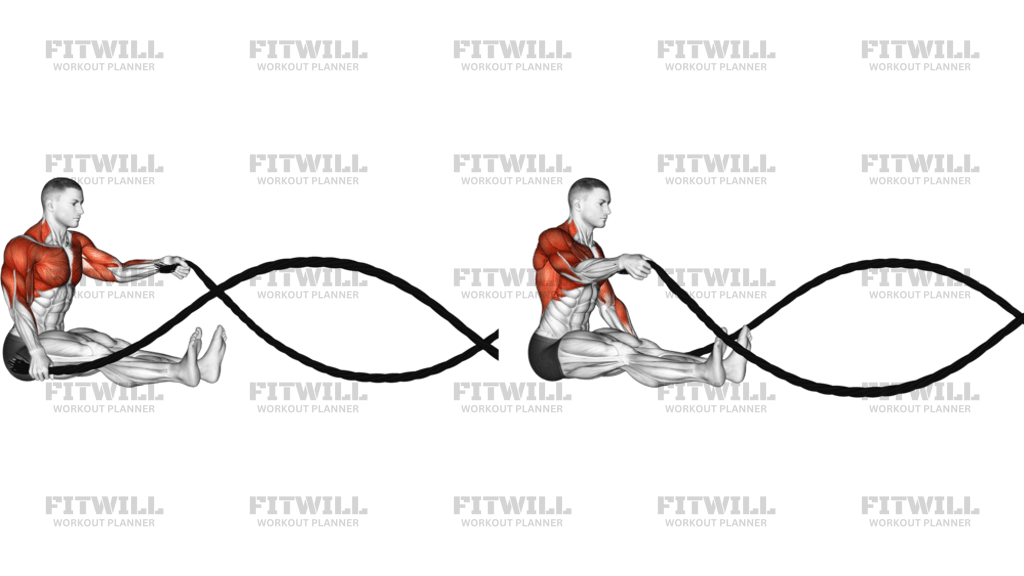
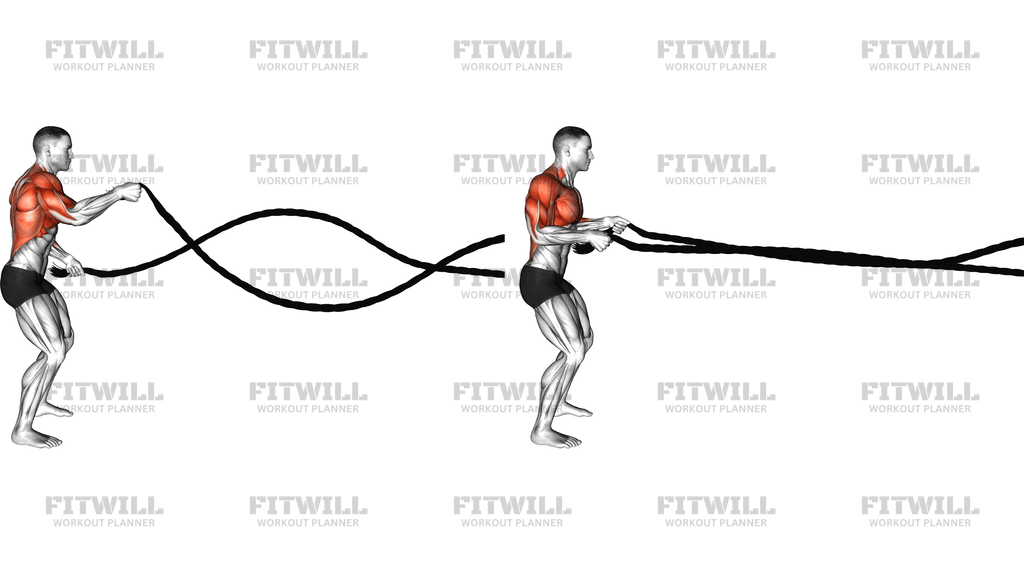
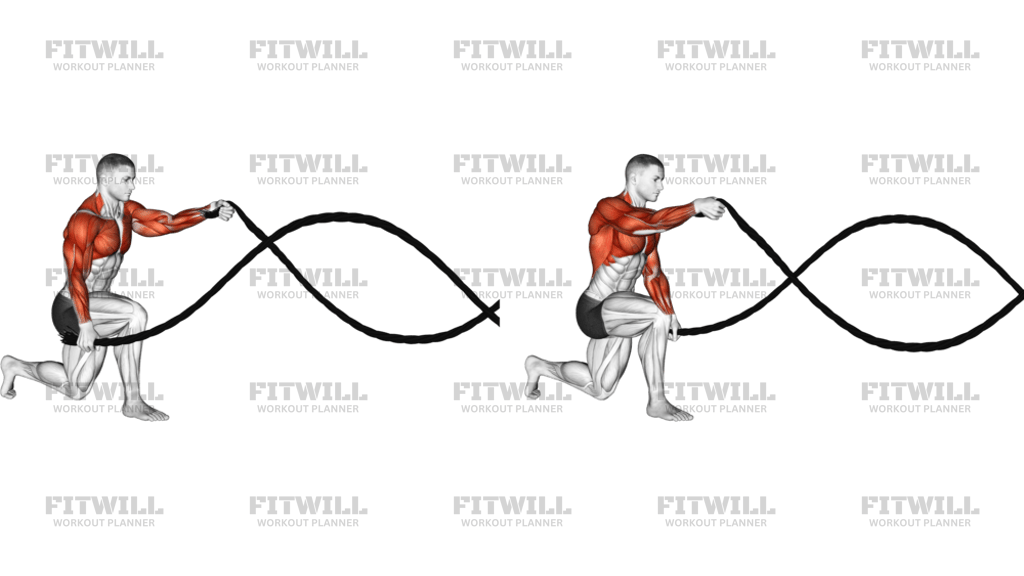
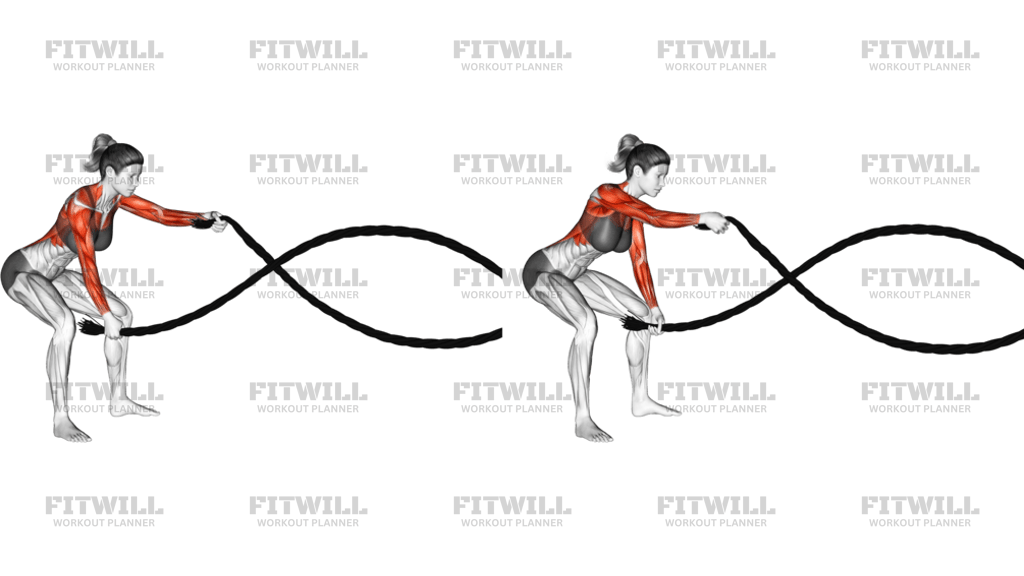
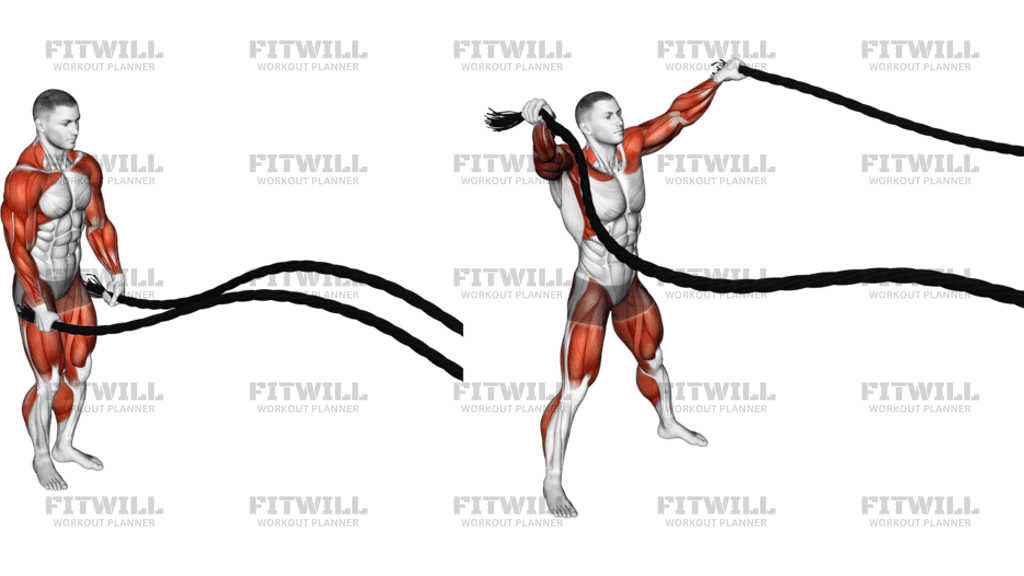
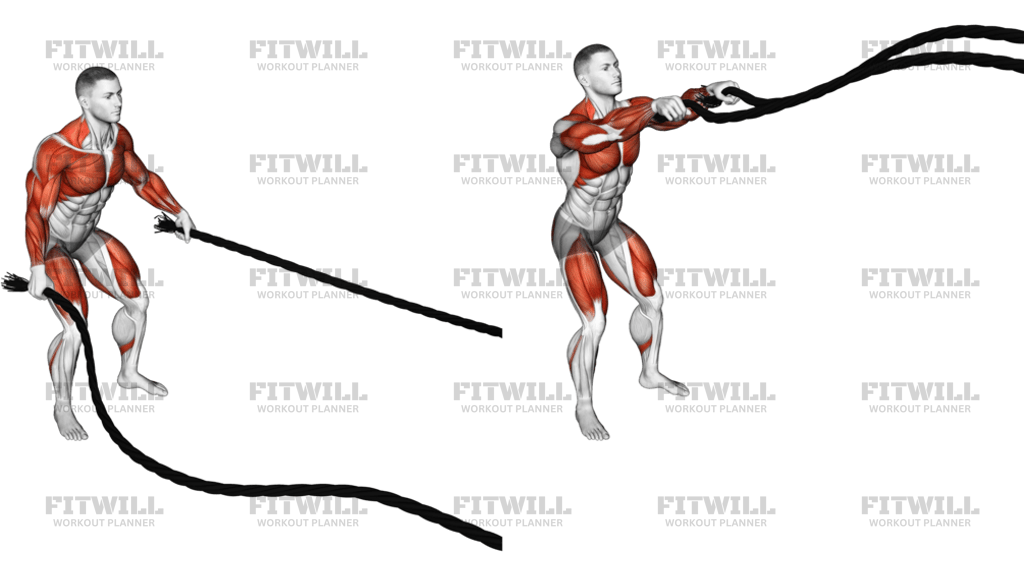
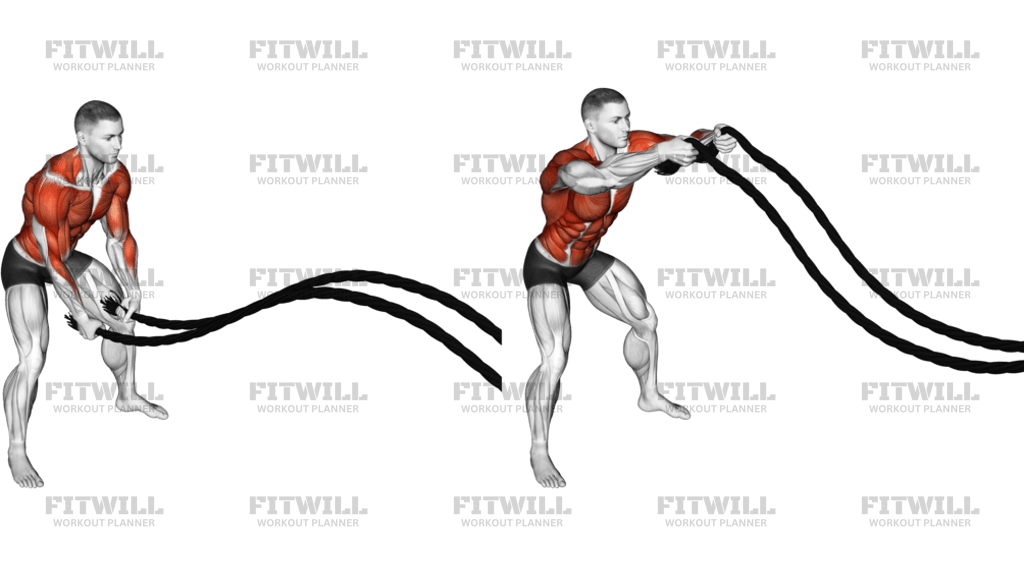
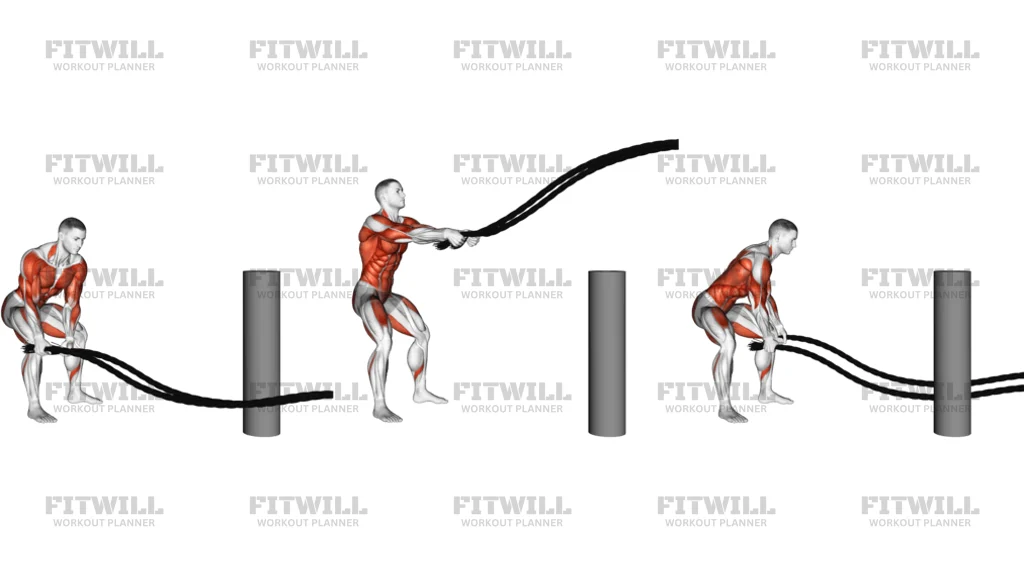
The image shows a clear progression through the rep. You start low on one or both knees with the rope anchor in front of you, then continue alternating waves while you step one foot forward into a half-kneeling get-up, and finish the sequence standing upright. The rope should keep moving smoothly through every transition. If the waves stop while you rise, the set has become a standing-up drill first and a rope exercise second.
Because the movement is long and position-specific, the setup matters. Face the anchor, keep the rope ends in a secure grip, and choose a distance that leaves enough slack for full waves without pulling you forward. The kneeling positions should feel stable: ribs down, pelvis under control, shoulders stacked over the rope path. The get-up portion should feel deliberate, not rushed, so each change of position happens without twisting or collapsing through the trunk.
Use this exercise when you want conditioning with a coordination challenge, or when you want to train shoulders and core endurance under a changing base of support. It fits well in warm-ups, athletic circuits, and rope intervals where quality matters more than total speed. Keep the wave amplitude honest and the transition clean. The goal is to stay organized while breathing hard, not to chase the biggest rope slams possible.
This movement is most useful when it is crisp, repeatable, and symmetrical. If the rope becomes jerky, your hips shoot back, or you have to jerk your torso to stand up, the load or rope speed is too aggressive. Use a controlled pace that lets you finish the kneeling get-up without losing the alternating wave pattern, and stop the set when the transitions stop looking smooth.
[ Workout Log & Planner ]
Put your next workout in Fitwill
Keep your plan and training log ready when you are.


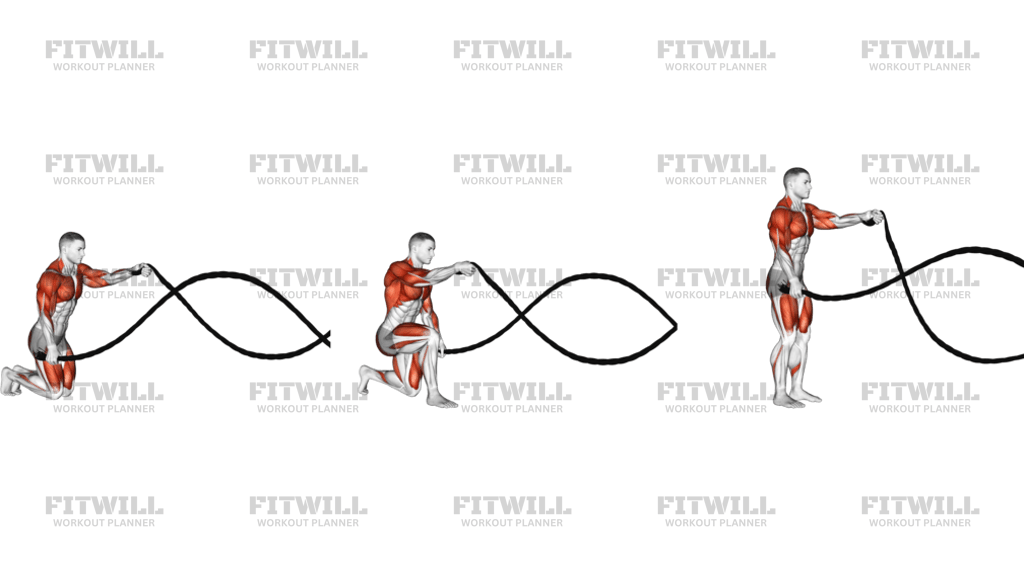
Instructions
- Kneel facing the rope anchor with both rope ends in your hands, elbows soft, and your chest tall enough to keep the lines clear.
- Set one knee down first and plant the other foot in front so you can rise into a half-kneeling position without losing balance.
- Begin alternating waves from the hands and shoulders while keeping your torso stacked over your hips.
- Drive one wave after another as you shift your weight forward and prepare to step up.
- Move from both knees into half-kneeling, keeping the rope moving and the shoulders relaxed.
- Continue the alternating waves as you press through the front foot and come up to standing.
- Finish upright with the rope still moving, then control the last wave before lowering back down to reset.
- Breathe steadily through the whole rep and restart from the kneeling position for the next repetition or interval.
Tips & Tricks
- Keep the rope anchor far enough away that the waves stay smooth when you go from kneeling to standing.
- Use smaller, faster waves if the get-up starts to pull you off balance.
- Let the hips and legs help you rise, but do not turn the rep into a lunge with a rope swing.
- Keep the ribs from flaring when you reach the half-kneeling and standing positions.
- If your shoulders creep toward your ears, reduce wave size and reset your posture before the next transition.
- Stay square to the anchor so the rope paths do not cross or twist during the get-up.
- Use a front knee and foot position that lets you stand without leaning the torso far forward.
- Stop the set when the waves become uneven or the transitions start looking rushed.
Frequently Asked Questions
What does Battling Ropes Alternating Waves With Kneeling Get-Up train?
It trains shoulder and arm endurance, trunk control, and the ability to keep producing rope waves while you move from kneeling to standing.
Do I have to stay on both knees the whole time?
No. The get-up portion is the point of the exercise: you start kneeling, move through a half-kneeling position, and finish standing while the waves continue.
Should the rope waves stop during the get-up?
They should stay active if possible. If the rope dies every time you transition, slow the pace or use smaller waves until the pattern stays smooth.
Is this more of a cardio drill or a strength drill?
It is mainly a conditioning drill, but the kneeling-to-standing transition adds a strength and coordination demand to the shoulders, core, and hips.
What is the biggest mistake with the rope attachment setup?
Standing too close to the anchor makes the rope feel cramped, while standing too far away makes the waves hard to control during the get-up.
Can beginners do this exercise?
Yes, if they keep the rope waves small and treat the get-up slowly. The exercise becomes much harder when the transition is rushed.
What should I feel most in my body?
You should feel the shoulders, arms, and upper back working continuously, with the core and hips helping you stay organized as you rise.
How do I make this exercise harder?
Increase wave speed, add more distance in the rope arcs, or shorten the rest between reps without letting the kneeling-to-standing pattern break down.