Hip Raise Bent Knee
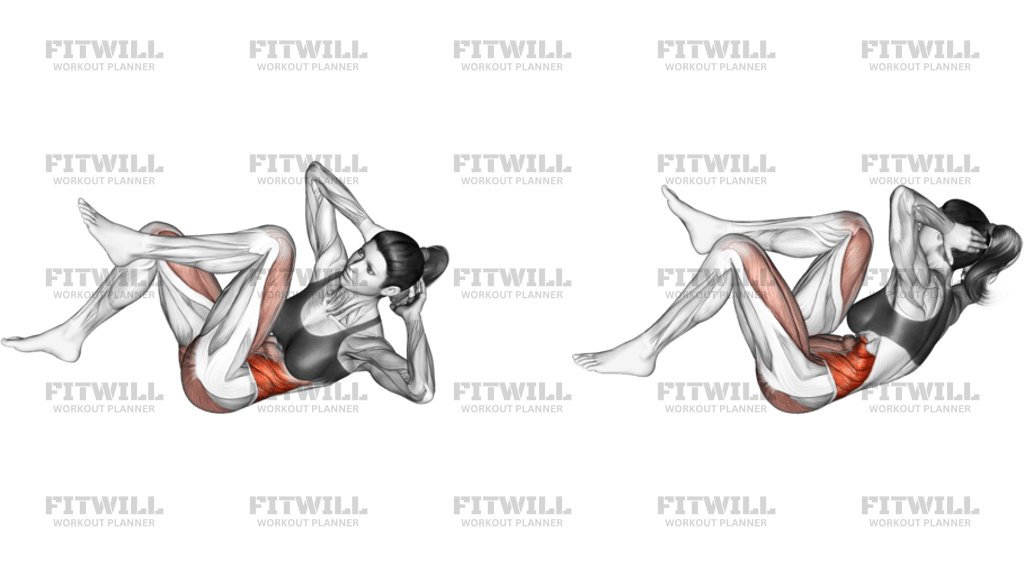
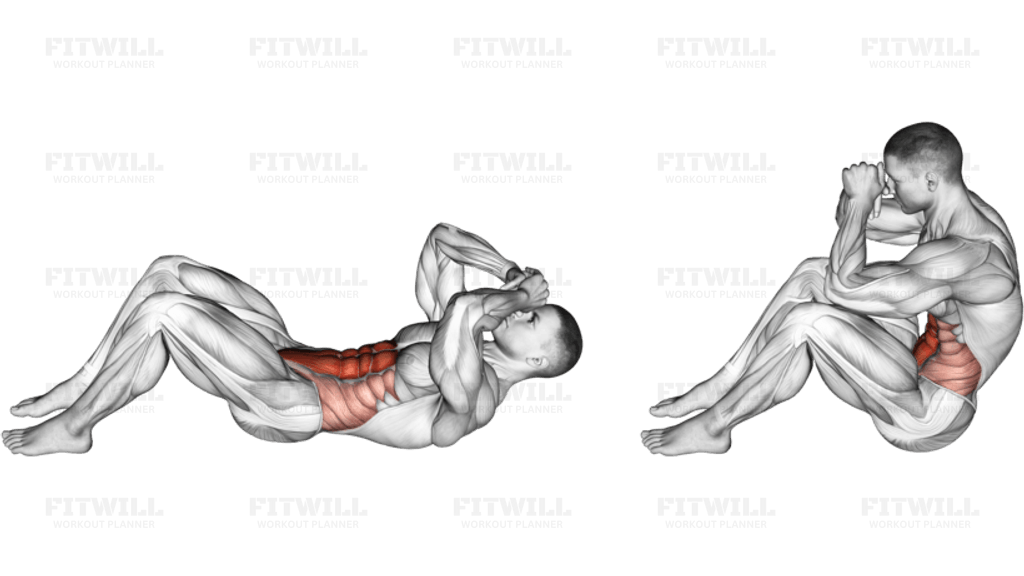
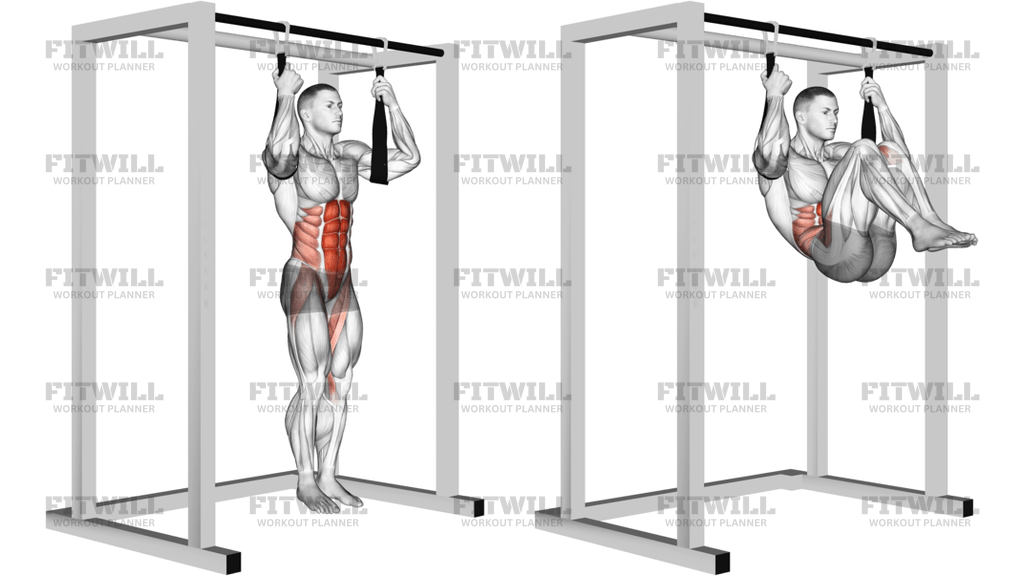
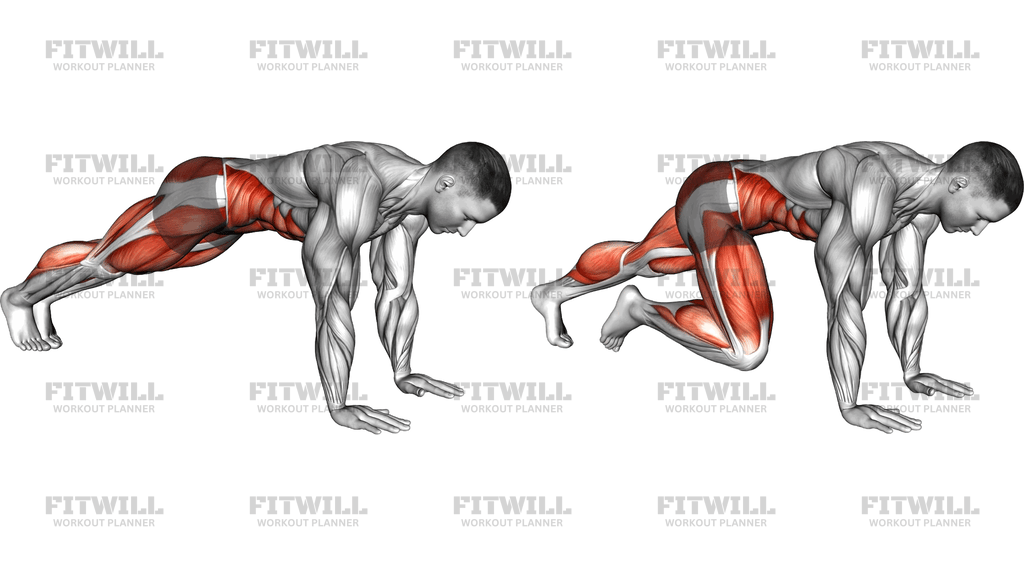
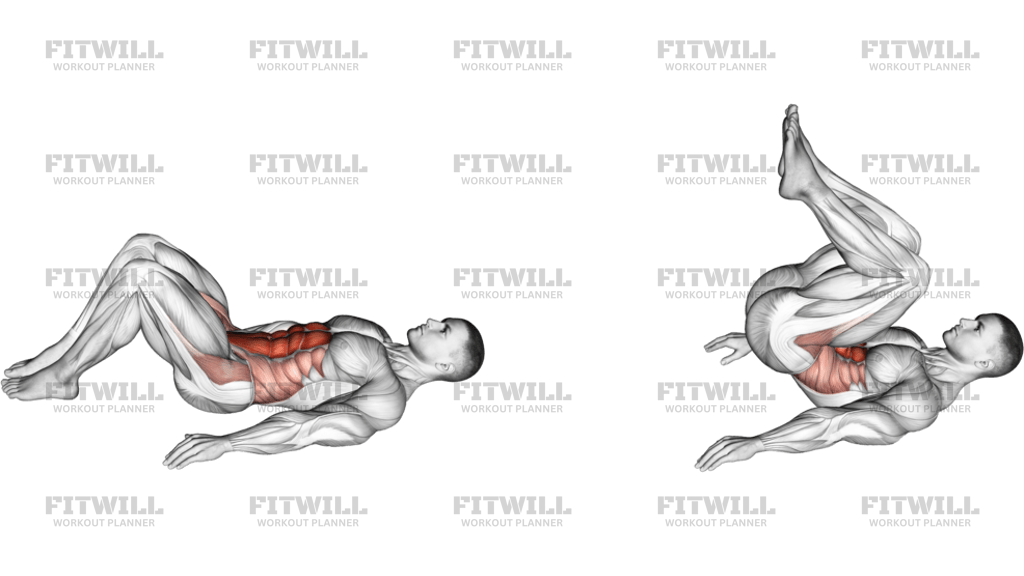
Hip Raise Bent Knee is a floor core drill that uses a tucked-knee pelvic curl to train the lower abs, rectus abdominis, obliques, hip flexors, and deep abdominal control. The bent-knee position shortens the lever arm and makes the movement more about posterior pelvic tilt and spinal control than about swinging the legs.
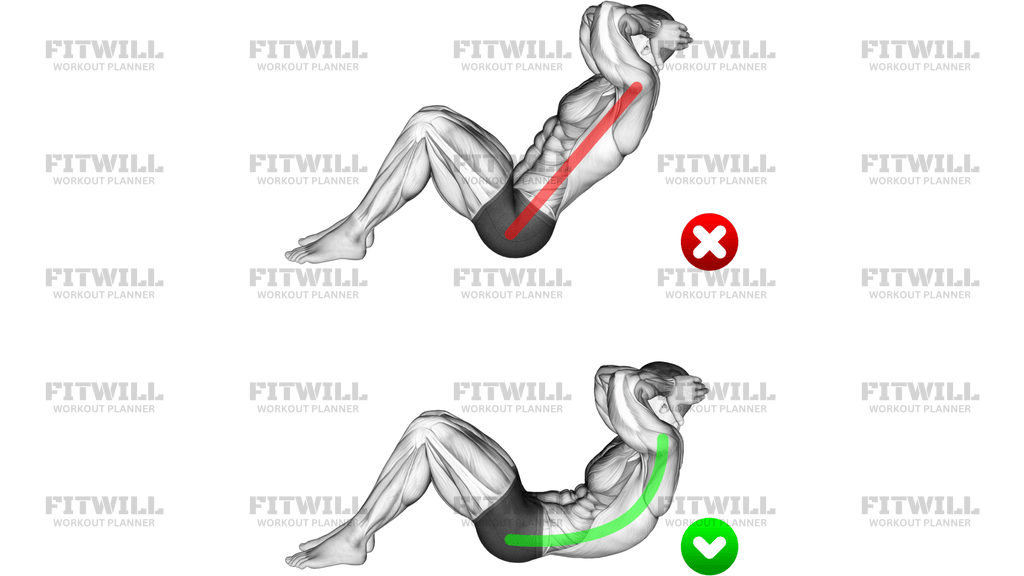
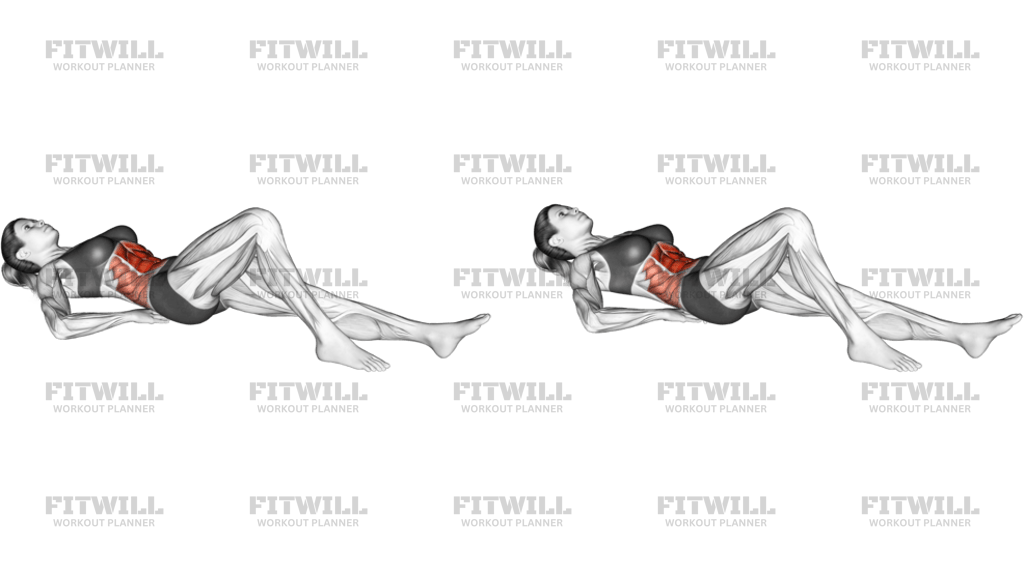
The setup matters because the exercise only works well when the pelvis can roll off the floor without the lower back arching. Lie face up on a mat with your arms on the floor beside you for balance, bend your knees, and keep the feet close enough that the legs can stay compact through the rep. From there, keep the ribs down and set the pelvis so the low back starts in a controlled, neutral-to-slightly-pressed position.
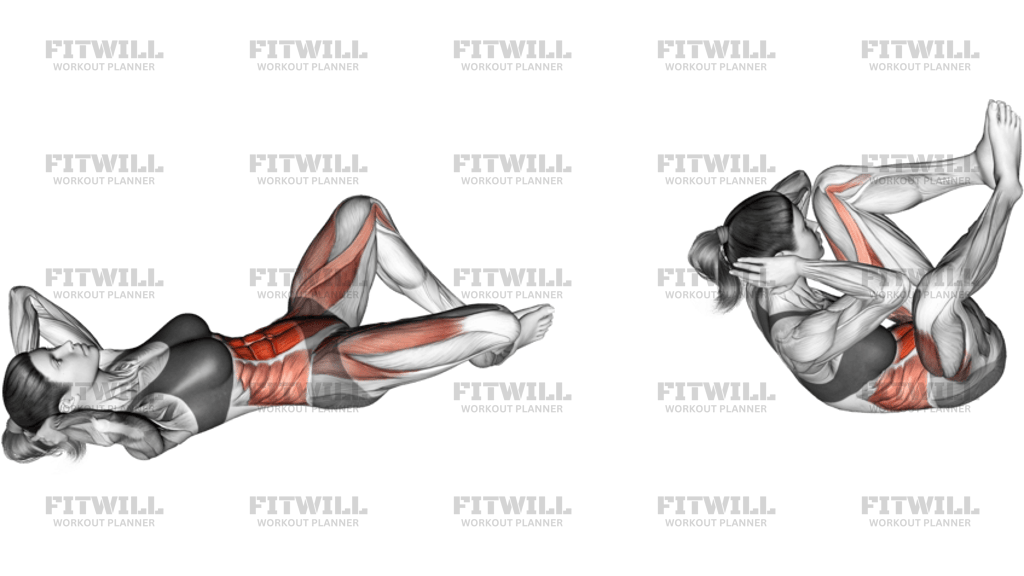
Each repetition should feel like a curl of the pelvis, not a kick of the legs. Exhale as you draw the knees toward your chest and peel the tailbone off the floor, then pause when the lower abs are fully shortened and the hips have lifted cleanly. The knees stay bent the whole time, and the descent should be slow enough that the pelvis returns to the mat under control instead of dropping or rocking.
This exercise is useful in core blocks, warm-ups, rehab-style conditioning, and finishers when you want abdominal work without heavy spinal loading. It is also a good option for lifters who need to learn how to brace while the pelvis moves. Keep the range smaller if the neck, hip flexors, or low back take over, and make the rep cleaner before making it harder.
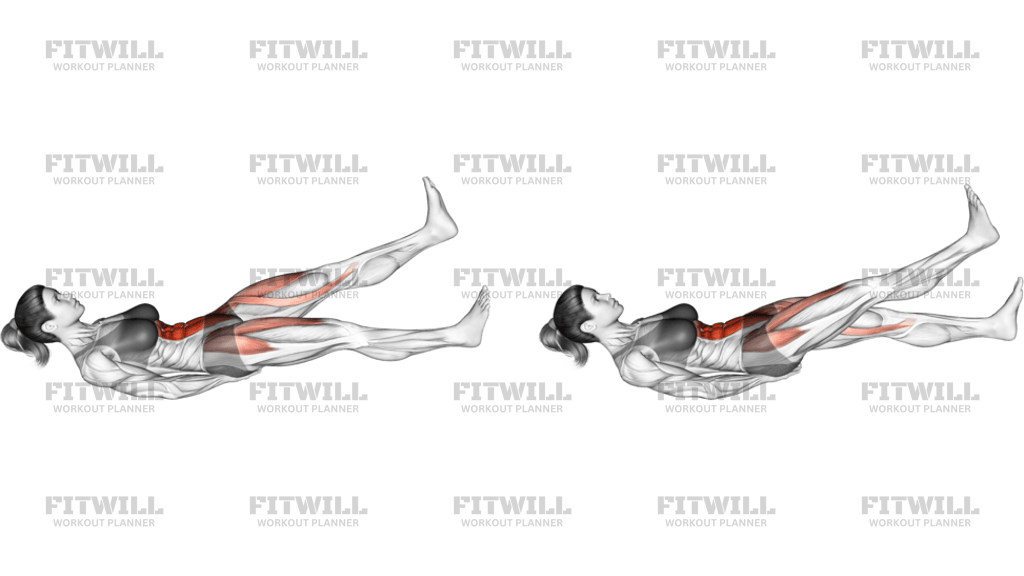
The main mistake is turning the lift into a momentum drill. If the feet swing, the shoulders yank, or the lower back arches hard at the bottom, the abs lose the job. Keep the movement compact, breathe with the curl, and stop the set when you can no longer control the pelvic tuck.
[ Workout Log & Planner ]
Put your next workout in Fitwill
Keep your plan and training log ready when you are.


Instructions
- Lie face up on a mat with your arms down by your sides and your knees bent so the legs stay compact.
- Keep your feet close and set your ribs down before the first rep so the pelvis can move without an arch in the low back.
- Brace your abs, tuck your chin slightly, and keep your neck long against the floor.
- Exhale as you pull your knees toward your chest and roll your tailbone off the mat.
- Lift only as high as you can while keeping the knees bent and the motion driven by the pelvis.
- Pause for a moment at the top without bouncing or swinging your legs.
- Lower slowly until the lower back and sacrum return to the mat under control.
- Reset the pelvis and breathe before starting the next rep.
Tips & Tricks
- Think about curling the pelvis toward your ribs instead of throwing the knees upward.
- Keep the arms quiet on the floor; they are for balance, not for generating lift.
- If the low back arches before the rep starts, shorten the range and reset the tuck at the bottom.
- Move the thighs as one unit so the knees stay bent and the rep stays compact.
- The hardest part should be the moment the tailbone leaves the floor, not the top of a leg swing.
- A slow lower exposes loss of control sooner than a fast drop, so use the descent as your quality check.
- If the hip flexors dominate, reduce how far the knees travel toward the chest and slow the tempo.
- Stop the set when the neck starts to tense or the pelvis stops peeling up cleanly.
Frequently Asked Questions
What muscles does Hip Raise Bent Knee work?
It mainly targets the lower abs and rectus abdominis, with help from the obliques, hip flexors, and deep core stabilizers. The glutes and upper back mainly help keep the body quiet on the floor.
Is Hip Raise Bent Knee the same as a reverse crunch?
It is very close. In this version the knees stay bent as the pelvis curls up, which makes it look and feel like a compact reverse crunch or hip raise.
Should my feet stay on the floor the whole time?
They should start close to the floor or lightly planted, but the lift comes from the pelvis rolling up, not from pushing through the feet. Keep the legs compact instead of kicking.
How high should I lift my hips?
Only high enough to feel the tailbone peel up and the lower abs finish the curl. If the knees swing and the low back arches, the rep is too big.
What if I feel this mostly in my hip flexors?
That usually means the knees are coming too far in or the tempo is too fast. Shorten the range, keep the pelvis tucked, and make the lower abs start the lift.
Is this a good beginner core exercise?
Yes. The bent-knee position makes it easier to control than a straight-leg variation, as long as you can keep the low back from arching.
What is the biggest mistake in Hip Raise Bent Knee?
Turning it into a leg swing or letting the lower back pop off the floor before the abs are ready. The movement should stay compact and controlled.
How can I make Hip Raise Bent Knee harder?
Slow the lowering phase, pause at the top, or add more reps only if the pelvis still curls cleanly. If the form breaks, make the range smaller instead of forcing it.