Kettlebell One-Arm Row
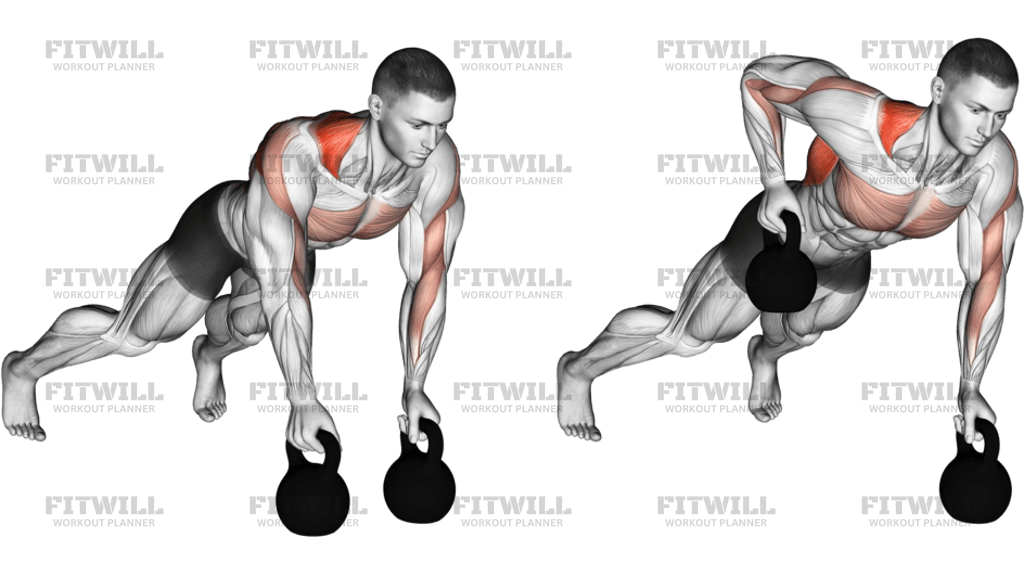
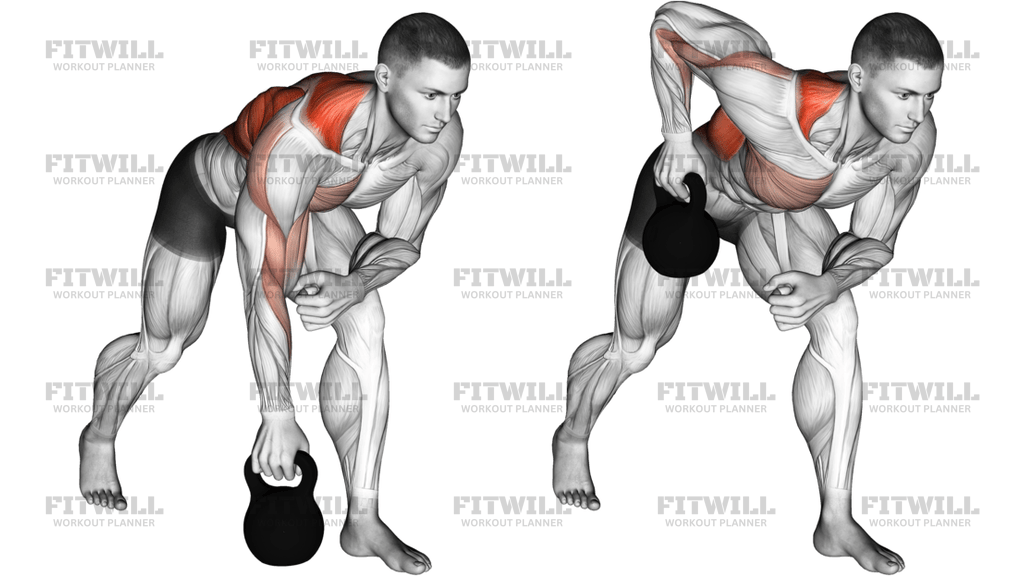
Kettlebell One-Arm Row is a supported bent-over pulling exercise that trains the upper back, lats, rear shoulder, and arm muscles while also challenging your brace and body position. The image shows a split-stance hinge with the free hand braced on the front thigh or knee and the kettlebell hanging straight down from the working shoulder before each pull. That setup matters because the row is only as good as the torso angle you can hold without twisting, shrugging, or turning the rep into a whole-body heave.
This movement is most useful when you want one side of the back to work at a time and you need clean scapular control. The main effort is centered on the trapezius, with the rhomboids, latissimus dorsi, and biceps helping drive the pull and steady the shoulder. A well-done row should feel like the shoulder blade glides back and down first, then the elbow drives toward the hip or lower ribs. If the kettlebell drifts away from the body or the torso rotates open, the set usually becomes easier to cheat and harder to load effectively.
Start by hinging forward until your chest is angled toward the floor and your spine stays long from head to tailbone. Keep most of your weight through the front foot and the back toes for balance, then let the kettlebell hang under the shoulder with the working arm fully extended. From there, pull the bell up with your elbow close to your side, briefly squeeze the back at the top, and lower the weight under control until the arm is long again. The non-working hand should stay planted on the thigh or knee so your trunk can resist the pull instead of chasing it.
Breathing should stay organized through the set: inhale in the hang, then exhale as you row. That rhythm helps you keep the ribs from flaring and prevents the torso from spinning toward the working arm. The return phase matters just as much as the pull, because a slow lower keeps tension on the upper back and stops the shoulder from collapsing forward between reps.
This exercise fits well in back-focused strength work, unilateral accessory blocks, or warmups that prepare the shoulder blade and trunk for heavier pulling. It is also a practical option when you want to clean up side-to-side differences in row strength or shoulder control. Keep the load honest, keep the torso fixed, and make every rep look the same from the first pull to the last.
[ Workout Log & Planner ]
Put your next workout in Fitwill
Keep your plan and training log ready when you are.


Instructions
- Stand in a staggered stance with the working-side leg slightly back, then hinge forward until your torso is angled toward the floor.
- Brace one hand on the front thigh or knee for support and let the kettlebell hang straight down from the other arm under the shoulder.
- Keep your spine long, your neck neutral, and most of your weight through the front foot and back toes.
- Inhale in the stretched position, then pull the kettlebell by driving the elbow close to your side.
- Row the bell toward your hip or lower ribs without rotating your chest open.
- Squeeze the shoulder blade back and down briefly at the top of the rep.
- Lower the kettlebell slowly until the arm is fully extended and the shoulder stays packed.
- Reset your brace before the next rep and repeat for the planned number of repetitions.
Tips & Tricks
- Keep the kettlebell close to your leg on the way up so the row loads the back instead of the shoulder joint.
- If your torso twists toward the bell, reduce the weight and shorten the range until you can stay square.
- Think about driving the elbow toward the back pocket, not yanking the handle straight up.
- Do not shrug the working shoulder toward your ear at the top; finish with the shoulder blade pulled down and back.
- Use a slight pause when the bell reaches the top to remove momentum from the rep.
- Lower in a controlled arc and let the shoulder reach full extension without rounding the upper back.
- Choose a stance that lets you hinge comfortably; if the low back feels crowded, widen the feet a little.
- Stop the set when the support hand starts doing all the work and the working side stops moving cleanly.
Frequently Asked Questions
What muscle does Kettlebell One Arm Row target most?
The biggest emphasis is on the upper back, especially the traps, with the lats, rhomboids, and biceps helping finish the pull.
Can beginners perform this exercise?
Yes, beginners can use it if they keep the load light and use the support hand to hold a fixed hinge position.
Where should the kettlebell travel during the row?
Pull it toward the hip or lower ribs with the elbow tracking close to the body, not flaring straight out to the side.
Should my free hand stay on my knee or thigh?
Yes. The support hand should stay braced on the front thigh or knee so your torso can stay stable while the working arm rows.
Why does my shoulder want to shrug at the top?
That usually means the load is too heavy or the pull is starting from the arm instead of the back. Keep the neck long and finish with the shoulder blade down.
How do I keep my torso from twisting?
Set your feet before the first rep, brace your abdomen hard, and lower the bell slowly so the rib cage does not chase the handle.
Is it okay to let the kettlebell hang below my shoulder?
Yes. A full hang is part of the setup as long as you keep the shoulder packed and the spine neutral.
What is the most common mistake with this row?
The most common mistake is turning it into a torso swing by using momentum, rotating the chest, or cutting the lowering phase short.