Kettlebell Two Arm Row
Kettlebell Two Arm Row is a bent-over pulling exercise that trains the upper back, lats, rear shoulders, and arms while also asking the trunk and hips to stay rigid. It is a practical strength movement when you want to build back thickness and pulling control without needing a machine or bench. The kettlebells give each side a clear load to manage, which makes it easier to spot side-to-side differences in posture, grip, and rowing path.
The setup matters more than the pull. Hinge forward at the hips until your torso is close to parallel with the floor, soften the knees, and let the kettlebells hang beneath the shoulders with neutral wrists. From that position, the row should start with the shoulder blades moving first, then the elbows driving back close to the ribs. If the torso is drifting or the lower back is doing the work, the load is too heavy or the hinge is too shallow.
A clean Kettlebell Two Arm Row ends when the bells reach the lower ribs or upper waist with the elbows tucked behind the body, not flared out wide. Lower the kettlebells under control until the arms are long again and the shoulders stay packed rather than shrugging forward. Breathing should stay rhythmic: brace before the pull, exhale as the bells come up, and reset that brace before each repetition. The goal is a strong pull with a still torso, not a heaved-up shrug or a fast swing.
This movement fits well in back, upper-body, or full-body sessions because it trains the pulling pattern without demanding a lot of setup time. It can be used as accessory work for deadlifts, presses, pull-ups, or general posture-focused training. Beginners can learn it safely with light kettlebells, but only if they can hold the hinge position without rounding the spine or losing balance through the feet.
When the set gets hard, the first thing to watch is body movement. If the chest keeps rising on every rep, if the bells stop near the thighs instead of the ribs, or if the shoulders roll forward at the bottom, the exercise is becoming sloppy. Keep the neck long, the feet planted, and the row path consistent so the upper back does the work it is meant to do.
[ Workout Log & Planner ]
Put your next workout in Fitwill
Keep your plan and training log ready when you are.


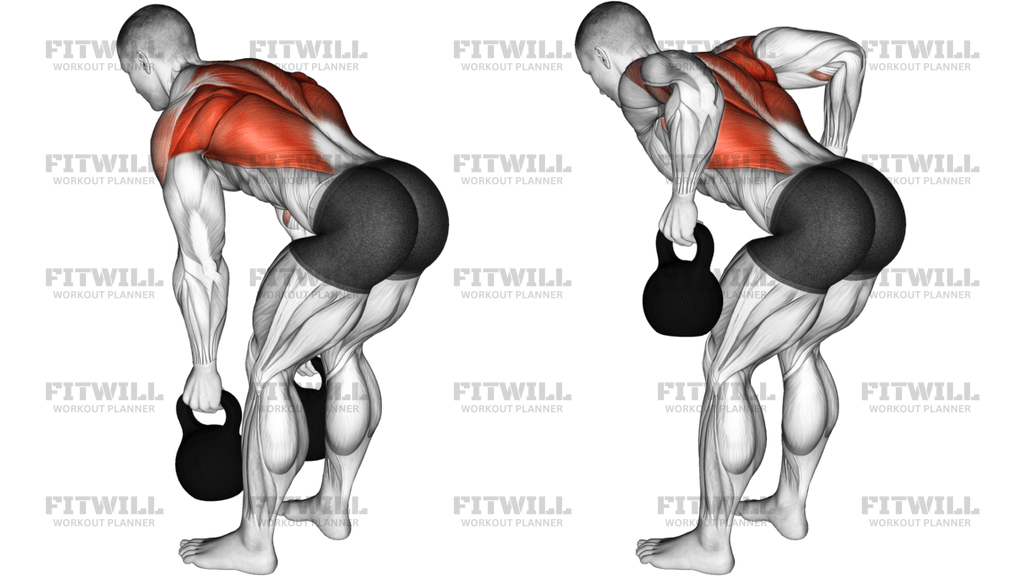
Instructions
- Stand with a kettlebell in each hand, feet about hip-width apart, and hinge at the hips until your torso is nearly parallel to the floor.
- Let the kettlebells hang under your shoulders with straight wrists, soft knees, and your neck in line with your spine.
- Set your weight through the middle of each foot and keep your ribs pulled down before the first rep starts.
- Pull both elbows back along your sides, driving the kettlebells toward your lower ribs or upper waist.
- Squeeze your shoulder blades back and together at the top without letting your chest pop up or your lower back arch.
- Lower the kettlebells slowly until the arms are long again and the shoulders stay controlled, not shrugged.
- Pause briefly at the bottom to reset the hinge and keep both bells still before the next pull.
- Exhale as you row, inhale as the bells lower, and keep the same torso angle for the whole set.
- Stop the set if you start twisting, standing up between reps, or turning the row into a swing.
Tips & Tricks
- Think about rowing to the ribs, not up toward the shoulders; a high pull usually means the upper traps are taking over.
- Keep the kettlebells close to your body so the lats can help and the shoulders do not drift forward at the bottom.
- If your lower back feels the set more than your upper back, raise your chest slightly less and shorten the hinge only enough to stay braced.
- Use a grip that lets the handles sit deep in the hand without bending the wrists back.
- Do not let the elbows flare wide; a tighter path usually keeps the row cleaner and more stable.
- A short pause at the top is useful if the bells keep bouncing off momentum.
- Choose bells you can lower under control for every rep; the eccentric should look as deliberate as the pull.
- Keep your chin tucked slightly so the neck does not crane forward while you watch the floor.
- If one side rises faster than the other, slow the tempo and match the pull height before adding load.
Frequently Asked Questions
What muscles does Kettlebell Two Arm Row work most?
It mainly targets the upper back and lats, with the traps, rhomboids, rear shoulders, and biceps helping during the pull.
How far should I pull the kettlebells on Kettlebell Two Arm Row?
Pull until the bells reach your lower ribs or upper waist. If you have to shrug or stand taller to get them higher, the range is too big.
Can beginners do Kettlebell Two Arm Row safely?
Yes, as long as the hinge stays stable and the load is light enough to keep the torso from moving. Beginners often do best with a shorter set and a slower lowering phase.
Should my torso stay fixed during the row?
Yes. A small amount of natural body tension is fine, but your torso should not rise or twist as the kettlebells come up.
What is the biggest mistake in Kettlebell Two Arm Row?
The most common mistake is turning it into a shrug or a swing. Keep the elbows close and let the shoulder blades and upper back finish the pull.
Do I need to row both kettlebells at the same time?
For this version, yes. Pull them together with the same torso angle and similar elbow path so both sides work evenly.
How heavy should the kettlebells be?
Pick a load you can hold in the hinge position without rounding your back or losing your grip before the upper back does the work.
Can I use Kettlebell Two Arm Row instead of a machine row?
Yes. It is a good free-weight alternative when you want more demand on the hips, trunk, and grip while still training a strong rowing pattern.