Kicks Leg Bent Version 2
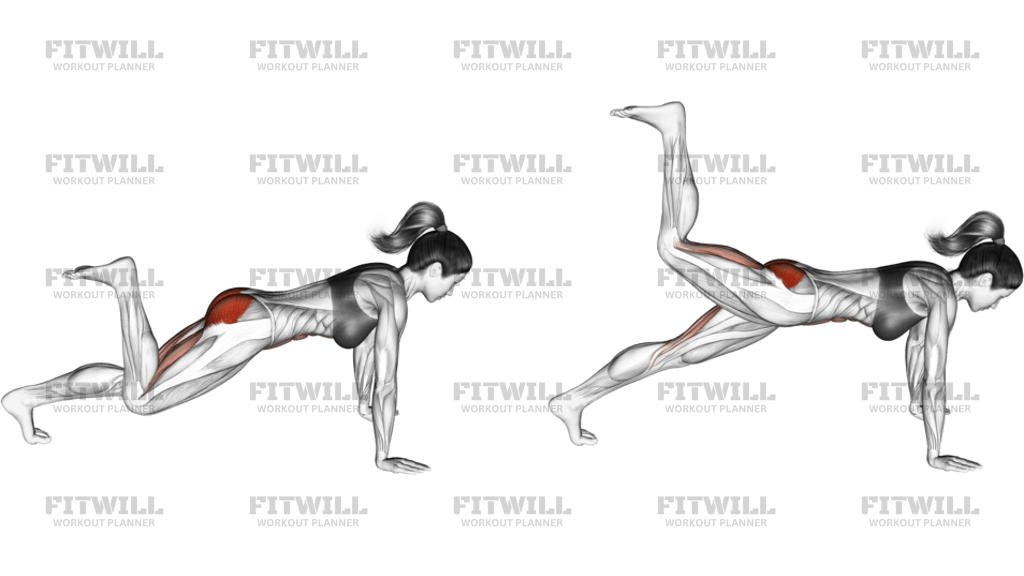
Kicks Leg Bent (version 2) is a bodyweight quadruped glute kickback performed on hands and knees with the working leg kept bent. The exercise looks simple, but the setup matters because the goal is to move the thigh at the hip without turning it into a low-back extension drill. When the torso stays steady and the pelvis stays square, the glutes do the work and the rep feels much cleaner.
The main training effect is hip extension for the glutes, with the core and hamstrings helping to stabilize the torso and keep the knee angle fixed. In anatomy terms, the main work centers on the Gluteus maximus, with assistance from Biceps femoris, Rectus abdominis, and Erector spinae. It is a good accessory movement when you want direct glute activation, controlled unilateral work, or a low-load exercise that reinforces hip control.
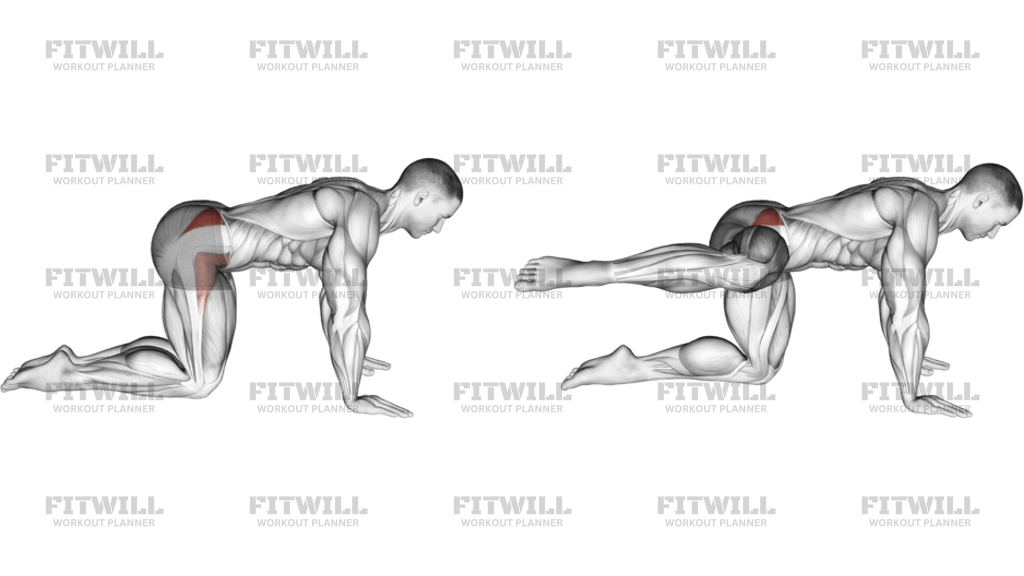
Start from a stable all-fours position with the shoulders stacked over the hands and the knees under the hips. One leg stays bent while you drive the sole of the foot upward in a controlled arc. The movement should come from the hip, not from swinging the leg or arching the back. A short pause at the top helps you feel the glute contract without losing position.
Because the exercise is bodyweight based, progression comes from cleaner reps, a slower tempo, a longer pause, or added resistance only after the basic shape stays strict. If the ribs flare, the pelvis twists open, or the lower back takes over, the range is too large or the leg is lifting too high. Keep the motion smooth and stop the rep where the glute is still in charge.
This variation works well in warmups, glute-focused sessions, rehab-style accessory work, or as a finishing drill after heavier lower-body lifts. Beginners can use it immediately if they can hold the tabletop position without collapsing through the shoulders or lumbar spine. The best version of the exercise looks controlled, quiet, and repeatable from the first rep to the last.
Fitwill
Log Workouts, Track Progress & Build Strength.
Achieve more with Fitwill: explore over 9600 exercises with images and videos, access built-in and custom workouts, perfect for both gym and home sessions, and see real results.
Start your journey. Download today!




Instructions
- Start on hands and knees with your shoulders stacked over your wrists and your knees under your hips.
- Keep both palms flat, spread your fingers, and set your head in line with your spine.
- Bend the working knee to about 90 degrees and keep that knee lifted slightly behind the hip.
- Brace your midsection so your ribs stay down and your lower back stays neutral.
- Drive the bent leg upward and back until the sole of the foot points toward the ceiling.
- Keep the knee bent and the pelvis square as you lift instead of twisting the hip open.
- Pause briefly at the top and squeeze the glute without shrugging through the shoulders.
- Lower the leg under control until you return to the starting height without resting on the floor.
- Breathe out on the lift, breathe in on the descent, and repeat for the planned reps.
Tips & Tricks
- Keep the working knee bent at roughly a right angle so the movement stays a hip extension drill, not a straight-leg kick.
- Do not arch your lower back to chase height; the foot should rise only as far as the pelvis can stay level.
- Press evenly through both hands to keep your shoulders from shifting while the leg moves.
- Think about lifting the heel toward the ceiling rather than swinging the entire thigh upward.
- If the hips rotate open, shorten the range and keep the kneecap pointing more toward the floor.
- A small pause at the top usually gives more glute tension than a bigger, sloppy kick.
- Move slowly enough that you can feel the glute start the lift and control the return.
- Stop the set if you feel the work moving into the lower back instead of the buttock.
Frequently Asked Questions
What does Kicks Leg Bent (version 2) train most?
It primarily trains the glutes through hip extension, while the core and hamstrings help keep the body stable.
Can beginners perform this exercise?
Yes. It is beginner-friendly because it uses body weight and has a simple setup, as long as the lower back stays still.
What should my setup look like on the floor?
Place your hands under your shoulders and your knees under your hips, then bend the working leg and keep the torso steady before you lift.
Why do I feel this in my lower back?
That usually means you are lifting too high or arching to finish the rep. Shorten the range and keep your ribs down.
Should the bent knee stay bent the whole time?
Yes. Keep the knee angle mostly fixed so the hip does the work instead of turning the rep into a straight-leg kick.
What is the best way to breathe during the rep?
Exhale as you kick the leg up and squeeze the glute, then inhale as you lower under control.
How is this different from a glute bridge?
A glute bridge is done with both feet planted, while this version works one bent leg at a time from a hands-and-knees position.
How can I make this exercise harder?
Slow the lowering phase, add a brief pause at the top, or add light ankle resistance only after the bodyweight version stays strict.