Seated Knee Up Rotation Stretch
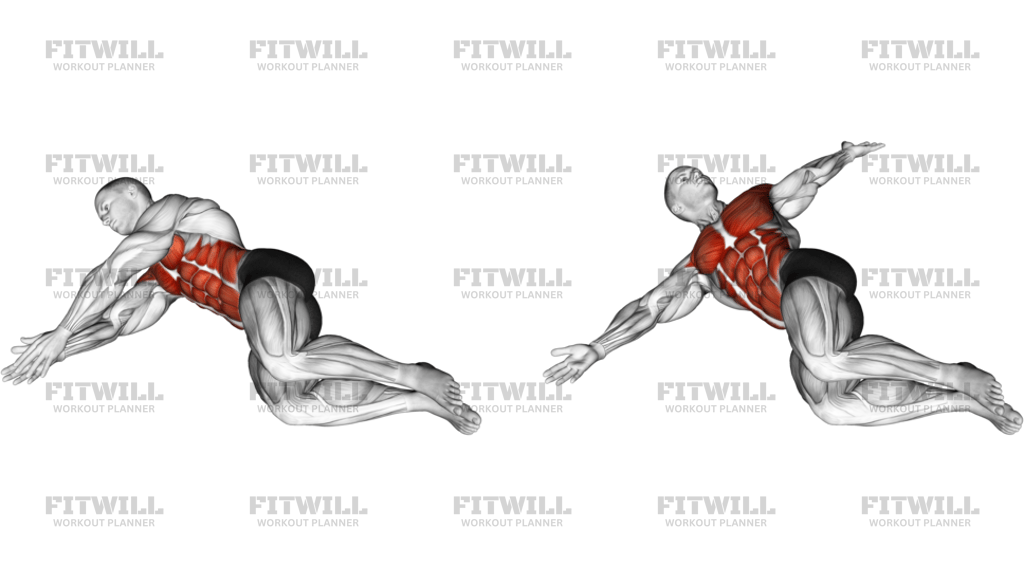
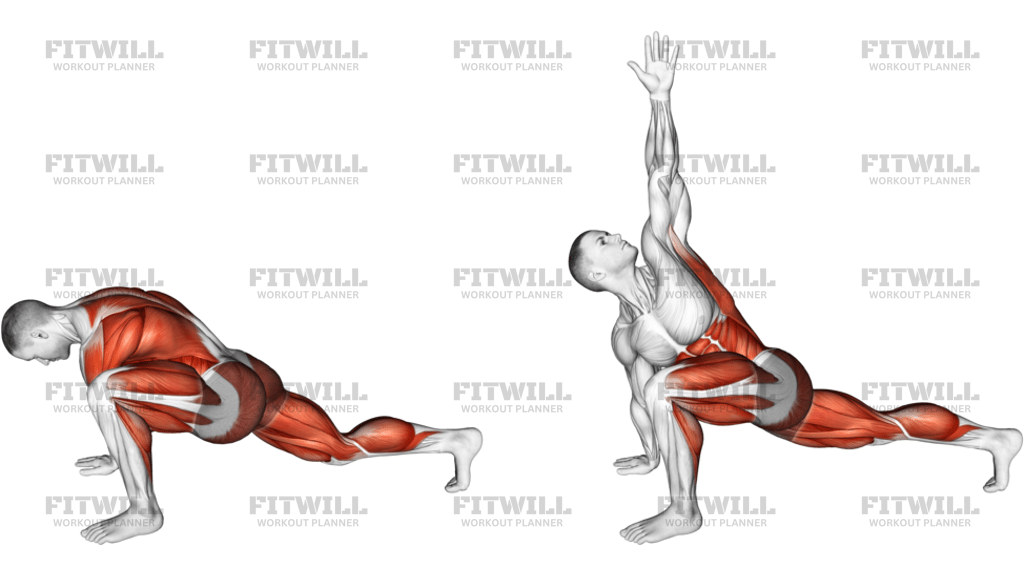
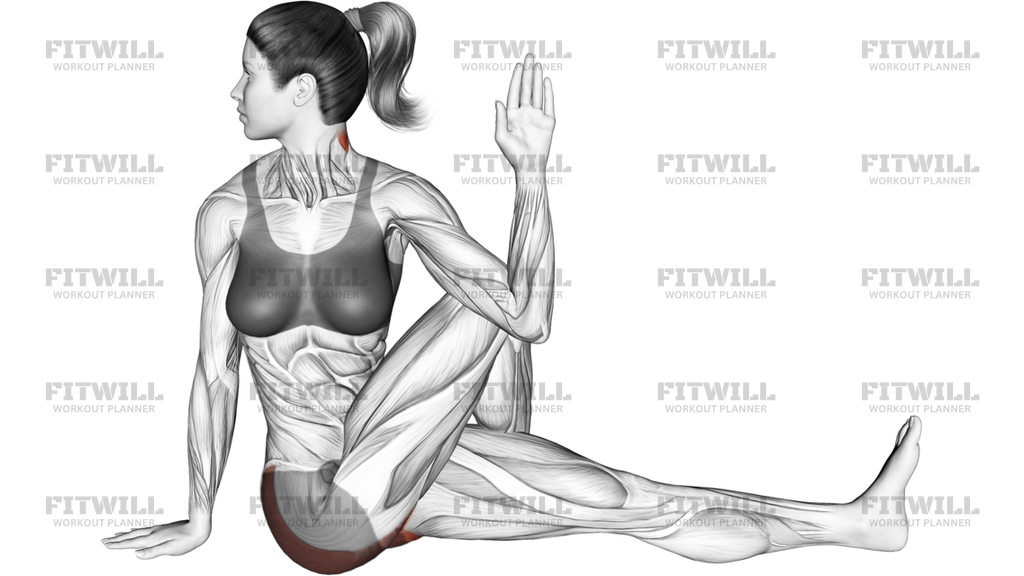
Seated Knee Up Rotation Stretch is a floor mobility drill for the hips, glutes, and torso. It uses body weight and an exercise mat to open the bent hip while teaching the trunk to rotate under control. The position in the image is not a standing twist or a lying stretch; it is a seated setup with one knee drawn up, the other leg extended, and the torso turning around the raised knee.
The stretch is useful when you want cleaner hip rotation and better control through the lower back, obliques, and glutes. The lifted knee helps lock in the hip position while the spine turns, so the quality of the setup matters more than how far you can twist. If the pelvis drifts or the chest collapses, the movement turns into a sloppy reach instead of a useful rotation stretch.
A good rep starts by sitting tall on the mat, bracing lightly, and placing one hand behind you for support while the other side helps guide the turn. From there, rotate your ribs and shoulders toward the raised knee without yanking on the leg. The goal is a smooth, comfortable rotation with steady breathing and enough length through the front of the hip, side waist, and upper back to feel useful but not aggressive.
This exercise works well in a warm-up, a hip mobility block, or at the end of a training session when the hips feel stiff after sitting, squatting, or running. It is especially helpful for people who need a simple seated option because it does not require equipment beyond a mat and body weight. Keep the stretch controlled, avoid forcing the knee toward the floor, and switch sides so both hips and both directions of rotation get attention.
[ Workout Log & Planner ]
Put your next workout in Fitwill
Keep your plan and training log ready when you are.


Instructions
- Sit on the mat with one leg extended straight and the other knee bent up in front of you, foot close to the body.
- Place the hand on the same side as the bent knee lightly behind you for support and sit tall through the crown of the head.
- Set the opposite hand on or near the lifted knee or thigh so you can guide the rotation without pulling.
- Brace gently, then rotate your ribcage and shoulders toward the bent knee while keeping both sit bones as grounded as possible.
- Keep the extended leg long and relaxed, with the toes facing up or neutral so the hip stays organized.
- Turn only until you feel a clear stretch through the hip, glute, and trunk without the pelvis tipping or the lower back pinching.
- Hold the end position for a steady breath or two, then ease a little deeper only if the stretch stays smooth and pain-free.
- Return to center under control, reset your posture, and repeat before switching sides.
Tips & Tricks
- Sit on top of a folded mat or small pad if your hips round backward and you cannot stay upright.
- Keep the chest open as you rotate; collapsing forward turns the movement into a spine slump instead of a clean twist.
- Use the supporting hand behind you to stay tall, not to heave yourself farther into the stretch.
- If the bent knee floats away from your body, reduce the twist and bring the foot a little closer before you continue.
- Keep the extended leg active enough to stay long, but do not lock the knee hard or jam the heel into the floor.
- Breathe into the side of the waist and the back of the hip instead of holding your breath at the end range.
- Move slowly enough that you can feel the difference between hip rotation and lower-back compensation.
- Stop short of sharp groin pain, especially if the bent hip feels pinchy when you rotate.
Frequently Asked Questions
What does Seated Knee Up Rotation Stretch work the most?
It mainly targets hip mobility, glute length, and thoracic rotation, with the obliques and deep stabilizers helping keep the twist controlled.
Which side should the lifted knee be on?
Either side works. Rotate toward the lifted knee, then switch sides so both hips and both directions of rotation are addressed.
Should my support hand stay behind me or on the knee?
The hand behind you is for balance, while the other hand can guide the knee or thigh if you need help controlling the turn.
Why does my lower back take over this stretch?
Usually the pelvis is rolling or the chest is collapsing forward. Sit taller, shorten the range, and rotate the ribs instead of cranking through the low back.
Can beginners do this stretch?
Yes. It is beginner-friendly as long as you keep the movement small, stay upright, and do not force the knee toward the floor.
What should I feel during the stretch?
You should feel a controlled stretch around the hip, outer glute, waist, and upper back on the rotated side, not a sharp pinch in the groin or knee.
How long should I hold each rep?
A short hold of one to three steady breaths is usually enough before returning to center and repeating or switching sides.
What if I cannot sit upright in the position?
Sit on a folded mat, widen the base slightly, or reduce how high the knee comes up until you can keep the spine tall without straining.