Split Squat
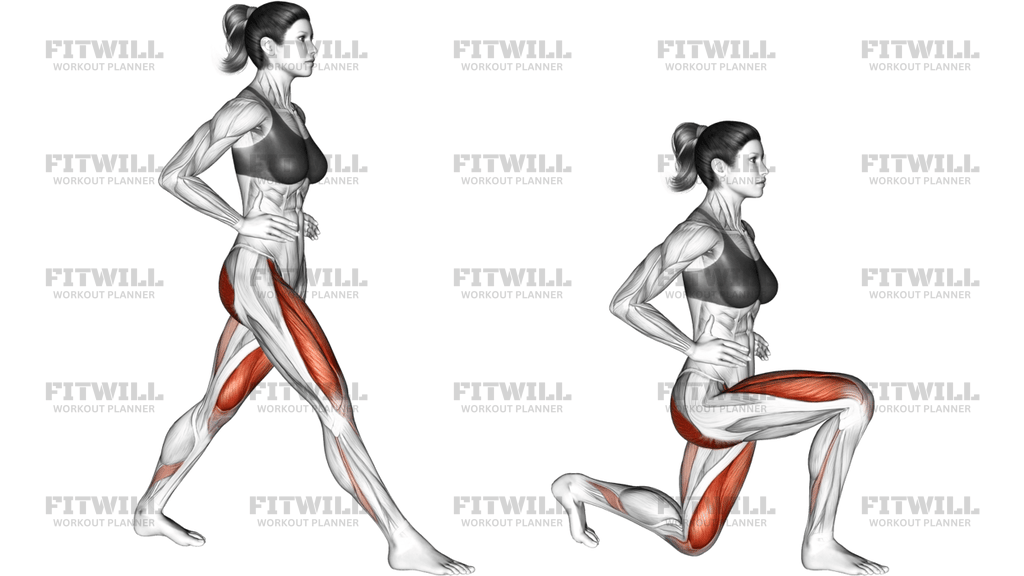
Split Squat is a bodyweight lower-body exercise built around a staggered stance, with one foot planted in front and the other set back on the toes. It is a simple pattern on paper, but the position demands real control from the hips, knees, and trunk. When you do it well, the front leg does most of the work while the torso stays tall and the pelvis stays steady.
This movement is especially useful when you want unilateral leg work without needing a machine, barbell, or step. The front glute, thigh, and supporting muscles share the load as you lower under control and drive back up from the front heel and midfoot. In anatomy terms, the main emphasis is the gluteus maximus, with help from the hamstrings, rectus abdominis, and erector spinae to keep the rep stable and aligned.
The setup matters because the stride length changes everything. If the stance is too short, the front knee can get crowded and the torso may fold; if it is too long, you may lose pressure through the front foot and feel the work shift away from the front leg. The goal is a stable split stance where the front foot stays flat, the back heel stays lifted, and the rear knee can travel down without twisting the hips.
Lower by bending both knees at the same time, letting the rear knee move toward the floor while the front knee tracks in line with the toes. Keep the chest tall, ribs stacked over the pelvis, and pressure spread through the front heel and big toe. At the bottom, the front thigh should work hard without bouncing, and the rear leg should act as a balance point rather than the driver of the rep.
Split Squat works well as a strength accessory, warmup primer, or lower-body hypertrophy movement because it teaches single-leg control and exposes side-to-side differences. It also scales easily: shorten the range if you lose balance, slow the descent if you rush, or add load only after the bodyweight version looks clean. That makes it a practical choice for beginners learning leg mechanics and for experienced lifters who want more demand from each rep without heavy equipment.
[ Workout Log & Planner ]
Put your next workout in Fitwill
Keep your plan and training log ready when you are.


Instructions
- Stand in a split stance with one foot forward and the other foot back on the toes, keeping both feet hip-width apart from side to side.
- Place the front foot flat on the floor and line the back foot up so your stance feels long enough for the rear knee to drop toward the floor without the front heel lifting.
- Keep your torso upright, your hips square to the front, and your hands on your hips or hanging by your sides for balance.
- Brace your trunk and lower yourself by bending both knees at the same time.
- Let the rear knee travel straight down toward the floor while the front knee tracks over the toes.
- Pause briefly near the bottom with steady pressure through the front heel and big toe.
- Drive through the front foot to rise back up until both legs are straight again.
- Keep the torso tall, exhale as you stand, and reset your stance before the next rep.
Tips & Tricks
- If the front heel wants to lift, take a slightly longer stance and keep more weight through the midfoot and heel.
- Let the rear knee drop straight down instead of reaching it forward; that keeps the split squat from turning into a shallow lunge.
- Keep the front knee tracking in the same direction as the toes so the rep stays centered over the planted foot.
- A small forward torso lean is fine, but folding at the waist usually means the stance is too short or the core has relaxed.
- Use the back leg only for balance; if it starts driving the ascent, the front leg is no longer doing the main work.
- Pause for a beat at the bottom if you tend to bounce out of the hole or lose control on the way up.
- If your balance wobbles, fix your gaze on one point ahead of you and keep the head still through the whole set.
- Stop the descent before the rear knee slams the floor; a soft hover keeps tension on the working leg and protects the joint.
Frequently Asked Questions
What muscle does Split Squat target most?
The front leg does most of the work, especially the glutes and thigh on that side. The rear leg mainly helps with balance and position.
Can beginners perform this exercise?
Yes. Start with body weight and a short range of motion, then lower deeper only when you can keep the torso tall and the front foot stable.
How wide should my split stance be?
Long enough that the rear knee can travel down comfortably without the front heel peeling up. If the front knee feels crowded, lengthen the stance a little.
Should my back knee touch the floor?
It does not have to. Lower until you can keep control and tension, and use a soft hover if touching the floor would make you bounce or twist.
Why does my front heel come off the ground?
The stance is usually too short or the descent is too aggressive. Lengthen the split slightly and keep pressure through the heel and big toe.
Can I hold dumbbells for Split Squat?
Yes, once the bodyweight version is steady. Hold the dumbbells at your sides and keep the same upright torso and straight-down knee path.
Why do I feel Split Squat more in my rear leg?
Usually the stance is too short or you are pushing off the back toes. Shift more weight into the front foot and let the rear leg stay relaxed.
Is Split Squat good for knee-friendly training?
It can be, because you control the range and load yourself. Keep the movement smooth, avoid bouncing, and stop short of any painful depth.