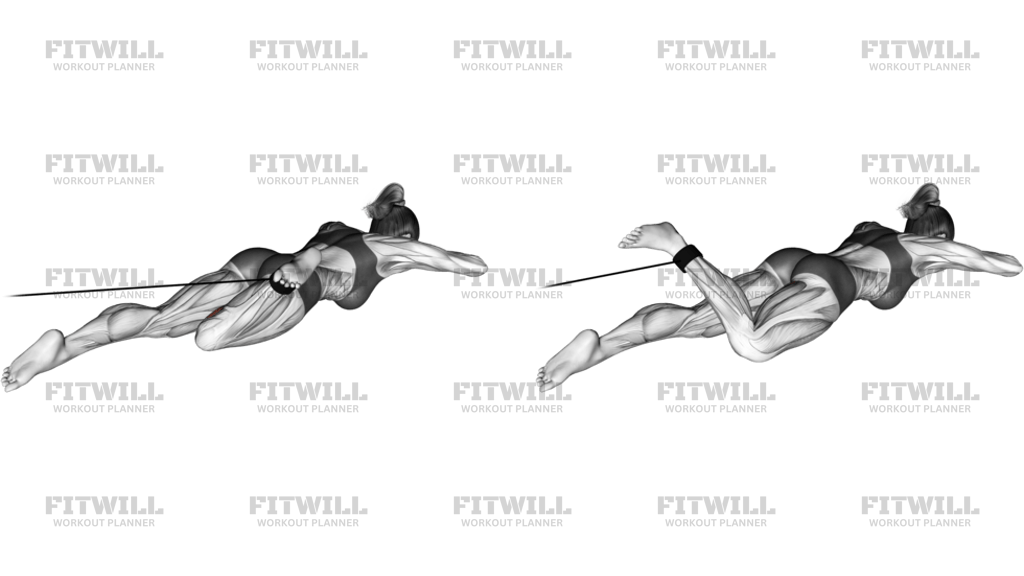
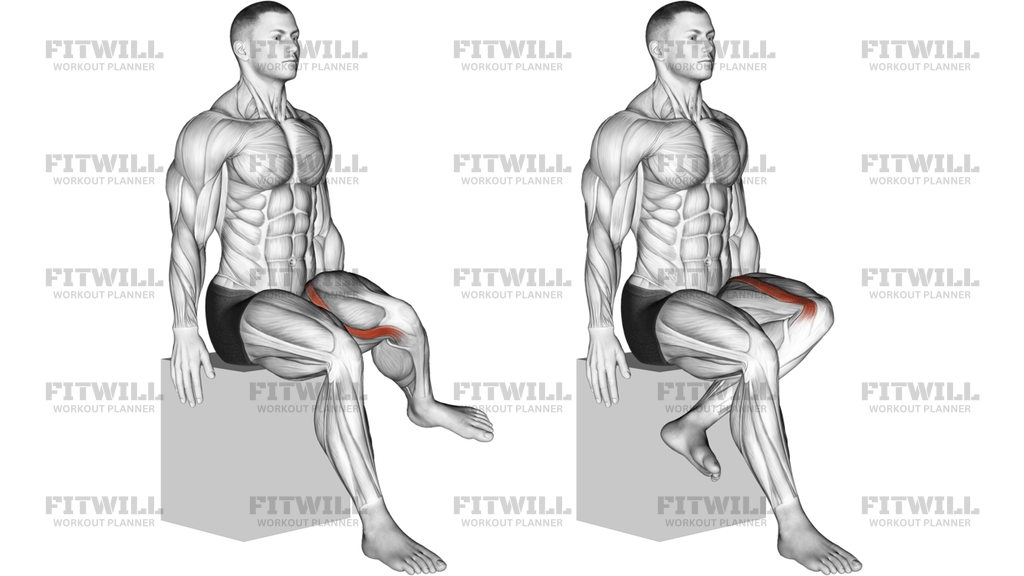
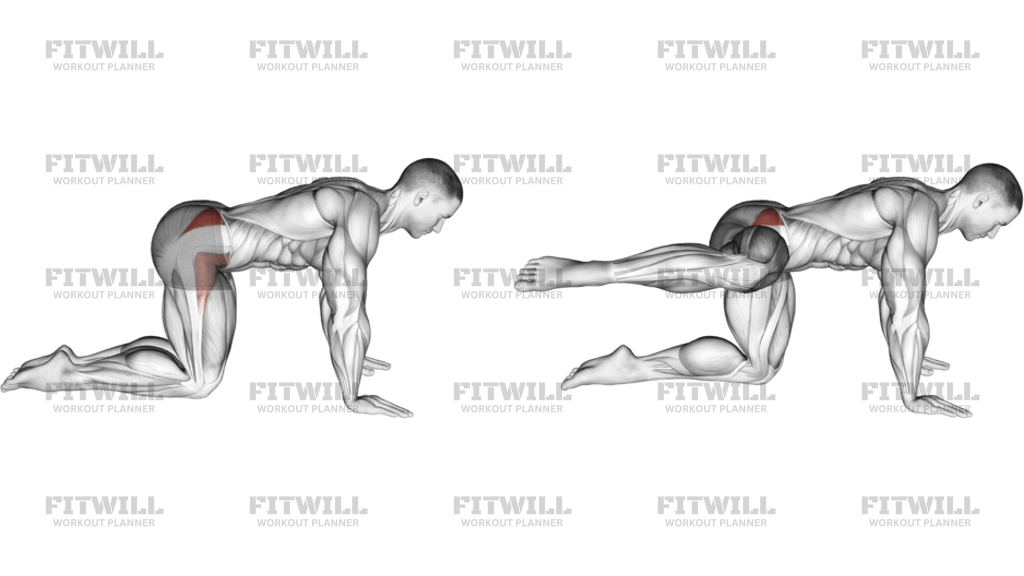
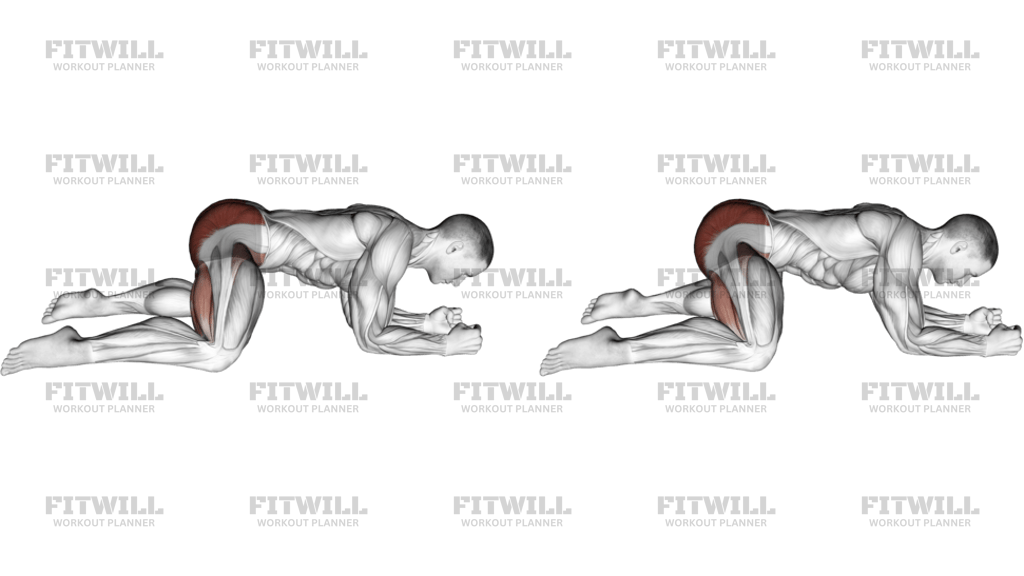
Lying Hip Leg Raise On Floor
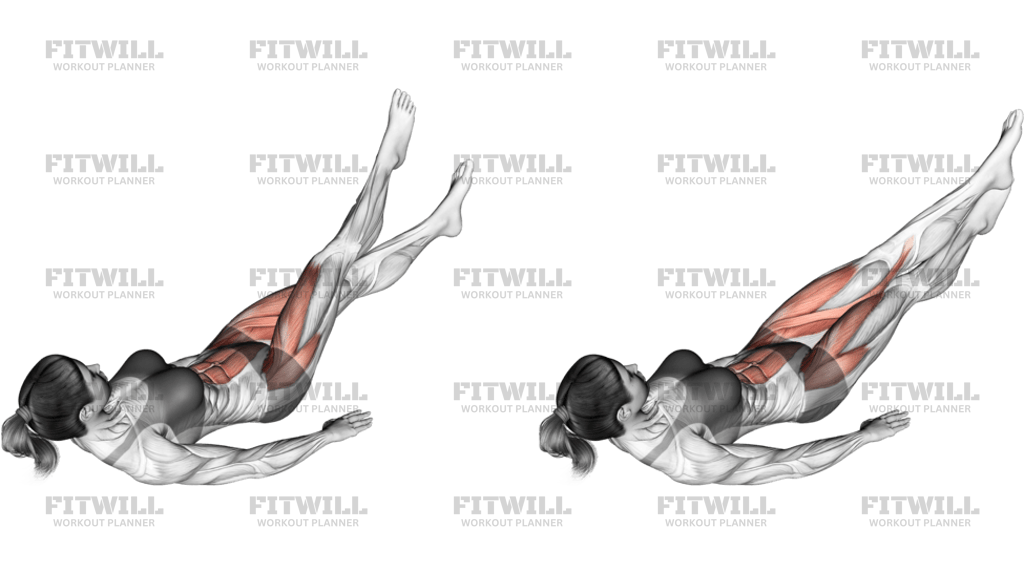
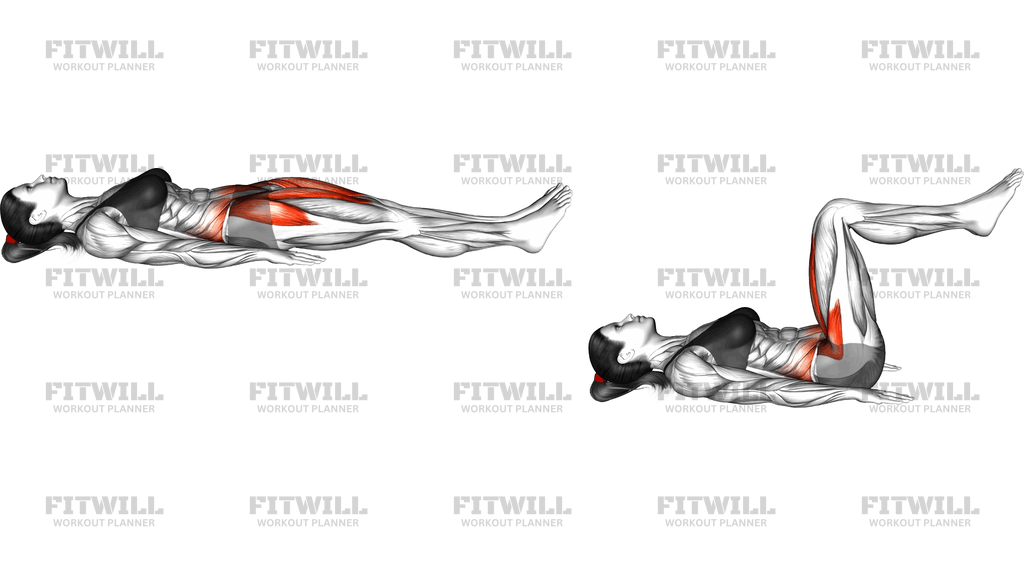
Lying Hip Leg Raise On Floor is a floor-based bodyweight drill that asks you to control the hips, pelvis, and trunk while you bring the legs into a raised position. The movement is small, but the demand is real: you are teaching the body to keep the ribs down, the lower back organized, and the pelvis moving without swinging. For that reason it works well as a low-load strength, activation, or control exercise rather than a speed movement.
The primary emphasis is on the glutes, with the hamstrings, core, and lower back helping to stabilize the body through the transition. In anatomy terms, the main work centers on the Gluteus maximus, with help from the Biceps femoris, Rectus abdominis, and Erector spinae. When the rep is done well, the glutes and deep abs share the load instead of letting the hip flexors or momentum do the work.
The floor gives you honest feedback, so the setup matters. Lie flat on your back with your arms down for support, shoulders relaxed, and your torso long against the floor. Start with the pelvis neutral and the lower back lightly anchored, then brace before the legs move. If your ribs flare or your spine arches early, the hips stop controlling the rep and the exercise turns into a swing instead of a clean lift.
During each repetition, exhale as you raise the legs and bring the thighs toward the hips, then add only a small pelvic curl so the hips leave the floor under control. The top position should feel firm, not explosive. Lower slowly, keep tension through the trunk, and reset without bouncing. The goal is a repeatable arc with consistent breathing and clean posture, not a bigger range than your body can control.
This exercise fits well in warm-ups, accessory blocks, core sessions, and rehab-style conditioning where strict body control matters more than load. It is also a useful teaching drill for learning how to move the pelvis without over-arching the low back. Beginners can usually learn it quickly because it uses only body weight, but the range should stay pain-free and the tempo should stay slow enough that every rep looks the same from the first to the last.
[ Workout Log & Planner ]
Put your next workout in Fitwill
Keep your plan and training log ready when you are.


Instructions
- Lie on your back on the floor with your arms by your sides and your palms down for balance.
- Start with your legs extended along the floor, feet together, and your neck relaxed.
- Set your ribs down and lightly press your lower back toward the floor before moving.
- Exhale and draw your thighs up toward your hips until they are stacked above your pelvis.
- Finish the rep with a small curl of the pelvis so your hips lift only a few centimeters.
- Keep the knees bent and the movement smooth instead of swinging the legs upward.
- Pause briefly at the top while keeping your abs and glutes tight.
- Inhale and lower the pelvis and legs back to the floor under control.
- Reset without bouncing and repeat for the planned number of reps.
Tips & Tricks
- Keep your palms pressing into the floor so your upper body stays quiet while the hips work.
- If your low back arches, shorten the range and stop the lift before the pelvis starts tipping forward.
- Think about curling the tailbone up rather than throwing the knees higher.
- Move slowly enough that each rep can pause at the top without losing balance.
- Keep the knees stacked over the hips instead of letting them drift toward your face.
- If you feel the hip flexors taking over, reduce the lift and focus on the pelvic curl.
- A long exhale on the way up usually helps keep the ribs down and the trunk braced.
- Stop the set when the hips stop rising under control or the lower back starts to pinch.
Frequently Asked Questions
What muscles does Lying Hip Leg Raise On Floor work most?
The main emphasis is on the glutes, with the hamstrings and core helping control the lift and the pelvis.
Is this a good beginner floor exercise?
Yes. It is a good beginner-friendly drill because the floor gives you feedback and the load is just body weight.
How high should the legs and hips come up?
Bring the thighs over the hips and lift the pelvis only a small amount. The rep should feel controlled, not like a full leg swing.
Should my lower back stay on the floor the whole time?
It should stay controlled and supported as long as possible. If the arch changes early, reduce the range and brace harder.
What is the most common mistake on this exercise?
Swinging the legs up and letting the pelvis tilt without control. The rep should be smooth and deliberate.
Can I bend my knees if straight legs feel too hard?
Yes. A bent-knee version usually makes the movement easier to control and keeps the focus on the hips and trunk.
Where should I feel the effort?
You should feel the glutes, lower abs, and a bit of hamstring tension. You should not feel a sharp pinch in the low back.
What is a good substitute if this bothers my back?
Use a smaller range of motion, keep the knees more bent, or switch to another floor-based core drill that does not require the same pelvic curl.