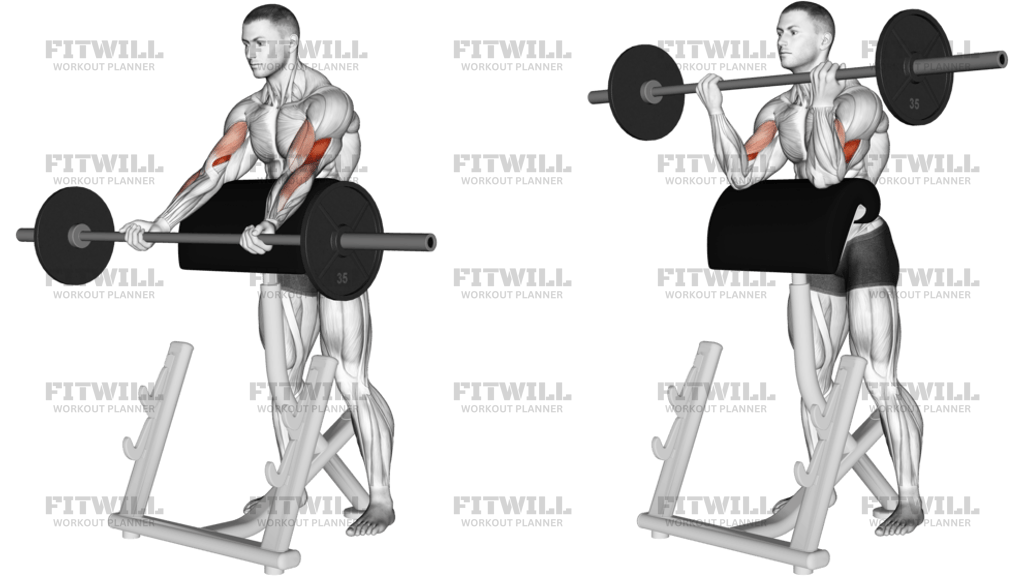
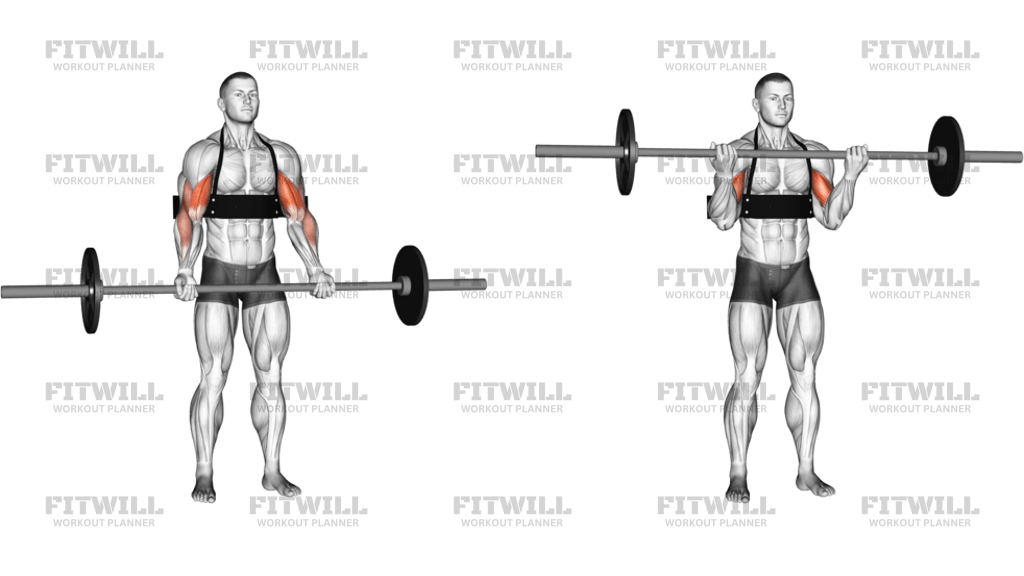
Olympic Barbell Hammer Curl
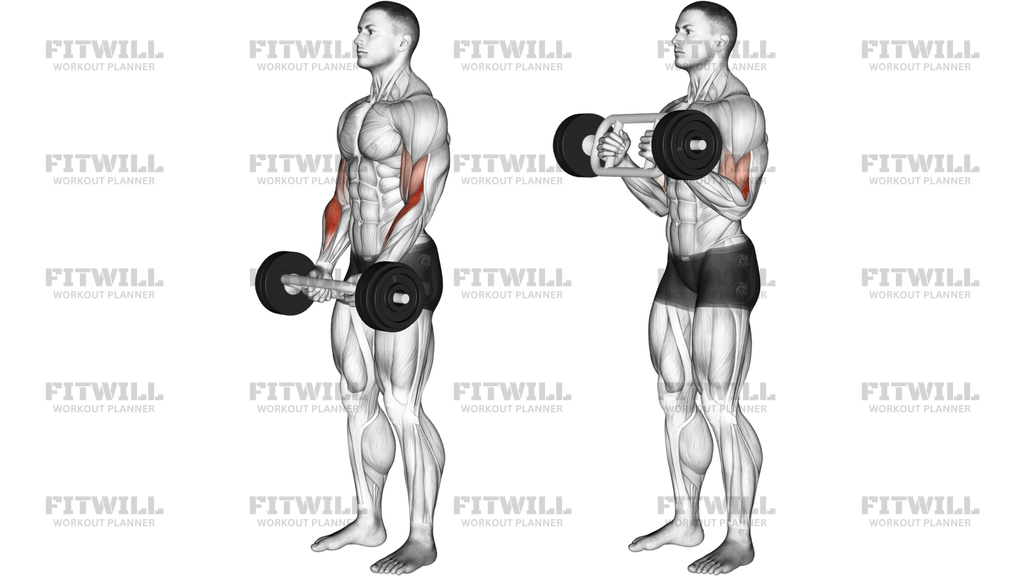
Olympic Barbell Hammer Curl is a standing arm exercise that uses a neutral or parallel grip on a specialty bar to train the elbow flexors with a strong forearm emphasis. It looks simple, but the grip changes the feel of the curl enough that the brachialis and brachioradialis work hard alongside the biceps. That makes it a useful choice when you want arm size and curling strength without relying on a fully supinated barbell position.
The setup matters because this movement is easy to turn into a torso swing if the bar starts too heavy or the shoulders drift forward. Stand tall with the bar in front of your thighs, feet about hip-width apart, and the palms facing each other on the neutral handles. Keep the chest tall, ribs down, and wrists stacked so the load sits in the forearm instead of folding the hands back.
Each repetition should be driven by elbow flexion, not by shrugging the shoulders or leaning back. Curl the bar toward the upper abdomen or lower chest while keeping the upper arms close to the sides, then squeeze briefly before lowering under control. The descent matters just as much as the lift, because a slow return keeps tension on the biceps, forearms, and upper arm muscles instead of letting the bar drop into the bottom position.
Olympic Barbell Hammer Curl works well as accessory work on an arm day, after heavier pulling, or as a controlled finisher when you want direct elbow-flexor work without complicated setup. Lifters who find straight-bar curls harsh on the wrists often prefer this variation because the neutral grip tends to feel more natural through the hand and forearm. It is also a practical option for beginners, provided the bar path stays smooth and the trunk stays quiet.
Use strict reps and stop the set once the elbows start drifting forward, the lower back starts arching, or the wrists stop lining up with the handles. A clean set should feel like the arms are doing the work while the rest of the body stays organized and still. If the bar touches the thighs at the start or the plates swing, reduce the load and make the first inch of the curl deliberate. That keeps the exercise honest and preserves the forearm-heavy feel that makes this movement worthwhile.
[ Workout Log & Planner ]
Put your next workout in Fitwill
Keep your plan and training log ready when you are.


Instructions
- Stand upright with your feet about hip-width apart and hold the Olympic barbell on the neutral handles with your palms facing each other.
- Let the bar rest in front of your thighs, keep your wrists straight, and tuck your elbows close to your ribs.
- Set your shoulders down, brace your midsection, and keep a soft bend in your knees before the first rep.
- Inhale, then curl the bar upward by bending only at the elbows.
- Keep your upper arms still as the bar travels toward your upper abdomen or lower chest.
- Squeeze the biceps and forearms briefly at the top without letting the shoulders roll forward.
- Lower the bar slowly until your arms are almost straight and the tension stays on the curl.
- Reset the bar in front of your thighs, exhale, and repeat for the planned reps without swinging.
Tips & Tricks
- If the plates swing at the bottom, start with the bar a little farther in front of your thighs so the first rep begins from a dead stop.
- Keep the elbows pinned near your ribs; if they drift forward, the bar is usually too heavy for strict hammer curls.
- Think about bending only at the elbows so the shoulders do not take over the lift.
- Keep the wrists in line with the neutral handles instead of letting them fold back toward the forearms.
- A two- to three-second lowering phase keeps tension on the biceps and brachioradialis instead of dumping the load.
- Stop the rep before the shoulders shrug up; the bar should rise from arm flexion, not from a shoulder hike.
- If the lower back arches, tighten the glutes and reduce the load until the torso stays still.
- Choose a grip width or handle angle that lets the bar clear your thighs cleanly at the start of each rep.
Frequently Asked Questions
What muscle does Olympic Barbell Hammer Curl target most?
The biceps work hard, but the neutral grip also puts a lot of emphasis on the brachialis and brachioradialis.
Can beginners perform this exercise?
Yes. Start with a light bar and keep the torso still so you can learn the neutral-grip curl path before adding load.
How is Olympic Barbell Hammer Curl different from a regular barbell curl?
The neutral hand position shifts more work to the forearms and upper arm flexors, and it usually feels friendlier on the wrists than a fully supinated curl.
Where should my elbows stay during the curl?
Keep them close to your sides and only let them drift slightly if the bar path demands it. Big forward movement usually means the set is getting too loose.
Should I fully straighten my arms at the bottom?
Lower until your arms are nearly straight, but do not slam into the lockout if it pulls on your elbows or lets the shoulders roll forward.
Why do my wrists feel better on this version?
The neutral handles keep the wrist and forearm stacked in a more natural line, which often reduces strain compared with a straight-bar curl.
Can I use an EZ curl bar or dumbbells instead?
Yes. An EZ bar or dumbbells are good substitutes if your specialty bar is unavailable or if you want a slightly different wrist angle.
How heavy should I go on Olympic Barbell Hammer Curl?
Use a load that lets you keep the bar still and finish each rep without leaning back. Moderate reps with strict form usually work best.