Place Jog
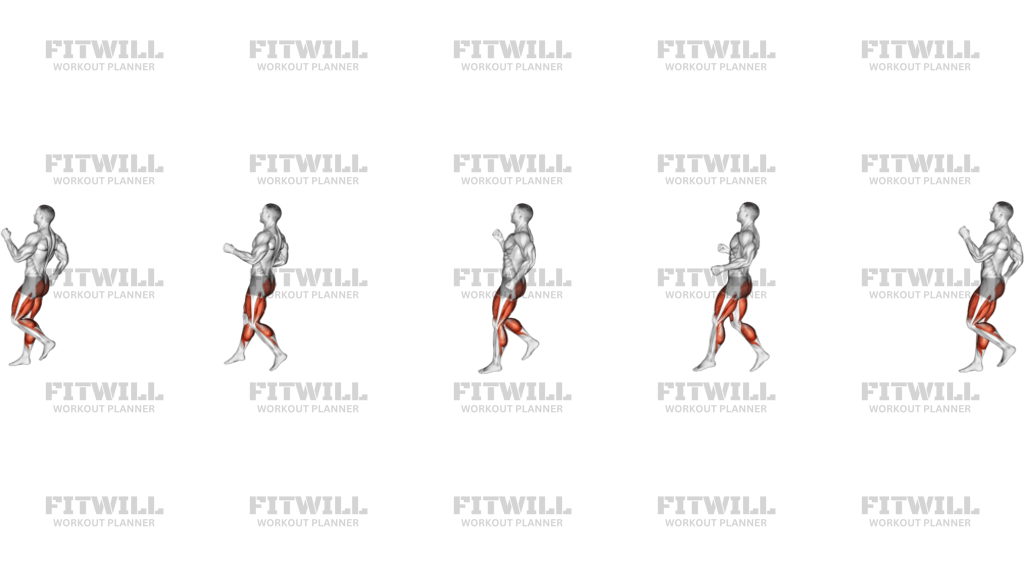
Place Jog is a bodyweight cardio drill that mimics a light run without traveling forward. It builds heart rate, coordination, rhythm, and lower-body endurance while also asking the arms, trunk, and feet to stay organized through a fast alternating pattern. Because the movement is repetitive and springy, the quality of the landing and the posture you hold between steps matter more than trying to make each knee drive as high as possible.
The drill works best when you start tall, with the ribs stacked over the pelvis and the feet landing directly under the hips. That position keeps the impact manageable and helps you keep the cadence smooth instead of turning the movement into a bouncing jump. A small, quick step pattern is usually better than a big stride, especially if you are using the exercise for warm-up work, conditioning intervals, or a low-equipment cardio finisher.
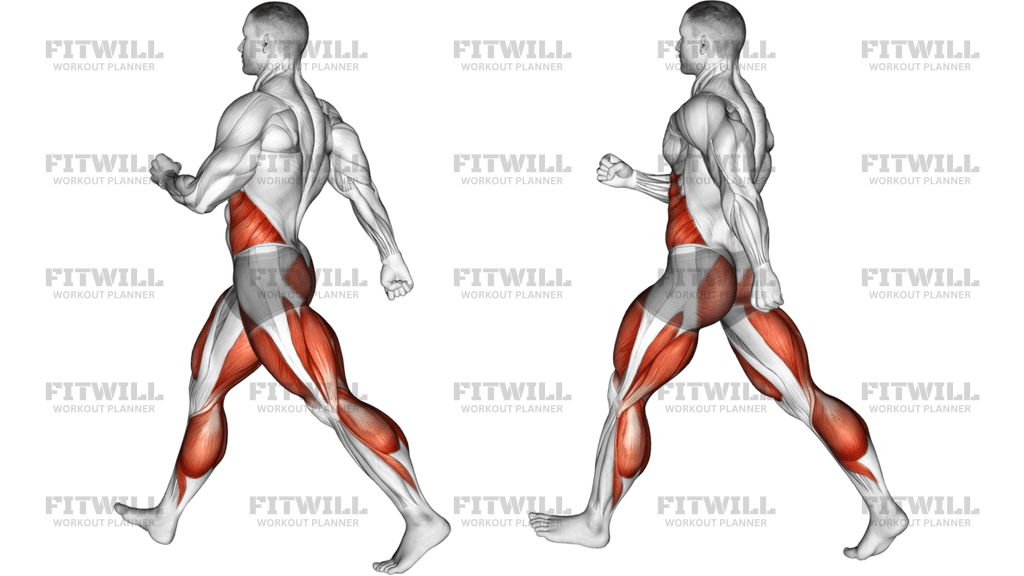
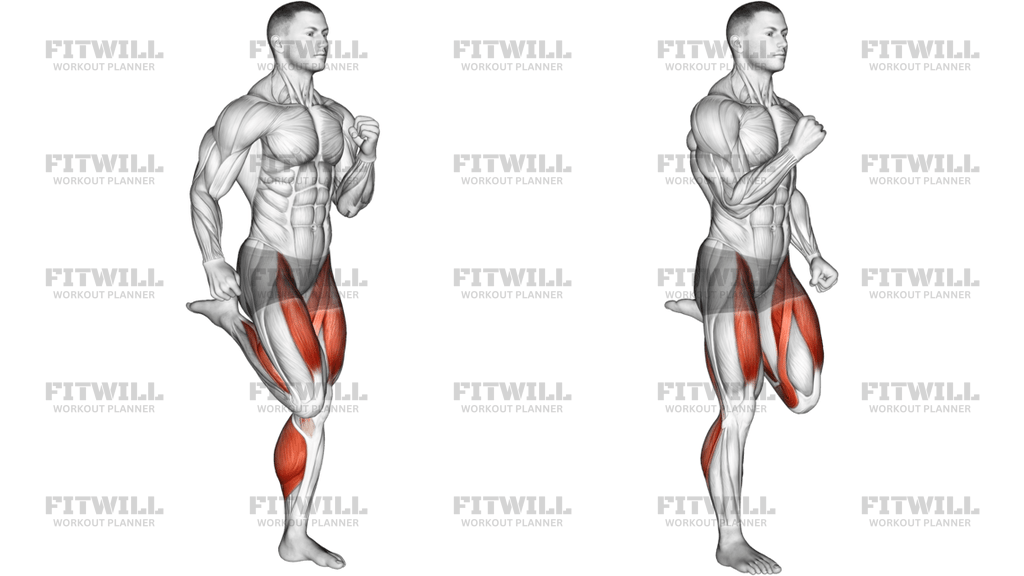
As you jog in place, alternate knees and arms in a natural running rhythm. One knee lifts while the opposite arm comes forward, then you switch immediately and keep the tempo even. Stay light on the balls of the feet, let the heels kiss the floor only if that helps control the bounce, and keep the shoulders relaxed so the arm drive does not turn into neck tension. The goal is a clean, repeatable pattern that feels athletic rather than frantic.
Place Jog is easy to scale. If you want a lower-impact option, shorten the step, lower the knee height, and slow the cadence. If you want a harder conditioning stimulus, increase the tempo or extend the interval while keeping the landing soft and quiet. Beginners can use it as a march-to-jog progression, while more advanced users can layer it into warm-ups, circuit training, or interval work. Stop the set if the feet start striking too far in front of the body, the torso leans excessively, or the rhythm breaks down.
[ Workout Log & Planner ]
Put your next workout in Fitwill
Keep your plan and training log ready when you are.


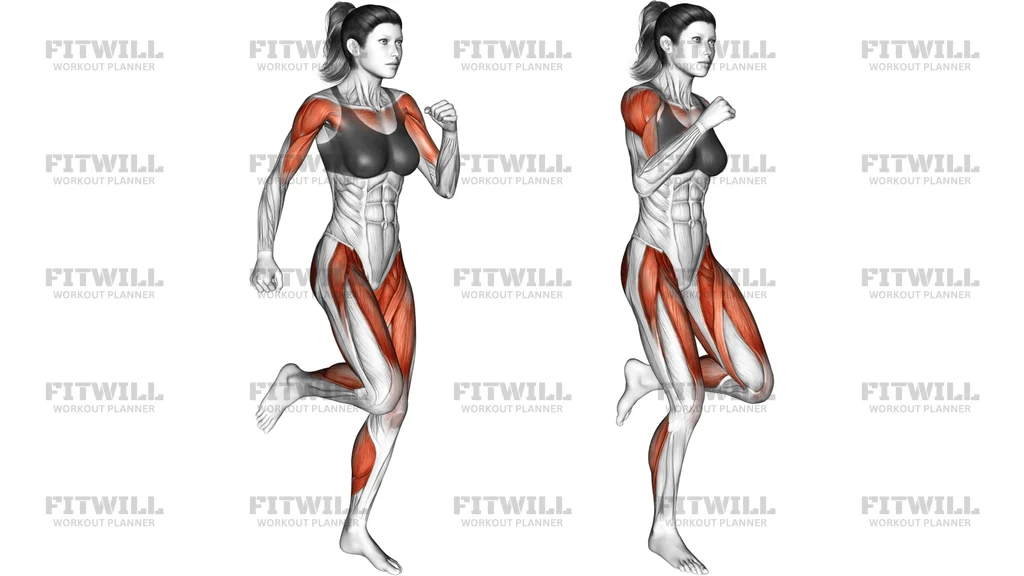
Instructions
- Stand tall with your feet about hip-width apart and your weight centered over the balls of your feet.
- Bend your elbows to about 90 degrees and let your hands hover in a relaxed running position beside your torso.
- Set your ribs over your pelvis so your chest stays tall without leaning back or collapsing forward.
- Begin with a light jog in place by lifting one foot, then the other, so each foot lands under your hips.
- Drive one knee forward and up as the opposite arm swings forward in a natural running pattern.
- Land softly on the forefoot or midfoot, then immediately switch sides to keep the rhythm continuous.
- Keep the steps quick and compact so the movement stays vertical instead of bouncing forward.
- Breathe in a steady rhythm, then slow the cadence and step back to a standstill when you finish.
Tips & Tricks
- Keep the stride short so each foot lands under your center of mass instead of reaching out in front.
- Use a quick arm swing with relaxed hands; tight fists usually create unnecessary shoulder tension.
- Stay tall through the trunk and avoid folding at the hips, which turns the drill into a sloppy shuffle.
- If the impact feels heavy, lower the knee height and soften the landing before you raise the pace.
- Think 'quiet feet' on the floor; a loud landing usually means you are bouncing too hard.
- Increase intensity by speeding up the cadence first, not by throwing the knees higher.
- Keep your neck long and your gaze forward so the head does not bob with every step.
- Use a march-to-jog progression if you need to warm up the ankles, calves, and hips before moving faster.
Frequently Asked Questions
What does Place Jog train?
It is mainly a cardio and coordination drill, with the legs, shoulders, and trunk working to keep the rhythm smooth.
Is Place Jog the same as high knees?
Not exactly. Place Jog is usually a lighter, more rhythm-based run in place, while high knees use a more aggressive knee drive and a bigger intensity spike.
Should my feet leave the floor a lot?
No. The goal is a quick, springy step with a soft landing, not a big jump.
Why do my calves burn so quickly?
You are likely staying light on the forefoot, which is normal. Shorten the step and slow the cadence if the burn turns into cramping or sloppy form.
Can beginners do this exercise?
Yes. Beginners can start with a marching version or a very low, controlled jog in place before increasing speed.
How long should I do Place Jog for?
It is commonly used for short warm-up bursts or interval-style sets, such as 20 to 60 seconds at a time.
How do I make Place Jog harder?
Increase the cadence, keep the arms driving more actively, or extend the work interval while keeping the steps compact and controlled.
What should I avoid while jogging in place?
Avoid reaching the foot far in front of the body, hunching the shoulders, or letting the torso sway from side to side.