Wall Push-Up Wide-Grip
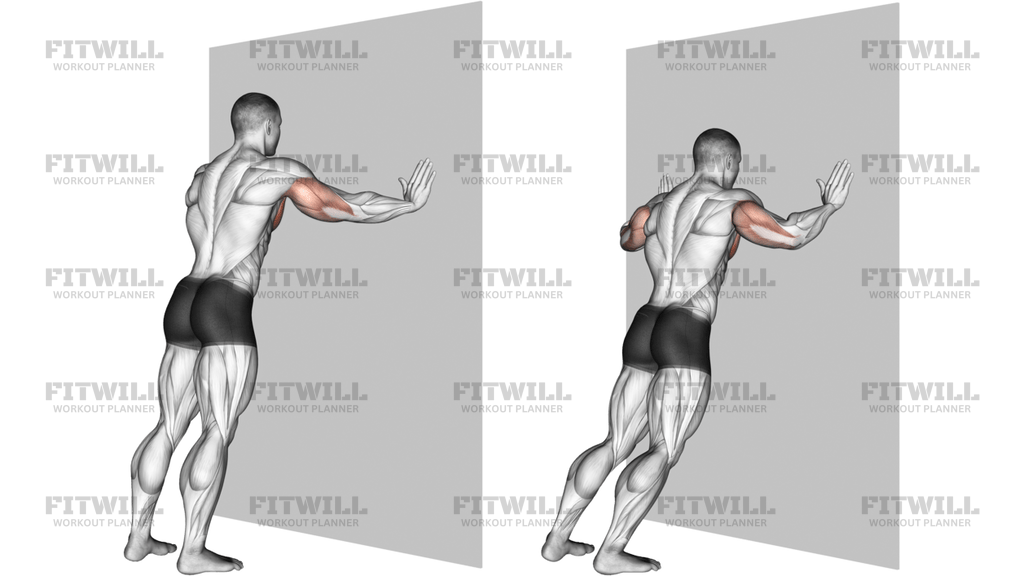
Wall Push-Up Wide-Grip is a standing pressing variation that uses a wall instead of the floor, making it one of the easiest ways to practice a push-up pattern with clean alignment. The hands sit wider than shoulder width at about chest height, the feet step back to create a forward lean, and the whole body stays long from head to heels while you lower toward the wall and press away.
The wide hand position changes the feel of the repetition. The triceps still extend the elbows, but the chest and front shoulders usually contribute more than they would in a narrow wall push-up. That makes the exercise useful for beginners, warm-ups, deload sessions, and anyone who wants a low-impact pressing drill that still teaches body tension, shoulder control, and coordinated breathing.
The setup matters because the wall angle determines how much load you have to control. Start with your palms flat on the wall, slightly wider than your shoulders, fingers pointing up, and elbows angled out naturally rather than pinned hard to your sides. Step your feet back until your torso is at a clear lean, then lock in a firm plank line through your ribs, hips, knees, and ankles before you begin the first rep.
Each repetition should feel smooth, not bouncy. Bend the elbows and let the chest travel toward the wall while the shoulder blades move naturally around the rib cage, then press the wall away until the arms are straight without slamming into lockout. If the hips drift forward, the low back arches, or the chin reaches first, shorten the range and reset the body line before continuing.
Use this movement when you want pressing practice without floor work, wrist strain, or heavy loading. It is especially helpful for learning how to brace, how to keep the torso organized during a push, and how to control the descent before moving on to lower wall pushes, incline push-ups, or standard floor push-ups. The best reps look almost identical from one to the next, with the same wall distance, hand width, and tempo maintained throughout the set.
[ Workout Log & Planner ]
Put your next workout in Fitwill
Keep your plan and training log ready when you are.


Instructions
- Stand facing a wall and place both palms on it at chest height, a little wider than shoulder width, with fingers pointing upward.
- Walk your feet back until your body forms a straight line from head to heels and your weight shifts into the hands.
- Keep your heels planted, ribs stacked over your pelvis, and neck long before you start the first rep.
- Inhale, then bend your elbows and lower your chest toward the wall with control.
- Let the elbows drift outward naturally for the wide grip, but keep them from flaring so far that the shoulders feel jammed.
- Stop when your chest or face is close to the wall and your torso is still rigid, not sagging.
- Exhale as you press the wall away and straighten the arms without bouncing off the end range.
- Reset your feet and hand position if the body line breaks, then continue for the planned reps.
Tips & Tricks
- Keep the hands wide enough to feel the chest and front shoulders, but not so wide that the wrists or shoulders lose a stable line.
- If the movement feels too easy, step your feet farther from the wall; if the lower back arches, move closer.
- Think of lowering the whole chest as one unit instead of reaching the head toward the wall first.
- Do not collapse the elbows straight back alongside the ribs; the wide grip should still let the upper arms open slightly.
- Maintain pressure through the full palm so the wrists do not fold backward as you press.
- A slow 2- to 3-second lowering phase usually makes this exercise more useful than chasing speed or reps.
- Keep the glutes lightly squeezed so the hips do not drift toward the wall as fatigue builds.
- Stop the set when your torso starts to snake or the shoulders shrug toward the ears.
Frequently Asked Questions
What does Wall Push-Up Wide-Grip work most?
It mainly trains the triceps, chest, and front shoulders, with the core and upper back helping keep the body in a straight line.
Why use a wide hand position on the wall?
A wider stance shifts the press a little more toward the chest and shoulders while still keeping the exercise beginner-friendly.
How far should my feet be from the wall?
Step back until you can hold a straight plank line and control the descent; if the hips sag or the lower back arches, you are too far away.
Should my elbows stay tucked in?
Not completely. With this wide-grip version, the elbows can open out naturally, but they should not flare so far that the shoulders feel pinched.
Is this a good exercise for beginners?
Yes. The wall reduces the load enough to practice push-up mechanics, bracing, and breathing before moving to lower inclines or the floor.
What is the most common mistake on this exercise?
People often let the hips drift forward and the chest reach independently, which breaks the straight-body line and reduces the training effect.
Can I use this to warm up before pressing workouts?
Yes. It works well as a light pressing warm-up because it rehearses shoulder motion, elbow extension, and trunk tension without heavy fatigue.
How do I make the wall push-up harder?
Move your feet farther back, slow the lowering phase, or progress to a lower incline once you can keep the same clean body line.