Wall Push-Up Close-Grip
Wall Push-Up Close-Grip is a bodyweight pressing exercise performed with the hands placed close together against a wall. The angled standing position makes the movement easier to control than a floor push-up, while the narrow hand position shifts a little more work toward the triceps and the inner portion of the chest. It is useful when you want a clean pressing pattern without the load or shoulder demand of a full push-up.
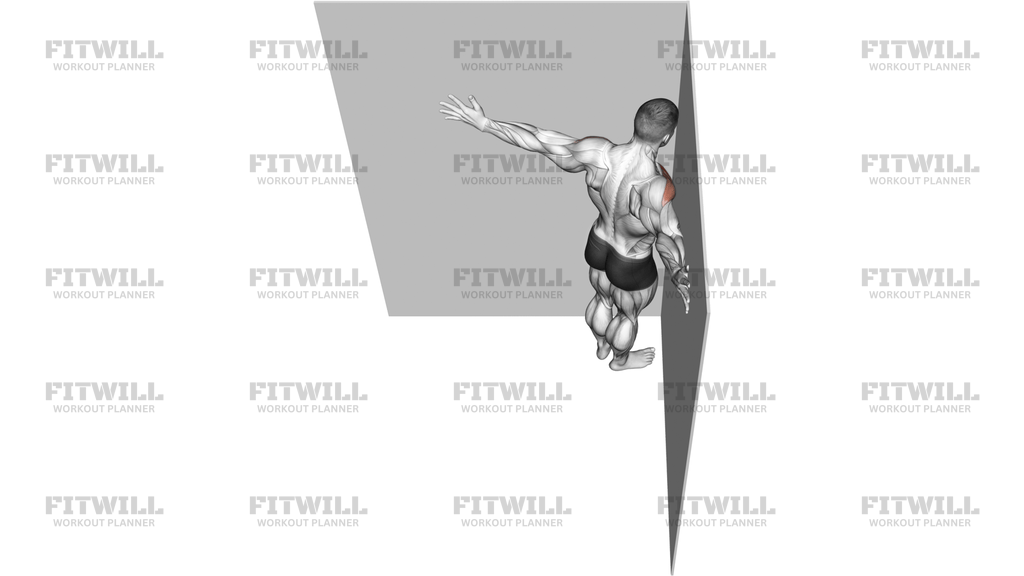
In the image, the body is set at a clear forward angle from the feet to the head, the palms are on the wall at chest height, and the elbows bend and straighten in a short, controlled arc. That setup matters: if the hands are too low, the shoulders take over; if the feet are too close, the movement becomes too easy to learn from. A stable stance, a tight torso, and a straight line from the heels through the hips help keep the press focused on the chest, triceps, and front shoulders.
The close-grip version is best when you want to practice a pressing groove with less stress on the joints or when you need a regression before moving to an incline or floor push-up. It works well in warm-ups, beginner programs, rehab-style progressions, high-rep accessories, and any session where you want repeated quality reps instead of heavy loading. The wall gives you a clear feedback point, so you can check whether both hands stay even and whether your chest reaches the wall under control.
Use a slow, deliberate lowering phase and press the wall away without shrugging or letting the ribs flare forward. Keep the neck long, the shoulders down, and the elbows angled slightly in rather than flaring wide. The goal is not to touch the wall harder; it is to repeat the same controlled path each rep and finish with the body still organized. If you can maintain that position, the exercise becomes a simple but effective way to build pressing endurance, shoulder stability, and triceps strength.
[ Workout Log & Planner ]
Put your next workout in Fitwill
Keep your plan and training log ready when you are.


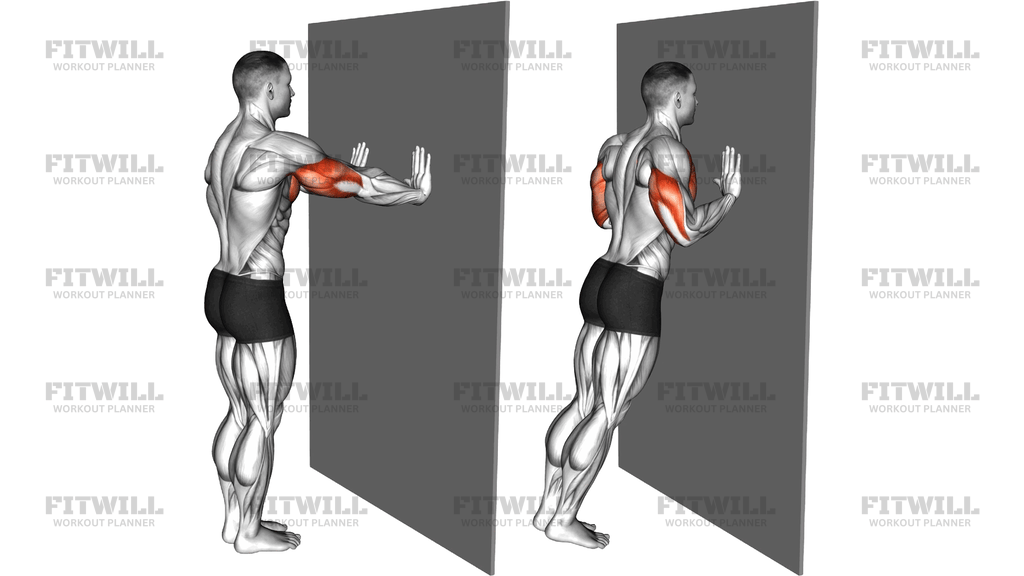
Instructions
- Stand facing a wall and place both palms on it at about chest height, with the hands close together and the fingers pointing up.
- Walk your feet back until your body forms a straight line from head to heels and your weight is balanced through the whole foot.
- Tighten your glutes and abdomen so your ribs do not flare and your lower back does not sag.
- Keep your elbows slightly tucked, then bend them to lower your chest and face toward the wall in one controlled line.
- Let your chest move toward the wall first while the head, hips, and ankles stay aligned behind it.
- Pause briefly when your chest is close to the wall and your shoulders are still stacked over your wrists.
- Press the wall away by straightening your elbows and keeping your shoulders down instead of shrugging upward.
- Exhale as you press back to the start, then repeat for the planned number of reps with the same body angle.
Tips & Tricks
- Keep the hands close, but not touching, so the triceps help without turning the elbows inward aggressively.
- Use the wall as a reference: both palms should stay level so one shoulder does not drift ahead of the other.
- If the shoulders feel crowded, move the feet a little farther back to make the press slightly harder and cleaner.
- Stop the lowering phase when the chest reaches the wall with control; do not bounce off the surface.
- Keep the elbows at a comfortable angle, usually around 30 to 45 degrees from the torso, instead of flaring them straight out.
- Think about moving your whole body as one plank rather than bending at the hips or breaking at the lower back.
- A slower eccentric makes this variation more useful than chasing speed or extra reps.
- If the neck tenses up, soften the chin and look slightly down toward the floor rather than craning toward the wall.
Frequently Asked Questions
What muscles does the close-grip wall push-up train most?
It mainly trains the chest and triceps, with the front shoulders and core helping to stabilize the body.
Why are the hands placed close together on the wall?
A narrow hand position shifts more work toward the triceps and the inner part of the chest while keeping the movement easy to control.
How far should my feet be from the wall?
Start close enough that you can keep a straight line from head to heels, then step farther back if the set feels too easy.
Should my elbows flare out wide?
No. Keep them slightly tucked so the press stays smooth and the shoulders do not take over the movement.
What should I feel when I lower toward the wall?
You should feel a controlled stretch through the chest and a steady bend at the elbows, not a collapse through the lower back.
Is this a good beginner pressing exercise?
Yes. The wall angle reduces load and makes it a practical first step before incline or floor push-ups.
Can I use this as a warm-up before push-ups or bench pressing?
Yes. It works well as a low-fatigue way to rehearse pressing mechanics and wake up the chest and triceps.
How do I make the exercise harder without changing the movement?
Step your feet farther from the wall, slow the lowering phase, or pause briefly near the wall before pressing back.