Push-Up To Side Plank
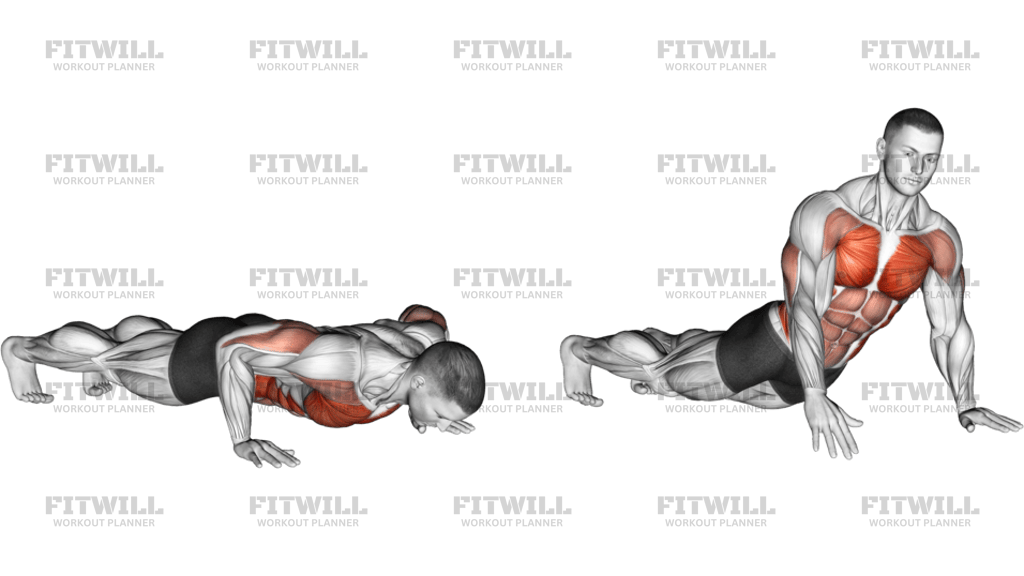
Push-Up To Side Plank is a bodyweight compound movement that combines a standard push-up with a rotation into a side plank. It challenges chest and triceps strength first, then asks the core, obliques, shoulders, and hips to control the turn without letting the trunk collapse or twist early. The exercise is useful when you want pressing strength and anti-rotation work in the same rep.
The setup matters because a sloppy plank position makes the rotation unstable before you even start. Begin in a strong high plank with your hands under or slightly wider than your shoulders, fingers spread, legs straight, and glutes squeezed. Keep your ribs down so the lower back does not overextend as you lower, press, and pivot. A narrow foot stance makes the side plank harder; a small stagger can help you stay balanced while you learn the movement.
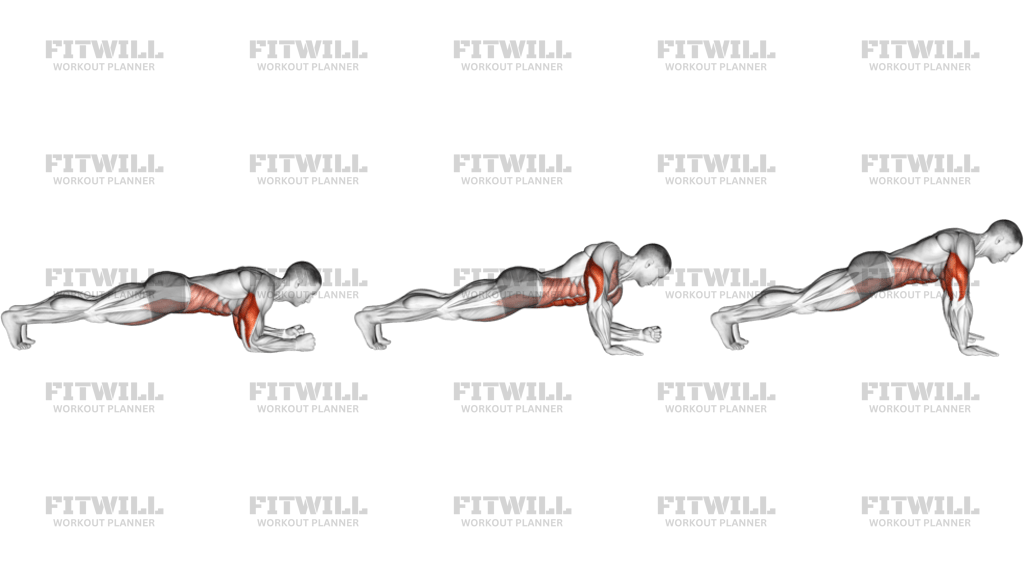
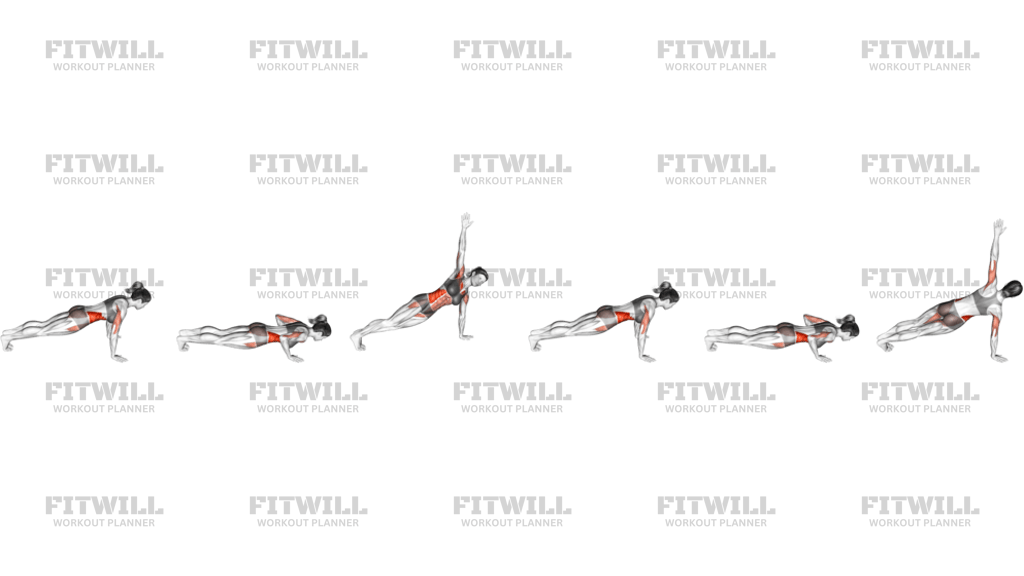
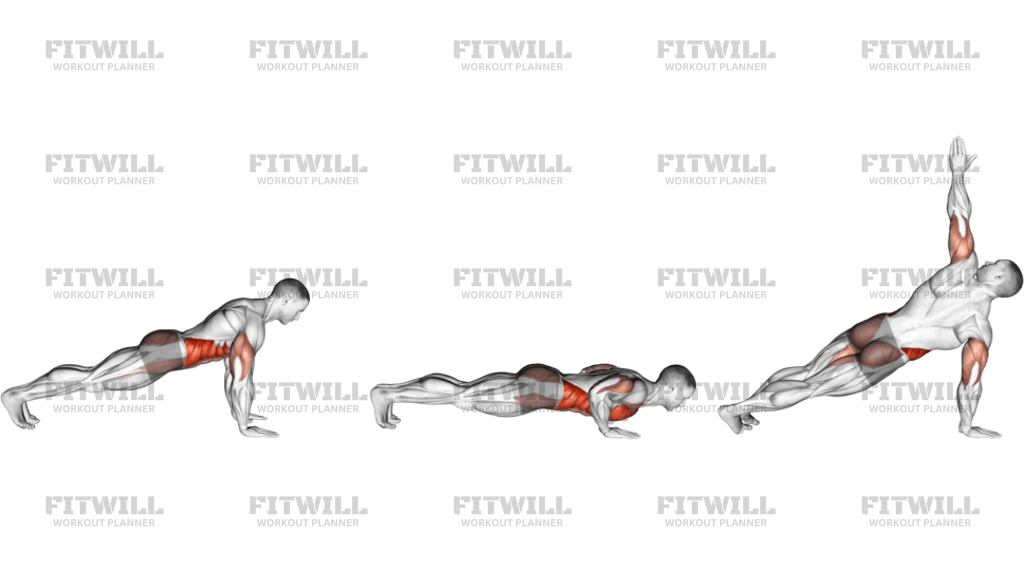
Each repetition starts like a push-up: lower the chest between the hands with the elbows tracking at a moderate angle, then press back to plank. From there, shift your weight onto one hand and rotate the shoulders and hips together into a side plank. Stack the feet if you can hold the position cleanly, or stagger them if you need more stability, and reach the free arm straight up so the chest opens without the low back taking over. Pause briefly in the side plank so the body has to own the position instead of bouncing through it.
Use this exercise for core-focused accessory work, conditioning circuits, or upper-body sessions where you want more trunk control than a plain push-up provides. It is easy to turn into a rushed, twisting press, so keep the movement smooth, controlled, and symmetrical. If wrists, shoulders, or balance are limiting factors, elevate the hands on a bench or box, or shorten the range until you can keep a clean plank line from head to heel.
[ Workout Log & Planner ]
Put your next workout in Fitwill
Keep your plan and training log ready when you are.


Instructions
- Start in a high plank on the floor with your hands under or slightly wider than your shoulders, fingers spread, legs straight, and feet either together or lightly staggered for balance.
- Squeeze your glutes and brace your abs so your ribs stay down and your body forms one straight line from head to heels.
- Lower your chest toward the floor with your elbows angled back about 30 to 45 degrees, keeping your neck long and your hips level.
- Press forcefully back up to the top of the push-up without letting your lower back sag or your shoulders shrug.
- Shift your weight onto one hand and pivot onto the outside edge of the same-side foot as you begin to rotate your torso.
- Turn your shoulders and hips together into a side plank instead of twisting only through the upper body.
- Stack the feet if you can hold the position cleanly, or stagger them if you need more stability, then reach the free arm straight up toward the ceiling.
- Pause briefly in the side plank, breathe out, and keep the top shoulder directly above the supporting wrist.
- Bring the free hand back down, return to the high plank with control, and repeat on the other side if the plan calls for alternating reps.
Tips & Tricks
- Keep the hands planted firmly so the transition into the side plank happens from the shoulders and trunk, not from slipping wrists.
- Use a slightly wider foot stance if stacked feet make you wobble; the goal is a clean rotation, not a perfect-looking balance challenge.
- If the elbows flare too far, the push-up becomes harder on the shoulders and easier to lose control of the trunk.
- Think about turning the hips and chest together as one unit so the side plank feels like a rotation, not a collapse onto one arm.
- Reach the top arm long rather than leaning the torso backward; the rib cage should stay stacked over the pelvis.
- Exhale through the press and rotation so the trunk stays braced while you move into the side plank.
- Slow down the transition between the push-up and the rotation if momentum is carrying you past the hardest point.
- Raise the hands on a bench or box if floor push-ups or wrist angle limit your ability to keep a straight line.
- Stop the set when the hips start dropping or the side plank turns into a twisted plank with the pelvis open and uncontrolled.
Frequently Asked Questions
What does Push-Up To Side Plank train most?
It trains chest and triceps strength along with the obliques, shoulders, and hip stabilizers that control the rotation into side plank.
Do I lower into a full push-up before rotating?
Yes, in the standard version you complete the push-up first, then press up and rotate into the side plank.
Should the free arm point straight up in the side plank?
It should reach vertically as much as your shoulder mobility allows, with the wrist stacked over the shoulder and the chest open.
What is the most common form mistake?
People usually rush the rotation and let the hips sag or twist independently from the shoulders, which breaks the plank line.
Can I alternate sides on every rep?
Yes, alternating sides is common. If your program specifies one side at a time, finish the set on that side before switching.
Is this exercise good for beginners?
Yes, but most beginners should master a clean push-up and side plank separately first, or use an incline version to reduce the load.
What should I do if my wrists hurt on the floor?
Use push-up handles, dumbbells, or an incline surface so the wrist stays in a more comfortable angle.
How can I make Push-Up To Side Plank harder?
Slow the lowering phase, pause longer in the side plank, keep the feet stacked, or add a longer hold at the top of the rotation.