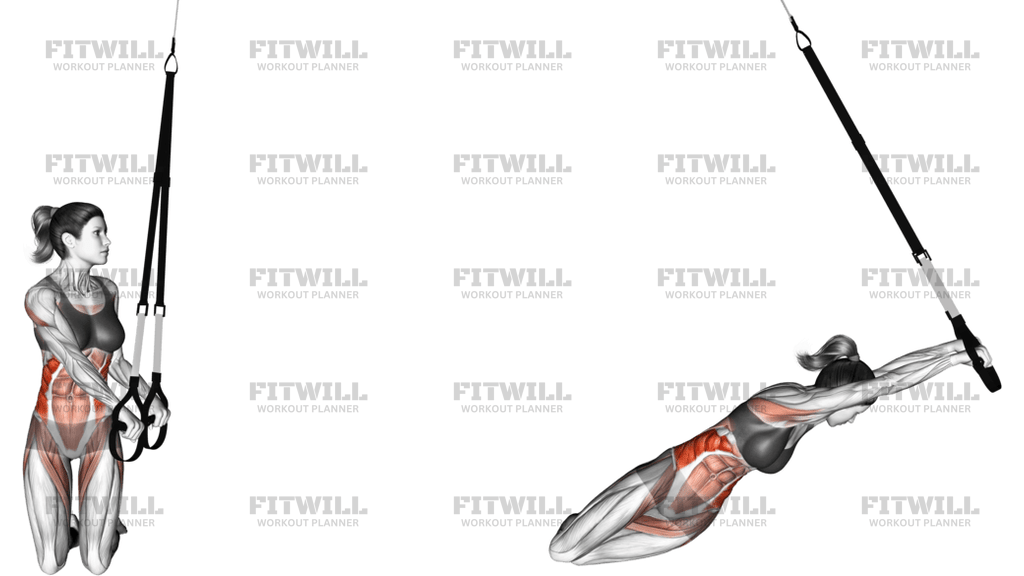
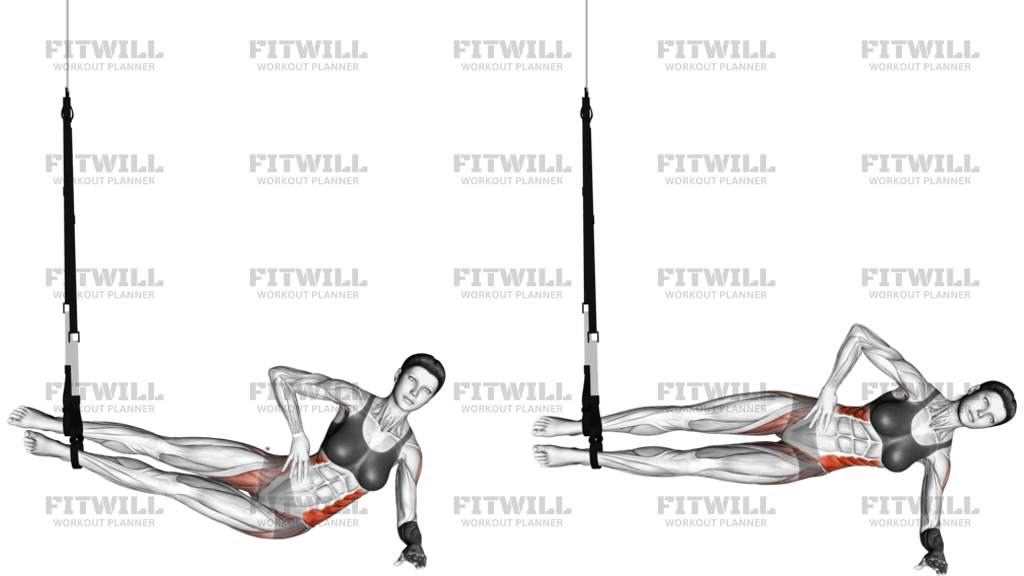
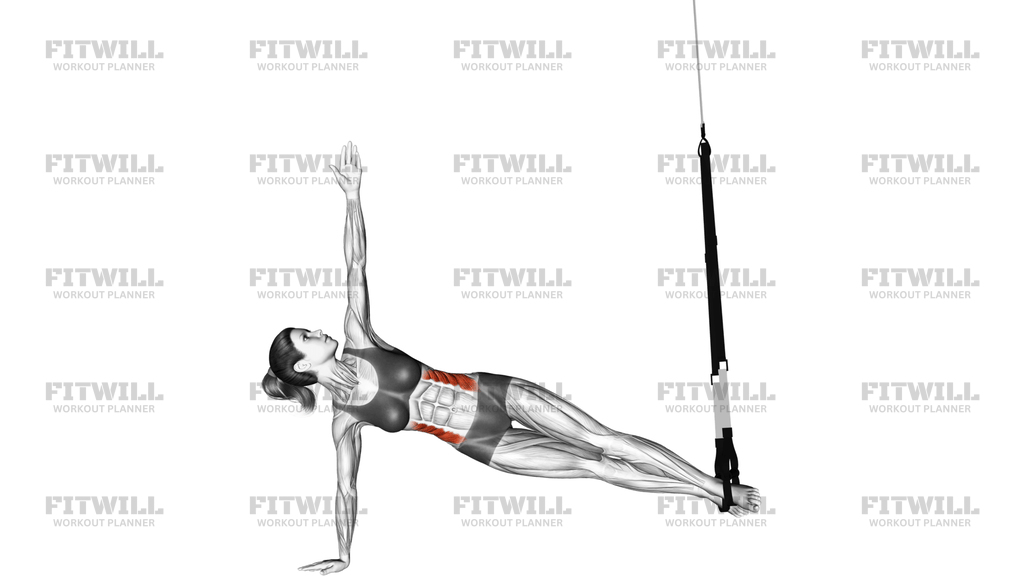
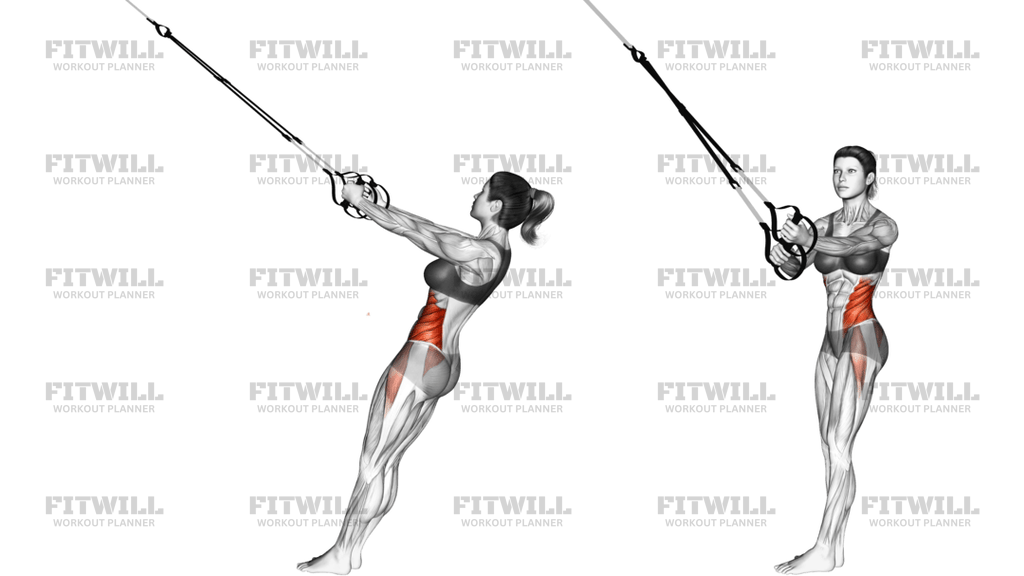
Suspension Twisting Jack Knife
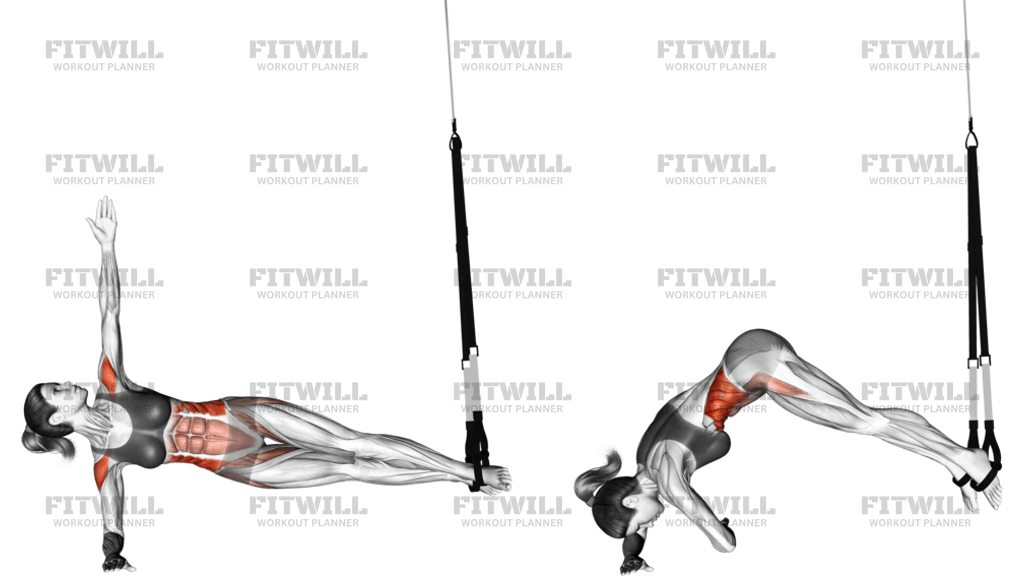
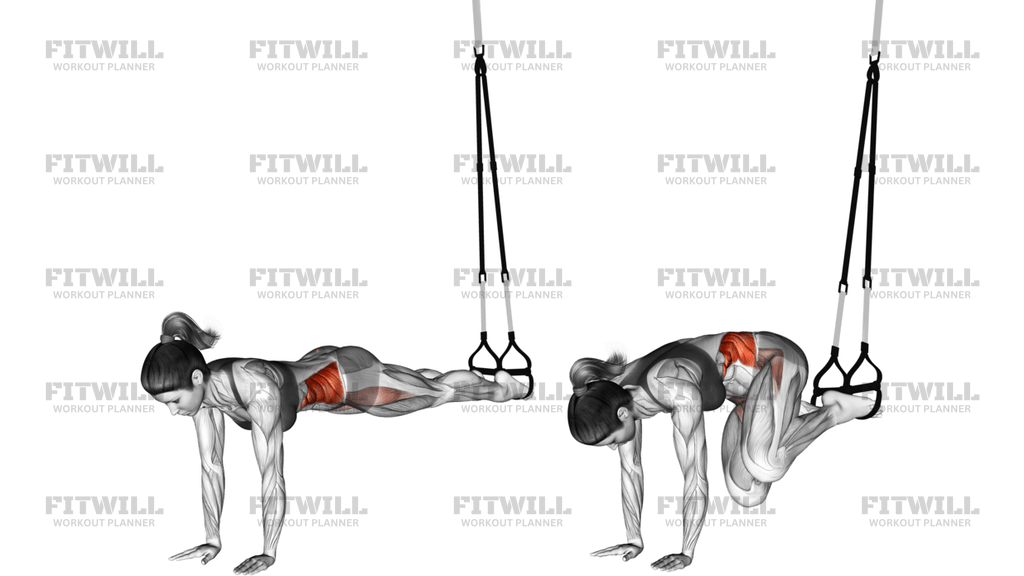
Suspension Twisting Jack Knife is a suspended core exercise that combines a plank, a knee tuck, and trunk rotation. With the feet in suspension straps and the hands on the floor, the body has to resist extension while the knees drive in and the pelvis twists. That makes this more than a simple ab curl: the exercise asks the abs, obliques, hip flexors, shoulders, and deep stabilizers to coordinate the whole rep.
The twisting component is what separates it from a standard suspension jack knife. As the knees travel in, the hips rotate and one side of the waist shortens more than the other. That is why the obliques are the main target, with the rectus abdominis helping flex the trunk and the shoulders and serratus working to keep the plank stable. If the straps are set too low or the body sags, the movement turns into a swing instead of a controlled core contraction.
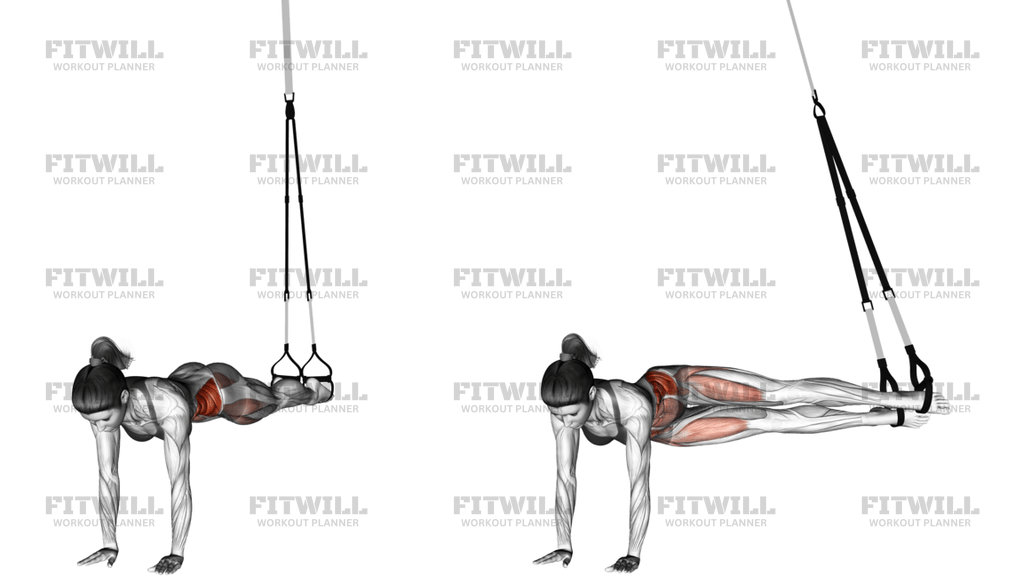
Good reps start from a rigid high-plank position: hands under shoulders, arms straight, feet secured in the suspension straps, and the body long from head to heels. From there, the knees draw toward one elbow or outer hip while the torso rotates slightly. The return should be just as deliberate as the pull-in, with the hips re-lengthening before the next repetition or before switching sides. Keep the neck quiet and the ribcage from flaring so the movement stays in the core instead of dumping into the low back.
This exercise works well in core blocks, athletic conditioning sessions, or accessory work after the main lifts. It is demanding enough that load selection is really about body position, strap height, and tempo rather than added weight. Shorter ranges, slower reps, and clean resets are usually more productive than chasing speed. When performed well, the exercise builds anti-extension control, rotational control, and hip-flexion strength at the same time.
Use it only through a range you can control without the straps swinging or the lumbar spine collapsing. If the shoulders or wrists cannot keep the plank, regress to a simpler suspension knee tuck or a floor-based variation. The goal is a crisp, organized twist, not a high knee count.
[ Workout Log & Planner ]
Put your next workout in Fitwill
Keep your plan and training log ready when you are.


Instructions
- Adjust the suspension straps so your feet can hang behind you while your hands stay planted on the floor in a high-plank position.
- Place both feet in the straps, stack your shoulders over your wrists, and set your body in a straight line from head to heels.
- Brace your abs and glutes so your lower back stays flat before the first rep starts.
- From the plank, pull your knees toward one outside elbow or hip while letting the pelvis rotate in the same direction.
- Keep pressing the floor away with straight arms so the shoulders stay stable as the legs travel in.
- Squeeze the abs at the top of the tuck, then stop the twist without letting the straps swing.
- Extend the legs back to a long plank under control, finishing with the hips level again.
- Alternate sides for each repetition or each rep pair, keeping the same tempo and range on both sides.
Tips & Tricks
- Set the straps high enough that you can return to a long plank without your toes scraping the floor between reps.
- Keep the ribs from popping up; a flared ribcage makes the twist look bigger than the actual core work.
- Rotate the pelvis, not just the shoulders, so the obliques do more than the hip flexors alone.
- If the straps start swinging side to side, slow down and shorten the tuck until the motion is controlled again.
- Think about drawing the knees toward the outside of the same-side elbow or hip, not straight under the chest.
- Exhale as the knees come in to help the torso compress without losing brace.
- Keep your head neutral and eyes on the floor so the neck does not lead the twist.
- Stop the set when the low back starts to arch or the shoulders can no longer hold the plank.
Frequently Asked Questions
What muscles does the Suspension Twisting Jack Knife work?
It mainly works the obliques, with strong help from the rectus abdominis, hip flexors, and shoulder stabilizers.
Can beginners perform this exercise?
Yes, but it is better to start with a smaller knee tuck or a regular suspension knee tuck before adding the twist.
Where should my hands and feet be during the rep?
Your hands should stay under your shoulders on the floor while both feet stay secured in the suspension straps behind you.
What is the biggest form mistake?
Letting the body swing or arching the low back instead of keeping a rigid plank through the twist.
Should the knees come straight in or toward one side?
For the twisting version, the knees should travel toward one elbow or outer hip so the pelvis and waist rotate together.
Why are the suspension straps important here?
They add instability, so the core has to control both the tuck and the side-to-side twist instead of relying on the floor for support.
How do I know if I am using too much range of motion?
If the straps swing, your shoulders collapse, or your lower back loses position, the range is too large for your current control.
Is this exercise better for strength or conditioning?
It can serve both, but clean control and trunk position matter more than speed or high rep counts.
Can I alternate sides every rep?
Yes. Alternating each rep is the most practical way to keep the twist even on both sides.