Cable Half Kneeling Pallof Press
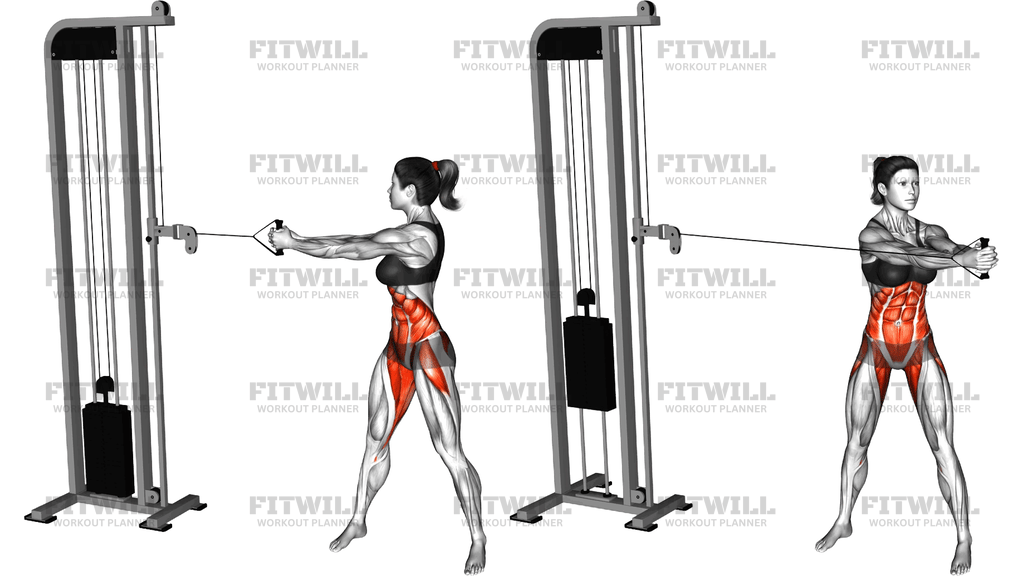
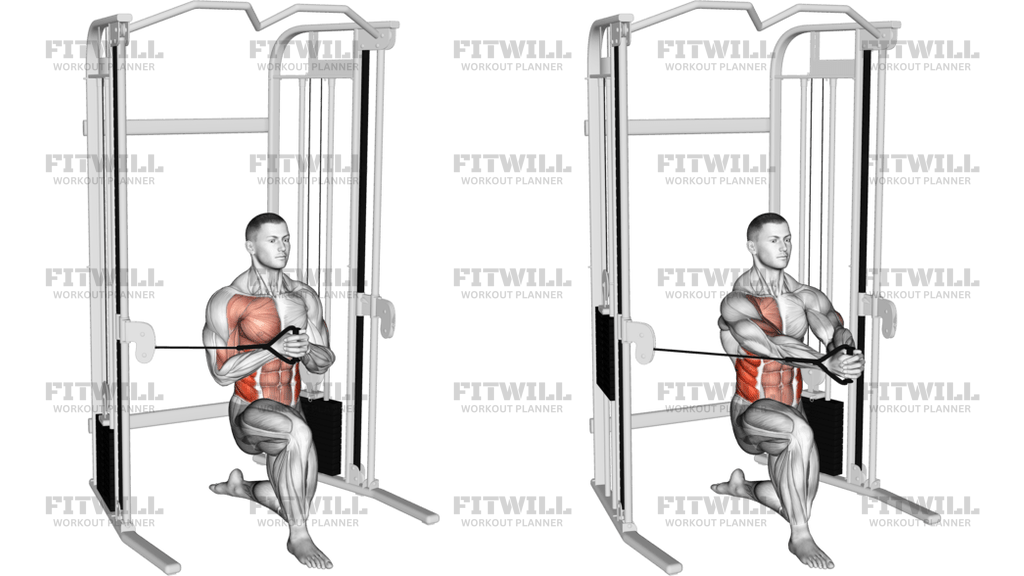
Cable Half Kneeling Pallof Press is a half-kneeling anti-rotation press that uses a cable machine and handle attachment to challenge the trunk, hips, and shoulders without letting the torso twist. The cable tries to pull you toward the stack, and your job is to keep the ribs, pelvis, and head stacked while you press the handle straight out from the chest. That makes the exercise useful for core strength, posture control, and any program that needs better midline stability.
The main work comes from the obliques, deep abdominal wall, and hip stabilizers, while the glutes and shoulder girdle keep the position steady. Half-kneeling removes a lot of help from the legs and makes rotation easier to spot, so even small shifts in the pelvis or rib cage become obvious. If the body stays organized, the exercise builds control; if the body starts turning or arching, the cable turns it into a compensation drill instead of a core exercise.
Setup matters more than load. Place the pulley at chest height, kneel with one knee on the floor and the opposite foot planted, and square the hips so the cable lines up with the middle of the chest. Hold the handle with both hands at the sternum, keep the front shin tall, and squeeze the glute on the kneeling side before the first press. The start position should already feel balanced, with the torso tall and the ribs stacked over the pelvis.
Each rep is a straight press away from the body, not a push into the line of pull. Extend the arms until they are nearly straight, pause without letting the shoulders, ribs, or hips rotate, then return the handle slowly to the chest under control. Breathe out as you press and breathe in as you come back, but do not lose trunk tension between phases. The clean rep is quiet and steady; the sloppy rep leans, twists, or arches to beat the cable.
Cable Half Kneeling Pallof Press works well in warm-ups, accessory blocks, and dedicated core sessions because it teaches the trunk to resist movement while the arms move. It is easy to scale by moving closer to the stack, using a lighter load, or adding a longer pause at full extension. When the setup is right, the exercise should feel like the abs and glutes are holding a strong line while the hands travel forward and back in a controlled path.
[ Workout Log & Planner ]
Put your next workout in Fitwill
Keep your plan and training log ready when you are.


Instructions
- Set the cable pulley at chest height and clip on a single handle attachment.
- Kneel beside the machine with one knee on the floor and the opposite foot planted in front.
- Square your hips and shoulders to the front, then hold the handle at the center of your chest with both hands.
- Keep the knee-down-side glute tight and stack your ribs over your pelvis before you press.
- Step far enough away that the cable wants to rotate your torso, but not so far that you have to lean.
- Press the handle straight out from your sternum until your arms are nearly straight.
- Pause in front without letting your shoulders, ribs, or hips turn toward the stack.
- Bring the handle back to your chest slowly and keep the torso tall on the return.
- Finish the set, bring the handle back to the machine, and switch sides before repeating.
Tips & Tricks
- If the cable pulls you into rotation, move closer to the stack or lower the load before the next set.
- Keep the front shin mostly vertical; if you drift forward, the hips usually follow and the core loses tension.
- Squeeze the glute on the kneeling side so the lower back does not arch when the arms reach forward.
- Press the handle straight ahead from the sternum instead of angling it toward the pulley.
- A one-second pause at full reach makes the anti-rotation demand much clearer than fast reps.
- Keep the shoulders down and quiet; shrugging usually means the load is too heavy.
- Use a stance wide enough to stay balanced, but narrow enough that the torso still has to resist twisting.
- Switch kneeling sides each set so both obliques and hip stabilizers get the same work.
Frequently Asked Questions
What does Cable Half Kneeling Pallof Press train most?
It trains anti-rotation strength through the obliques, deep abdominals, glutes, and hip stabilizers while the shoulders keep the handle steady.
Which knee should be on the floor in Cable Half Kneeling Pallof Press?
Either side works, but many lifters kneel on the side closest to the cable so the front leg can help balance the stance while the trunk resists rotation.
How far should I press the handle out?
Press straight away from the chest until the arms are nearly extended and the torso still looks square to the front.
Why do I feel Cable Half Kneeling Pallof Press in my shoulders too?
The shoulders hold the handle in place, but they should not be the limiting factor. If they burn more than your core, lighten the load or shorten the reach.
What is the most common mistake in Cable Half Kneeling Pallof Press?
The biggest mistake is letting the ribs flare or the hips turn as the handle leaves the chest. Keep the pelvis level and the press line straight.
Is Cable Half Kneeling Pallof Press good for beginners?
Yes, as long as the cable is light enough to keep the torso still. Beginners usually learn it best with a short pause and a close starting distance.
Can I use Cable Half Kneeling Pallof Press instead of a standing Pallof press?
Yes. The half-kneeling position is often better if you want less help from the legs and a clearer challenge to trunk control.
How do I know the load is too heavy for Cable Half Kneeling Pallof Press?
If you have to lean, twist, or let the handle drift off your center line, the stack is winning. Reduce the weight until each rep stays clean.